
The 4 Best Walk Behind Garden Tillers of 2026
Struggling to break up tough soil for a smoother planting bed? The best walk behind garden tillers roundup features 4 top models from Mantis, Saker, EEYBLAEEY and more in November 2026.
 By Carolyn Brooks
Updated October 27, 2026
If you are comparing the best walk behind garden tillers for a vegetable plot, a new flower bed, or a patch of compacted ground, the right machine can save hours of labor and help you create a cleaner planting area. In this guide, we focus on the features that matter most so you can choose a tiller that matches your soil, your space, and the kind of work you do most often.
We also cover the differences between maneuverability, tine design, power delivery, and ease of storage, since those details often separate a frustrating machine from one that feels intuitive from the first pass. If you want more lawn and garden comparison content, you can also explore our Lawn Care Tools hub for related buying guides.
| Award | Product | ACMS Score About LAT ScoreACMS Score is calculated based on product ratings, reviews, and sales performance to help you make informed purchasing decisions. | Price | |
|---|---|---|---|---|
| Best Premium |
Mantis 7940 4-Cycle Tiller
|
8.6/10 | $489.99 | Check price |
| Best Overall |
 EEYBLAEEY 1505 52cc Gas Mini Tiller |
9.4/10 | $115.99 | Check price |
| Best Value |
 Mutaomay 212cc 21-Inch Tiller |
9.4/10 | $469.99 | Check price |
| Best Budget |
 Saker SK-TC18A 22V Cordless Garden Tiller |
8.8/10 | $89.99 | Check price |
Mantis 7940 4-Cycle Tiller
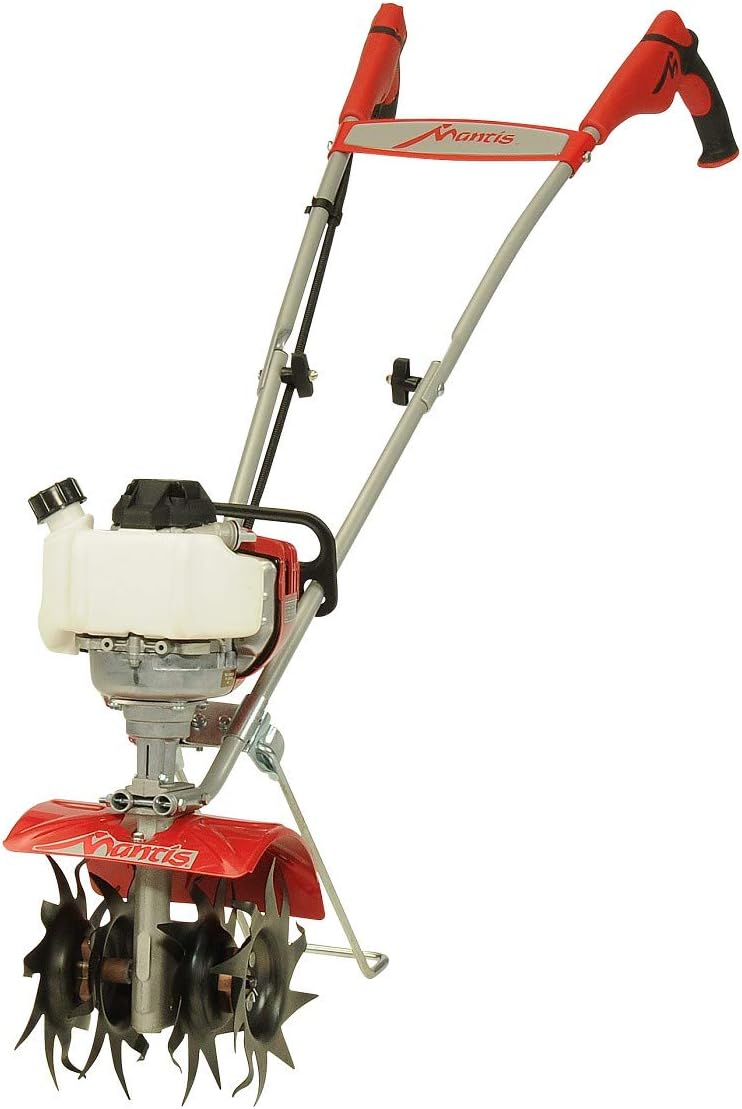
A compact gas tiller built around a Honda-powered 4-cycle engine, this Mantis model focuses on easy handling and straightforward operation. At 24 pounds, it is a practical fit for gardeners who want a lightweight machine for breaking up soil, cultivating rows, and weeding around established plants.
Pros
- Very light at 24 pounds, so it is easy to carry and maneuver.
- Honda-powered 4-cycle engine runs on gas only, with no fuel mixing required.
- Infinite speed control helps match the pace to different tasks.
- Curvy tines can till up to 10 inches deep and can be flipped for precision weeding.
- Folding handlebars and a kickstand make storage and setup easier.
Cons
- Lightweight build may feel less substantial than larger tillers for heavy-duty work.
EEYBLAEEY 1505 52cc Gas Mini Tiller
This gas-powered mini tiller is designed for small-scale gardening where larger equipment can't fit. Its 52cc engine and four steel tines aim to break ground efficiently in flower beds, raised beds, and vegetable patches. The walk-behind, hand-push design prioritizes maneuverability in confined spaces.
Pros
- Powerful 52cc 2-cycle engine for tough soil
- Durable, heat-treated steel tines designed to stay sharp
- Compact size ideal for small gardens and raised beds
- Adjustable tilling depth up to 4 inches
- Walk-behind design intended for user control and reduced fatigue
Cons
- Gas-powered operation requires fuel mixing and maintenance
- Manual push operation may be strenuous on harder ground
Mutaomay 212cc 21-Inch Tiller
A gas-powered tiller built for hard soil, with a 212cc 4-stroke engine and forward and reverse drive for easier control. Its 21-inch tilling width and steel tines make it a practical fit for larger gardens, raised beds, and small farm work.
Pros
- Powerful 212cc 4-stroke gas engine handles compacted and clay soil.
- Forward and reverse transmission improves maneuverability in tight spaces.
- 21-inch tilling width covers ground efficiently.
- Adjustable handle adds comfort for longer sessions.
- High carbon steel construction supports heavy-duty use.
Cons
- At 130 pounds, it is relatively heavy to move and position.
- Gas-powered design requires more upkeep than an electric tiller.
Saker SK-TC18A 22V Cordless Garden Tiller
This cordless electric tiller offers flexibility with its three adjustable speed settings, designed for precise cultivation in smaller spaces like raised beds. Its battery-powered, cordless nature and ergonomic design aim to provide comfortable, unrestricted operation.
Pros
- Features three adjustable speed settings for different tilling tasks
- Cordless and battery-powered for enhanced portability and maneuverability
- Includes two 22V batteries for extended runtime
- Ergonomic design with an adjustable auxiliary handle for user comfort
- Equipped with dual safety locks for secure operation
Cons
- Battery life per pack is limited to approximately 30 minutes
Best Walk Behind Garden Tillers Buying Guide
Tilling Width and Depth
The first spec we look at is working width, because it determines how much ground you can break up with each pass. A wider tiller can speed up bigger garden beds, but it may feel less nimble in narrow rows or around established plants. If your space is small or segmented, a slimmer machine may be easier to guide and less likely to disturb nearby soil you have already prepared.
Depth matters just as much as width. Shallow tilling is useful for mixing compost into the top layer, while deeper tilling helps loosen compacted soil before planting. In practice, you want enough depth to match the job without forcing the machine to work harder than necessary. For reference, a tiller that can consistently cut deeper into dense soil is usually more versatile than one that only excels in light garden prep.
| Use case | Preferred width | Preferred depth |
|---|---|---|
| Small raised beds | Narrow to moderate | Shallow to moderate |
| Average backyard garden | Moderate | Moderate to deep |
| Heavily compacted ground | Moderate | Deep |
Power Source and Soil Conditions
Power source is one of the biggest decision points when choosing best walk behind garden tillers. Electric models are often lighter and easier to maintain, while gas-powered machines are typically better suited to tougher or more expansive soil work. The right choice depends on how often you till and whether you need continuous runtime for larger projects.
Soil type should guide your decision as much as power output. Loose, previously worked soil is easier to manage with a lighter machine, but hard clay or long-untouched ground usually benefits from more aggressive tine action and stronger drive. For broader context on equipment that handles yard cleanup efficiently, our Lawn Sweepers category can help you compare other seasonal yard tools alongside your tiller purchase.
Tine Design and Blade Layout
Tines do the real work, so their layout has a major impact on how the tiller performs. Forward-rotating tines usually help break new ground aggressively, while counter-rotating designs can dig in more forcefully and offer better control in hard soil. If you need to mix amendments into existing beds, a design that churns evenly can leave soil more consistent and ready for planting.
Look closely at tine placement and the spacing between passes. A machine that throws soil efficiently without leaving clumps can reduce the need for multiple runs, which saves time and energy. If you are comparing models for mixed-use gardens, the Tillers & Cultivators category page is a useful place to compare related styles and see how cultivating differs from heavier tilling.
The product positioned as the third option in our lineup is a good example of why tine layout matters. A well-balanced tine system can reduce bounce and help the machine stay engaged with the soil instead of skipping over the surface, which is especially useful when you are working in mixed-density ground.
Handle Comfort and Maneuverability
A walk-behind tiller should feel controllable, not like something you are fighting for the entire pass. Handle height, grip comfort, and overall weight distribution all affect how easily you can guide the machine. If the tiller feels too front-heavy, you may end up straining your wrists and shoulders, especially during longer sessions.
Maneuverability becomes especially important in gardens with corners, borders, or tight access paths. A machine that turns smoothly and resists pulling to one side will give you a cleaner result and less fatigue. When you compare models, think beyond raw power and ask whether you can comfortably control the machine at the pace your garden requires.
The fourth product in the roundup is a useful reference point for comfort-focused buyers because maneuverability can matter more than brute force in smaller spaces. If a tiller is easier to pivot and line up at the edge of a bed, you will spend less time correcting your path and more time actually preparing the soil.
Maintenance, Storage, and Long-Term Value
Maintenance can affect the long-term value of any tiller just as much as its day-one performance. Machines with simpler upkeep routines are easier to keep ready for the next planting season, especially if you only use them a few times a year. Consider how easy it is to clean soil from the tines and whether the design makes routine inspection straightforward.
Storage also matters, particularly if your garage or shed is already full. Compact frames, foldable handles, and manageable weight can make seasonal storage much easier. We recommend thinking about ownership in full, not just the initial purchase, because the most practical model is often the one that fits your routine from off-season storage to spring prep. For more seasonal equipment comparisons, you can revisit the Lawn Care Tools hub.
Why You Should Trust Us
We evaluate products using a consistent comparison framework that focuses on specs, usability signals, and category-specific performance markers. Rather than relying on marketing claims alone, we look at the features that most directly affect how a tiller works in real garden conditions, including tilling width, tine configuration, maneuverability, and ease of maintenance.
Our goal is to make the buying process easier and more transparent. We do not claim hands-on testing unless supported by available data, and we prioritize objective product information so you can compare models with confidence. That way, our recommendations are based on practical value, not just brand familiarity or promotional language.
Final Thoughts
For our best overall recommendation, we would start with as the most balanced option in the group. It is the kind of choice that makes sense when you want one machine to cover a wide range of garden prep tasks without overcomplicating the buying decision.
For shoppers who care most about overall value, is the kind of model worth close attention. Value is not just about being inexpensive, but about giving you the right mix of soil-handling ability, usability, and long-term practicality for the money you spend.
If your garden has tighter access points or you need a machine that feels especially easy to manage, stands out as a strong specific-use pick. For more related outdoor equipment comparisons, browse our Lawn Sweepers page or return to the Tillers & Cultivators category to compare more options.
FAQs
What is the best walk behind garden tillers in 2026?
The best walk behind garden tillers in 2026 depends on whether you need lighter cultivation or more aggressive soil breakup. A strong all-around model should balance working width, tine action, and comfort so you can handle most garden tasks without switching tools. If you are unsure where to begin, compare the top-ranked options in this guide and match them to your garden size.
How do I choose the right size best walk behind garden tillers?
Choose the size based on the width of your beds and the condition of your soil. Smaller gardens usually benefit from a more maneuverable machine, while larger plots are better served by a wider model that can cover ground faster. The key is finding a balance between coverage and control so you do not sacrifice precision for speed.
Are walk behind tillers better for hard soil?
Yes, walk behind tillers are often the better option for compacted or untouched soil because they give you more leverage and control. The more important question is whether the tine design and drive system are strong enough for your specific ground conditions. If your soil is especially dense, prioritize a machine built for deeper engagement rather than a lighter cultivator-style option.
Should I choose a gas or electric best walk behind garden tillers?
Gas models are usually better for larger yards and tougher soil, while electric models are often easier to start and maintain. Your decision should come down to runtime, the size of your work area, and how much power you need for repeated passes. If you mainly prep smaller beds, lighter operation may matter more than maximum digging force.
What maintenance does a best walk behind garden tillers need?
Regular cleaning is the most important maintenance task because built-up soil can affect performance and make storage messier. You should also inspect moving parts, check handles and fasteners, and follow the care steps recommended by the manufacturer. For a broader look at garden tool upkeep and seasonal yard planning, our Lawn Care Tools hub is a useful place to start.
About the author
Managing Editor & Buying Guides. Based in Asheville, North Carolina. Carolyn manages the editorial calendar and writes our buying guides. A long-time gardener in the Blue Ridge foothills, she knows how much fall leaf cleanup can wear on a yard, so blowers and vacuums are her specialty.