
The 4 Best Hand Held Garden Tiller of 2026
A hand held garden tiller can make small garden beds easier to loosen and prepare. This roundup covers 4 top picks from SunJoe, MUYLUX, WTFOVOV and more in November 2026 to help you choose the right one.
 By Maria Delgado
Updated October 27, 2026
If you are comparing the best hand held garden tiller options for a small vegetable bed, raised row, or tight backyard patch, the details matter more than the headline. A good handheld tiller should help you loosen soil, blend in compost, and reduce strain without overwhelming you with bulk or complexity. In this guide, we focus on the kinds of features that make a real difference when you are working in limited spaces and need controlled, repeatable results.

We also keep the selection process practical. Instead of chasing oversized machines, we look at maneuverability, tine design, build quality, and how well a tool fits common garden tasks. If you want to explore more lawn and soil equipment after this guide, our Tillers & Cultivators category page is a useful place to continue.
| Award | Product | ACMS Score About LAT ScoreACMS Score is calculated based on product ratings, reviews, and sales performance to help you make informed purchasing decisions. | Price | |
|---|---|---|---|---|
| Best Budget |
Muylux CT-20LS 20V Cordless Tiller with 2
|
8.4/10 | $39.99 | Check price |
| Top Rated |
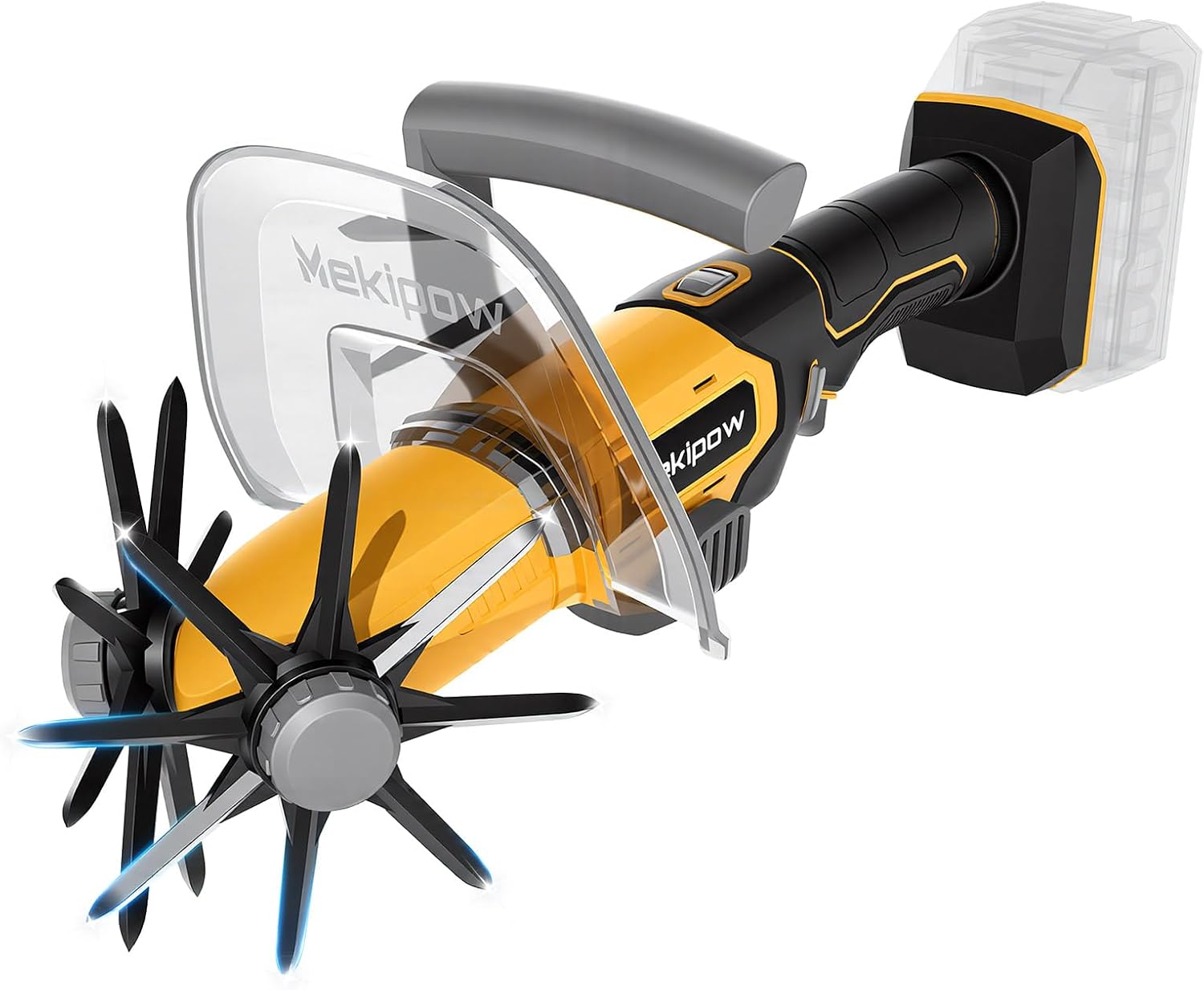 MekiPow STJ-132 Cordless Handheld Tiller |
8.4/10 | $59.99 | Check price |
| Best Value |
 WTFOVOV 2-in-1 21V Mini Tiller |
8.1/10 | $74.86 | Check price |
| Best Overall |
 Sun Joe TJ604E Corded Electric Tiller |
8.8/10 | $149.99 | Check price |
Muylux CT-20LS 20V Cordless Tiller with 2
This battery-powered cultivator is designed for small-scale soil work, offering cordless convenience for preparing garden beds and aerating lawns. Its lightweight, compact design makes it easy to handle in tight spaces, suitable for casual gardeners.
Pros
- Cordless operation provides excellent maneuverability and eliminates extension cord hassles.
- Comes with two batteries for extended runtime without waiting for a recharge.
- Lightweight and compact build is easy to handle and store.
- Solid 4.4-star rating from over 380 reviews indicates reliable user satisfaction.
Cons
- Soil penetration is limited to 4 inches, making it unsuitable for deep tilling or heavy-duty tasks.
- The 2.0Ah battery capacity may be less than ideal for larger garden areas.
MekiPow STJ-132 Cordless Handheld Tiller
A battery-powered handheld tiller designed for owners of DeWalt's 20V MAX platform. Its five-speed control and gear-driven motor offer flexibility for various soil tasks, from light cultivation to breaking up tougher ground in raised beds and small gardens.
Pros
- Compatible with a wide range of existing DeWalt 20V MAX batteries.
- Five-speed adjustable RPM dial provides versatility for different soil conditions.
- Ergonomic front handle is designed to improve control and reduce fatigue.
- Gear-driven system aims to deliver higher torque for demanding tasks.
- Dual safety switch design helps prevent accidental startup.
Cons
- Battery and charger are not included.
- The 5.1-inch tilling width is suitable for small-scale work but not for large areas.
WTFOVOV 2-in-1 21V Mini Tiller
This compact cordless cultivator is built for small garden spaces, raised beds, and flower borders. It can be used handheld or with the extension rods for more upright work, and the 450 RPM motor with steel tines is sized for light soil loosening rather than heavy-duty tilling.
Pros
- 2-in-1 design works handheld or with extension rods
- Cordless setup includes two 1.5Ah batteries and a fast charger
- Compact 4-inch width and depth suit tight garden areas
- Lightweight at 2.65 lb, with a dual-trigger start for added safety
Cons
- Small 4-inch working width makes it better for light, targeted cultivation than larger plots
- Battery-powered runtime will depend on the two included 1.5Ah batteries
Sun Joe TJ604E Corded Electric Tiller
A compact, electric tiller for small to medium garden beds. Its 13.5-amp motor and steel tines handle soil preparation efficiently, while the folding handle simplifies storage.
Pros
- Powerful 13.5-amp motor for effective tilling
- Rust-proof, durable steel tines
- Compact with a folding handle for easy storage
- Corded electric design eliminates gas and oil maintenance
- Adjustable wheels for depth control
Cons
- Corded design limits range and requires a power outlet
- Primarily suitable for small to medium spaces, not large-scale tilling
Best Hand Held Garden Tiller Buying Guide
Tine Design and Soil Contact
When you choose a hand held garden tiller, tine design is one of the first things to evaluate because it determines how aggressively the tool enters the soil. Narrow, closely spaced tines tend to work well for light cultivation, weed removal, and mixing amendments into already loosened ground. Wider or more aggressively shaped tines can bite deeper, which helps in compacted soil, but may require more control from you during operation.
For most home gardeners, the best balance is a design that breaks the top layer without tearing up the entire bed. That gives you enough soil movement for seeding and compost work while keeping the bed structure intact. If your soil is clay-heavy or has a lot of roots, it helps to loosen the surface first and then make multiple shallow passes rather than trying to force one deep cut.
| Soil Type | Best Tine Style | What to Expect |
|---|---|---|
| Loose garden soil | Light-duty tines | Easy movement and smooth blending |
| Mixed soil with compost | Balanced tines | Good mixing without overworking the bed |
| Compact or packed soil | Aggressive tines | More resistance, but better initial penetration |
Another useful way to judge tine performance is by the amount of control you keep while pushing, pulling, or twisting the tool. A tiller that feels too grabby can be tiring in small spaces, especially around borders and established plants. You want a tool that works with your pace, not one that pulls you deeper into the bed than you intended.
Handle Comfort and Control
Handle comfort matters more than many shoppers expect. Since a handheld tiller is used directly by your arms, wrists, and shoulders, grip shape can determine whether a quick task feels simple or becomes annoying after a few minutes. Look for a handle that gives you leverage without forcing your wrist into an awkward angle, especially if you plan to cultivate multiple beds in one session.
Control is especially important if you garden around delicate roots or in narrow rows. A well-balanced tool is easier to guide with short strokes and smaller motions, which helps prevent accidental damage to nearby plants. If you want broader context on garden equipment ergonomics, our Lawn Care Tools category page can help you compare related tools by use case.
The right handle should also support different working styles. Some gardeners prefer a straight, firm motion for loosening soil, while others want more wrist-driven rotation for breaking clumps and removing weeds. The key is choosing a tool that gives you enough leverage to work efficiently without sacrificing precision.
The is a good example of why balance and grip design matter. When a tool feels stable in the hand, you can work closer to plants, edge beds more neatly, and keep pressure where it belongs instead of fighting the tool with every pass.
Build Quality and Long-Term Durability
Durability is important even for a compact tool because the parts are exposed to repeated force, soil abrasion, and moisture. A handheld tiller with sturdy construction should resist bending, loosening, and excessive wear over time. If you garden often, durability affects not only replacement cost but also how consistently the tool performs from season to season.
Pay attention to the way moving parts connect, especially where the handle meets the head and where the tines are attached. Any weak point in those areas can become noticeable once the tool starts encountering hard soil or hidden debris. In a practical sense, a better-built tool saves time because you spend less effort compensating for flex or wobble.
Durability also affects confidence. If you know a tool can handle repeated use in slightly different conditions, you can focus on the garden work itself instead of worrying about whether the head will stay aligned. That confidence is especially valuable when you are preparing beds for planting and want consistent texture across the entire area.
Size, Maneuverability, and Garden Layout
Hand held garden tillers are designed for precision, so the best choice usually depends on the size and shape of your growing space. In a compact raised bed, you want something easy to turn at the corners and light enough to reposition often. In a longer row, you may care more about efficiency and how quickly the tool can cover repeated passes without feeling awkward.
Think about the layout of your garden before buying. If you work between closely spaced plants, a smaller head and tighter control can prevent unnecessary disturbance. If you mainly prep open soil, a slightly wider working path can help reduce total labor. Matching the tool to the garden layout is often more useful than choosing the most aggressive option available.
A practical way to compare maneuverability is to consider how many turns, lifts, and resets you need to finish one bed. Fewer awkward movements usually means less fatigue, especially when you are preparing multiple planting areas in one afternoon. That is why the best hand held garden tiller is often the one that feels most natural in your hand, not just the one with the most force.
The can be a helpful model to think about when comparing compact control and reach. A tool that works cleanly in tighter spots gives you more flexibility in mixed garden layouts, especially where borders, edging, and nearby plants limit your range of motion.
Task Type and Soil Preparation Goals
Not every gardener needs the same kind of handheld tilling performance. Some people want to blend compost into the top layer before planting, while others want to loosen crusted soil or remove shallow weeds. Knowing your main task helps you choose a tool with the right level of aggressiveness and control.
If your main goal is maintenance, a lighter tool may be enough because you are mostly refreshing the topsoil. If your goal is preparation, especially after a season of compacted ground, you may need more bite and more durable construction. The best choice is the one that matches your realistic workload, not your ideal gardening scenario.
Before buying, it helps to ask a simple question: are you maintaining beds or rebuilding them? Maintenance favors ease and precision. Rebuilding favors tougher soil engagement and a design that can handle repeated pressure without losing stability.
Why You Should Trust Us
We evaluate product listings, feature sets, and category-specific use cases to build recommendations that are practical rather than promotional. Our goal is to compare the options using the information that matters most to gardeners: how a tool is likely to perform in real beds, how it fits different tasks, and where its design strengths and tradeoffs show up.
We also keep our process transparent. When ratings, specs, or product descriptions are limited, we avoid making unsupported claims and focus on what can be reasonably inferred from the available data. That means our recommendations are designed to help you narrow the field with confidence while still leaving room for your own garden conditions and preferences.
Final Thoughts
After comparing the options in this guide, our best overall recommendation is the . It earns the top spot because a strong overall pick should deliver a balanced mix of control, versatility, and comfort for everyday garden prep. If you want one tool that can handle a wide range of small-bed tasks without overcomplicating the process, this is the kind of product we would start with.
For a best value style choice, the stands out as a practical option for gardeners who want straightforward performance without extra complexity. And if you are looking for a tool that is especially useful in tighter spaces or more precise bed work, the is a smart pick because it aligns well with controlled movement and narrow-area cultivation.
If you are still deciding, we recommend browsing our Tillers & Cultivators category page alongside this guide so you can compare similar tools in one place. You can also explore our broader Lawn Care Tools category page if you are building out your home gardening toolkit and want a more complete equipment shortlist.
FAQs
What is the best hand held garden tiller in 2026?
The best choice depends on whether you want more control, better soil engagement, or easier handling. For most gardeners, the strongest option is the one that balances comfort and maneuverability while still handling everyday bed prep well. If you want a general-purpose recommendation, start with the top-ranked model in this guide and compare it against your garden size and soil type.
How do I choose a best hand held garden tiller for raised beds?
Raised beds usually reward compact, easy-to-guide tools because you often work around edges, seedlings, and narrow planting zones. Look for a tiller that gives you short, controlled soil passes rather than a large, aggressive bite. That makes it easier to keep the bed structure intact while still loosening the top layer for planting.
Can a hand held garden tiller handle compact soil?
Yes, but compact soil usually requires patience and a lighter first pass. A handheld tool is best used to break the surface gradually, especially if the soil has dried hard or contains roots and debris. For especially dense areas, it helps to moisten the bed slightly and work in small sections rather than forcing the entire area at once.
What features matter most when buying the best hand held garden tiller?
The most important features are tine design, handle comfort, durability, and how easily the tool fits your garden layout. Those factors determine whether the tiller works for your soil conditions and how tiring it feels during use. If you want a broader look at related tools, our Tillers & Cultivators category page is a helpful next step.
Is a handheld tiller better than a larger cultivator for small gardens?
For small gardens, yes, a handheld tool is often better because it gives you more precision and less bulk. Larger cultivators can be useful for open areas, but they are usually less convenient around narrow rows and established plants. If your main work involves beds, borders, or spot prep, a handheld tiller is usually the more efficient choice.
About the author
Editor, Garden Hand Tools. Based in Phoenix, Arizona. Maria grows vegetables and native desert plants in a small backyard and cares most about tools that stay sharp and comfortable in the heat. She writes about pruners, loppers, shovels, and everyday hand tools.