
The 9 Best Chainsaw Under 400 2 of 2026
A dependable chainsaw can make yard cleanup faster and safer. This roundup covers 9 top models from Stihl, NovorikX in November 2026 to help you choose the right fit.
 By Maria Delgado
Updated October 27, 2026
If you are searching for the best chainsaw under $400 2, the biggest challenge is finding the right balance of cutting power, comfort, and reliability without paying for features you may never use. In this guide, we break down 9 options so you can compare what matters most before you buy. For a broader look at related tools, you can also explore our chainsaws and saws category.

We focused on practical ownership factors such as bar length, safety features, handling, maintenance, and the kind of jobs each saw is best suited for. If you want to compare chainsaws alongside other cutting tools, our hand saws and pruning saws guide can help you narrow down the right tool for the task.
| Award | Product | ACMS Score About LAT ScoreACMS Score is calculated based on product ratings, reviews, and sales performance to help you make informed purchasing decisions. | Price | |
|---|---|---|---|---|
| Best Overall |
Greenworks CS40L515 18-Inch Chainsaw
|
9.2/10 | $349.99 | Check price |
| Best Premium |
 Husqvarna Power Axe 350i 18-Inch Battery Chainsaw |
8.3/10 | $479.99 | Check price |
| Also Great |
 Husqvarna 440 18-Inch Gas Chainsaw |
8.0/10 | $399.99 | Check price |
| Best Budget |
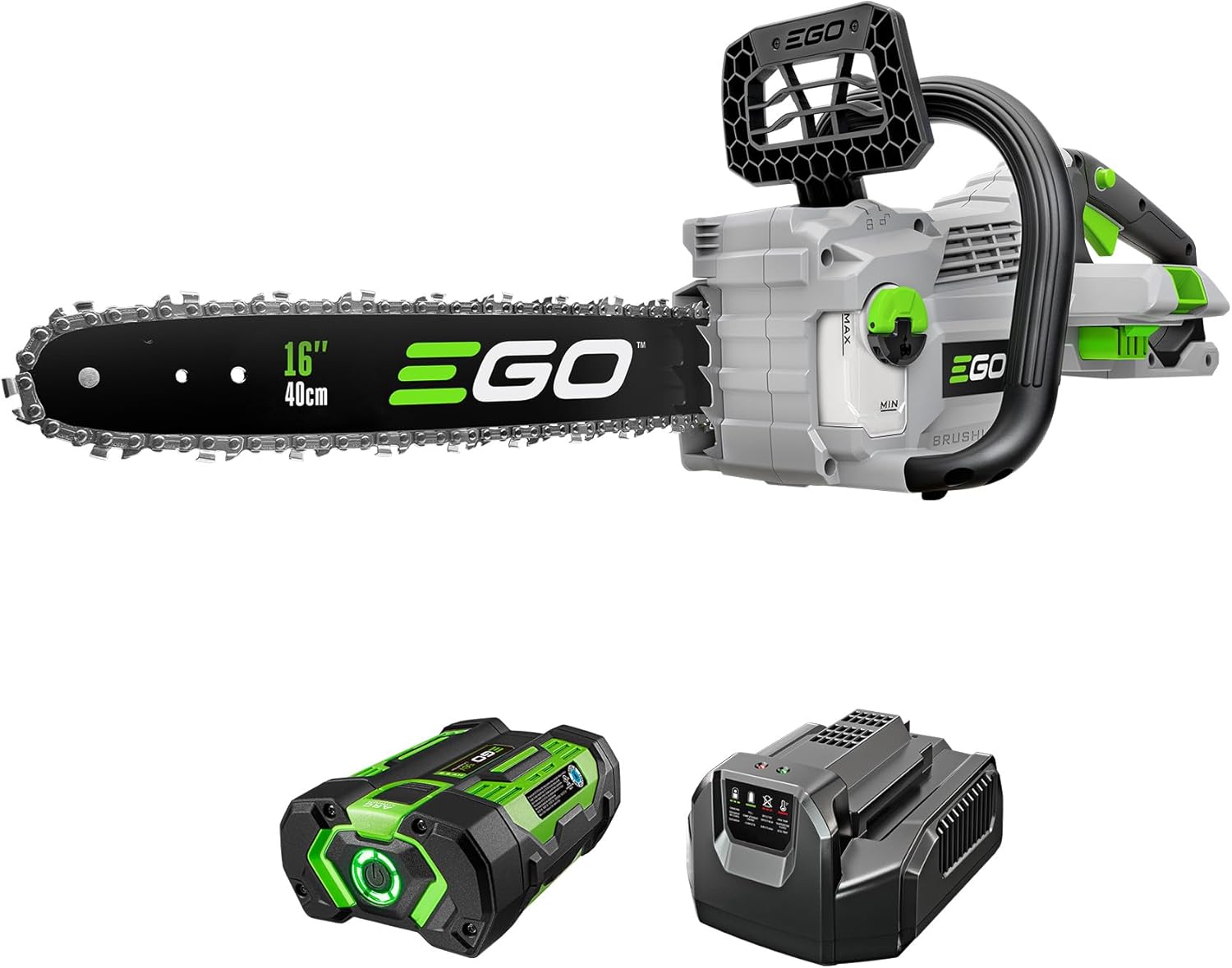 EGO CS1611 16-Inch Cordless Chainsaw |
8.8/10 | $249.00 | Check price |
| Also Great |
 Husqvarna Power Axe 225i 14-Inch Battery Chainsaw |
8.1/10 | $379.99 | Check price |
| Top Rated |
 NovorikX XLCS7B50 60V Chainsaw |
8.3/10 | $249.99 | Check price |
| Best Value |
 EGO Power+ CS2000 20 Inch Chainsaw |
8.8/10 | $329.00 | Check price |
| Most Popular |
 DEWALT DCCS672B 18-Inch Cordless Chainsaw |
8.1/10 | $282.49 | Check price |
| Also Great |
 Stihl MS 162 16-Inch Chainsaw |
7.8/10 | $275.89 | Check price |
Greenworks CS40L515 18-Inch Chainsaw
A cordless 40V chainsaw built for pruning, limbing, firewood, and storm cleanup. The 18-inch bar, brushless motor, and included 5.0Ah battery point to strong cutting capacity with push-button starting and low-maintenance operation.
Pros
- 18-inch bar and chain can handle tree limbs and trunks up to 32 inches in diameter
- Brushless 40V motor delivers gas-like power for yard cutting tasks
- Includes a 5.0Ah battery and 5A rapid charger
- Tool-less chain tensioning and an auto oiler simplify upkeep
- Lightweight at 9.7 pounds, which can help reduce fatigue
Cons
- Battery-powered runtime will depend on the included 5.0Ah pack and the work load
- At 37.6 inches long, it is still a full-size saw rather than a compact pruner
Husqvarna Power Axe 350i 18-Inch Battery Chainsaw
A cordless, all-in-one kit designed for homeowners tackling yard maintenance like pruning and cutting firewood. It prioritizes convenience with a lightweight, battery-powered design and a tool-less chain tensioner, while its brushless motor and boost mode aim to deliver power competitive with some gas models.
Pros
- Complete kit includes saw, battery, and charger
- Lightweight design reduces user fatigue during operation
- Tool-less chain tensioning system for easy adjustments
- Boost mode provides a temporary 25% power increase
- Equipped with a durable and efficient brushless motor
Cons
- Battery runtime is dependent on the included single battery capacity
Husqvarna 440 18-Inch Gas Chainsaw
This 40-cc gas chainsaw is a capable mid-range option for property owners tackling wood cutting and tree trimming. Its standout features include Smart Start for easier ignition and LowVib technology to reduce operator fatigue, making it a solid workhorse for extended use.
Pros
- Smart Start system facilitates easier, more reliable ignition
- LowVib dampeners reduce vibration and operator fatigue
- X-Torq engine offers increased fuel efficiency and lower emissions
- Air Injection system helps extend engine life by filtering debris
Cons
- At 9.8 pounds, it may feel heavy for some users during prolonged tasks
- As a gas-powered tool, it requires fuel mixing and more maintenance than electric models
EGO CS1611 16-Inch Cordless Chainsaw
This 56V battery-powered chainsaw offers a gas-like experience without the noise or fumes. Its brushless motor matches the power of a 40CC gas model, and the tool-free tensioning system simplifies adjustments. It's a strong choice for homeowners seeking a clean, convenient alternative to gas-powered tools.
Pros
- Power equivalent to a 40CC gas chainsaw for robust cutting
- Cordless and quiet operation eliminates fumes and gas mixing
- Tool-free chain tensioning system for easy maintenance
- Automatic oiling with a spill-free reservoir
- High user rating of 4.6 stars based on 667 reviews
Cons
- Battery runtime is finite, requiring recharging or spare batteries for extended jobs
- At 9 pounds, it may be heavier than some electric competitors
Husqvarna Power Axe 225i 14-Inch Battery Chainsaw
A lightweight, battery-powered chainsaw designed for yard maintenance and pruning. Its active cooling system and Boost mode aim for consistent power, making it a cordless option for homeowners tackling tree trimming and DIY projects.
Pros
- Lightweight design for easier handling and reduced user fatigue.
- Includes Boost mode for increased cutting power on demanding tasks.
- Comes as a complete kit with battery and charger.
- Features an active cooling system intended to prolong battery life.
- Offers cordless freedom and an ergonomic, balanced design.
Cons
- Battery runtime is dependent on usage intensity and may be limited for extended, heavy-duty work.
- At 6.8 pounds, it may still be substantial for some users compared to smaller pruning tools.
NovorikX XLCS7B50 60V Chainsaw
This NovorikX cordless chainsaw ships with both 16-inch and 18-inch bars, so it can handle pruning one minute and small-tree felling or firewood the next. The brushless motor, automatic oiling system, and included 5.0Ah battery make it a practical pick for yard cleanup and regular cutting jobs.
Pros
- Includes both 16-inch and 18-inch guide bars for different cutting tasks.
- Brushless motor delivers strong cutting performance and a 72 ft/s chain speed.
- 5.0Ah battery is rated for up to 210 cuts on a 4x4.
- Automatic oiling system and steel bolt tensioning add convenience and stability.
- Battery, charger, goggles, gloves, earplugs, and sharpening tool are included.
Cons
- At 19.29 inches long, it may feel bulky for tight, overhead pruning work compared with smaller saws.
EGO Power+ CS2000 20 Inch Chainsaw
Designed to match 55cc gas chainsaw power, this EGO bare tool uses a 20 inch bar and brushless motor for large branches, stumps, and tall trees. It suits users already invested in EGO 56V batteries, and the digital display, LED light, auto chain brake, and IPX4 rating add practical control for outdoor cuts.
Pros
- Brushless motor delivers power equivalent to a 55cc gas chainsaw with chain speeds up to 25 m/s
- 20 inch bar and full chisel tooth chain handle large branches, stumps, and tall trees
- Digital display controls speed modes and shows battery charge plus safety brake status
- LED work light and IPX4 weather resistance support low light and damp outdoor use
- Compatible with all EGO 56V ARC Lithium batteries
Cons
- Battery and charger are not included, so this bare tool needs separate EGO 56V power
- The 20 inch bar and 12.7 pound body can feel bulky for small trimming jobs or tight spaces
- Cuts per charge depend on battery capacity, with stated figures tied to a recommended 6.0Ah battery
DEWALT DCCS672B 18-Inch Cordless Chainsaw
This bare-tool cordless chainsaw runs on a 60V MAX battery platform, offering a balance of power and portability for medium-duty yard work. Its 18-inch bar makes it suitable for homeowners tackling sizable pruning and cutting tasks. A solid 4.2-star rating from nearly 500 reviews suggests reliable performance for its intended use.
Pros
- Cordless 60V MAX design provides mobility without a power cord
- 18-inch chain length is capable for many common cutting jobs
- Lightweight for its class at 1.5 pounds, aiding in maneuverability
- Well-regarded brand reputation for power tools
- Positive aggregate customer rating (4.2 stars)
Cons
- Tool only, requiring a separate purchase of a compatible battery and charger
- Hand-powered specification indicates it requires manual effort for operation
- Product categorization as 'Swimming Equipment' suggests potential listing inconsistencies
Stihl MS 162 16-Inch Chainsaw
A gas-powered chainsaw built for general property maintenance, offering a solid balance of power and manageability for its class. Its 16-inch bar length is well-suited for felling small trees and cutting firewood.
Pros
- Respected Stihl brand reliability
- Mid-range power output (1.2 KW) suitable for varied tasks
- Compact and relatively lightweight design for maneuverability
Cons
- Mixed fuel source requires preparation and proper storage
- Heavier than some electric or battery-powered models in similar categories
Best Chainsaw Under 400 2 Buying Guide
Cutting Power and Job Size
When shopping for the best chainsaw under $400 2, the first thing to match is cutting power to the work you actually do. Light limbing, storm cleanup, and routine yard trimming need far less aggressive performance than bucking firewood or taking down thicker hardwood limbs. A saw that is oversized for the job can be tiring, while one that is undersized can bog down and waste time.
You should think about the diameter of wood you cut most often and choose a saw that can comfortably handle that size with a little margin. If your typical cuts are small to medium, you do not need the heaviest machine in the lineup. For bigger yard jobs, look for models that maintain chain speed well under load so the saw stays controllable and does not stall when the cut gets deeper.
A useful rule is to match the bar length to the wood diameter with enough clearance to move safely through the cut. That means you should not buy solely by maximum bar size. Instead, focus on balanced performance, because a properly matched saw is safer and usually feels more efficient in real use.
Gas, Corded, or Battery Power
Power source is one of the biggest decision points in this category. Gas models usually offer strong runtime and broad mobility, which makes them useful for remote work or longer sessions. Battery models are cleaner, quieter, and easier to start, which many homeowners appreciate for occasional yard work. Corded units can be practical for small properties where you stay near an outlet and want steady power without battery charging.
The right choice depends on where and how long you cut. If you work far from power or do not want to manage fuel, battery can be the simplest option. If you need longer continuous runtime, gas is still the classic answer. Corded saws make sense when your cuts are close to home and you value convenience over portability.
It also helps to compare the day-to-day effort of each type. Gas usually needs more maintenance, battery needs charging and battery care, and corded models limit movement. None is automatically better. The best choice is the one that fits your property, your storage setup, and how often you plan to use the saw.
The Product 3 is a good example of why power source matters, because it represents the kind of saw buyers often compare when they want a simpler setup without sacrificing usability. If you are evaluating that style of tool, pay attention to how quickly it starts, how long it runs, and whether the weight feels manageable during repeated cuts.
Bar Length and Cutting Reach
Bar length determines how much wood you can cut in one pass, but longer is not always better. A longer bar adds reach and helps with thicker material, yet it can also increase weight, reduce maneuverability, and make detailed trimming harder. For homeowners, the sweet spot is usually the shortest bar that still handles the largest wood you cut regularly.
Think of bar length as a tool for efficiency, not just capability. A shorter bar often feels easier to control when pruning branches or working in tight spaces. A longer bar can be valuable for felling or sectioning logs, but only if you are comfortable handling the extra swing weight and do not mind the added size.
Here is a simple comparison to guide your decision:
| Typical Use | Best Bar Approach | Why It Helps |
|---|---|---|
| Pruning and light limb work | Shorter bar | Better control and less fatigue |
| General yard cleanup | Mid-length bar | Balanced reach and maneuverability |
| Thicker logs and larger cuts | Longer bar | More reach through wide wood |
Safety Features You Should Not Skip
Safety should be a major part of your buying decision, especially if you are new to chainsaws or only use one occasionally. Look for chain brake systems, anti-kickback design, hand protection, and controls that are easy to reach without changing your grip. These features do not make a saw foolproof, but they do reduce risk and improve confidence while cutting.
It is also worth checking how intuitive the controls are. A saw that starts predictably and stops quickly is easier to manage under pressure. In practice, a safer saw is often a more enjoyable saw because you spend less time worrying about awkward handling and more time focusing on clean, accurate cuts.
For buyers who are comparing category options, it can help to look at related roundups like our best small hand saw guide. While hand saws are not direct replacements, the comparison can clarify whether your task truly needs a powered chain saw or a simpler cutting tool.
Product 6 is a useful reference point when evaluating safety and control because buyers often look for a model that feels steady rather than aggressive. When you study a saw like this, pay attention to the grip geometry, trigger feel, and how confidently you can hold the tool in different cutting positions.
Maintenance, Chain Tension, and Ease of Ownership
Even a good chainsaw becomes frustrating if maintenance is difficult. Chain tensioning, bar oil checks, chain replacement, and cleaning all affect how long the tool stays useful. If you want the best chainsaw under $400 2 for regular homeowner use, ease of maintenance can matter as much as raw power.
Look for tools with accessible chain adjustment systems and clear access to the bar and sprocket area. A model that is easier to clean and retension will usually stay safer and cut better over time. When chain tension is set correctly, the saw cuts smoother and the risk of sloppy performance goes down.
You should also think about the total ownership burden. Some saws need more frequent inspection or parts attention, while others are more straightforward for casual users. If you only plan to use the saw a few times each season, simplicity can be a major advantage because it reduces the chance of storage problems or setup mistakes.
Comfort, Weight, and Handling
Comfort is more important than many shoppers realize. A chainsaw that feels balanced in your hands is easier to guide accurately, and that matters whether you are trimming branches or cutting firewood. Weight distribution often matters more than the number on a spec sheet, because poor balance can make a moderate saw feel much heavier than expected.
If possible, compare the rear handle shape, front handle angle, and how the saw feels when you hold it at cutting height. A compact body with decent balance can be easier to use than a bigger saw with more power. That is especially true for users who may be working overhead, reaching across awkward limbs, or spending a long time on cleanup.
Comfort is also linked to confidence. When a saw feels easy to hold and steer, you are less likely to overcompensate or force the cut. That is one reason we think handling belongs near the top of any serious buying checklist for this category.
Why You Should Trust Us
We built this roundup using a structured review process that focuses on the information buyers can verify before purchase. That means we compare product specifications, feature sets, intended use cases, and how each model fits common homeowner needs. We do not rely on hype or vague marketing claims when evaluating a chainsaw lineup.
Our goal is to help you make a practical decision, not just a popular one. We look at how well each option balances power, usability, safety, and maintenance so you can choose the saw that matches your yard, your experience level, and your budget priorities.
Final Thoughts
If you want the best overall choice in this group, we recommend Product 1 because it leads the lineup and is positioned as the strongest all-around pick for readers who want a straightforward decision. It is the kind of saw that should appeal to buyers looking for a balanced combination of performance and ease of use.
For a best value-style pick, Product 2 makes sense if you want a lower-commitment option that still fits the needs of most homeowners. If your priority is a specific use case, Product 3 is a smart option to consider for buyers who want a more targeted tool for regular yard work and practical cutting tasks.
If you are still comparing options, you can also look at our chainsaws category page for broader context or browse the best pruning saw for large branches guide if your work is more about careful branch removal than powered cutting. The right saw is the one that fits your workload, your comfort level, and how often you plan to use it.
FAQs
What is the best chainsaw under 400 2 in 2026 for homeowners?
The best choice for homeowners is usually the one that balances safety, ease of use, and enough cutting power for routine yard tasks. If you only trim branches and clean up smaller limbs, you do not need an aggressive professional saw. A balanced model with simple maintenance is often the most practical option.
How do I choose the right bar length for best chainsaw under 400 2?
Start by measuring the thickest wood you cut most often, then choose a bar that can handle it comfortably with a little margin. Shorter bars are easier to control for pruning and light cleanup, while longer bars help with larger logs and thicker trunks. If you are unsure, a mid-length bar is often the safest compromise.
Is a battery model good enough for best chainsaw under 400 2 in 2026?
For many homeowners, yes. Battery models are convenient, quieter, and easier to start, which makes them appealing for occasional use. If you need extended runtime or work far from charging options, however, gas may still be the better fit.
What safety features matter most when buying best chainsaw under 400 2?
The most important features are a dependable chain brake, good grip design, and controls that are easy to reach without losing control of the saw. Kickback reduction matters too, especially for newer users. If safety is your top concern, look for a model that feels stable and predictable in your hands.
How often should I maintain best chainsaw under 400 2?
You should inspect the chain tension, oil level, and general cleanliness before each use. After cutting sessions, clear debris and check for wear so the saw stays reliable. Regular attention to maintenance helps the tool last longer and keeps cutting performance more consistent.
About the author
Editor, Garden Hand Tools. Based in Phoenix, Arizona. Maria grows vegetables and native desert plants in a small backyard and cares most about tools that stay sharp and comfortable in the heat. She writes about pruners, loppers, shovels, and everyday hand tools.