
The 9 Best Logging Chainsaw of 2026
Need a logging chainsaw that can handle tough timber and long cutting sessions? This roundup covers 9 top picks from FARMMAC in November 2026.
 By admin
Updated October 27, 2026
If you need the best logging chainsaw for serious firewood work, storm cleanup, or production cutting, the details matter more than the marketing claims. The right saw should balance power, bar length, control, and durability so you can work efficiently without fighting the tool on every cut.

In this guide, we break down 9 options for November 2026 and focus on the features that actually change your experience in the woods. If you also want a broader look at saw categories, our Chainsaws & Saws category is a helpful starting point before narrowing down your shortlist.
| Award | Product | ACMS Score About LAT ScoreACMS Score is calculated based on product ratings, reviews, and sales performance to help you make informed purchasing decisions. | Price | |
|---|---|---|---|---|
| Best Premium |
Husqvarna 450 Rancher 20-Inch Gas Chainsaw
|
8.6/10 | $499.99 | Check price |
| Also Great |
 Husqvarna 120 Mark III 16-Inch Gas Chainsaw |
8.3/10 | $219.99 | Check price |
| Best Value |
 Greenworks 80V 18-Inch Brushless Cordless Chainsaw |
8.4/10 | $349.99 | Check price |
| Best Overall |
 Husqvarna T435 35.2cc Top Handle Chainsaw |
8.6/10 | $469.99 | Check price |
| Top Rated |
 Husqvarna 460 Rancher 24-Inch Gas Chainsaw |
8.6/10 | $649.00 | Check price |
| Also Great |
 FARMMAC F380W 72cc Gas Chainsaw |
8.1/10 | $299.99 | Check price |
| Best Budget |
 Greenworks 20312 16-Inch Chainsaw |
8.4/10 | $249.99 | Check price |
| Also Great |
 Husqvarna 555 Professional 24-Inch Gas Chainsaw |
8.1/10 | $799.99 | Check price |
| Most Popular |
 DEWALT DCCS672B 18-Inch Cordless Chainsaw |
8.1/10 | $282.49 | Check price |
Husqvarna 450 Rancher 20-Inch Gas Chainsaw
A capable, mid-range gas chainsaw designed for demanding property owners who tackle serious woodcutting. It balances professional-grade power with user-focused features like an easy-start system and vibration dampening, making it suitable for extended pruning, cleanup, and firewood cutting sessions.
Pros
- Powerful and efficient 50.2-cc X-Torq engine provides reliable performance for heavy-duty tasks.
- Smart Start and air purge system facilitates easier starting, a common pain point with gas saws.
- LowVib technology and ergonomic handle design aim to improve comfort and reduce fatigue during use.
- Air Injection centrifugal cleaning system helps extend engine life by reducing filter maintenance.
Cons
- At 11.3 pounds, it is heavier than many electric and some smaller gas models, which can affect maneuverability.
- Requires mixing of fuel and oil (50:1 ratio), adding complexity compared to battery-powered or pre-mix fuel options.
Husqvarna 120 Mark III 16-Inch Gas Chainsaw
A lightweight 16-inch gas chainsaw built for home and garden tasks like cutting firewood and limbing. It's designed for easier starting and handling, with features like an air purge system and LowVib technology to reduce operator fatigue.
Pros
- Air purge system and combined choke/stop control aim to simplify starting and reduce engine flooding.
- LowVib technology is intended to lower vibration for reduced operator fatigue during use.
- Air Injection centrifugal cleaning system helps protect the engine by removing larger debris before it reaches the air filter.
- Inertia-activated chain brake is a standard safety feature to help reduce kickback injury risk.
Cons
- As a gas-powered tool, it requires fuel mixing and regular engine maintenance.
- At 10.7 pounds, it may be heavier than some electric or battery-powered models for similar tasks.
Greenworks 80V 18-Inch Brushless Cordless Chainsaw
This 80V cordless chainsaw leverages brushless motor technology to deliver gas-comparable power for demanding tasks like tree felling and limbing. It offers significant user-friendly advantages, including push-button start and an automatic oiler, making it a strong contender for professionals seeking a cleaner, quieter alternative.
Pros
- Powerful brushless motor provides torque comparable to a 42cc gas model.
- Long runtime capable of up to 150 cuts on 4x4 lumber per charge.
- User-friendly features like push-button start and automatic chain oiling.
- Quiet, fume-free operation with no need for gas, spark plugs, or starter ropes.
- Part of a large 80V ecosystem with over 75 compatible tools.
Cons
- The included 2.0Ah battery may limit continuous runtime for very large jobs.
- At 18 inches, the bar length is fixed and may be less versatile for smaller pruning tasks.
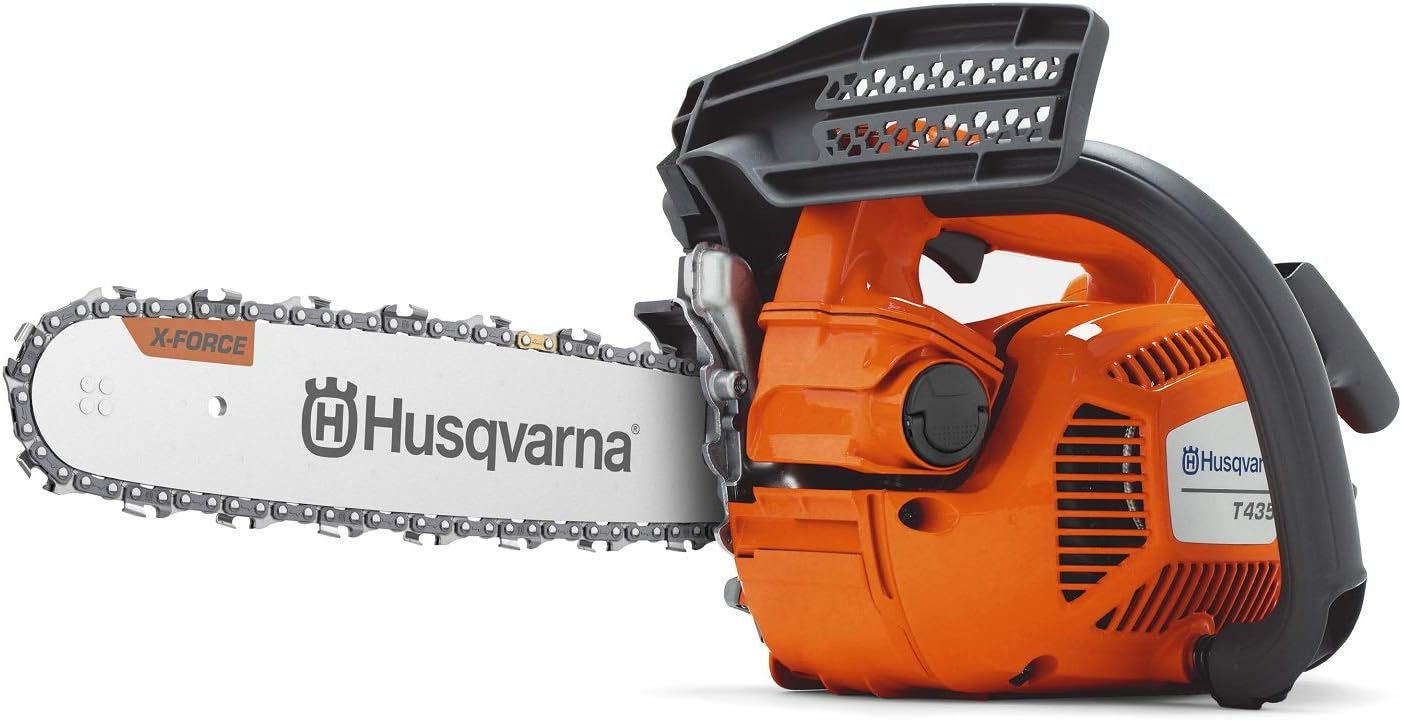
Husqvarna T435 35.2cc Top Handle Chainsaw
A professional-grade, top-handle gas chainsaw built for arborists and serious tree care. Its standout feature is an exceptional power-to-weight ratio, delivering 2.01 HP from a 35.2cc X-Torq engine in a well-balanced, 7.5-pound body. The design prioritizes in-tree maneuverability and reduced operator fatigue, making it a tool for pruning, limbing, and cutting in the canopy.
Pros
- Excellent power-to-weight ratio for a professional-grade tool
- Top-handle design enhances control and reduces fatigue for in-tree work
- Features like Smart Start and LowVib technology improve ease of use and comfort
- Adjustable oil pump and simple maintenance points add practical utility
- Includes a heavy-duty rope attachment point for hoisting into trees
Cons
- As a gas-powered tool, it requires more maintenance and produces emissions compared to battery models
- Its professional orientation and power may be overkill for casual or infrequent home users
Husqvarna 460 Rancher 24-Inch Gas Chainsaw
A high-power, 60.3-cc gas chainsaw designed for demanding tasks like felling trees and processing firewood. It balances robust performance with user-focused features, including easy-start technology and vibration dampening. This model is well-suited for landowners and professionals tackling heavy cutting work.
Pros
- Powerful 3.6-HP X-Torq engine for demanding cutting jobs
- Smart Start system and side-mounted tensioner for easier operation
- LowVib technology and ergonomic handle reduce user fatigue
- Air Injection centrifugal air cleaning extends engine life
- Warranty can be extended to 5 years with fuel purchase
Cons
- Heavy-duty 60.3-cc engine and 24-inch bar make it a substantial tool, weighing 13.2 pounds
- Requires mixing 2-stroke oil with gasoline, adding maintenance complexity
- Large bar size may be unwieldy for lighter tasks or less experienced users
FARMMAC F380W 72cc Gas Chainsaw
FARMMAC’s F380W is a gas-powered chainsaw powerhead built around a 72cc, 2-cycle air-cooled engine and a 24-inch alloy bar. It is aimed at professional logging and heavy-duty land clearing, with compatibility listed for Stihl MS381, MS380, and 038.
Pros
- 72cc full-crank engine with 3.6 kW, 4.8 HP output
- 24-inch alloy solid bar and chain for bigger cutting jobs
- Compatible with Stihl MS381, MS380, and 038
- Magnesium alloy crankcase for lighter weight and strength
- HLHIC carburetor is designed for easier starting and better fuel atomization
Cons
- Not CARB certified, so it cannot be sold or shipped to California
- Heavier than compact saws at 19.8 lb
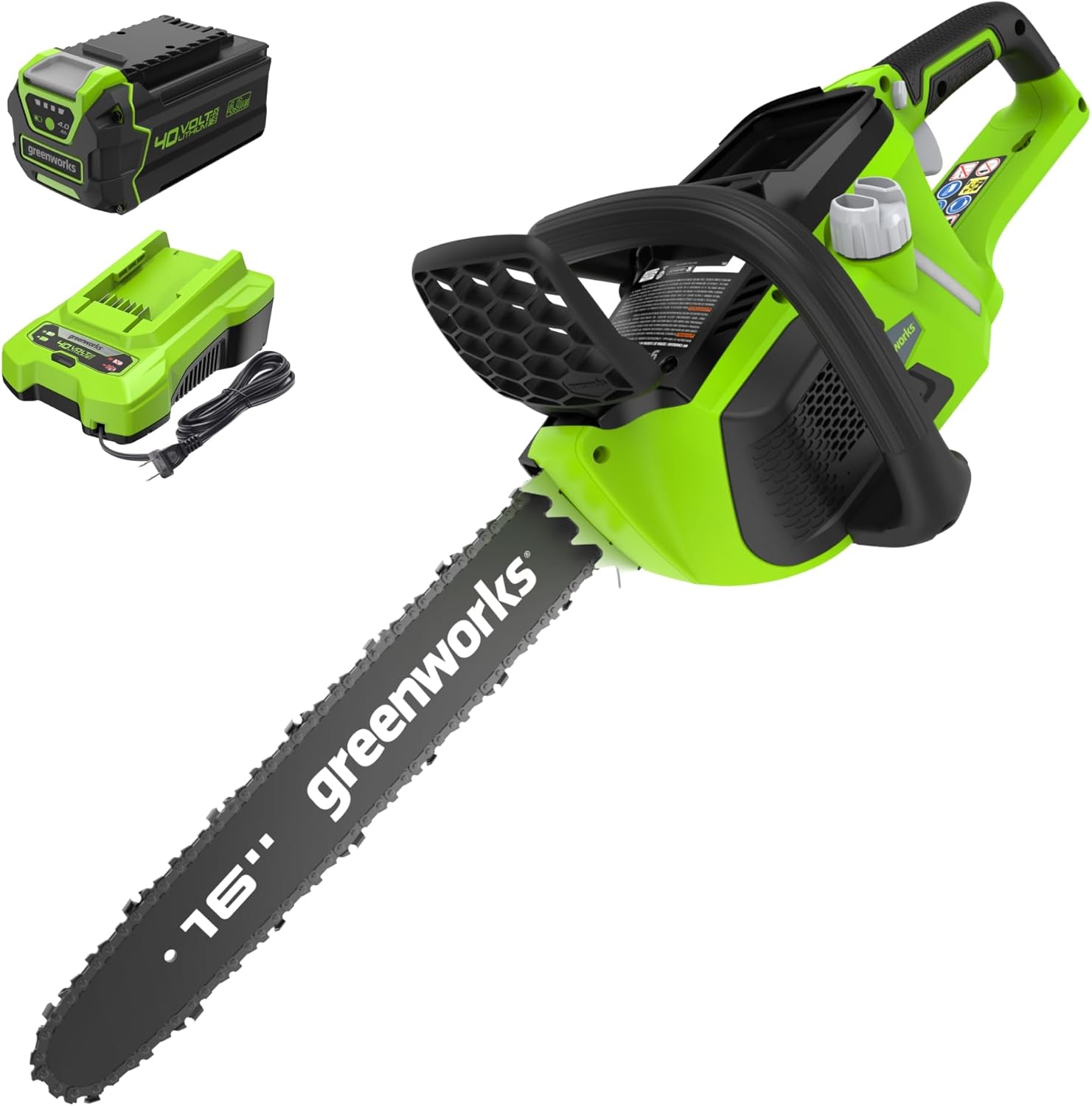
Greenworks 20312 16-Inch Chainsaw
A cordless 16-inch chainsaw built for yard work, firewood cutting, and storm cleanup. Its brushless motor, included 4.0Ah battery, and tool-free chain tensioning make it a practical pick for homeowners who want gas-free cutting with less maintenance.
Pros
- Brushless motor for better efficiency and durability.
- Includes a 4.0Ah battery and charger.
- 16-inch bar and chain suited to heavier yard tasks.
- Automatic oiler and tool-free chain tensioning simplify upkeep.
- Chain brake, low-kickback design, and ergonomic grip support safer, more comfortable use.
Cons
- At 10.4 pounds, it is not especially light for one-handed or extended overhead work.
Husqvarna 555 Professional 24-Inch Gas Chainsaw
A pro-grade gas chainsaw built for demanding tasks like felling midsize trees and cutting firewood. Its X-Torque engine delivers high power at low RPMs, while features like Smart Start and AutoTune aim for reliable performance in varied conditions.
Pros
- Powerful 4.16-HP X-Torque engine for demanding cutting jobs
- Smart Start and AutoTune features for easier starting and consistent performance
- Air Injection system extends engine life by reducing filter cleanings
- Side-mounted chain tensioner allows for quick adjustments
- Includes a low-kickback, inertia-activated chain brake for safety
Cons
- At 13 pounds, it may be heavier than some electric or smaller gas models
- Requires mixing fuel and oil, adding to maintenance complexity
DEWALT DCCS672B 18-Inch Cordless Chainsaw
This bare-tool cordless chainsaw runs on a 60V MAX battery platform, offering a balance of power and portability for medium-duty yard work. Its 18-inch bar makes it suitable for homeowners tackling sizable pruning and cutting tasks. A solid 4.2-star rating from nearly 500 reviews suggests reliable performance for its intended use.
Pros
- Cordless 60V MAX design provides mobility without a power cord
- 18-inch chain length is capable for many common cutting jobs
- Lightweight for its class at 1.5 pounds, aiding in maneuverability
- Well-regarded brand reputation for power tools
- Positive aggregate customer rating (4.2 stars)
Cons
- Tool only, requiring a separate purchase of a compatible battery and charger
- Hand-powered specification indicates it requires manual effort for operation
- Product categorization as 'Swimming Equipment' suggests potential listing inconsistencies
Best Logging Chainsaw Buying Guide
Engine Power and Cutting Performance
For logging, power is the first thing we look at because it affects how confidently the saw pulls through hardwood, wet timber, and larger diameter trunks. A stronger engine or motor does not just increase speed. It also helps the chain stay consistent in the cut, which matters when you are making repeated cuts all day.
When comparing models, pay attention to whether the saw is designed for intermittent homeowner use or longer duty cycles. Logging work usually benefits from a setup that can handle sustained load without bogging down. If a saw needs constant feathering to stay alive in thicker wood, it is probably better suited to lighter property maintenance than to true cutting tasks.
A useful way to think about performance is cut demand versus saw capacity. If you plan to process larger stems or dense species, prioritize a saw that is built to keep chain speed stable under pressure. That stability often matters more than raw headline numbers because it directly affects how cleanly and safely you can work through a cut.
Bar Length and Wood Size
Bar length should match the kind of logging you actually do. A longer bar can help with larger trees, but extra length also increases weight and can make the saw less nimble. For many users, the best choice is the shortest bar that still handles the largest wood they expect to cut comfortably.
If your work involves bucking trunks on the ground, a balanced bar length can improve control and reduce fatigue. For limbing and smaller diameter work, a shorter bar may be faster and safer to maneuver. For felling, you need enough reach to make controlled cuts without forcing awkward body positions.
The right question is not just, “How long is the bar?” It is, “How much wood do I need to cut in one pass, and how often?” That distinction helps you avoid oversizing the saw and ending up with a tool that feels heavier than necessary for daily use.
Weight, Balance, and Fatigue
Logging sessions can become long and physically demanding, so balance is just as important as raw cutting ability. A saw that feels nose-heavy or awkward in the hands can wear you down quickly, especially when you are making repeated starts, repositioning between cuts, or working at odd angles.
We recommend comparing the overall design, not just the listed weight. Handle placement, front grip shape, and how the saw sits with a full tank all influence comfort. A lighter saw that is poorly balanced can feel worse than a slightly heavier one with a better center of gravity.
If you split time between felling, limbing, and bucking, balance becomes even more important. In that case, choose a saw that gives you enough authority in the cut while still remaining manageable during overhead or side-angle work. That is one reason many buyers compare products across a broader Hand Saws & Pruning Saws section when deciding which cutting tool fits their routine.
The design of is a good example of why balance matters. A logging saw should feel controllable through the full cut, not just strong on paper, and that depends on how the machine distributes its weight across the body and handles.
Chain Speed, Chain Type, and Cutting Efficiency
The chain is where the saw actually does the work, so chain speed and chain configuration can have a big effect on real-world efficiency. A logging-focused saw should move through wood cleanly without forcing you to push harder than necessary. The better the chain and drive setup, the less strain you place on the motor and yourself.
Chain type matters because different setups are better suited to different kinds of cuts. A more aggressive chain can remove wood quickly, but it may also demand more from the operator and the saw. A smoother, more controlled chain can be a better fit if you value consistency, especially in dense wood or when accuracy matters more than speed.
When evaluating options, look for signs that the saw is tuned for efficient chip removal and reliable feed through the cut. If a model tends to stall or chatter under load, that can slow you down more than you might expect. For a logging tool, the goal is steady progress with less interruption.
Safety Features and Control
Logging work brings higher risk than light trimming, so safety features are not optional extras. Chain brake design, throttle response, handguard shape, and anti-kickback elements all contribute to how much control you have when the saw meets resistance or the cut shifts unexpectedly.
Good control also comes from the way the saw starts and responds in the hands. A predictable throttle and secure grip are important when you are working on uneven ground or in awkward positions. The best logging chainsaw for you should reduce the chance of fighting the machine during start-up and during the cut itself.
Before buying, think through your environment. If you often cut in wet, muddy, or cold conditions, choose a saw that gives you confident handling and easy access to the controls. It is also smart to review our Chainsaws & Saws category alongside your shortlist so you can compare saw types and safety priorities in one place.
The is worth studying if you want a saw style that emphasizes user control. Safety and handling should be evaluated together because a powerful saw is only useful when you can guide it confidently through a cut.
Why You Should Trust Us
We build our recommendations using structured product comparison rather than guesswork. Our review process focuses on the specifications that matter most for logging use, including power delivery, bar compatibility, balance, control features, and overall suitability for demanding cutting tasks. We also look for consistency across product details so our recommendations stay practical and useful.
We do not claim hands-on testing unless the product data supports it. Instead, we emphasize transparent analysis, side-by-side comparison, and category-specific buying guidance. That approach helps us identify which saws are better suited to heavy woodcutting, which ones are more versatile, and which options are better for users who need a dependable everyday tool.
Final Thoughts
If you want the best overall option in this roundup, the stands out as the strongest first place to check because it leads the list and is positioned as the primary recommendation in the comparison table. For buyers who want a balanced option that still looks competitive in a demanding role, the is a smart model to compare closely against the rest of the field.
For a more specific use case, the is a good choice to evaluate if you are prioritizing a focused cutting setup rather than a general-purpose machine. If you want to continue comparing saw guides, our Hand Saws & Pruning Saws category and the broader Chainsaws & Saws category can help you match the right tool to the job.
FAQs
What is the best logging chainsaw in 2026?
The best logging chainsaw in 2026 is usually the one that combines strong cutting performance, stable handling, and a bar length that matches your wood size. For most buyers, the best choice is the saw that fits their workload instead of the biggest model available. A well-balanced option often performs better in real use than an oversized saw that is harder to control.
How do I choose the right bar length for a best logging chainsaw?
Choose a bar length based on the diameter of the wood you cut most often. If you regularly handle large logs, a longer bar can reduce repositioning, but it may also add fatigue. If you mostly buck smaller stems or limbing wood, a shorter bar is usually easier to manage and can improve control.
Is a heavier best logging chainsaw better for logging?
Not always. A heavier saw can sometimes feel more stable in the cut, but extra weight also increases fatigue and can reduce precision over long sessions. The best logging chainsaw is usually the one that gives you enough power without making the saw hard to maneuver.
What safety features matter most on a best logging chainsaw?
The most important safety features include a reliable chain brake, a secure front handguard, and a design that helps reduce kickback risk. Good grip texture and intuitive control placement also matter because they help you stay confident when the saw is under load. If you are still comparing options, our Chainsaws & Saws category is a useful place to explore more tools and see how they differ.
Can I use a best logging chainsaw for both felling and bucking?
Yes, many logging saws can handle both tasks, but some are better tuned for one job than the other. If you do both regularly, look for a model with a good balance of reach, control, and sustained cutting ability. That versatility usually makes the tool more practical across a full day of work.
About the author

admin writes reviews and buying guides for LAT Review.