
The 4 Best Push Lawn Sweeper For Pine Needles of 2026
Searching for the best push lawn sweeper for pine needles? Our 2026 review compares 4 top-rated models to help you clean up your yard efficiently.
 By admin
Updated October 27, 2026
If you have pine trees gracing your property, you know the constant battle against a blanket of needles. A standard rake or leaf blower often struggles with this specific, fine debris. That’s where a dedicated push lawn sweeper designed for pine needles becomes an essential tool. These units are engineered to collect, not just scatter, the small, waxy needles that can smother grass and create a messy landscape. In this guide, we’ve analyzed 4 of the top-performing models available in November 2026 to help you find the perfect match for your yard maintenance needs. For tackling larger areas or heavier debris, you might also consider our guide on the best tow-behind yard sweepers.
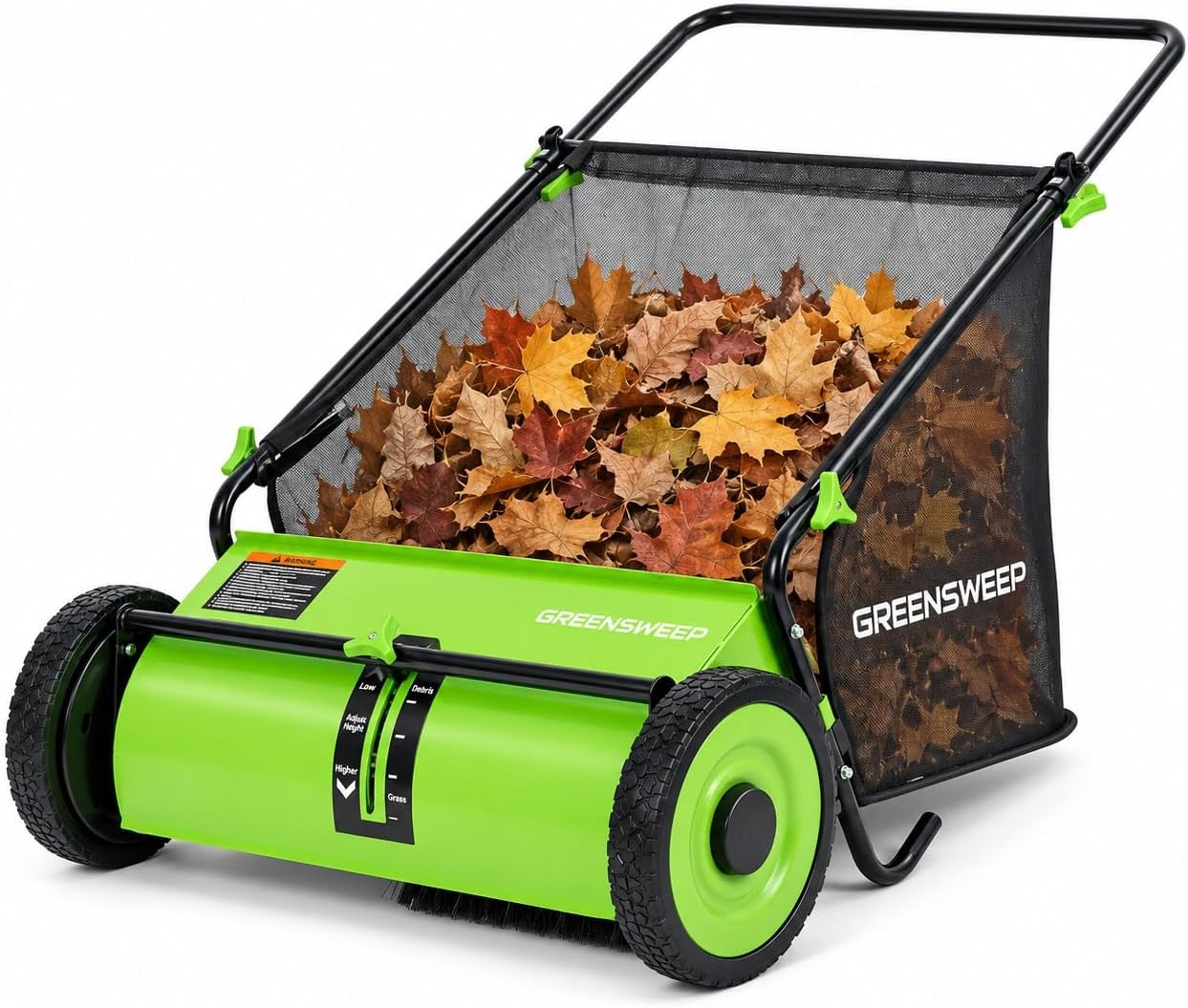
Choosing the right sweeper involves more than just picking the widest model. You need to consider the hopper capacity, the type of brushes, the maneuverability on your specific terrain, and the ease of emptying. A sweeper that excels on a flat lawn might struggle on a sloped or uneven surface littered with pine cones. Our comprehensive buying guide below will walk you through these critical factors, using examples from the products we’ve reviewed.
| Award | Product | ACMS Score About LAT ScoreACMS Score is calculated based on product ratings, reviews, and sales performance to help you make informed purchasing decisions. | Price | |
|---|---|---|---|---|
| Best Premium |
GreenSweep GS-PP3V26 26-Inch Push Sweeper
|
7.2/10 | $129.00 | Check price |
| Best Overall |
 VEVOR S19-001A 21-Inch Manual Lawn Sweeper |
7.6/10 | $89.90 | Check price |
| Best Value |
 VEVOR GT1110 26-Inch Push Lawn Sweeper |
7.6/10 | $115.90 | Check price |
| Best Budget |
 GreenSweep GS-PP2V26 21-Inch Sweeper |
7.6/10 | $99.99 | Check price |
GreenSweep GS-PP3V26 26-Inch Push Sweeper
This manual push sweeper uses rotating brushes and a 26-inch sweeping path to lift leaves, grass clippings, and light debris into a large hopper. The tool-free height dial helps adjust brush clearance for different lawn conditions, while the polypropylene frame and foam handle support easier handling on flat surfaces. It suits owners who want a cordless option for routine yard cleanup without raking or bending.
Pros
- Tool-free adjustable brush height
- Large hopper reduces frequent emptying
- No electricity, batteries, or fuel needed
- 26-inch path covers lawns, patios, and driveways
- Compact design for storage
Cons
- Designed for light debris, not heavy material
- Manual push operation requires physical effort
- 26-inch sweeping width may need more passes on larger lawns
VEVOR S19-001A 21-Inch Manual Lawn Sweeper
This manual push sweeper is designed for efficient yard cleanup, featuring adjustable brush height and a large-capacity bag to reduce dumping frequency. Its sturdy alloy steel construction and tool-free setup make it a practical choice for maintaining driveways, sidewalks, and medium-sized lawns.
Pros
- Stepless brush height adjustment allows for use on various terrains without tools.
- Large 3.5 cu. ft. hopper bag reduces the frequency of stops to empty debris.
- Compact storage design with quick clips and support feet for stable wall hanging.
Cons
- Manual operation requires physical effort to push, which may be tiring on large properties.
- The product listing lacks detailed user feedback to assess long-term durability.
VEVOR GT1110 26-Inch Push Lawn Sweeper
This heavy-duty manual sweeper is designed for efficient yard cleanup, featuring a quad-brush system and a large-capacity hopper bag. It's a solid choice for homeowners with small to medium lawns who prefer a non-motorized, time-reviewed design for collecting leaves and grass clippings.
Pros
- Heavy-duty steel frame promises proven reliability
- Quad-brush system aims for high-efficiency pickup in a single pass
- Tool-free height adjustment for adapting to different surfaces
- Large 7 cu. ft. hopper bag handles substantial debris volume
- Ergonomic handle design intended to reduce back strain
Cons
- Manual operation requires physical effort to push
- At 33 pounds, it is a relatively heavy unit to maneuver
GreenSweep GS-PP2V26 21-Inch Sweeper
A manual push lawn sweeper built for collecting leaves, grass clippings, and light garden debris across lawns, artificial turf, paths, and patios. The AntiLock Drive system and tool-free brush-height adjustment are the main practical touches, while the 21-inch sweep width and large hopper should suit routine cleanup jobs.
Pros
- Manual push design requires no power, batteries, cables, or fuel.
- AntiLock Drive is designed to improve wheel movement for smoother sweeping.
- 21-inch cutting width covers a decent path with each pass.
- Large-capacity hopper reduces how often you need to stop and empty it.
- Tool-free height adjustment makes it easier to adapt to different surfaces.
Cons
- Manual operation may take more effort than a powered cleaner.
Best Push Lawn Sweeper For Pine Needles Buying Guide
Sweeping Width and Hopper Capacity
The sweeping width determines how much ground you cover with each pass. For large, open lawns under mature pines, a wider sweeper (often 30 inches or more) will significantly reduce your cleanup time. However, a wider unit can be more difficult to maneuver around tight spaces, garden beds, or between trees. Hopper capacity is equally crucial; it dictates how often you need to stop and empty the collection bag. A small hopper on a needle-heavy lawn means constant interruptions. Look for a model that balances a good width with a generous, easy-to-empty hopper. The hopper should also be made of durable, rip-resistant material to handle the abrasive nature of pine needles.
Brush Type and Adjustability
The brushes are the heart of any lawn sweeper. For pine needles, you need stiff, durable bristles that can penetrate the thatch layer and lift the needles effectively. Many models use polypropylene bristles, which are resistant to wear and weather. Brush adjustability is a key feature that separates basic sweepers from versatile ones. The ability to raise or lower the brushes allows you to adapt to different surfaces: a lower setting for maximum pickup on a short lawn, and a higher setting to prevent scalping on uneven ground or to simply glide over pavement. A sweeper with non-adjustable brushes may leave needles behind or damage your turf.
Frame Construction and Wheel Design
Durability is paramount. A sturdy steel frame will withstand the rigors of regular use far better than a plastic one, especially when pushing a full hopper over rough terrain. Pay attention to the wheel design as well. Larger wheels roll more easily over obstacles like roots, small branches, and uneven ground. Pneumatic (air-filled) tires offer the smoothest ride and best traction, particularly on slopes or soft soil, though they can go flat. Solid rubber or plastic wheels eliminate flat tires but may provide a bumpier ride. The axle and wheel bearings should be robust to handle the lateral forces of turning with a load.
Maneuverability and Ease of Use
A sweeper is only useful if you can push it comfortably. The handle should be ergonomic and, ideally, height-adjustable to suit different users. A sweeper that is too heavy or poorly balanced will cause fatigue quickly. Consider the turning radius; models where the front wheels pivot independently offer much tighter turns, making it easier to navigate around landscaping features. Also, evaluate how easy it is to engage and disengage the brushes. A simple lever or clutch mechanism that allows you to lift the brushes when moving the sweeper without collecting (e.g., crossing a driveway) is a valuable convenience feature.
Dumping Mechanism and Maintenance
Emptying a full hopper of damp, heavy pine needles should not be a chore. The best systems allow for easy, controlled dumping without having to lift or tilt the entire sweeper. Look for a design where the hopper tilts or a door opens at the bottom, letting you deposit the debris exactly where you want it. Some models even feature a pull-cord release. After use, maintenance is simple but important. Check that brushes can be replaced when worn, and that there are no complex parts that require frequent lubrication. A sweeper that is easy to clean and store will have a longer lifespan. For more general lawn care tips and tool reviews, explore our Lawn Care Tools hub.
Why You Should Trust Us
Our recommendations are based on a rigorous, data-driven analysis of the available market. We aggregate and scrutinize specifications, verified customer reviews, brand reputation, and feature sets to identify which products truly deliver on their promises for cleaning pine needles. We focus on objective criteria like construction materials, brush design, hopper capacity, and user-reported performance across various yard conditions. Our goal is transparency; we clearly present the strengths and potential limitations of each model so you can make an informed decision aligned with your specific needs and budget.
Final Thoughts
After reviewing 4 models, we can confidently recommend several standout options for different scenarios. For the user with a large, relatively flat property who wants maximum efficiency and durability, our best overall pick is the . Its combination of a wide sweeping path, high-capacity hopper, and robust construction makes it a workhorse for serious pine needle cleanup.
If you’re working with a tighter budget or a smaller yard, our best value recommendation is the . It offers core sweeping functionality and essential features like brush adjustability at a very competitive price point, proving you don’t need to spend a fortune to keep your lawn needle-free.
For those dealing with sloped or uneven terrain where maneuverability is key, we suggest looking closely at the . Its design prioritizes easy handling and smooth operation over challenging ground, ensuring you can clean under trees and along hillsides without excessive effort. Remember, the right tool makes all the difference. For those with riding mowers, complementing your push sweeper with a tow-behind lawn sweeper can cover vast areas even faster.
FAQs
What is the best push lawn sweeper for pine needles in 2026?
The “best” sweeper depends entirely on your yard’s size, terrain, and your budget. Our review highlights a top overall performer for large, flat areas, a great value option for smaller yards, and a model suited for uneven ground. Check the comparison table and buying guide to match a product’s strengths with your specific needs.
Can a push lawn sweeper pick up wet pine needles?
Yes, most push lawn sweepers can handle damp or wet pine needles, but performance will vary. Wet needles are heavier and can clump, potentially reducing the hopper’s effective capacity and making the sweeper harder to push. Models with powerful, stiff brushes and a sturdy frame will perform better under damp conditions than lightweight options.
How often do the brushes on a lawn sweeper need to be replaced?
Brush lifespan depends on usage frequency, the surface you’re sweeping (pavement is more abrasive than grass), and the quality of the bristles. With regular residential use on a lawn, a good set of polypropylene brushes can last several seasons. It’s a good idea to check the brushes at the start of each fall season for significant wear and ensure replacement brushes are available for your model.
Is a lawn sweeper better than a leaf blower for pine needles?
For collection and removal, a sweeper is generally superior for pine needles. A leaf blower simply moves debris from one area to another, which can be useful for piling, but a sweeper actually collects and contains the needles in its hopper for easy disposal. This is especially important if you have compost piles or specific disposal areas. For a comprehensive cleanup, some homeowners use a blower to pile needles first, then use the sweeper for final collection.
Can I use a lawn sweeper on gravel or dirt driveways?
It’s not recommended. Using a lawn sweeper on hard, abrasive surfaces like gravel, pavement, or dirt will dramatically accelerate brush wear and could damage the bristles or the sweeper’s mechanism. The brushes are designed to flex and work within grass. For cleaning loose debris off hard surfaces, a broom, rake, or a powerful leaf blower is a more appropriate tool. For all your outdoor equipment questions, our Lawn Sweepers category page is a great resource.
About the author

admin writes reviews and buying guides for LAT Review.