
The 4 Best Manual Push Lawn Sweeper of 2026
A manual push lawn sweeper can make yard cleanup quicker and easier after mowing. This roundup covers 4 dependable options for best manual push lawn sweeper in November 2026.
 By Maria Delgado
Updated October 27, 2026
Keeping a lawn tidy can take more effort than it should, especially when you are dealing with leaves, grass clippings, pine needles, and light debris after routine yard work. That is why many homeowners search for the best manual push lawn sweeper: it offers a simple, quiet, and low-maintenance way to collect debris without fuel, charging, or complicated setup. If you want to compare more yard-cleaning options, you can also explore our Lawn Sweepers category.
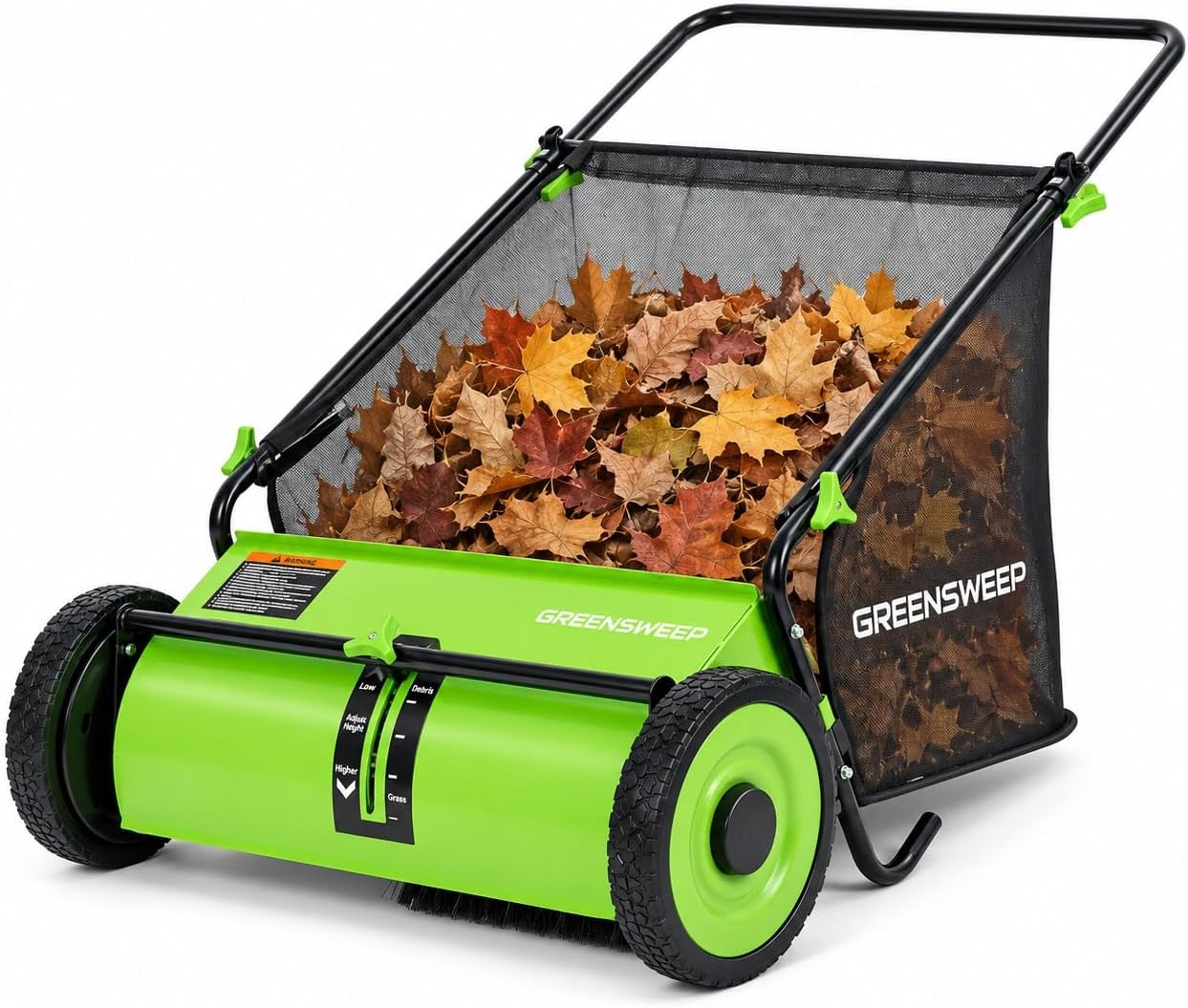
In this guide, we break down 4 options to help you choose a model that matches your yard size, surface type, and cleanup routine. Some sweepers are better for short grass and light debris, while others are more practical for bigger yards or heavier seasonal cleanup. The goal is to help you narrow down the best manual push lawn sweeper for your needs without wasting time on features that do not matter.
| Award | Product | ACMS Score About LAT ScoreACMS Score is calculated based on product ratings, reviews, and sales performance to help you make informed purchasing decisions. | Price | |
|---|---|---|---|---|
| Best Premium |
GreenSweep GS-PP3V26 26-Inch Push Sweeper
|
7.2/10 | $129.00 | Check price |
| Best Budget |
 MAXLANDER 21-Inch Lawn Sweeper |
7.3/10 | $89.98 | Check price |
| Best Overall |
 VEVOR S19-001A 21-Inch Manual Lawn Sweeper |
7.6/10 | $89.90 | Check price |
| Best Value |
 VEVOR GT1110 26-Inch Push Lawn Sweeper |
7.6/10 | $115.90 | Check price |
GreenSweep GS-PP3V26 26-Inch Push Sweeper
This manual push sweeper uses rotating brushes and a 26-inch sweeping path to lift leaves, grass clippings, and light debris into a large hopper. The tool-free height dial helps adjust brush clearance for different lawn conditions, while the polypropylene frame and foam handle support easier handling on flat surfaces. It suits owners who want a cordless option for routine yard cleanup without raking or bending.
Pros
- Tool-free adjustable brush height
- Large hopper reduces frequent emptying
- No electricity, batteries, or fuel needed
- 26-inch path covers lawns, patios, and driveways
- Compact design for storage
Cons
- Designed for light debris, not heavy material
- Manual push operation requires physical effort
- 26-inch sweeping width may need more passes on larger lawns
MAXLANDER 21-Inch Lawn Sweeper
A manual lawn sweeper built for routine yard cleanup, with a 21-inch sweeping path and a 3.5 cu. ft. hopper for collecting dry leaves, grass clippings, and other lightweight debris. The adjustable brush height and lightweight frame make it a practical option for lawns, sidewalks, patios, and driveways.
Pros
- 21-inch sweeping width covers ground quickly.
- 3.5 cu. ft. hopper reduces how often you need to empty it.
- Adjustable brush height helps it adapt to different surfaces.
- 15.6-lb frame is easier to push and maneuver.
- Foldable handle helps with compact storage.
Cons
- Manual operation takes more effort than powered alternatives.
- Best suited to dry, lightweight debris rather than heavier yard material.
VEVOR S19-001A 21-Inch Manual Lawn Sweeper
This manual push sweeper is designed for efficient yard cleanup, featuring adjustable brush height and a large-capacity bag to reduce dumping frequency. Its sturdy alloy steel construction and tool-free setup make it a practical choice for maintaining driveways, sidewalks, and medium-sized lawns.
Pros
- Stepless brush height adjustment allows for use on various terrains without tools.
- Large 3.5 cu. ft. hopper bag reduces the frequency of stops to empty debris.
- Compact storage design with quick clips and support feet for stable wall hanging.
Cons
- Manual operation requires physical effort to push, which may be tiring on large properties.
- The product listing lacks detailed user feedback to assess long-term durability.
VEVOR GT1110 26-Inch Push Lawn Sweeper
This heavy-duty manual sweeper is designed for efficient yard cleanup, featuring a quad-brush system and a large-capacity hopper bag. It's a solid choice for homeowners with small to medium lawns who prefer a non-motorized, time-reviewed design for collecting leaves and grass clippings.
Pros
- Heavy-duty steel frame promises proven reliability
- Quad-brush system aims for high-efficiency pickup in a single pass
- Tool-free height adjustment for adapting to different surfaces
- Large 7 cu. ft. hopper bag handles substantial debris volume
- Ergonomic handle design intended to reduce back strain
Cons
- Manual operation requires physical effort to push
- At 33 pounds, it is a relatively heavy unit to maneuver
Best Manual Push Lawn Sweeper Buying Guide
Sweeping Width and Yard Coverage
Sweeping width is one of the first things to evaluate because it affects how quickly you can clean a yard. A wider sweeper covers more ground per pass, which is useful if you have a larger lawn or frequent debris buildup. A narrower model can still be a smart choice if you have tight corners, landscaped edges, or smaller spaces where maneuverability matters more than raw coverage.
When comparing options, think about how much of your cleanup time is spent making repeated passes versus repositioning the machine. A wider deck can reduce passes, but only if it remains easy to push and maintain contact with the surface. For compact yards or mixed landscaping, a balance of width and control often performs better than the biggest available option.
The right width also depends on the kind of debris you collect most often. If your lawn sheds mostly light leaves and clippings, a broader sweeper may be efficient. If you deal with heavier debris near driveways, pathways, or beds, a model with better control and edge handling can be the better long-term fit.
Brush Action and Debris Pickup
Brush quality is the heart of any manual push lawn sweeper. The brushes need enough stiffness to lift leaves and clippings while still rotating smoothly over grass. If the brushes are too soft, they may miss lighter debris. If they are too stiff, they can struggle on uneven ground or feel less forgiving on delicate turf.
You should also consider whether the sweeper is designed for seasonal debris or regular maintenance. Some models are better for clearing a heavy fall leaf layer, while others work best for quick weekly passes after mowing. That difference matters because a machine that performs well on dry leaves may not behave the same way on damp clippings or scattered twigs.
Our best advice is to match brush behavior to your real-world cleanup pattern. If your yard produces a light but frequent mix of clippings and leaves, choose a sweeper with consistent brush contact and easy height adjustment. If your yard gets bigger seasonal piles, you will want a model that stays productive without requiring constant rework.
The model is a good example of why brush performance matters. A sweeper can look similar from the outside, but the real difference comes from how effectively the brushes lift debris and feed it into the collector. If a model in this category has strong contact with the lawn surface, it can save you several extra passes on each cleanup session.
Hopper Capacity and Dumping Convenience
Even a well-built sweeper can become frustrating if the collection hopper fills too quickly or is awkward to empty. Hopper capacity influences how often you stop during cleanup, and that directly affects efficiency. A larger hopper usually means fewer interruptions, but it may also add bulk that makes the machine harder to handle when full.
Dumping convenience matters just as much as size. If the bag or hopper is easy to remove and empty, you can move through a cleanup job more smoothly. On the other hand, if the disposal process is awkward, a high-capacity unit may still feel inefficient because you lose time at the dump point instead of on the lawn.
Think about your debris volume over a typical week rather than only the biggest cleanup of the season. A yard that produces a modest amount of debris most of the time may do fine with a smaller hopper, while a property with heavy leaf fall will benefit from a design that minimizes stops. If you are comparing yard tools more broadly, our Lawn Care Tools page is a useful starting point.
Height Adjustment and Surface Compatibility
Height adjustment is critical because not every lawn sweeper works well out of the box on every surface. Grass length, lawn density, and terrain all affect how easily the brushes make contact with debris. A model with straightforward height settings lets you fine-tune performance instead of forcing the sweeper to work in only one condition.
For example, a recently mowed lawn may need a different brush position than a thicker or slightly uneven lawn. If the brushes ride too high, pickup suffers. If they ride too low, the machine may feel harder to push and can become less comfortable to use over longer sessions. That is why adjustability is not just a convenience feature. It directly impacts pickup efficiency.
Surface compatibility also extends beyond grass. If your cleanup area includes sidewalks, hard edges, or gravel-adjacent zones, you want a sweeper that can transition without losing stability. A flexible height range helps the machine adapt to different parts of your property without constant tinkering.
The option is worth considering if you care about how easily a sweeper adapts to different lawn conditions. Adjustable contact with the ground can make a noticeable difference in pickup quality, especially when you move from thicker turf to thinner areas or from lawn to edge zones. That flexibility is often what separates a decent sweeper from one you can rely on all season.
Frame Build, Handle Comfort, and Storage
Because manual push lawn sweepers depend on your effort, build quality matters more than many shoppers expect. A sturdy frame helps the machine track straight, stay stable when the hopper fills, and handle repeated use without feeling loose. Handle comfort is equally important because a tool that feels awkward or too short can make even a short cleanup session tiring.
Pay attention to how the sweeper feels in use, not just how it looks in product photos. A comfortable handle angle, good grip, and predictable rolling motion can make cleanup feel much smoother. If you plan to use the sweeper regularly, those details may matter more than a small difference in width or other headline specs.
Storage is another overlooked factor. A sweeper that folds down or stores compactly is easier to live with if your garage or shed is already crowded. Since manual sweepers do not require fuel or charging, convenient storage often becomes one of the biggest everyday benefits. If you want to compare this category with related options, take a look at our tow-behind yard sweeper guide.
Why You Should Trust Us
We build our recommendations by comparing product listings, feature sets, user-facing details, and category-specific performance factors that matter in real yard work. For the best manual push lawn sweeper category, that means looking closely at brush design, coverage, hopper convenience, maneuverability, and how well a model is suited to common debris types. Our aim is to reduce guesswork and highlight the differences that actually affect daily use.
We also stay transparent about what the available data does and does not show. When product information is limited, we avoid overstating claims and focus on practical comparison points that help you make a smarter choice. That way, you can use our guide as a clear buying reference rather than a generic list of names.
Final Thoughts
If you want the strongest starting point, we recommend as the best overall choice because it leads this roundup and is positioned to deliver the most balanced performance for most buyers. It is the kind of pick that makes sense when you want one sweeper that can handle regular cleanup without forcing you to overthink every pass. For more comparison shopping, you can also browse our tow lawn sweeper guide.
For value-focused shoppers, the is a sensible option if you want a practical balance of useful features and straightforward operation. For a more specialized use case, the stands out as a strong fit for homeowners who prioritize brush effectiveness and consistent debris pickup in mixed lawn conditions. Those three picks cover the most common needs we see in the Lawn Sweepers category.
No matter which model you choose, the right sweeper should save time, reduce cleanup frustration, and make lawn maintenance feel simpler. Start with your yard size, your most common debris, and how often you plan to use the tool, then use the product comparison above to narrow the field. That approach will help you choose the best manual push lawn sweeper with confidence.
FAQs
What is the best manual push lawn sweeper in 2026?
The best manual push lawn sweeper in 2026 depends on whether you want maximum coverage, easier storage, or the most consistent debris pickup. In this roundup, the top-ranked option is the best place to start because it offers the strongest overall balance for most homeowners. If you have a very specific yard layout, you may still prefer another model that suits your space better.
How do I choose a best manual push lawn sweeper for a small yard?
For a small yard, focus on maneuverability, simple storage, and a sweeper that is easy to empty. You usually do not need the widest model available because tighter areas and landscaping edges matter more than maximum coverage. A compact sweeper can often be easier to use and quicker to store between jobs.
Can a best manual push lawn sweeper pick up wet leaves?
Manual push lawn sweepers generally perform best on dry or lightly damp debris. Wet leaves are heavier, tend to clump, and may not feed into the collector as cleanly. If your yard often has damp debris, you will get better results by waiting for drier conditions or combining sweeping with another cleanup method.
How often should I use a best manual push lawn sweeper?
How often you use it depends on your lawn, your trees, and how much clippings you generate after mowing. Many homeowners use a sweeper weekly during active growing seasons and more often during heavy leaf drop. Regular use usually makes each cleanup faster because debris does not have time to build up.
Is a best manual push lawn sweeper better than raking?
For many homeowners, yes, especially if you have larger areas or want a faster cleanup routine. A sweeper can reduce physical strain and collect debris more consistently than hand raking over broad sections of lawn. If you want to compare broader yard cleanup options, our Lawn Care Tools page is a helpful place to continue your research.
About the author
Editor, Garden Hand Tools. Based in Phoenix, Arizona. Maria grows vegetables and native desert plants in a small backyard and cares most about tools that stay sharp and comfortable in the heat. She writes about pruners, loppers, shovels, and everyday hand tools.