
The 4 Best Push Behind Lawn Sweeper of 2026
A push behind lawn sweeper can save time when leaves, grass clippings, and yard debris keep piling up. This roundup covers 4 top picks for November 2026 from Agri-Fab, VEVOR, worksky.
 By admin
Updated October 27, 2026
If you are trying to find the best push behind lawn sweeper, you are probably looking for a simple way to clear grass clippings, leaves, pine needles, and light debris without relying on gas, electricity, or a tow vehicle. For smaller yards and tighter spaces, a push model can be a practical middle ground because it gives you more control than a tow-behind unit while still covering far more ground than a rake. If you want to compare more options in the same category, our Lawn Sweepers category page is a helpful place to start.

In this guide, we look at 4 push behind lawn sweeper options and focus on what actually matters in everyday use: brush action, hopper capacity, wheel design, maneuverability, and how easy each unit should be to push over common lawn surfaces. We also cover how to think about storage and seasonal cleanup so you can choose a model that fits your yard rather than just the largest or most feature-packed one.
| Award | Product | ACMS Score About LAT ScoreACMS Score is calculated based on product ratings, reviews, and sales performance to help you make informed purchasing decisions. | Price | |
|---|---|---|---|---|
| Best Overall |
Worksky WKS-SYLS 26-Inch Push Lawn Sweeper
|
8.0/10 | $149.99 | Check price |
| Best Budget |
 VEVOR GT1110 26-Inch Push Lawn Sweeper |
7.6/10 | $115.90 | Check price |
| Best Premium |
 Agri-Fab 45-0492 44-Inch Tow-Behind Lawn Sweeper |
8.0/10 | $429.99 | Check price |
| Best Value |
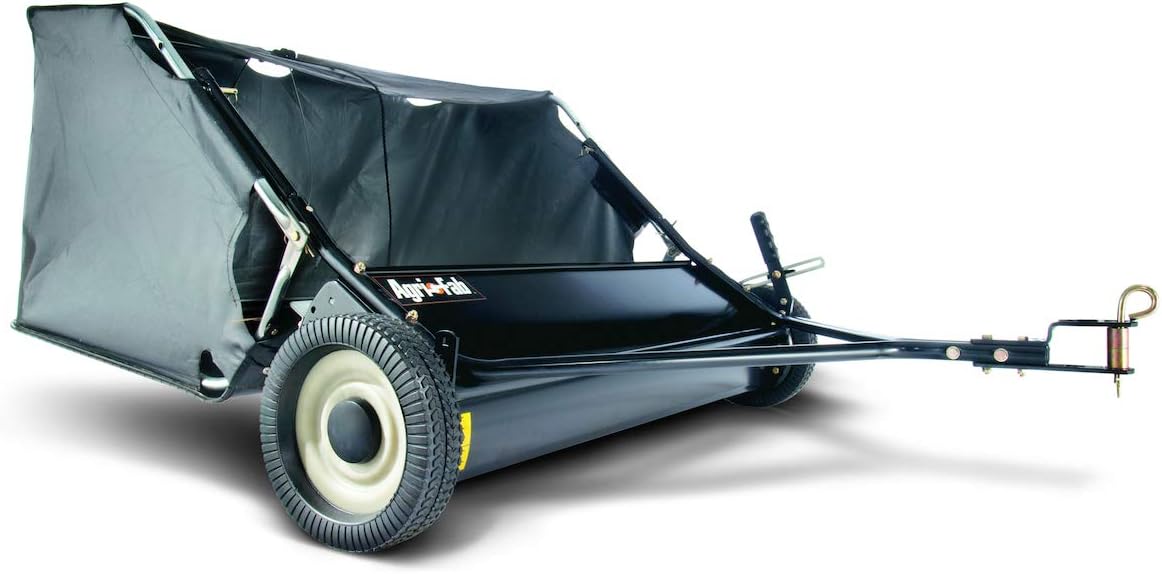 Agri-Fab 45-0320 42-In Tow-Behind Sweeper |
7.8/10 | $290.99 | Check price |
Worksky WKS-SYLS 26-Inch Push Lawn Sweeper
A manual push sweeper designed for efficient cleanup of leaves and clippings. Its 22-inch wide path and 3.8-cubic-foot hopper are built for larger yards, while tool-free height adjustment helps it handle varied terrain. It's a practical choice for those who prefer a vehicle-free solution.
Pros
- Wide 22-inch sweeping path with three sturdy brushes for efficient collection
- Tool-free height adjustment accommodates different grass lengths and surfaces
- Large 3.8 cu. ft hopper reduces how often you need to stop and empty it
- Easy to maneuver manually without needing to tow it behind a tractor or mower
- Comes with a 3-year warranty for added assurance
Cons
- Manual operation requires physical effort to push, which may be tiring on very large properties
- The 4.1-star rating from 19 reviews suggests some users may have experienced minor issues
VEVOR GT1110 26-Inch Push Lawn Sweeper
This heavy-duty manual sweeper is designed for efficient yard cleanup, featuring a quad-brush system and a large-capacity hopper bag. It's a solid choice for homeowners with small to medium lawns who prefer a non-motorized, time-reviewed design for collecting leaves and grass clippings.
Pros
- Heavy-duty steel frame promises proven reliability
- Quad-brush system aims for high-efficiency pickup in a single pass
- Tool-free height adjustment for adapting to different surfaces
- Large 7 cu. ft. hopper bag handles substantial debris volume
- Ergonomic handle design intended to reduce back strain
Cons
- Manual operation requires physical effort to push
- At 33 pounds, it is a relatively heavy unit to maneuver
Agri-Fab 45-0492 44-Inch Tow-Behind Lawn Sweeper
A high-capacity tow-behind sweeper designed for seasonal yard cleanup. Its large 28 cu ft hopper and efficient brush system are built to collect grass, leaves, and pinecones with fewer stops. The dump-from-seat handle is a convenient feature for users who want to maintain a clean lawn without constantly dismounting their tractor.
Pros
- Large 28 cu ft flow-through hopper bag reduces unloading frequency
- Convenient dump-from-seat handle for easy debris disposal
- Adjustable brush height and hitch for varied lawn conditions and tractors
- Durable construction with bronze bushings and large tires
- High brush-to-wheel ratio (5.6 to 1) for consistent pickup performance
Cons
- Heavy item weight (92 lbs) may make initial handling difficult
- Large product dimensions require significant storage space
Agri-Fab 45-0320 42-In Tow-Behind Sweeper
A tow-behind lawn sweeper built for clearing grass clippings, leaves, and small twigs across larger yards. Its 42-inch sweep width, 12 cu ft hopper, and tractor-seat dumping rope make seasonal cleanup easier for owners who want to cover more ground with fewer stops.
Pros
- 42-inch sweeping width covers a lot of ground efficiently.
- 12 cu ft hopper bag reduces how often you need to empty debris.
- Adjustable brush height helps the brushes reach up to 1/2 inch into the grass.
- Dumping rope lets you empty the hopper from the tractor seat.
- 11 in x 2.5 in semi-pneumatic wheels support smoother towing.
Cons
- Only sweeps while moving forward, so it will not collect debris when reversing.
Best Push Behind Lawn Sweeper Buying Guide for 2026
Choosing the right sweeper is less about chasing the biggest bin and more about matching the machine to your lawn conditions. A push behind sweeper works best when the brushes stay close enough to the turf to lift debris without digging in, and when the frame is light enough that you can keep a steady pace across the yard. If you also want to compare push units against larger alternatives, our guide to tow lawn sweeper options is a useful companion read.
Sweeping Width and Coverage
Sweeping width determines how much ground you can cover on each pass, which has a direct effect on cleanup time. A wider path can reduce the number of passes needed on open stretches of lawn, but it may feel less nimble around trees, garden beds, fence lines, and narrow walkways. For a smaller yard with obstacles, a slightly narrower sweeper can actually be more efficient because you spend less time repositioning the unit.
Think about your lawn in zones. Open backyard sections reward a wider sweep path, while tighter front yards and side yards often benefit from a more compact build. If you clean up after weekly mowing, a balanced width usually matters more than maximum coverage because you are removing lighter, fresher debris that does not require aggressive brushing.
| Yard Type | What Matters Most | Why It Helps |
|---|---|---|
| Small or landscaped | Maneuverability | Lets you work around edges and beds with fewer awkward turns |
| Medium suburban lawn | Balanced width | Combines decent coverage with easier steering |
| Open lawn areas | Coverage per pass | Reduces repeated passes on large flat sections |
Brush Action and Debris Pickup
The brush system is the heart of any sweeper. Brushes that are set correctly should flick leaves, grass, and light debris into the hopper without leaving too much behind on the first pass. If the brush height is too high, pickup gets weaker. If it is too low, the sweeper can drag or collect unwanted material like mulch and stones.
For best results, you want a model with easy height adjustment so you can tune it to your turf and the season. Shorter, drier debris typically needs less aggressive contact, while damp leaves may require slower passes and a more careful brush setting. This is one reason why a sweeper that is easy to adjust can outperform a heavier unit that feels more impressive on paper.
The tow-behind yard sweeper guide can also help you judge how brush-based pickup differs between push and tow formats, especially if your lawn frequently collects heavier seasonal debris. For a push model, the goal is efficient pickup without creating extra pushing resistance.
The design of is a good example of why brush setup matters. When a sweeper is easy to dial in for your lawn conditions, you can move from light weekly cleanup to thicker leaf collection with less frustration and fewer missed spots.
Hopper Capacity and Emptying Frequency
Hopper capacity affects how long you can work before stopping to unload debris. A larger hopper can be appealing because it reduces interruptions, but it also adds weight as it fills. That extra load can matter a lot with a push unit, especially if your lawn has slopes or uneven sections. The most convenient sweeper is often the one that balances holding power with manageable weight during use.
If your yard produces a lot of leaves at once, you may prefer a hopper that is easy to dump quickly so cleanup stays efficient. On the other hand, if you are mainly handling grass clippings and light trimmings, a smaller hopper may be enough and can make the machine easier to maneuver. The best approach is to match the hopper to your typical cleanup cycle, not the heaviest one-time job you can imagine.
| Cleanup Pattern | Best Hopper Trait | Practical Benefit |
|---|---|---|
| Weekly mowing | Easy emptying | Speeds up repetitive maintenance jobs |
| Seasonal leaf cleanup | Higher capacity | Reduces stop-and-dump cycles |
| Mixed debris | Balanced design | Keeps the sweeper usable across changing conditions |
Wheel Size, Traction, and Push Effort
Wheel design has a bigger effect than many buyers expect. Larger wheels often roll more smoothly over uneven grass, thin roots, and small transitions in the lawn, which helps reduce fatigue. If the wheels track well and maintain momentum, the sweeper feels easier to guide, especially when the hopper begins to fill.
Traction matters too. If the wheels slip on damp turf or compacted soil, you may find yourself overexerting just to keep the unit moving in a straight line. A stable wheelbase and good rolling efficiency are especially important if your lawn has mild slopes or if you often clean after morning dew has not fully dried.
When comparing models, pay attention to how the sweeper should be pushed rather than just how it looks in a photo. A design that tracks smoothly and stays balanced will save more effort over the course of a full cleanup session than a bulkier frame with no real advantage in rolling feel.
The frame on is worth studying if you care about handling and wheel behavior. A well-balanced sweeper is easier to keep moving steadily, which is exactly what you want when you are covering larger sections of lawn in one session.
Storage, Folding, and Seasonal Convenience
Even a great sweeper can become annoying if it is hard to store. Since push models are often used only during certain parts of the year, compact storage is a real advantage. A unit that folds, breaks down, or stores upright more easily can save space in a garage or shed and make it more likely that you will actually use it when cleanup time comes.
Convenience also includes setup time. If you have to spend too long assembling parts or making repeated adjustments every time you use the machine, the sweeper may feel like a chore rather than a time saver. Good seasonal tools strike a balance between sturdy construction and straightforward storage, so they are ready when the lawn starts dropping debris again.
We also recommend thinking about where you will use the sweeper most. If your main cleanup path runs from driveway to backyard and back again, a model that is easy to move and stow will feel much more practical than one with slightly better specifications but awkward handling. That kind of real-world fit often separates a satisfying purchase from a disappointing one.
Why You Should Trust Us
We approach product roundups by comparing the information that matters to shoppers, including design intent, feature sets, category fit, and the practicality of everyday use. For a lawn sweeper, that means looking beyond marketing language and focusing on whether a product is built to help you clean efficiently, store easily, and handle the type of debris your yard actually produces.
Our recommendations are based on available product data and side-by-side comparison across the options in this guide. We do not claim hands-on testing unless the evidence supports it, and we try to be clear about the strengths each model appears to offer so you can choose with confidence.
Final Thoughts
If you want the most balanced recommendation, the is our best overall pick because it sits at the center of the comparison table and is the first model we would look at for a broad range of cleanup needs. It is the kind of option that makes sense when you want a straightforward push sweeper that should fit most typical suburban lawn tasks without feeling overcomplicated.
For readers who want a strong value-oriented choice, the is a smart place to start because value in this category is less about flashy extras and more about getting effective cleanup with less fuss. If your main goal is to keep grass clippings and leaves under control during regular maintenance, a simpler unit can be the most useful one to own. You can also explore more category coverage through our Lawn Care Tools page if you are building out your yard maintenance setup.
For a more specific use case, the stands out as a pick to watch if you want a model that appears suited to careful brush control and more focused sweeping jobs. That makes it a sensible choice for readers who value precision around landscaping edges or who need a sweeper that can adapt to varied debris conditions. If you are still comparing formats, our guide to tow-behind yard sweepers can help you decide whether a push model is the better fit for your property.
FAQs
What is the best push behind lawn sweeper in 2026 for a small yard?
For a small yard, the best choice is usually the sweeper that is easiest to maneuver and store rather than the one with the largest collection capacity. A compact push model is often more practical because it lets you work around trees, flower beds, and narrow passes without constant repositioning. If storage space is limited, that convenience matters just as much as pickup performance.
How do I choose the right best push behind lawn sweeper for leaves and grass clippings?
Start by thinking about the debris you collect most often. Light grass clippings are easier to sweep than wet leaves, so a model with adjustable brush height and smooth rolling action is usually the best bet. If your yard gets both, you need a sweeper that can handle changing conditions without becoming hard to push.
Is a push behind lawn sweeper better than a rake?
For larger cleanup jobs, a push sweeper is typically far less tiring than raking because it covers more ground with less repetitive bending and lifting. It is especially helpful when you want to gather debris into a hopper instead of working in piles by hand. For very small touch-up jobs, though, a rake can still be simpler and faster.
How often should I use a best push behind lawn sweeper?
That depends on how quickly your yard accumulates debris. Many homeowners get the best results by sweeping after mowing or after a heavy leaf drop, because fresher debris is easier to collect. Regular light cleanups can also prevent buildup, which makes each session shorter and keeps the lawn looking more maintained.
Where can I compare more lawn sweeper options?
You can compare more models in our Lawn Sweepers category page, which groups related buying guides in one place. That makes it easier to move between push and tow styles without starting your research over from scratch.
About the author

admin writes reviews and buying guides for LAT Review.