
The 4 Best Small Gas Chainsaw of 2026
A small gas chainsaw can make yard cleanup, pruning, and light cutting much easier. This roundup covers 4 top picks from CeepuyDirect, KAKEI, Supstable in November 2026 so you can choose the right one.
 By Carolyn Brooks
Updated October 27, 2026
If you are shopping for the best small gas chainsaw, the main challenge is finding a model that feels compact without giving up the cutting power you need for limbing, trimming storm damage, or handling smaller firewood tasks. In this guide, we break down 4 options so you can compare size, handling, and practical performance before you buy. If you also want to compare other saw types, our Chainsaws & Saws category is a helpful place to start.

We focused on the kinds of details that matter most in a compact gas saw: engine behavior, bar length, balance, chain control, and how easy a saw should be to start and maintain in regular use. A small gas chainsaw should be manageable in tight spaces, but it still needs enough torque to avoid bogging down when the wood gets a little harder or the cut gets a little deeper.
| Award | Product | ACMS Score About LAT ScoreACMS Score is calculated based on product ratings, reviews, and sales performance to help you make informed purchasing decisions. | Price | |
|---|---|---|---|---|
| Best Premium |
KAKEI CS6150V 61.5cc Gas Chainsaw with 18-Inch Bar
|
8.1/10 | $119.99 | Check price |
| Best Budget |
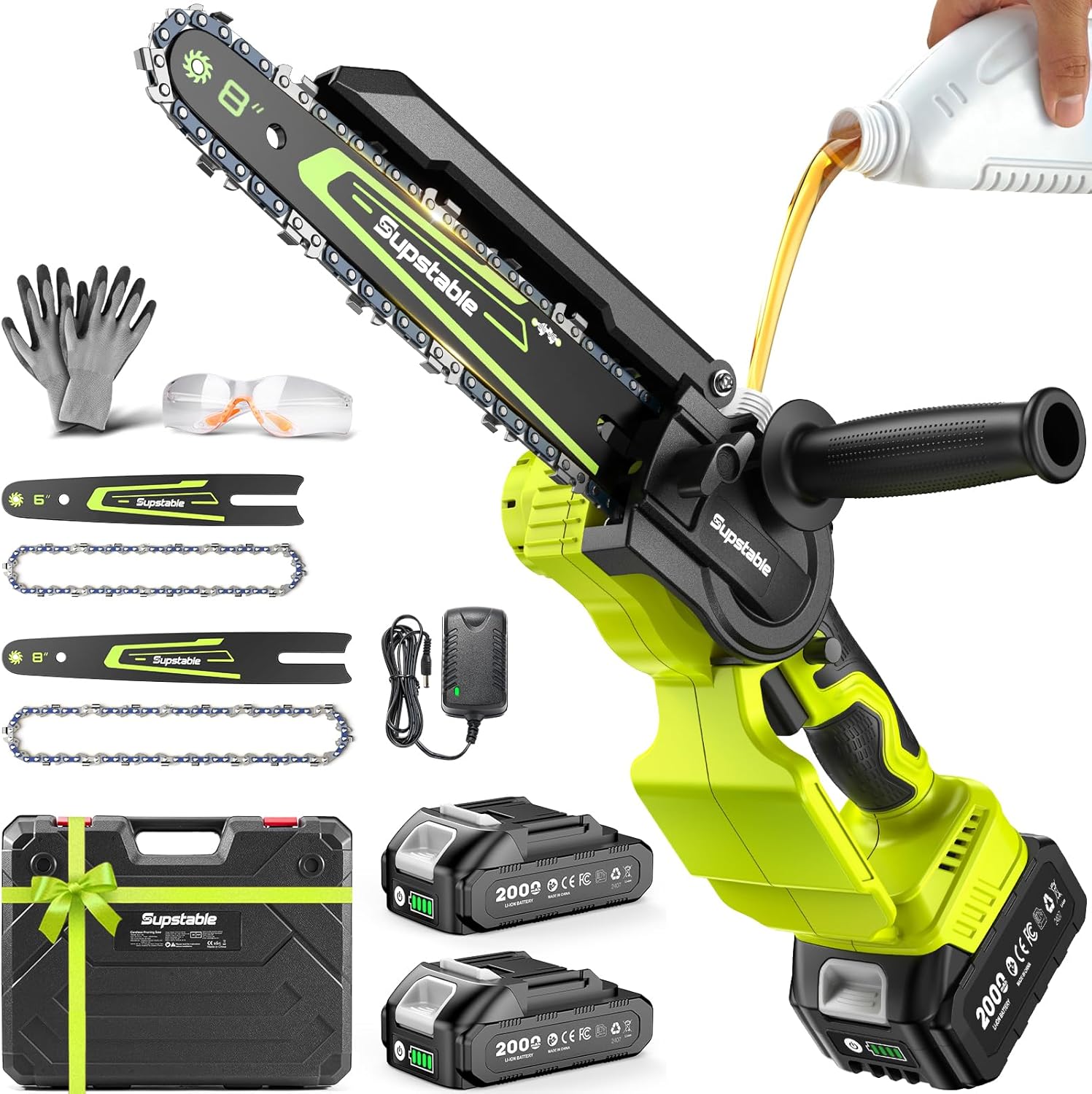 Supstable BL-168 8 Inch Mini Chainsaw |
8.4/10 | $53.99 | Check price |
| Top Rated |
 Supstable BLX-168 6/8-Inch Mini Chainsaw |
8.4/10 | $53.99 | Check price |
| Best Overall |
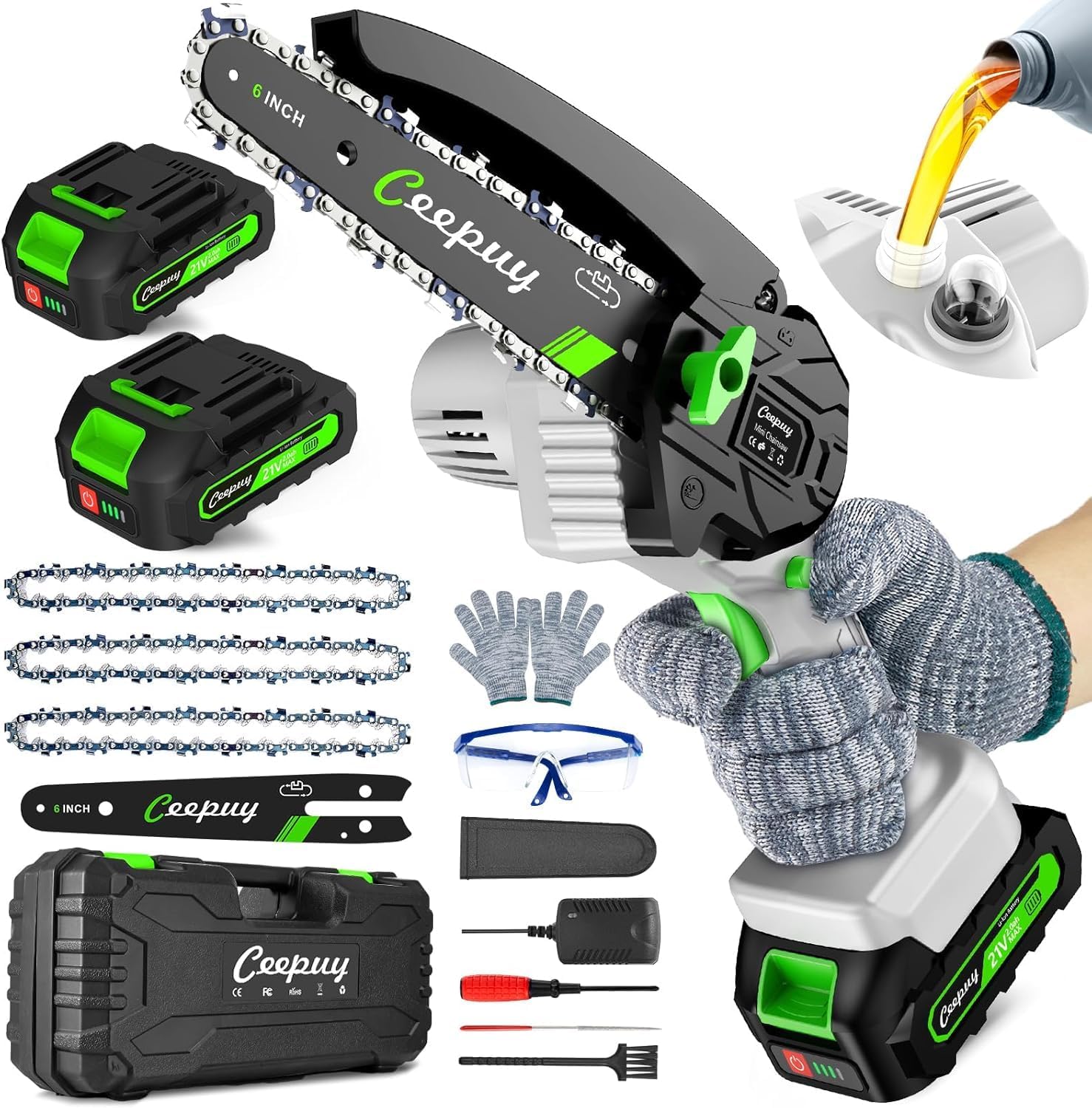 Ceepuy Mini Chainsaw Cordless with Auto Oiler |
8.4/10 | $35.52 | Check price |
KAKEI CS6150V 61.5cc Gas Chainsaw with 18-Inch Bar
A capable gas-powered saw built for demanding property maintenance tasks like cutting firewood and storm cleanup. Its 2.75-hp engine provides robust power, and the package includes a full suite of maintenance tools for upkeep. This is a solid choice for users on farms or large properties comfortable with 2-stroke engine maintenance.
Pros
- Powerful 61.5cc, 2.75-hp engine suitable for heavy-duty cutting tasks
- Complete kit includes guide bar, chain, mixing bottle, and maintenance tools
- Chain is constructed from durable German steel with heat-treated components
- Rated well by users with a 4.2-star average from 69 reviews
Cons
- Requires specific 40:1 fuel-oil mix and separate bar oil, which are not included
- At 5.6 kg (approximately 12.3 lbs), it is on the heavier side for a chainsaw
- Operation requires strict adherence to safety and startup procedures to avoid damage
Supstable BL-168 8 Inch Mini Chainsaw
Supstable BL-168 pairs a 1000W brushless motor with interchangeable 6 and 8 inch guide bars, giving gardeners two cutting sizes in one cordless body. At 3.3 pounds, it suits light pruning, branch trimming, and firewood prep for users who want a compact, battery powered alternative to gas saws. The included two batteries, safety accessories, and auto oiler support easier maintenance and shorter setup time.
Pros
- Two interchangeable 6 and 8 inch guide bars allow different cutting sizes without switching tools
- 1000W brushless motor with 32 ft per second chain speed supports responsive cutting
- Cordless 3.3 pound body is easy to handle for pruning and trimming
- Two 2000 mAh batteries provide up to 60 minutes of runtime
- Auto oiling system and included safety lock, debris baffle, non-slip handle, gloves, and goggles reduce setup effort
Cons
- The 8 inch chain length is better suited for small branches and trimming than larger tree work
- Lubricating oil is not included despite the automatic oiling system
- Up to 60 minutes runtime may require charging breaks for longer outdoor sessions
Supstable BLX-168 6/8-Inch Mini Chainsaw
This cordless mini chainsaw uses interchangeable 6-inch and 8-inch bars, a brushless motor, and two batteries for branch trimming and light wood cutting. The lightweight design and included safety lock, gloves, and goggles make it approachable for casual garden users. The automatic oiling system keeps maintenance simple during repeated cuts.
Pros
- Interchangeable 6-inch and 8-inch guide bars
- 1000W brushless motor
- Lightweight at about 3.3 pounds
- Two batteries provide up to 60 minutes of runtime
- Includes safety lock, gloves, goggles, and an auto-oiler
Cons
- Lubricating oil is not included
- 60-minute maximum runtime may require battery swaps for longer jobs
- The 6-inch and 8-inch bars are better suited to smaller branches than heavy-duty cutting
Ceepuy Mini Chainsaw Cordless with Auto Oiler
A compact, battery-powered chainsaw designed for light-duty yard work like trimming branches and small logs. It stands out for its automatic oiling system and a comprehensive safety kit, making it a user-friendly option for casual users.
Pros
- Automatic oiling system reduces maintenance and extends chain life
- Comes with a wide array of safety gear, including gloves and goggles
- Includes two batteries for extended runtime and a portable storage case
- Lightweight design is noted as suitable for seniors and easier one-handed use
Cons
- Battery life is limited, offering 30-40 minutes of continuous use per charge
- The 6-inch bar limits it to cutting smaller-diameter logs and branches
Best Small Gas Chainsaw Buying Guide
Engine Size and Cutting Power
When you are comparing a small gas chainsaw, engine size is one of the clearest clues to how the tool will behave. Smaller displacement usually means less weight and easier handling, but it can also mean the saw works harder in dense hardwood or during longer cutting sessions. For homeowners, the sweet spot is often a compact engine that still gives you enough reserve power to keep the chain speed steady instead of forcing you to push the saw through the cut.
That balance matters because a saw that sounds powerful on paper can still feel sluggish if the power delivery is uneven. If you plan to trim limbs, clear fallen branches, or cut occasional rounds for a woodpile, prioritize a saw that feels responsive at the bar tip and does not require constant coaxing. For broader yard projects, it can also help to compare this category with other tools in our Hand Saws & Pruning Saws category so you can decide whether gas power is truly necessary for every task.
Look at the saw as a system, not just an engine number. Chain speed, bar length, sprocket design, and overall weight all affect how much usable cutting power you actually feel. A lighter saw with a well-matched bar can be more effective for typical small-property work than a heavier model that technically has more power but tires your arms faster.
Bar Length and Reach
Bar length is one of the easiest specifications to understand, but it is also one of the easiest to overestimate. With a small gas chainsaw, a shorter bar usually improves control, especially when you are working overhead, near fences, or around landscaping where precision matters. A shorter bar also tends to make the saw feel less intimidating for newer users.
At the same time, you do not want to go so short that every cut becomes a multi-pass task. If you regularly cut branches or logs that are close to the bar length, you will spend more time repositioning the saw and less time working efficiently. A practical way to think about it is to choose a bar that gives you enough reach for your common cuts without making the saw feel nose-heavy or hard to balance.
The product list below includes models that are aimed at compact work, so the best choice for you depends on whether you want maximum maneuverability or a little extra reach. If your yard chores tend to be light and frequent, a compact bar can be a major advantage because it lets you make cleaner, more controlled cuts with less fatigue.
The is a useful example to consider if you want a saw style that emphasizes compact handling. In this category, that kind of format is valuable because it usually helps you steer the bar more confidently when trimming close to the trunk or making short, repeated cuts in brush and limbs.
Weight, Balance, and Handling
For a small gas chainsaw, weight is only half of the story. Balance determines whether the saw feels nimble or awkward in your hands. A well-balanced tool should let you guide the bar with less wrist strain, especially when you are cutting above waist height or working in a position where you cannot perfectly align your body behind the saw.
This is where many buyers make a common mistake. They focus on the saw’s overall size and forget to consider how that weight is distributed. If the front end feels too heavy, the saw can be tiring even if the total weight is modest. On the other hand, a compact saw with good ergonomics can feel surprisingly stable and predictable, which is exactly what you want for branch work and cleanup jobs.
As you compare models, think about how long you will hold the saw continuously. If you only need it for quick occasional cuts, nearly any compact saw may feel manageable. But if you expect to use it for a longer cleanup session, a lighter and better-balanced option will usually save your arms and help you maintain cleaner cutting technique from the first cut to the last.
Starting Ease and Maintenance
Gas chainsaws are popular because they are portable and capable, but they also require more attention than electric alternatives. Starting ease matters because a saw that is frustrating to start often gets used less, even when it is otherwise a good fit. Features that support easier starting can make a noticeable difference if you are not using the saw every day.
Maintenance is equally important. You should expect to keep the chain sharp, check tension regularly, and stay on top of fuel and air filter care. A small gas chainsaw that is easier to service will usually remain more consistent over time, which matters because performance loss often shows up first as slower cutting rather than an obvious failure.
For practical ownership, ask yourself how comfortable you are with routine upkeep. If you want a tool for casual use, you may prefer a model with straightforward access to the bar, chain, and filter components. That kind of simplicity can reduce downtime and make the saw feel more approachable across the season.
| Maintenance Area | What to Check | Why It Matters |
|---|---|---|
| Chain tension | Before and during use | Reduces derailment risk and keeps cuts efficient |
| Air filter | Regularly during dusty work | Helps the engine breathe properly |
| Bar oil | Before every session | Protects the bar and chain from wear |
| Spark plug | Seasonally or when starting becomes difficult | Supports reliable ignition |
Safety Features and Control
Safety is especially important in a compact saw because the tool may feel more maneuverable, which can tempt you to work faster than you should. Look for features that improve control, such as a secure front handle, a comfortable rear grip, and a chain brake that feels intuitive to engage. Those details matter whenever the bar contacts tough wood, catches a knot, or finishes a cut suddenly.
Good control also starts with the right match between tool and task. A small gas chainsaw is ideal for pruning, limbing, and light property cleanup, but it is not the best choice for forcing through oversized timber. Matching the saw to the job helps you maintain safe body positioning and lowers the risk of fatigue-related mistakes.
Before buying, think about whether you value a forgiving saw or a more aggressive one. A forgiving setup is often the better choice for first-time owners or occasional users because it gives you a little more room for error while you develop habits around stance, throttle control, and chain awareness.
Value, Use Case, and Long-Term Fit
The best small gas chainsaw for you is not always the one with the most features. It is the one that matches the way you actually work. If you only need a saw for a few jobs each season, value may mean easy starting and reliable trimming performance rather than maximum output. If you are cutting more often, long-term durability and comfort become more important because the tool will need to stay dependable through repeated use.
It also helps to think beyond the first month of ownership. Replacement parts, chain compatibility, and routine upkeep all affect long-term value. A saw that is easier to keep in service can save you time and frustration later, especially if you rely on it after storms or during seasonal yard cleanup.
To keep your decision practical, rank your priorities in this order: the cuts you make most often, the places you work most often, and how long you expect to hold the saw in one session. That simple checklist can quickly separate a genuinely useful compact saw from one that only looks appealing on a spec sheet.
Why You Should Trust Us
We built this guide using a data-driven comparison of the available product listings, focusing on the factors that most affect real-world usefulness in the small gas chainsaw category. Our evaluation framework emphasizes compact handling, usable power, bar length suitability, maintenance practicality, and control, so the recommendations are centered on performance that matters to everyday buyers rather than marketing language.
We also aim to be transparent about what the available product data does and does not tell us. When specifications are limited, we avoid inventing details and instead compare the products based on the information that is actually available. That approach helps keep the review fair, consistent, and useful for readers who want a grounded buying guide instead of guesswork.
Final Thoughts
For most buyers, the best overall pick is because it leads the comparison list and is positioned as the strongest all-around choice in this roundup. If you want a model that balances compact size with broad everyday usefulness, this is the first product we would consider. It is the kind of saw that should appeal to anyone who wants one compact tool for trimming, cleanup, and light cutting tasks without overcomplicating the decision.
If your priority is value-oriented everyday use, is a sensible second look because it sits near the top of the list and should fit buyers who want a straightforward compact saw without chasing unnecessary extras. For a more specific use case, is a strong candidate if you want a compact format that emphasizes maneuverability and close-quarters handling. That makes it a practical option for limbing, light yard cleanup, and other jobs where control matters more than sheer cutting reach.
If you are still narrowing the field, you may also want to browse our best small hand saw guide for less demanding cutting jobs or revisit the Chainsaws & Saws category to compare related tools before making a final decision. The right choice depends on how often you cut, how much reach you need, and whether portability or cutting speed matters more to you.
FAQs
What is the best small gas chainsaw in 2026 for homeowners?
The best small gas chainsaw for homeowners is usually the one that combines manageable weight, enough cutting power for routine yard work, and simple maintenance. Most homeowners do not need a full-size saw, so a compact model that is easy to control is often the smarter choice. If your work is mostly limbing and cleanup, that balance matters more than maximum engine size.
How do I choose the right bar length for a best small gas chainsaw?
Choose a bar length based on the average diameter of the wood you cut, not the largest log you might encounter once in a while. A shorter bar is easier to control and usually feels less tiring, while a slightly longer bar can save time if you regularly cut thicker branches. For small-property use, control often wins over reach.
Are small gas chainsaws hard to start?
They can be, depending on the design and how well the saw is maintained. A well-tuned small gas chainsaw should start reliably enough for seasonal use, but proper fuel handling, spark plug care, and air filter maintenance make a big difference. If starting ease is a major concern, look for a model known for user-friendly operation rather than raw power alone.
Can a best small gas chainsaw handle storm cleanup?
Yes, as long as the cleanup involves branches and smaller limbs within the saw’s intended cutting range. A compact gas saw is often ideal for clearing fallen brush and trimming damaged limbs after a storm. For larger trunks or heavy-duty recovery work, you may need a bigger saw or a different cutting tool depending on the material you are facing.
How often should I maintain a best small gas chainsaw?
You should check chain tension and bar oil before each use, then inspect the air filter, spark plug, and chain condition regularly during the season. If you use the saw often, maintenance should become part of your normal workflow rather than a once-in-a-while task. For more guidance on choosing the right cutting tool, our Hand Saws & Pruning Saws category can help you compare alternatives.
About the author
Managing Editor & Buying Guides. Based in Asheville, North Carolina. Carolyn manages the editorial calendar and writes our buying guides. A long-time gardener in the Blue Ridge foothills, she knows how much fall leaf cleanup can wear on a yard, so blowers and vacuums are her specialty.