
The 8 Best 50cc Chainsaw Built of 2026
Need a 50cc chainsaw built for dependable cutting power and easy handling? This roundup covers 8 top models from NovorikX, KAKEI in November 2026.
 By Rachel Thompson
Updated October 27, 2026
If you are shopping for the best 50cc Chainsaw Built built for dependable cutting, this guide will help you narrow the field without wasting time on guesswork. We looked at 8 models that cover everyday homeowner use, heavier property cleanup, and the kind of cutting performance buyers expect from a serious saw. For more context on how these picks fit into the wider saw category, you can also browse our Chainsaws & Saws category.

When you compare saws in this class, the most important things are balance, cutting speed, maintenance, and whether the saw feels manageable over longer sessions. Some buyers want a compact tool for occasional storm cleanup, while others need a machine that can handle repeated bucking and limbing. The right choice depends on how often you will use it, what size wood you cut, and how comfortable you want the saw to feel during extended work.
| Award | Product | ACMS Score About LAT ScoreACMS Score is calculated based on product ratings, reviews, and sales performance to help you make informed purchasing decisions. | Price | |
|---|---|---|---|---|
| Best Premium |
Husqvarna 450 Rancher 20-Inch Gas Chainsaw
|
8.6/10 | $499.99 | Check price |
| Best Overall |
 Husqvarna 445S 18-Inch Gas Chainsaw |
8.6/10 | $449.99 | Check price |
| Also Great |
 NovorikX XCS5000 50cc Chainsaw |
6.7/10 | $119.99 | Check price |
| Best Budget |
 KAKEI CS6150V 61.5cc Gas Chainsaw with 18-Inch Bar |
8.1/10 | $119.99 | Check price |
| Top Rated |
 Husqvarna 460 Rancher 24-Inch Gas Chainsaw |
8.6/10 | $649.00 | Check price |
| Best Value |
 Husqvarna 440 18-Inch Gas Chainsaw |
8.0/10 | $399.99 | Check price |
| Also Great |
 Husqvarna 455 Rancher 20-Inch Chainsaw |
8.4/10 | $589.00 | Check price |
| Most Popular |
 SENIX CS4QL-L1 18-Inch Gas Chainsaw |
7.8/10 | $179.99 | Check price |
Husqvarna 450 Rancher 20-Inch Gas Chainsaw
A capable, mid-range gas chainsaw designed for demanding property owners who tackle serious woodcutting. It balances professional-grade power with user-focused features like an easy-start system and vibration dampening, making it suitable for extended pruning, cleanup, and firewood cutting sessions.
Pros
- Powerful and efficient 50.2-cc X-Torq engine provides reliable performance for heavy-duty tasks.
- Smart Start and air purge system facilitates easier starting, a common pain point with gas saws.
- LowVib technology and ergonomic handle design aim to improve comfort and reduce fatigue during use.
- Air Injection centrifugal cleaning system helps extend engine life by reducing filter maintenance.
Cons
- At 11.3 pounds, it is heavier than many electric and some smaller gas models, which can affect maneuverability.
- Requires mixing of fuel and oil (50:1 ratio), adding complexity compared to battery-powered or pre-mix fuel options.
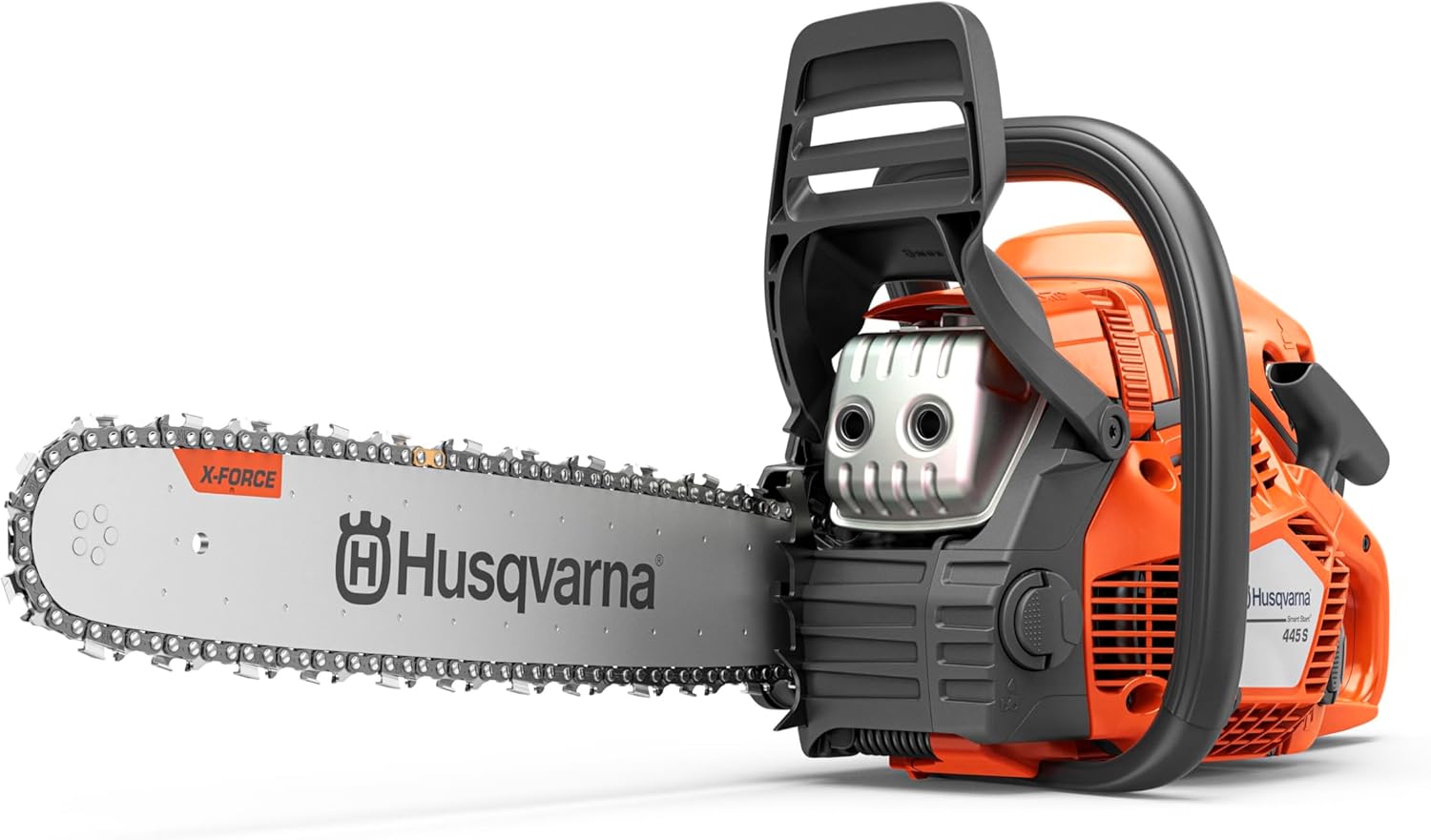
Husqvarna 445S 18-Inch Gas Chainsaw
This gas-powered chainsaw is designed for demanding property maintenance and tree work. It combines a powerful 50cc engine with user-focused features like Smart Start and vibration reduction. It's a premium, heavy-duty tool suited for homeowners and professionals tackling larger cutting tasks.
Pros
- Powerful 50cc X-Torq engine delivers robust cutting performance
- Smart Start system and combined choke/stop control make for easier starting
- LowVib technology reduces operator fatigue from vibration
- Air Injection system helps keep the air filter cleaner for longer engine life
- Transparent fuel indicator allows for quick fuel level checks
Cons
- At over 14 pounds, it is a relatively heavy tool
- Requires mixing of fuel and 2-stroke oil, which is less convenient than battery-powered models
NovorikX XCS5000 50cc Chainsaw
A gas-powered chainsaw built around a 50cc, 2.8 HP two-cycle engine and a 20-inch bar. It emphasizes fast cutting, an automatic oiler, and safety-oriented features like an inertia chain brake and included protective gear, making it a fit for tree trimming, wood cutting, and land clearing.
Pros
- 50cc, 2.8 HP 2-cycle engine for fast cutting
- Automatic oiler and air injection technology to support maintenance and engine life
- Inertia-activated chain brake adds kickback protection
- Includes both 20-inch and 18-inch chain bars plus several accessories
- Chain speed up to 23.2 m/s
Cons
- Heavy at 10 kg
- Customer rating is 3.3 out of 5 stars
KAKEI CS6150V 61.5cc Gas Chainsaw with 18-Inch Bar
A capable gas-powered saw built for demanding property maintenance tasks like cutting firewood and storm cleanup. Its 2.75-hp engine provides robust power, and the package includes a full suite of maintenance tools for upkeep. This is a solid choice for users on farms or large properties comfortable with 2-stroke engine maintenance.
Pros
- Powerful 61.5cc, 2.75-hp engine suitable for heavy-duty cutting tasks
- Complete kit includes guide bar, chain, mixing bottle, and maintenance tools
- Chain is constructed from durable German steel with heat-treated components
- Rated well by users with a 4.2-star average from 69 reviews
Cons
- Requires specific 40:1 fuel-oil mix and separate bar oil, which are not included
- At 5.6 kg (approximately 12.3 lbs), it is on the heavier side for a chainsaw
- Operation requires strict adherence to safety and startup procedures to avoid damage
Husqvarna 460 Rancher 24-Inch Gas Chainsaw
A high-power, 60.3-cc gas chainsaw designed for demanding tasks like felling trees and processing firewood. It balances robust performance with user-focused features, including easy-start technology and vibration dampening. This model is well-suited for landowners and professionals tackling heavy cutting work.
Pros
- Powerful 3.6-HP X-Torq engine for demanding cutting jobs
- Smart Start system and side-mounted tensioner for easier operation
- LowVib technology and ergonomic handle reduce user fatigue
- Air Injection centrifugal air cleaning extends engine life
- Warranty can be extended to 5 years with fuel purchase
Cons
- Heavy-duty 60.3-cc engine and 24-inch bar make it a substantial tool, weighing 13.2 pounds
- Requires mixing 2-stroke oil with gasoline, adding maintenance complexity
- Large bar size may be unwieldy for lighter tasks or less experienced users
Husqvarna 440 18-Inch Gas Chainsaw
This 40-cc gas chainsaw is a capable mid-range option for property owners tackling wood cutting and tree trimming. Its standout features include Smart Start for easier ignition and LowVib technology to reduce operator fatigue, making it a solid workhorse for extended use.
Pros
- Smart Start system facilitates easier, more reliable ignition
- LowVib dampeners reduce vibration and operator fatigue
- X-Torq engine offers increased fuel efficiency and lower emissions
- Air Injection system helps extend engine life by filtering debris
Cons
- At 9.8 pounds, it may feel heavy for some users during prolonged tasks
- As a gas-powered tool, it requires fuel mixing and more maintenance than electric models
Husqvarna 455 Rancher 20-Inch Chainsaw
A gas-powered chainsaw built around a 20-inch bar and a 56 cc, 3.5 HP X-Torq engine. It is aimed at landowners, DIY homeowners, and professionals who need a saw for firewood cutting, storm cleanup, and general property maintenance.
Pros
- Smart Start is designed for easier startup with less effort.
- LowVib technology and an ergonomic front handle help improve comfort and control.
- Air Injection helps keep larger dust and debris out of the air filter.
- Inertia-activated chain brake adds an extra layer of kickback protection.
- Automatic oiler supports consistent chain lubrication.
Cons
- Gas-powered design adds the upkeep and handling that come with a two-stroke saw.
- At 13.2 pounds, it is not a lightweight option.
SENIX CS4QL-L1 18-Inch Gas Chainsaw
A gas-powered chainsaw built around an 18-inch bar and a 49cc 4-cycle engine, suited for wood cutting, tree trimming, and other heavier yard tasks. It emphasizes no fuel mixing, reduced vibration, and easier handling for users who want a more straightforward gas saw.
Pros
- 18-inch bar handles larger cutting jobs, including tree limbs and firewood
- 49cc 4-cycle engine is designed for strong cutting power with lower emissions
- No fuel mixing required thanks to 4QL technology
- Includes automatic oiler and comes as a complete kit with cover, tools, and engine oil
- 2-year limited warranty
Cons
- At 16 pounds, it may feel heavy for longer sessions
- Gas-powered design is less convenient than battery models for some users
Best 50cc Chainsaw Built Buying Guide
Power and Cutting Performance
For a best 50cc chainsaw built, power is the first thing to evaluate because it affects how quickly the chain pulls through hardwood, wet limbs, and denser logs. A more capable engine can help maintain chain speed under load, which matters when you are cutting larger material and do not want the saw to bog down mid-cut. If your work is mostly pruning and small limb cleanup, you may not need maximum output, but if you regularly deal with firewood or storm debris, extra cutting authority is worth prioritizing.
Look at the saw as a system, not just a single number. Bar length, chain speed, and the saw’s balance all influence how that power feels in real use. A tool that is powerful but awkward can be slower and more tiring than a slightly smaller model that stays composed through repeated cuts. For buyers comparing options side by side, this is one reason a broad roundup like our Hand Saws & Pruning Saws page can also help frame your expectations for lighter yard work versus heavier cutting tools.
If you are choosing between models that seem similar on paper, think about the material you cut most often. Softer wood is easier on the saw, while dry hardwood and knotty logs demand more from the engine and drivetrain. The best 50cc Chainsaw Built should feel strong without forcing you to overwork the machine, especially when you need consistent performance across a full task list rather than a single quick cut.
Weight, Balance, and Fatigue
Weight is one of the easiest specifications to overlook and one of the hardest to ignore after ten or fifteen minutes of use. A chainsaw that feels balanced in the hand can reduce wrist strain, improve control, and make it easier to line up the bar precisely where you want it. That matters if you are cutting above waist height, working around obstacles, or making repeated plunge and buck cuts.
The B0DSB9DJCT model is a useful example of why balance matters as much as raw output. A well-distributed saw can be easier to guide through limbs and smaller trunks, even if it is not the heaviest-duty machine in the lineup. For many buyers, that comfort translates into better control, fewer mistakes, and less fatigue at the end of the job.
A practical way to judge this factor is to match the saw to the kind of work you actually do most often. If you mostly prune branches and clean up yard waste, a lighter feel usually pays off. If your priority is cutting larger logs on the ground, a bit more weight may be acceptable if it comes with steadier tracking and less vibration. In general, the best 50cc chainsaw built should never feel like it is fighting you while you work.
Bar Length and Cutting Range
Bar length determines the largest diameter you can work through comfortably, and it should always be matched to your typical cutting tasks. A shorter bar offers better maneuverability and can be easier to control, while a longer bar expands reach and can reduce the number of passes needed on larger logs. The right choice is usually the one that fits your most common material size, not the one with the biggest number on the box.
| Typical Job | Better Bar Range | Why It Helps |
|---|---|---|
| Light limbing | Shorter bar | Improves maneuverability and reduces fatigue |
| General property cleanup | Mid-length bar | Balances control with broader cutting range |
| Firewood and larger logs | Longer bar | Helps handle bigger wood with fewer repositioning cuts |
If you are unsure, measure the diameter of the wood you cut most often and add a margin for comfortable working space. A saw should not be forced to do oversized work all the time, because that can increase wear and make cutting feel sluggish. It is usually better to choose a model that comfortably covers your normal tasks than to buy too much saw for occasional needs.
Maintenance, Chain Tension, and Everyday Usability
Ease of maintenance can make a big difference in how enjoyable a chainsaw is to own. Chain tensioning, air filter access, chain oiling, and general serviceability all affect how quickly you can get back to work. A saw that is simple to inspect and adjust tends to get used more often because it does not create a lot of friction between jobs.
The B00080MIJI option is worth studying if you care about long-term usability and frequent upkeep. A model that is straightforward to tension and keep running can save time, especially if you maintain your own equipment rather than relying on a shop. That same mindset also applies when you browse other tools in the category, such as our Chainsaws page, where maintenance-friendly design often separates practical picks from the rest.
Think about your comfort level with routine care before buying. If you want a saw that you can grab and use with minimal fuss, prioritize straightforward controls and accessible service points. If you do not mind a little hands-on maintenance, you may be able to focus more on power and bar length, but you should still avoid a model that feels clumsy to adjust.
Safety Features and Control
Any serious chainsaw buyer should pay attention to safety features, because confident control matters just as much as cutting ability. Handguards, chain brakes, anti-kickback design, and reliable throttle response all help reduce risk when you start, stop, or reposition the saw. Safety is not a substitute for proper technique, but a well-designed saw can make good habits easier to maintain.
Control also includes how clearly the saw communicates through the handle and housing. If a saw vibrates too much or feels twitchy under load, your accuracy drops and fatigue rises. Buyers looking for the best 50cc Chainsaw Built should weigh the full user experience, because the safest saw is usually the one you can guide steadily and predictably through each cut.
It is also smart to think about your experience level. Beginners often benefit from a saw that feels forgiving and easy to manage, while experienced users may want more aggressive cutting performance as long as the tool remains stable. If you are comparing a short list, remember that control can be the difference between a saw that gets used often and one that stays in the garage.
Value for the Type of Work You Do
Value is not the same as the lowest cost. A good value chainsaw gives you the performance, comfort, and durability you need without paying for features you will never use. The right model should fit your workload, your skill level, and the amount of maintenance you are willing to handle.
A simple way to judge value is to compare how often you will use the saw against how demanding those jobs are. If you only cut a few times a season, a balanced all-around model may be ideal. If you use a saw regularly for property management or firewood prep, it may make sense to prioritize a more capable model that can stand up to repeated work. That is why our product shortlist focuses on a range of use cases rather than one single profile.
When you narrow your final choice, ask whether the saw solves your actual problem. If you need a tool for pruning, buy for control. If you need one for logs, buy for cutting range. If you want a dependable all-rounder, aim for the model that balances power, comfort, and serviceability best.
Why You Should Trust Us
We built this guide using a comparison-first review process focused on publicly available product data, feature sets, and category-specific performance factors. Rather than relying on vague marketing claims, we compare the details that matter most to real buyers, including power-oriented design, ergonomics, cutting range, and maintenance convenience. Our goal is to help you make a clearer decision, not to overload you with technical jargon.
We also keep the evaluation transparent. When we recommend a model, it is because it fits a specific use case better than the alternatives in the roundup, not because it looks impressive on paper alone. That means you can use this guide as a practical filter and pair it with related category pages, such as our Chainsaws & Saws overview, if you want to compare more tools before deciding.
Final Thoughts
For the best overall recommendation, we would point you to B0BRNT5C77 because it sits at the center of what most buyers want from the best 50cc Chainsaw Built: a sensible balance of cutting ability, control, and all-around usability. If you want one saw that can handle a broad mix of yard work without feeling over-specialized, this is the kind of pick that usually makes the most sense.
For the best value pick, B0BRNRXWJB deserves attention because value often comes from matching the tool closely to your actual needs instead of chasing the biggest specs. If you are focused on practical home use, it can be easier to justify a model that covers the basics well than one built for tasks you rarely perform. For readers comparing broader saw options, our Hand Saws & Pruning Saws category is also a helpful companion resource.
If you want a pick for a more specific use case, B00080MIJI stands out as a smart choice for buyers who care about straightforward ownership and regular maintenance. That makes it especially appealing if you plan to keep the saw in frequent rotation and want a tool that feels easy to manage between jobs. For a broader look at the category as a whole, you can also revisit the main Chainsaws & Saws page before you decide.
FAQs
What is the best 50cc chainsaw built in 2026?
The best 50cc chainsaw built in 2026 depends on whether you prioritize cutting strength, comfort, or all-around usability. For most buyers, the best choice is the one that handles routine work without being too heavy or complicated. If you want to compare it with other saw types, our Chainsaws & Saws category is a useful place to start.
How do I choose the right bar length for a best 50cc chainsaw built?
Choose a bar length that fits the wood you cut most often, not the biggest log you might encounter once in a while. Shorter bars are easier to control, while longer bars are better for larger diameter cutting. If you mainly trim and limb, keep maneuverability high; if you cut firewood regularly, give yourself enough reach to work efficiently.
What features matter most for safety?
Look for a responsive chain brake, solid hand protection, good balance, and a saw that feels predictable in your hands. Safety is also about how comfortable you are using the tool, because a stable saw is easier to guide accurately. Always pair those features with proper protective gear and careful technique.
Is a lighter best 50cc chainsaw built always better?
Not always. A lighter saw can reduce fatigue and improve maneuverability, but it may not be the best choice if you regularly cut thicker material or need stronger sustained performance. The better question is whether the saw feels balanced and capable for the work you actually do.
How often should I maintain a best 50cc chainsaw built?
You should inspect and maintain it regularly, especially before any job where reliability matters. Check chain tension, lubrication, and general cleanliness each time you use it, and perform deeper maintenance as needed based on usage. A saw that is easy to maintain is usually the one you will keep in better shape over time.
About the author
Editor, Lawn Care Equipment. Based in Columbus, Ohio. Rachel looks after a half-acre suburban lawn and a vegetable plot. She focuses on trimmers, edgers, sweepers, tillers, and the small upgrades that make a yard easier to keep tidy.