
Pruning Saw vs Bow Saw: Key Differences and How to Choose
Learn the key differences between pruning saws and bow saws, including blade design, intended use, sizes, and maintenance tips to choose the right tool for your yard work.
 By admin
Updated November 5, 2026
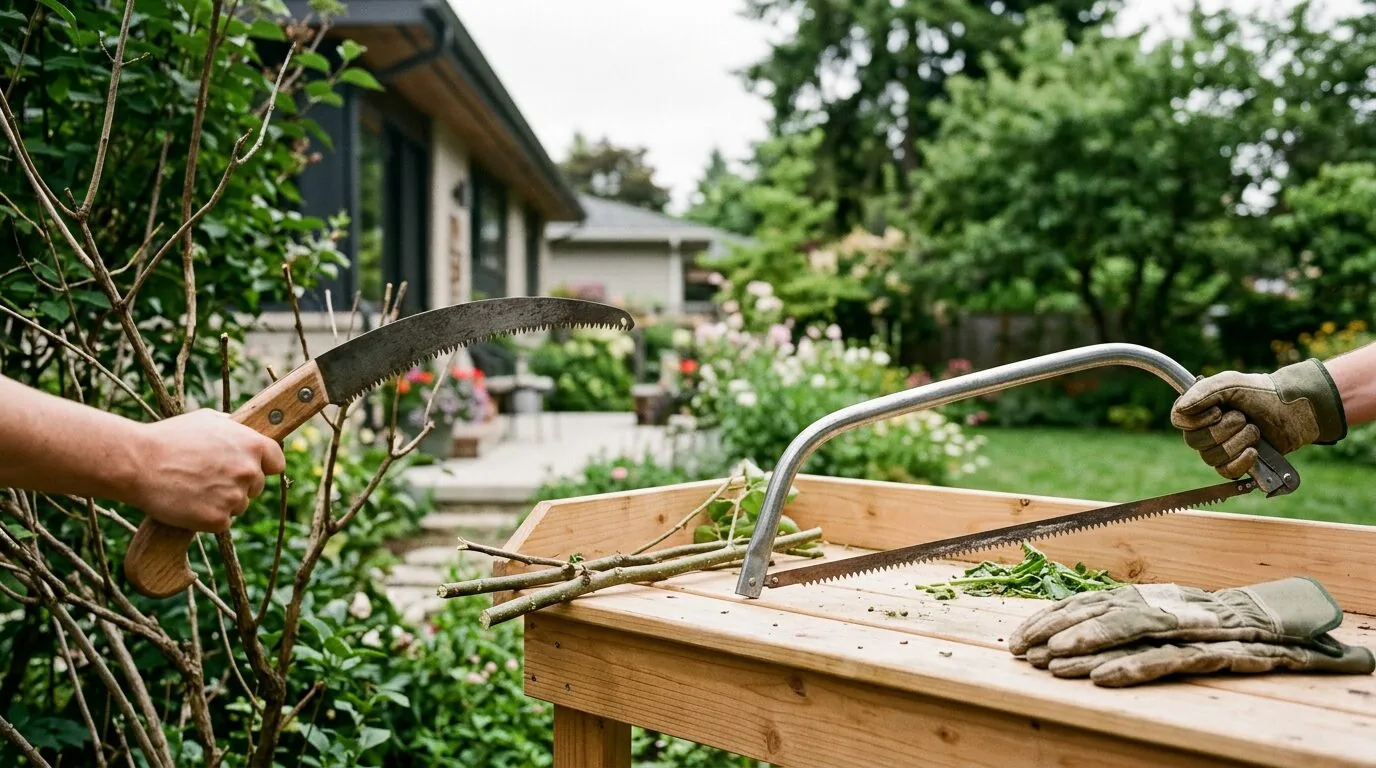
If you are trying to decide between a pruning saw and a bow saw for your next yard or workshop project, you have come to the right place.
While both tools are designed for cutting wood, they excel in very different situations. In this guide, we explain exactly how each saw works, what it does best, and how to pick the right one for your needs.
We will also point you toward useful resources in our hand saw collection if you are ready to browse options.
1. Blade Design and Cutting Action
The most fundamental difference between a pruning saw and a bow saw lies in their blade design. A pruning saw typically has a curved, stiff blade with coarse teeth that cut on the pull stroke.
This design allows for precise, controlled cuts through live wood without tearing the bark. Many pruning saws are folding, making them compact and safe to carry.
A bow saw, on the other hand, uses a narrow, flexible blade held in tension by a tubular metal frame.
The blade cuts on both the push and pull strokes, which makes it very efficient for cutting through dry or dead wood. The blade can be detached and replaced easily.
Some woodworkers also appreciate Japanese pull saws for similar precision, but those are a separate category designed for joinery and fine cuts.
2. Intended Use: Live Branches vs. Firewood
Pruning saws are purpose-built for trimming live tree branches and shrubs. The teeth are engineered to cut cleanly through green wood without catching or stripping the bark. This makes them ideal for orchard maintenance, tree care, and shaping ornamental plants.
Their compact size also allows you to reach into tight canopies.
Bow saws are workhorses for cutting dry wood, firewood, and lumber. The frame provides leverage, and the aggressive teeth eat through logs quickly.
If you are cutting fallen branches into stove-length pieces or tackling rough carpentry, a bow saw is the better choice.
For lighter pruning tasks, some people use small hand saws that are similar to pruning saws but designed for general use.
3. Sizes and Portability
Pruning saws are generally compact, with blade lengths ranging from 6 to 12 inches. Many fold into the handle for safe storage in a pocket or belt pouch. This makes them perfect for gardeners and arborists who climb ladders or move between trees.
Bow saws come in larger sizes, with blade lengths typically from 21 to 42 inches. The frame adds bulk, but many models allow you to remove the blade for transport.
If you need to carry a saw in a truck or to a campsite, a bow saw is still manageable.
For even more cutting power on large property tasks, you might also look at chainsaws and power saws, though those are a different conversation entirely.
4. Replacement Blades and Maintenance
One of the strongest advantages of a bow saw is the ease of blade replacement. Blades are inexpensive, widely available, and can be swapped in seconds without tools.
If a bow saw blade dulls or breaks, you simply install a new one. In contrast, many pruning saw blades are permanently attached or require removing a small screw to replace.
Some high-end pruning saws offer replaceable blades, but not all do.
Sharpening a pruning saw is possible with a small file, but because the teeth are often hardened, many users find it easier to replace the entire saw when it dulls.
A bow saw blade can be sharpened with a round file, but given the low cost of new blades, replacement is again the practical route for most homeowners.
5. Cost and Value for the Homeowner
Both saws are relatively affordable compared to power tools. Pruning saws range from budget models to premium options with ergonomic handles and impulse-hardened teeth. Bow saws are very inexpensive for the frame, and the blades are cheap to replace.
Your choice should depend on the frequency and type of cutting you do. If you only prune a few branches each season, a simple pruning saw will suffice.
If you process firewood or do demolition work, invest in a good bow saw.
Frequently Asked Questions
Can a bow saw be used for pruning live branches?
You could, but it is not recommended. A bow saw’s teeth tend to tear and rip green wood, leaving a rough cut that can invite disease. For clean cuts on living trees, a pruning saw is far superior.
Are pruning saws better for small branches?
Yes. Pruning saws are designed for branches up to about 6 inches in diameter. Their curved blade and ergonomic handles give you good control. For thicker limbs, consider a bow saw or even a chainsaw.
Which saw is easier to sharpen?
Both can be sharpened, but bow saw blades are easier to file because the teeth are larger and the blade is straight. However, given the low cost of replacement blades, most people choose to swap rather than sharpen.
Can I use a bow saw for limbing a felled tree?
Absolutely. A bow saw is a classic tool for limbing and bucking firewood. Its frame provides the leverage needed to cut through larger branches and logs effectively.
About the author

admin writes reviews and buying guides for LAT Review.