
How to Use a Lawn Sweeper for Pine Needles Effectively
Learn how to adjust and operate a lawn sweeper to efficiently collect pine needles. Practical tips for brush height, speed, and hopper maintenance.
 By admin
Updated October 28, 2026
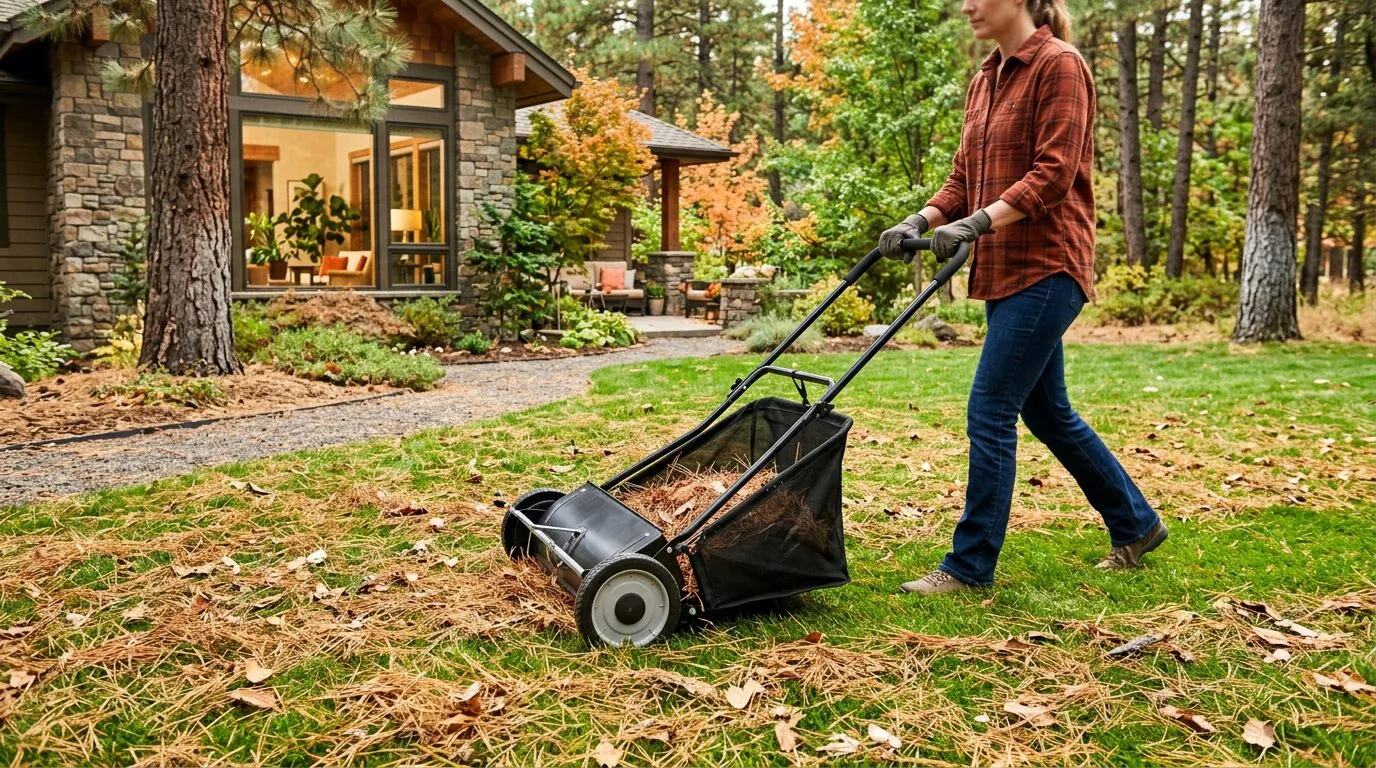
If you have pine trees on your property, you know that raking pine needles can be a tedious chore. A lawn sweeper can make this task much quicker, picking up thousands of needles in a single pass.
However, because pine needles are lightweight and tend to cling together, you may need to adjust your technique. This guide explains how to set up and operate a lawn sweeper specifically for pine needles, saving you time and effort.
Adjust Your Sweeper for Pine Needles
The most important step is setting the brush height correctly. Pine needles are finer than grass clippings, so the brushes need to make firm contact with the ground to sweep them into the hopper.
Many sweepers have an adjustable brush height lever. Start with the brushes just barely touching the ground. If the sweeper leaves needles behind, lower the brushes slightly. evaluation on a small area.
If the brushes skip over the needles, raise them a touch. The goal is to get the bristles to catch the needles without digging into the soil.
If you use a tow lawn sweeper, check that the hopper is free from blockages and that the mesh is fine enough to retain pine needles. Some sweepers come with a coarse mesh that lets smaller needles fall through.
You can temporarily line the hopper with a fine screen or landscape fabric to prevent loss. For push sweepers, ensure the wheels are properly inflated for consistent ground contact.
Choose the Right Conditions
Timing matters when sweeping pine needles. Work on a dry day: wet needles clump together and become heavier, which can clog the sweeper or cause the hopper to fill unevenly. Dry needles flow into the hopper more readily.
Also, avoid sweeping right after a rain or heavy dew. If you must sweep wet needles, plan to empty the hopper more frequently.
Another factor is the needle depth. For heavy accumulations, consider raking the thickest patches first to avoid overloading the sweeper. A light pass followed by a second pass is often more effective than one heavy load.
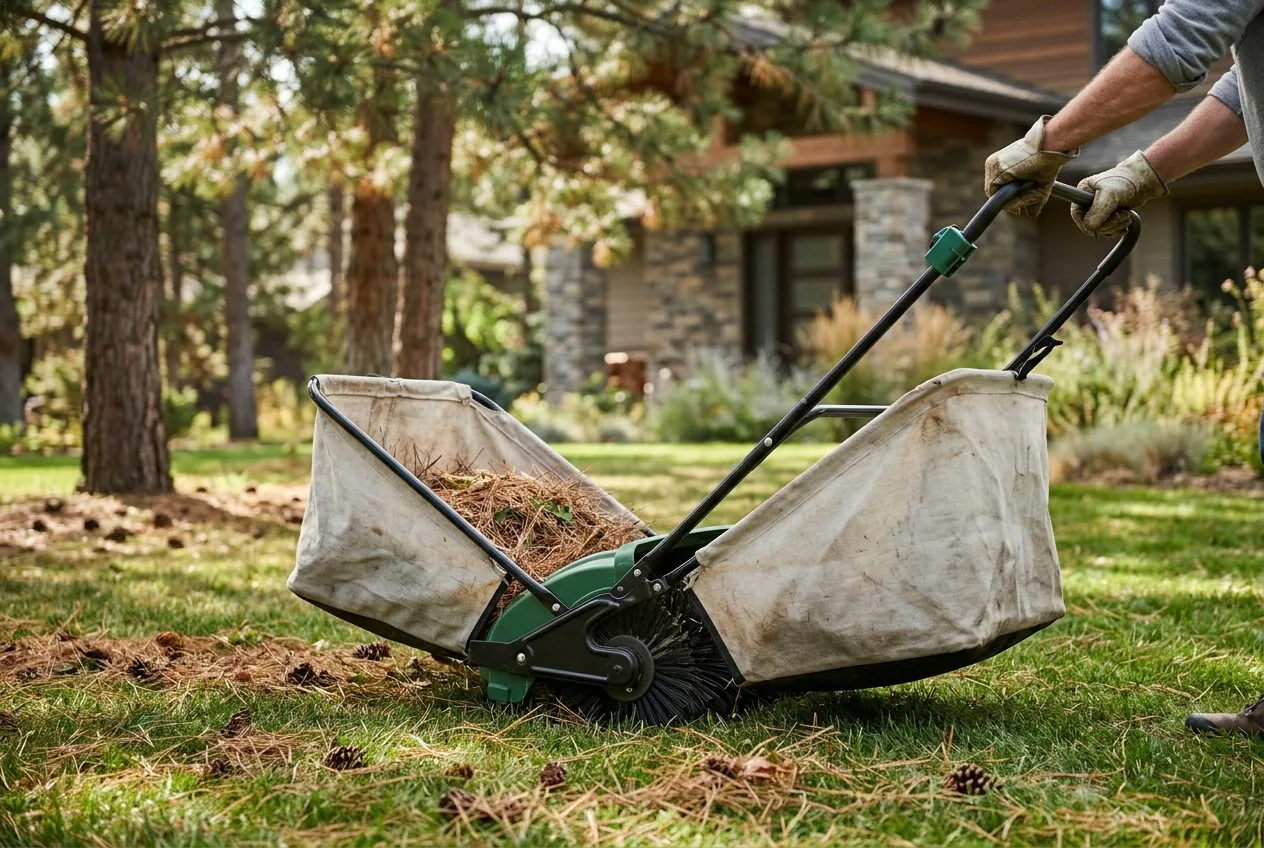
Operate at a Steady Speed
Your walking or towing speed directly affects pickup. Move at a moderate pace. Going too fast causes the brushes to skip over the needles; going too slow can cause the hopper to clog with matted material.
A consistent, steady speed gives the best results. If you are using a tow behind yard sweeper, adjust your tractor speed to a slow crawl. Watch the hopper fill and adjust your speed if you see needles being left behind.
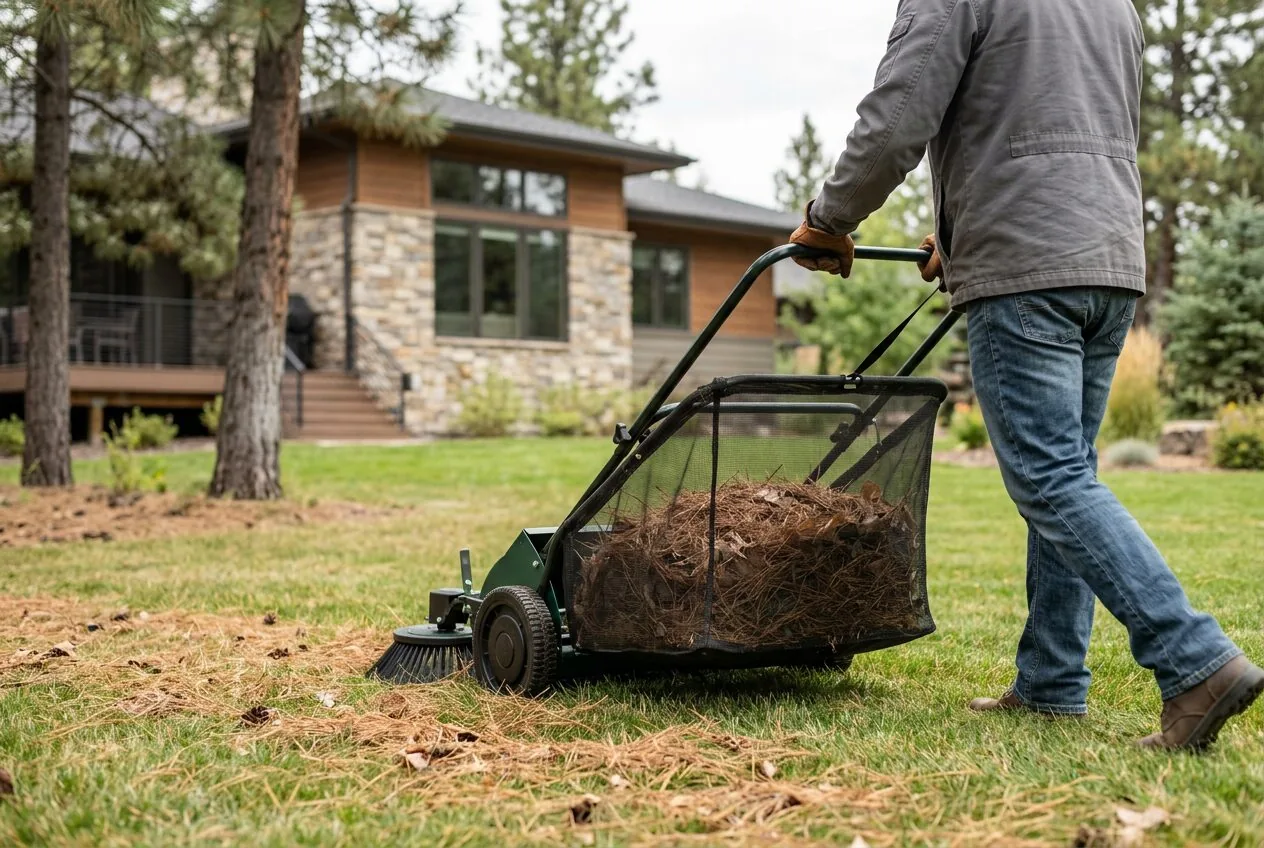
Empty the Hopper Frequently
Pine needles have a lot of air pocket space, so the hopper fills surprisingly fast. Do not wait until the hopper is completely full before emptying. A full hopper places extra weight on the sweeper and can reduce brush contact.
Empty every few passes, especially if you are dealing with a thick layer of needles. This keeps the sweeper light and effective. Compost or dispose of the collected needles properly.
Pine needles are acidic, so use them around acid loving plants or add them to your compost pile in moderation.
Maintain Your Sweeper
Regular maintenance ensures your sweeper works well for pine needles. After each use, clean the brushes and hopper of any debris. Pine needles can get tangled in the brush bristles. Remove them by hand or with a stiff brush.
Check the wheel bearings and pivot points for dirt. Lubricate moving parts as recommended by the manufacturer. Proper care extends the life of your sweeper and keeps it picking up effectively season after season.
For more tips on caring for your yard equipment, browse our lawn care resources.
Frequently Asked Questions
Can a lawn sweeper pick up pine needles?
Yes, a lawn sweeper can effectively pick up dry pine needles. Adjust the brush height for good ground contact and empty the hopper often. Some models may require a finer mesh to prevent needles from falling through.
What is the best way to adjust a sweeper for pine needles?
Lower the brush height so the bristles just touch the ground. evaluation on a small patch and adjust until the needles are swept without the brushes digging into the turf.
If needles are left behind, lower slightly; if the sweeper skips, raise the brushes a little.
Should I use a tow behind or a push sweeper for pine needles?
Both types work well. Tow behind models are ideal for large properties and cover more ground per pass. Push sweepers are more maneuverable and work better on smaller lawns or around obstacles. Choose based on your yard size and how much storage space you have.
How often should I empty the hopper when sweeping pine needles?
Empty the hopper every few passes, especially if needles are thick. A full hopper reduces performance. Watch for signs of reduced pickup and empty as soon as the hopper is about half to three quarters full.
Can I use a lawn sweeper on wet pine needles?
It is better to wait until the needles are dry. Wet needles clump and can clog the sweeper. If you must sweep wet needles, empty the hopper very frequently and consider raising the brush height slightly to avoid dragging clumps.
About the author

admin writes reviews and buying guides for LAT Review.