
How to Sharpen a Lawn Mower Blade With an Angle Grinder
Learn how to sharpen a lawn mower blade with an angle grinder. This step-by-step guide covers safety, removal, sharpening technique, balancing, and reinstallation for a clean cut every time.
 By admin
Updated October 28, 2026

If your lawn mower is tearing grass instead of cutting it cleanly, a dull blade is likely the culprit.
Sharpening a mower blade with an angle grinder is a fast, effective DIY task that restores a clean cut without needing special equipment. This guide walks through each step to do it safely and correctly.
Safety First: Preparing Your Workspace
Before you start, disconnect the spark plug wire to prevent accidental starting. Wear heavy work gloves and safety goggles. The blade is sharp even when dull, and metal sparks can fly during grinding.
Work on a stable surface, preferably a workbench or a sturdy table, and keep your angle grinder’s guard in place.
Removing the Blade
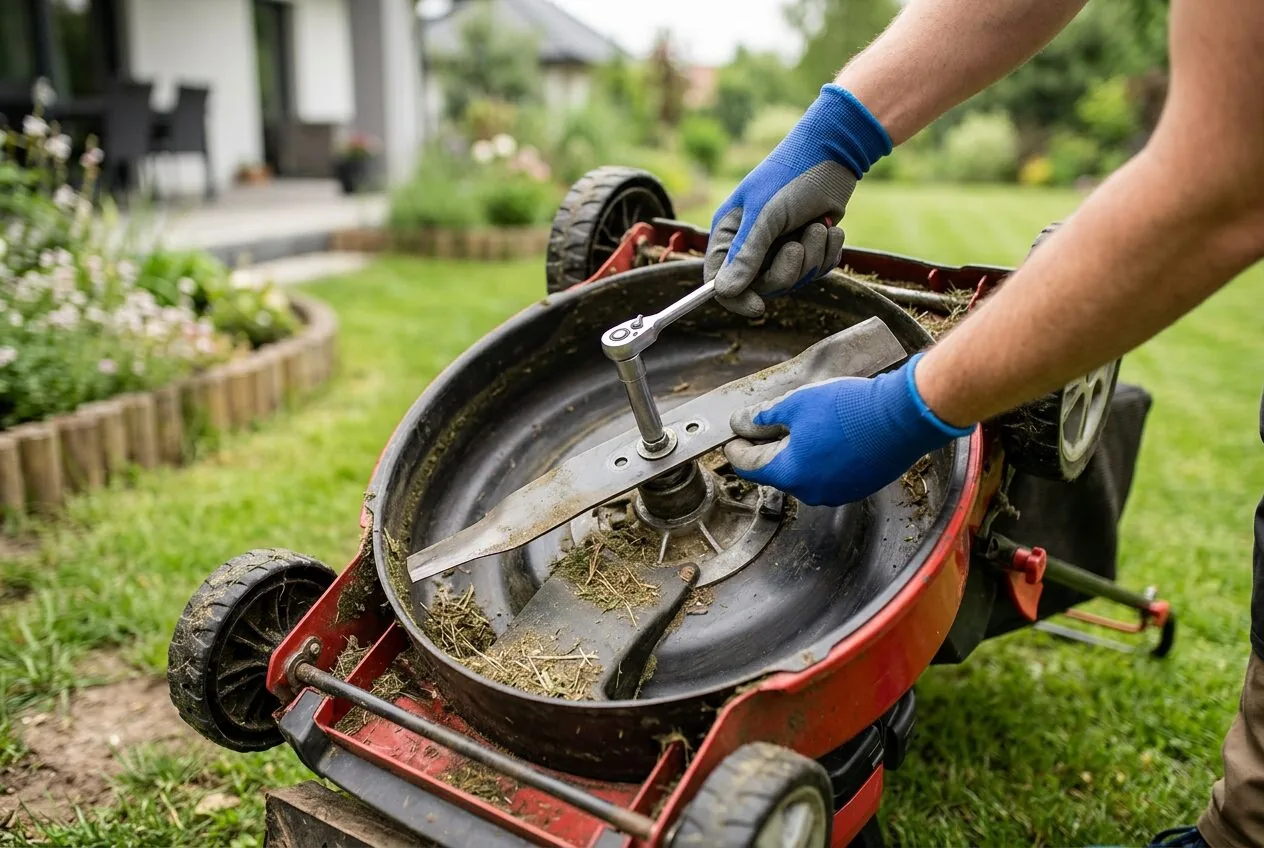
Tip the mower on its side with the air filter and carburetor facing up to avoid oil leakage. Use a wrench to loosen the bolt holding the blade. Most mowers have a single bolt or nut; turn it counterclockwise.
If it’s tight, a breaker bar or penetrating oil helps. Remove the blade and note its orientation so you reinstall it correctly.
Cleaning and Inspecting the Blade
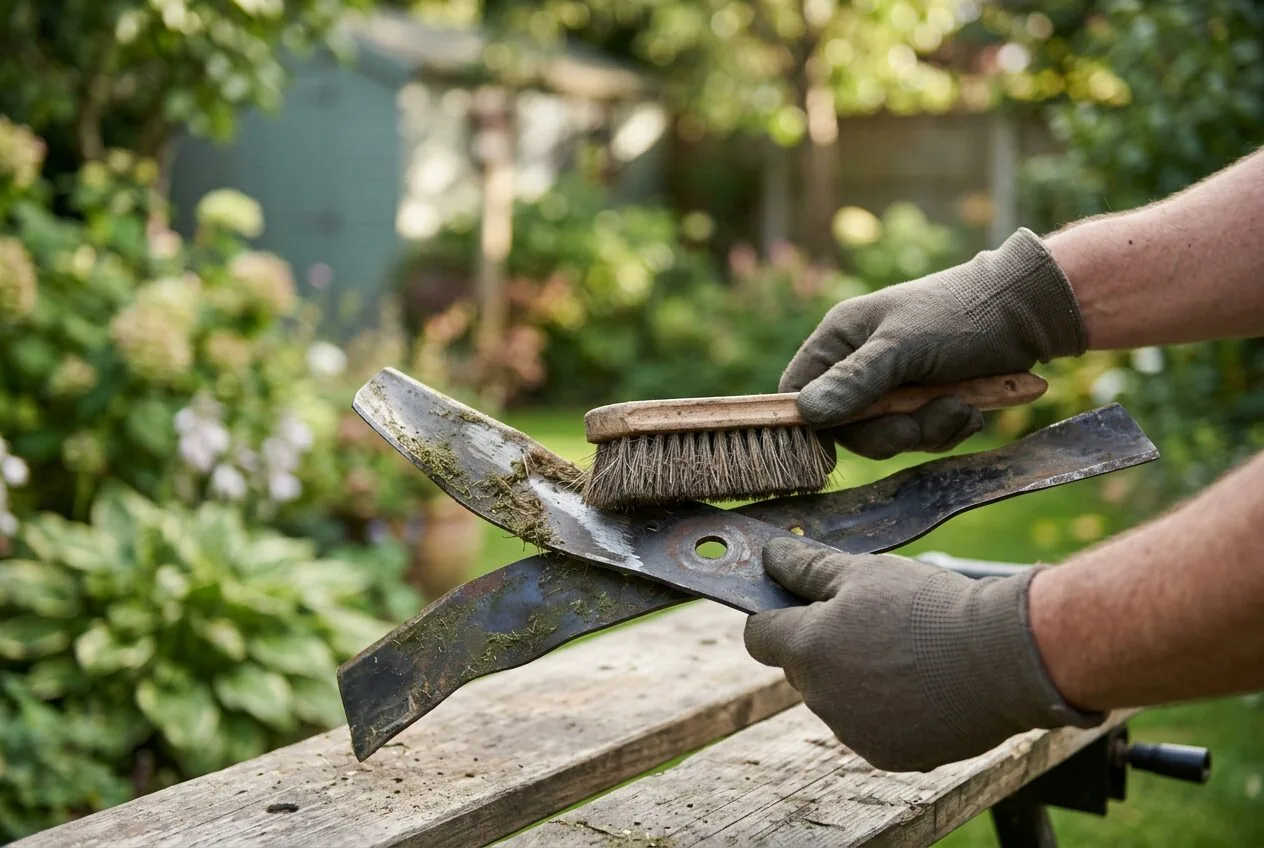
Wipe off grass buildup and dirt with a rag. Inspect the blade for deep nicks, cracks, or excessive wear. Small dents can be ground out, but replace the blade if it’s bent or cracked.
A damaged blade can cause vibration and poor cutting. For more on choosing a new blade or alternative sharpening methods, browse our mower blade sharpening section.
Sharpening With the Angle Grinder
Secure the blade in a vise or clamp it to the workbench. Fit your angle grinder with a 40- to 60-grit flap disc or grinding wheel.
Hold the grinder so the disc contacts the blade’s cutting edge at roughly the same angle as the original bevel typically 30 to 45 degrees. Move the grinder in smooth, consistent passes along the entire edge.
Avoid overheating the metal; dip the blade in water every few passes to keep it cool.
Grind only the top side of the cutting edge, never the back flat side, until you see a thin silver edge along the entire length. Finish with a finer grit disc or a sharpening stone to remove burrs.
- Keep the blade balanced: remove equal material from each side.
- Don’t change the original cutting angle.
- Use light pressure and let the grinder do the work.
Balancing the Blade
An unbalanced blade causes vibration and damages the mower’s spindle. After sharpening, hang the blade on a nail or a blade balancer tool. If one side dips, grind a bit more metal from the heavier side.
Check again until the blade stays level. A properly balanced blade ensures smooth operation and an even cut.
Reinstalling and evaluation
Place the sharpened blade back on the mower with the cutting edge facing the direction of rotation (usually away from the operator). Tighten the bolt or nut to the manufacturer’s torque specification, typically 30 to 50 foot pounds.
Reconnect the spark plug, start the mower, and evaluation on an overgrown patch of grass. You should see a clean cut with no torn or frayed grass tips. For general lawn maintenance tips, check out our main lawn care page.
Frequently Asked Questions
How often should I sharpen my mower blade?
Sharpening once or twice per season is typical, but inspect the blade after every 25 hours of use. If the grass looks ragged, it is time to sharpen.
Can I use a file instead of an angle grinder?
Yes, a hand file works and removes less metal, but it takes more time and effort. An angle grinder is faster and more consistent for most people.
What angle should I sharpen the blade at?
Match the existing bevel angle, typically between 30 and 45 degrees. Maintaining the correct angle preserves the blade’s cutting efficiency.
Do I need to remove the blade to sharpen it?
Removing the blade is strongly recommended. It allows you to clean, inspect, and balance it properly. Sharpening on the mower is risky and less precise.
How do I know when the blade is sharp enough?
The edge should feel smooth and have a consistent, thin silver line. It does not need to be razor sharp; a moderately sharp edge cuts grass cleanly.
About the author

admin writes reviews and buying guides for LAT Review.