
How to Sharpen a Chainsaw Without a File: Electric Tools and Guides
Learn how to sharpen a chainsaw without a hand file using electric sharpeners, bar-mounted guides, or rotary tools. Compare trade-offs, safety tips, and know when to call a pro.
 By admin
Updated October 28, 2026
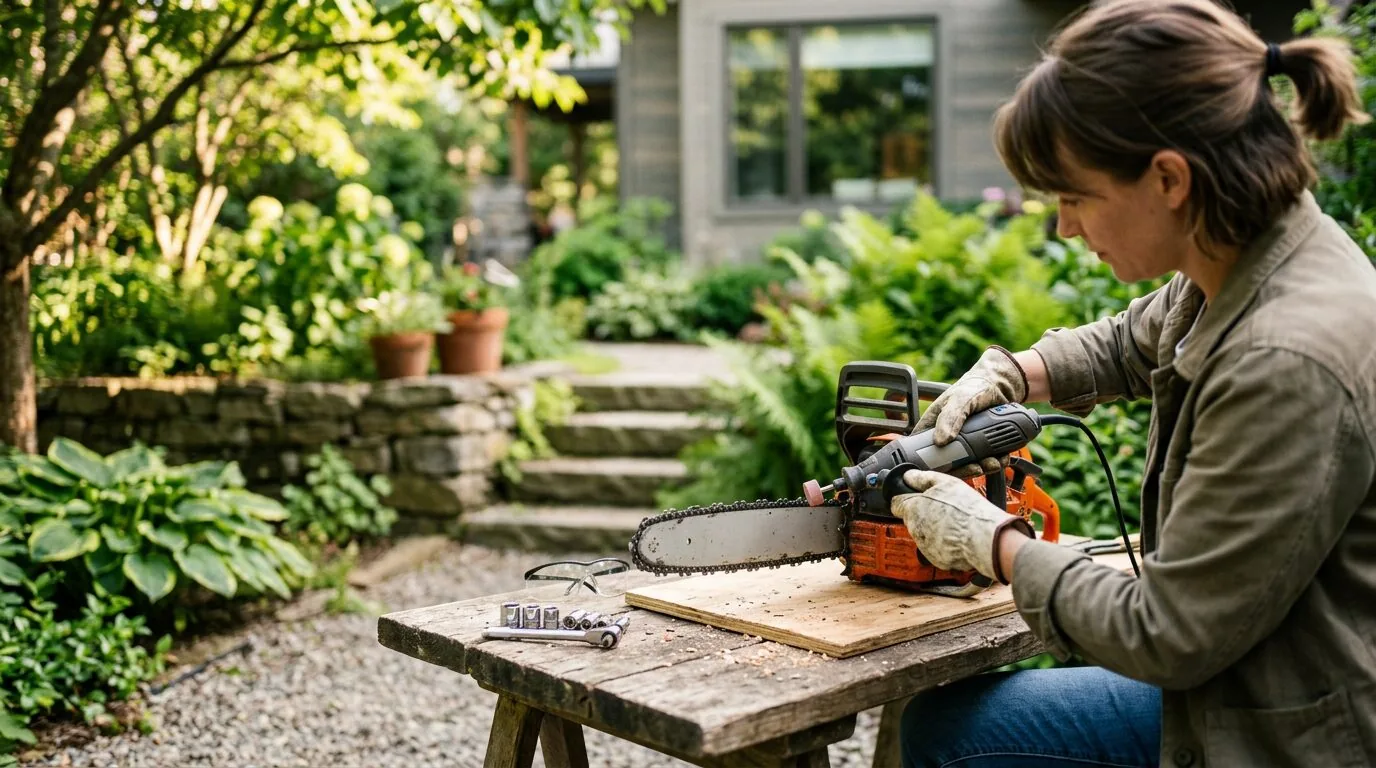
If you own a chainsaw, you know a dull chain makes cutting harder and more dangerous. Reaching for a hand file is the classic solution, but not everyone has one or feels comfortable with the technique.
Fortunately, you have several reliable alternatives that can restore a sharp edge without touching a file. This article covers the main methods, their trade-offs, and when it’s best to let a professional handle it.
Using an Electric Chainsaw Sharpener
An electric sharpener plugs into a wall outlet or runs on a battery. It uses a grinding wheel to reshape the cutter teeth on the chain.
Most models have a simple clamp that holds the bar steady while you guide the wheel over each tooth. The big advantage is speed: you can sharpen an entire chain in a few minutes with consistent results.
The trade-off is that electric sharpeners remove more metal than a file, so your chain won’t last as long if you use one regularly.
They also generate heat, which can affect the temper of the steel if you press too hard or dwell too long. Look for a unit with an adjustable depth stop and a built-in stop to prevent overgrinding.
Always wear eye protection and follow the manufacturer’s instructions for angle settings.
Bar-Mounted Sharpening Guides
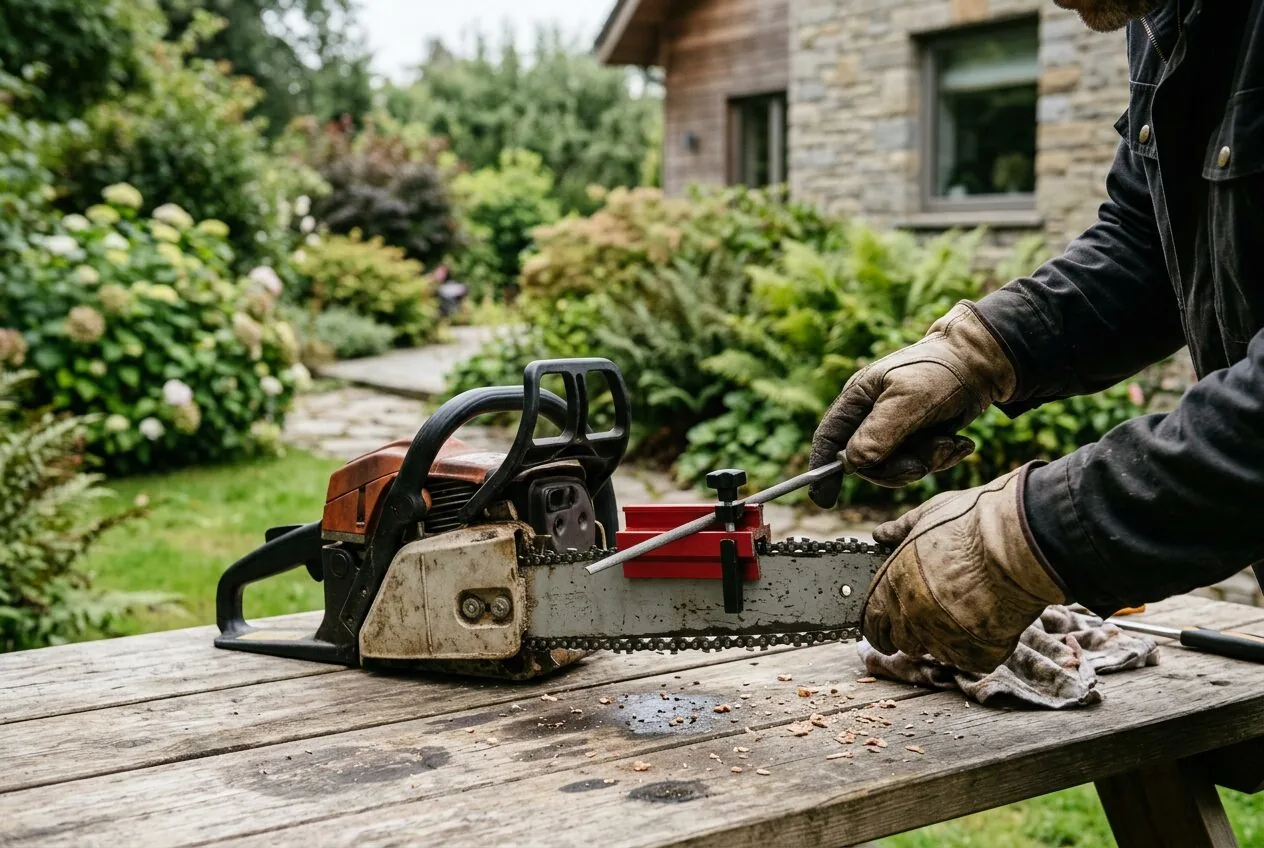
A bar-mounted guide is a tool that clips onto the chainsaw bar and aligns a rotary tool or small grinding stone at the correct angle.
You attach the guide to the bar, then run the rotary tool along the guide to sharpen each tooth. This method gives you more control than freehanding a rotary tool and is much faster than a file.
The main drawback is that the guide can sometimes slip or wear out, leading to inconsistent angles. You also need a steady hand and a quality rotary tool with a small enough collet.
For occasional touch-ups, a bar-mounted guide is a good middle ground between a file and a full electric sharpener. It’s also portable, so you can take it into the field.
Rotary Tool Attachments
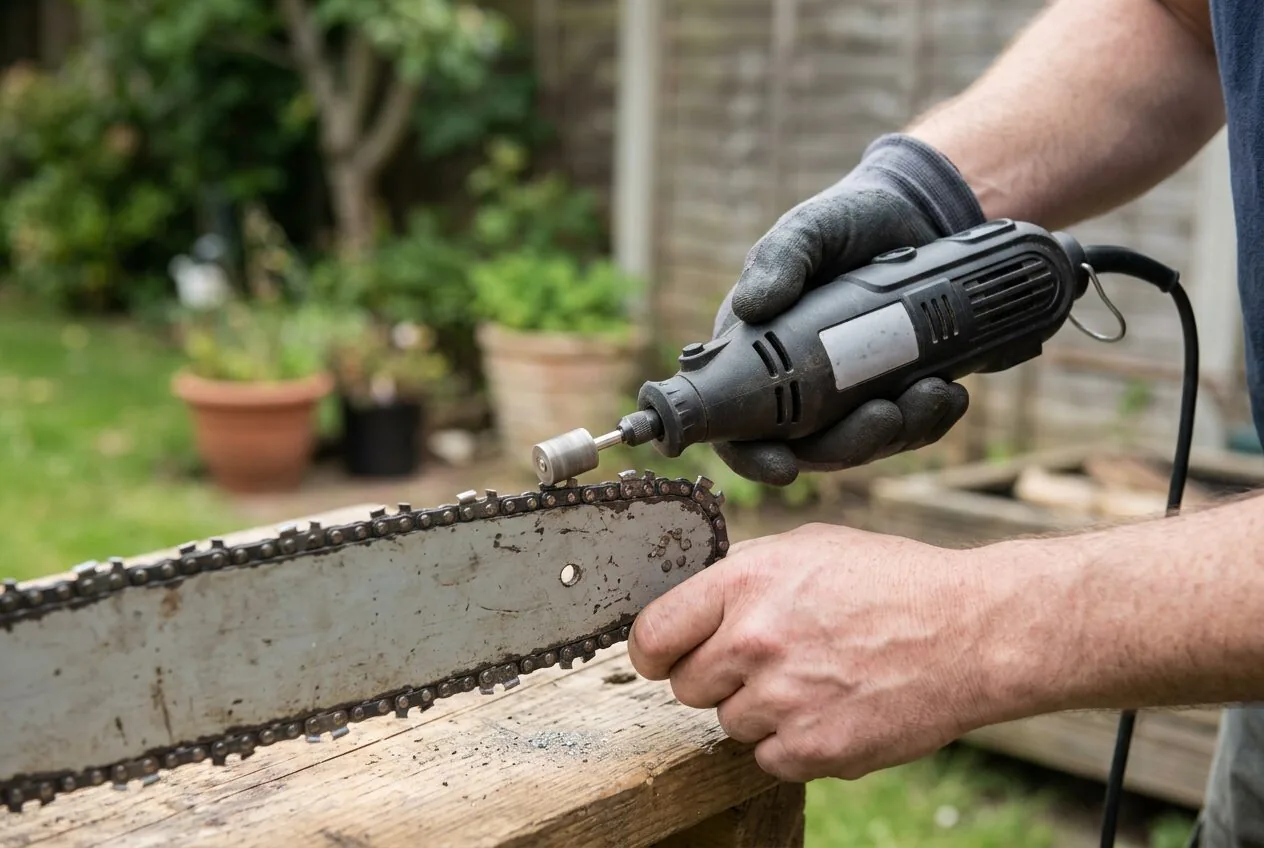
A rotary tool, like a Dremel, can sharpen a chainsaw chain with the right attachment. You use a small grinding stone or a dedicated chainsaw sharpening bit, and you guide it along the cutting edge by hand.
This approach is inexpensive if you already own a rotary tool, and the bits are cheap to replace.
The challenge is consistency: without a guide, it’s easy to round off the cutting edge or change the angle from tooth to tooth. If you go this route, practice on a worn chain first.
Mark the depth gauges with a felt-tip pen so you can see where you’ve been. And keep the tool moving to avoid overheating the steel.
For a chainsaw model you use heavily, this method is best reserved for emergency field repairs.
When to Call a Professional
Some situations demand a shop’s expertise. If you’ve hit a nail, rock, or fence wire, the chain might have damaged or bent teeth that need replacement, not just sharpening.
Professional sharpeners use industrial machines that set the depth gauges precisely and can check for uneven wear. They also have the tools to replace broken chain links.
If your chain is very old or you’ve resharpened it multiple times with electric tools, the metal may be too thin to sharpen safely. A pro can tell you whether a new chain is a better investment.
In general, if you notice excessive vibration, uneven cuts, or the chain seems to stretch unevenly, take it to a shop before you risk damaging the bar or clutch.
Safety Tips for Alternative Sharpening Methods
No matter which method you choose, safety comes first. Always disconnect the spark plug wire (or remove the battery) before sharpening. Secure the bar in a vise or clamp to keep it steady.
Wear gloves to protect your hands from sharp edges. Use eye protection: grinding wheels and rotary bits can throw debris. Work in a well-ventilated area because the grinding dust from chain steel can be irritating.
Check your owner’s manual for the recommended filing angle and depth gauge height, and set your sharpener or guide accordingly.
Finally, after sharpening, lubricate the chain and run it at low speed for a few seconds to seat the new edge.
Frequently Asked Questions
Can I use a bench grinder to sharpen my chainsaw chain?
It is possible with a special chainsaw grinding wheel and a jig to hold the bar at the correct angle, but bench grinders are fast and aggressive. They can easily overheat the steel or remove too much metal.
Most homeowners get better results with a dedicated electric sharpener or a bar-mounted guide.
How often should I sharpen my chainsaw without a file?
That depends on how much you cut and what you cut. If you use the chainsaw daily on dirty or frozen wood, you may need to sharpen every tank of fuel.
For occasional use on clean, dry wood, sharpening every few hours of cutting is typical. The real sign is the cut quality: if you see fine sawdust instead of chips, or you have to push hard, it’s time to sharpen.
Will an electric sharpener ruin my chainsaw chain?
Used correctly, it won’t ruin it, but any power tool removes more metal than a file. If you sharpen too often or press too hard, you’ll shorten the chain’s life.
Follow the tool’s guidelines and stop grinding as soon as you see a burr form on the cutter edge. Many chains can be sharpened five to ten times before they need replacement.
Is it safe to sharpen a chainsaw chain with a Dremel?
Yes, as long as you use the proper bit and work carefully. The main risk is inconsistent angles and overheating. Go slow, keep the bit moving, and check your work after every few teeth. A steady hand and a good light help a lot.
Can I sharpen a chainsaw chain without taking it off the saw?
Yes, many electric sharpeners and bar-mounted guides allow you to sharpen the chain while it’s still on the saw. You just need to secure the bar and release the chain tension slightly.
This saves time, but make sure the chain is perfectly clean and the saw is securely clamped to avoid injury.
About the author

admin writes reviews and buying guides for LAT Review.