
How to Quiet a Leaf Blower: Practical Steps That Actually Work
Learn practical steps to quiet a leaf blower, from simple maintenance and lower speed settings to muffler upgrades and choosing a quieter type of blower.
 By admin
Updated November 5, 2026
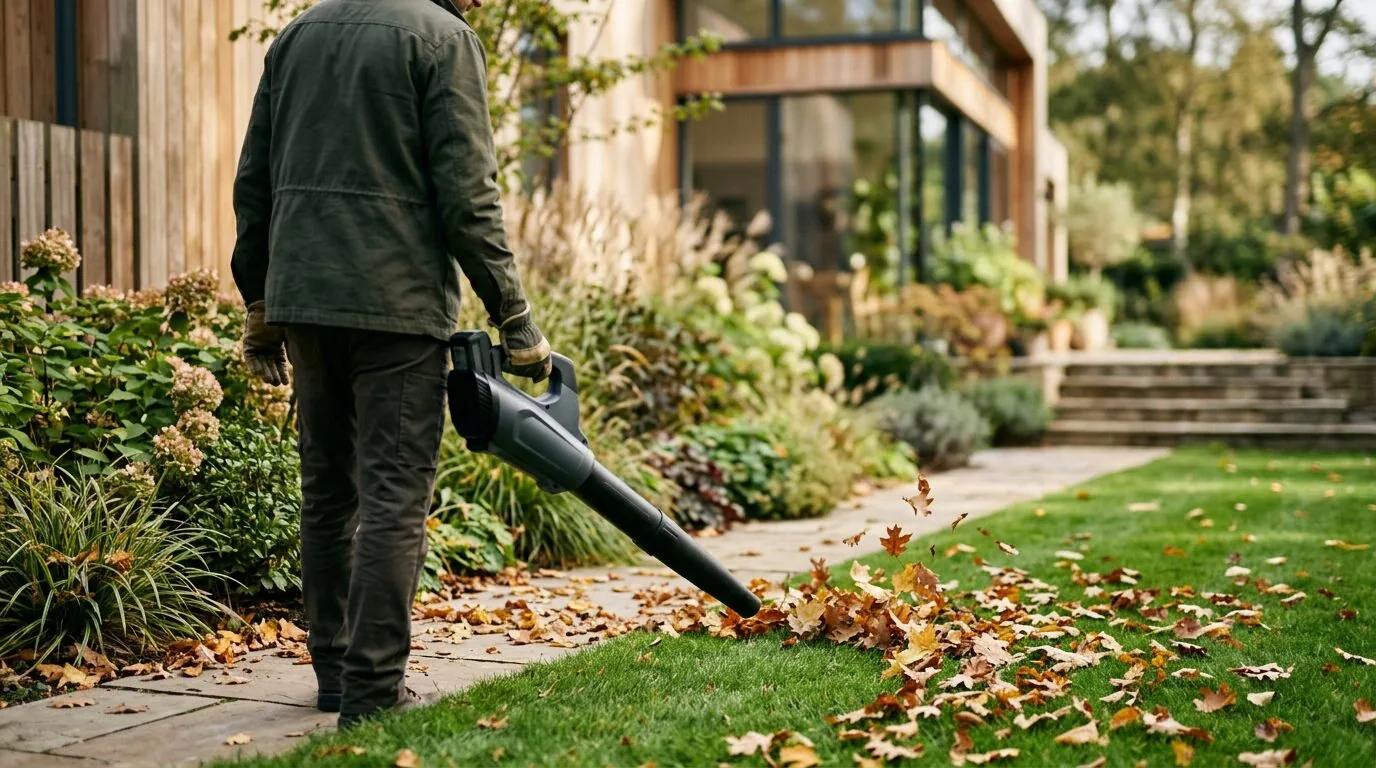
Leaf blowers are loud, and in many neighborhoods they are the source of the most friction between neighbors. You can reduce the noise without giving up the tool entirely, and in some cases the fix is both simple and inexpensive.
Start with the easiest upgrades, then move to changes that require a little more effort.
Before you replace anything, check whether the noise is coming from the engine, the fan, or the plastic housing. Loose parts, debris stuck near the impeller, and worn mounts all add unnecessary racket.
Tighten hardware, clear any visible buildup, and secure the housing so it stops vibrating against itself. That alone often makes a noticeable difference.
Use the Right Muffler or Exhaust System
Most handheld gas blowers ship with a small, basic muffler that does little more than meet legal limits. If you are comfortable with basic engine work, replacement mufflers and exhaust shields are available for many popular models.
A larger muffler reduces exhaust noise at the source, and the blower stays quieter at full throttle instead of just at idle.
If you are not ready to swap parts, be honest about how much echo your yard creates. Working next to a fence, a wall, or a driveway reflects sound straight back at you and your neighbors.
Move to a spot with more open space, or angle the discharge so the blast points at the ground rather than a hard surface.
Switch to the Lowest Setting That Gets the Job Done
Leaf blowers are rarely used at full throttle, and most outdoor cleanup tasks do not require maximum airspeed.
Run the machine at half speed for loose grass clippings or dry leaves on pavement, and bump up the power only for wet, compacted piles. Lower RPM means lower sound output, so you keep the convenience without the noise.
This also reduces the amount of dust and small debris your blower kicks into the air. A slower air stream is easier to control near flower beds and mulch, which cuts down on the time you spend sweeping patio chairs and window sills afterward.
Add Sound-Dampening Material Carefully
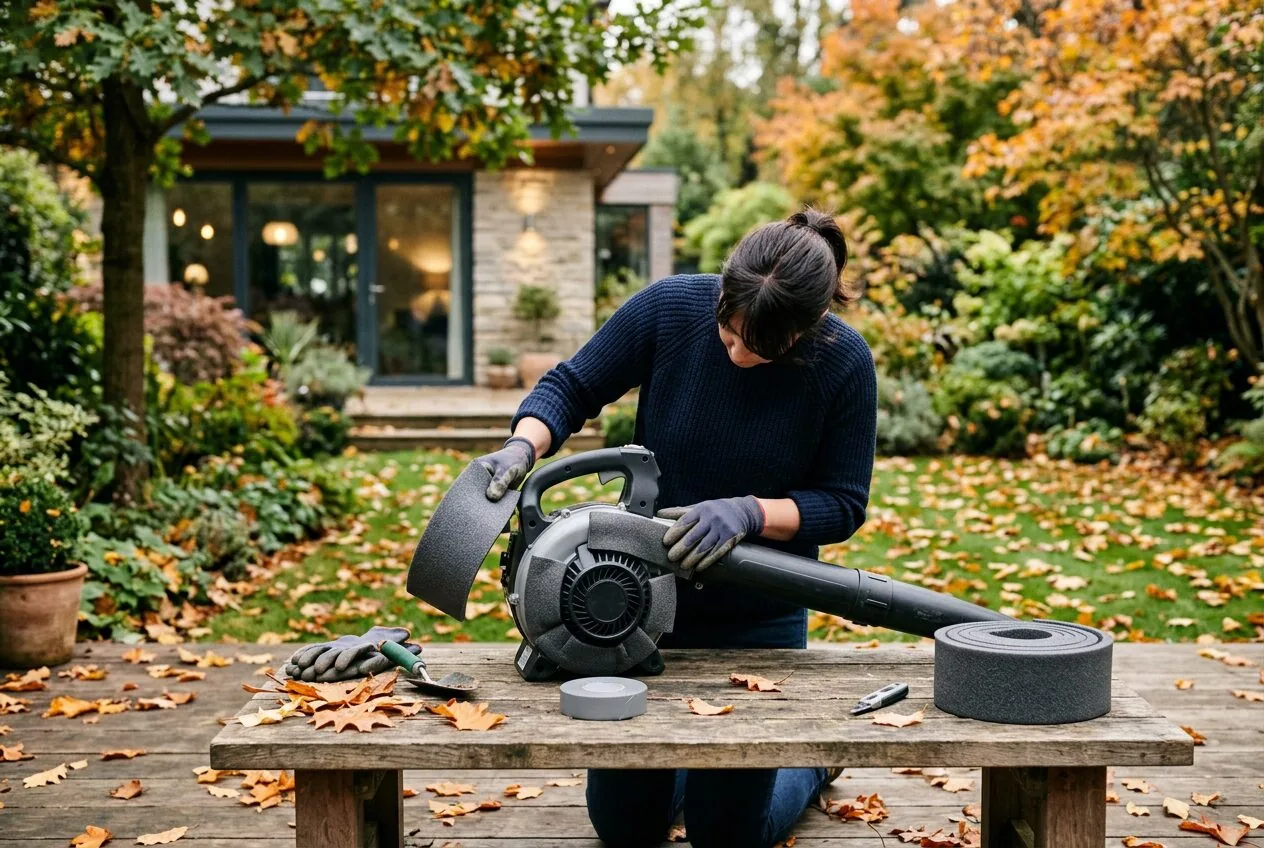
Wrapping the exhaust or the engine housing with insulation can help, but only if the material is rated for high heat and does not block airflow needed for cooling.
Automotive heat wrap and foil-faced fiberglass are common choices, but be careful not to cover vents or the throttle linkage. Secure everything with stainless steel zip ties so nothing shifts during use.
A cheaper first step is to simply hold the blower away from your body and keep your grip relaxed.
Your own body and clothing absorb and reflect a fair amount of noise, so a loose rather than locked elbow position reduces what reaches your ears and the neighbors beyond.
Time Your Work Around Noise Ordinances
Even the quietest leaf blower is still machinery, and the best time to operate one depends on local rules and common courtesy.
Many communities restrict noisy yard work to weekday daytime hours, and some prohibit gas blowers entirely, so check the ordinance that applies to your address before you start.
When in doubt, use a corded electric model during early morning or evening hours.
If your neighborhood has no written rules, aim to work between mid-morning and late afternoon. That gives people a reasonable window for sleep, meals, or remote work, and it prevents the hard feelings that come from a 7 a.m. start.
If you are replacing a worn-out unit, you can find quieter leaf blowers and vacuums in a range of sizes at most major retailers.
Keep the Machine Tuned and the Air Path Clean
Routine maintenance does more for noise than almost any accessory. A dirty air filter makes the engine run rich, which changes the exhaust note and reduces efficiency.
Fresh fuel mixed correctly, a clean spark plug, and a sharp impeller all keep the blower running smoothly, and a smooth engine is a quieter engine.
Take the nozzle off every couple of months and check for small stones or twigs lodged near the fan.
Debris that rattles around the housing not only makes noise, it also throws off the balance of the impeller, which can cause premature wear.
Keep the underside of the housing free of grass buildup, and the blower will stay quieter for years.
Consider a Quieter Type of Blower
If a neighbor has already complained twice, it is fair to rethink the tool itself. Modern electric handheld models produce far less noise than gas engines, and they skip the exhaust crackle that carries across the block.
Battery-powered versions have improved enough for most residential lots, though run time depends on the battery you already own. Corded models weigh less and never run out of power, but you have to manage the extension cord.
If you prefer to stay with gas, look for a model with an enclosed engine and a larger muffler, and avoid machines with short, open exhaust ports.
A gas handheld leaf blower with a decent muffler is still louder than an electric one, but it will not dominate the whole street the way a bare two-stroke can.
Frequently Asked Questions
Can I make a leaf blower quieter without replacing it?
Yes. Tighten loose hardware, clean out debris, run at reduced speed, and use the blower below half throttle for most jobs. These simple steps can lower the noise level meaningfully, so try them before spending money on parts or a new machine.
Is there a legal limit on how loud a leaf blower can be?
Limits are set by local governments, not by a single federal standard. Some cities ban gas blowers entirely, while others cap the decibel level at a set distance from the machine.
Check your local ordinance, because the rules vary widely from one town to the next.
Are electric leaf blowers quieter than gas ones?
Generally yes. Corded and battery models produce less exhaust noise and lack the sharp two-stroke crackle that travels so far outdoors. They are not silent, but they are usually several decibels lower than a comparable gas unit.
About the author

admin writes reviews and buying guides for LAT Review.