
How to Fix a Chainsaw That Won’t Start: A Step by Step Troubleshooting Guide
A step by step guide to fix a chainsaw that won't start. Check fuel, spark plug, air filter, choke, and flooding. Safety first, no special tools needed for most fixes.
 By admin
Updated October 28, 2026
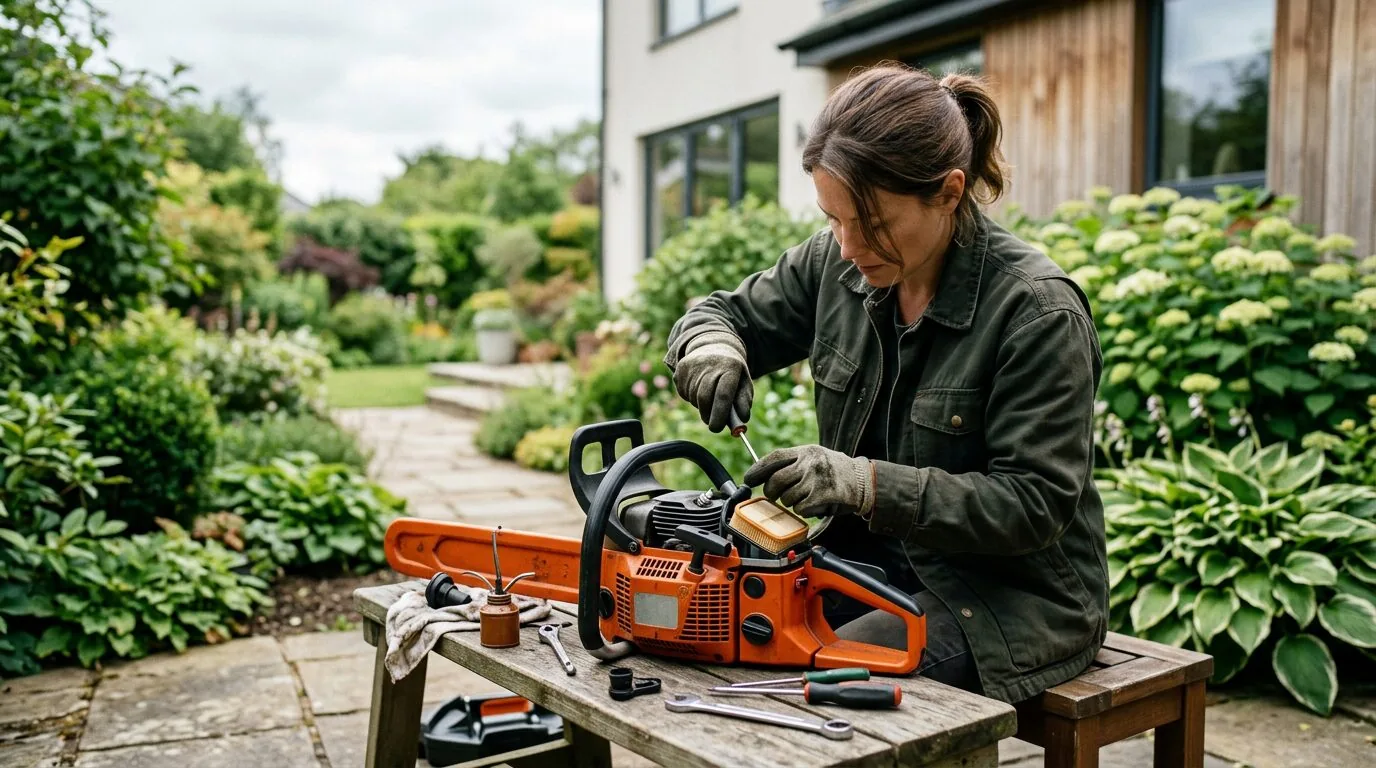
There you are, ready to tackle a pile of branches or a fallen tree, and your chainsaw refuses to start. You pull the cord, check the switch, and nothing happens.
It is a common frustration, but more often than not, the issue can be solved in a few minutes without a trip to a repair shop.
This guide walks you through a systematic approach to diagnosing and fixing a chainsaw that won’t fire up, so you can get back to work safely and quickly.
Before any troubleshooting, put safety first. Make sure the chain brake is engaged, the saw is on a stable, flat surface, and you are wearing gloves and eye protection.
If you have not used the saw in a while, take a moment to inspect the general condition of the tool, especially if it is an older model.
For a refresher on basic maintenance and setup, visit our section on chainsaws and saws.
1. Check the Fuel System
The most common reason a chainsaw will not start is a fuel problem. Begin by verifying that there is fresh, properly mixed fuel in the tank.
Gasoline that has sat for more than a few weeks (especially with ethanol) can degrade, attract moisture, or gum up the carburetor.
If you suspect old fuel, drain the tank and refill with a fresh mix of the correct oil to gas ratio as specified in your owner manual.
Next, check the fuel filter inside the tank. A clogged filter restricts flow. If you have basic tools, you can remove the filter and drop it into a small amount of clean fuel to see if it passes liquid.
Also inspect the fuel line for cracks or brittleness. A simple fuel system check solves a surprising number of no start issues. Once the fuel system is sound, move to the next step.
2. Inspect and Clean the Spark Plug
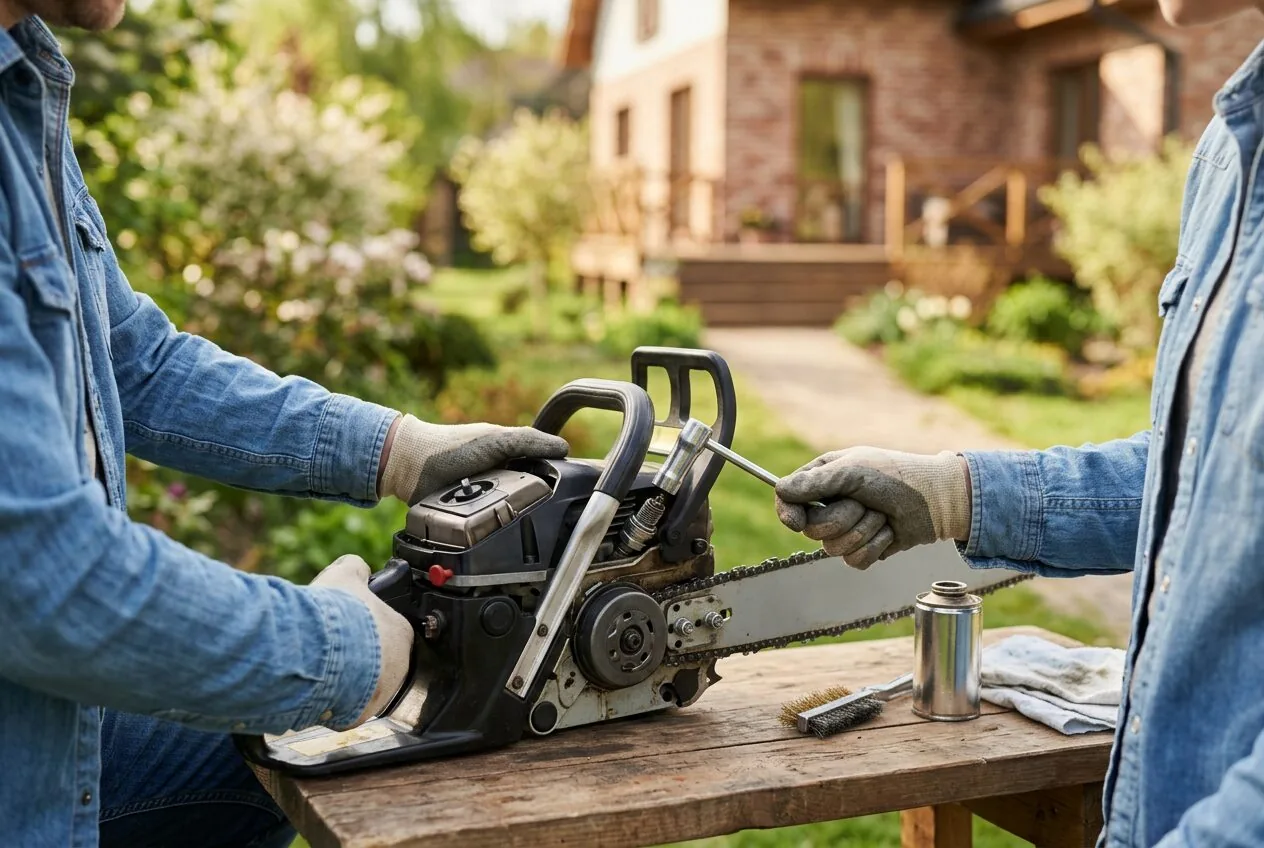
A weak or fouled spark plug can prevent ignition. Remove the spark plug wire, then unscrew the plug with a socket.
Look at the electrode: if it is covered in black carbon or oil deposits, it is time to clean or replace it.
Use a wire brush or fine sandpaper to gently remove deposits, and check the gap with a feeler gauge. Set it to the manufacturer specification (commonly 0.020 to 0.030 inches).
While the plug is out, pull the starter cord a few times to clear any excess fuel from the cylinder. Reinstall the plug, tighten it by hand then a quarter turn with a wrench, and reconnect the wire.
A fresh spark plug is inexpensive and often a quick fix. For more guidance on maintaining different types of cutting equipment, browse our collection of chainsaw models.
3. Clean or Replace the Air Filter
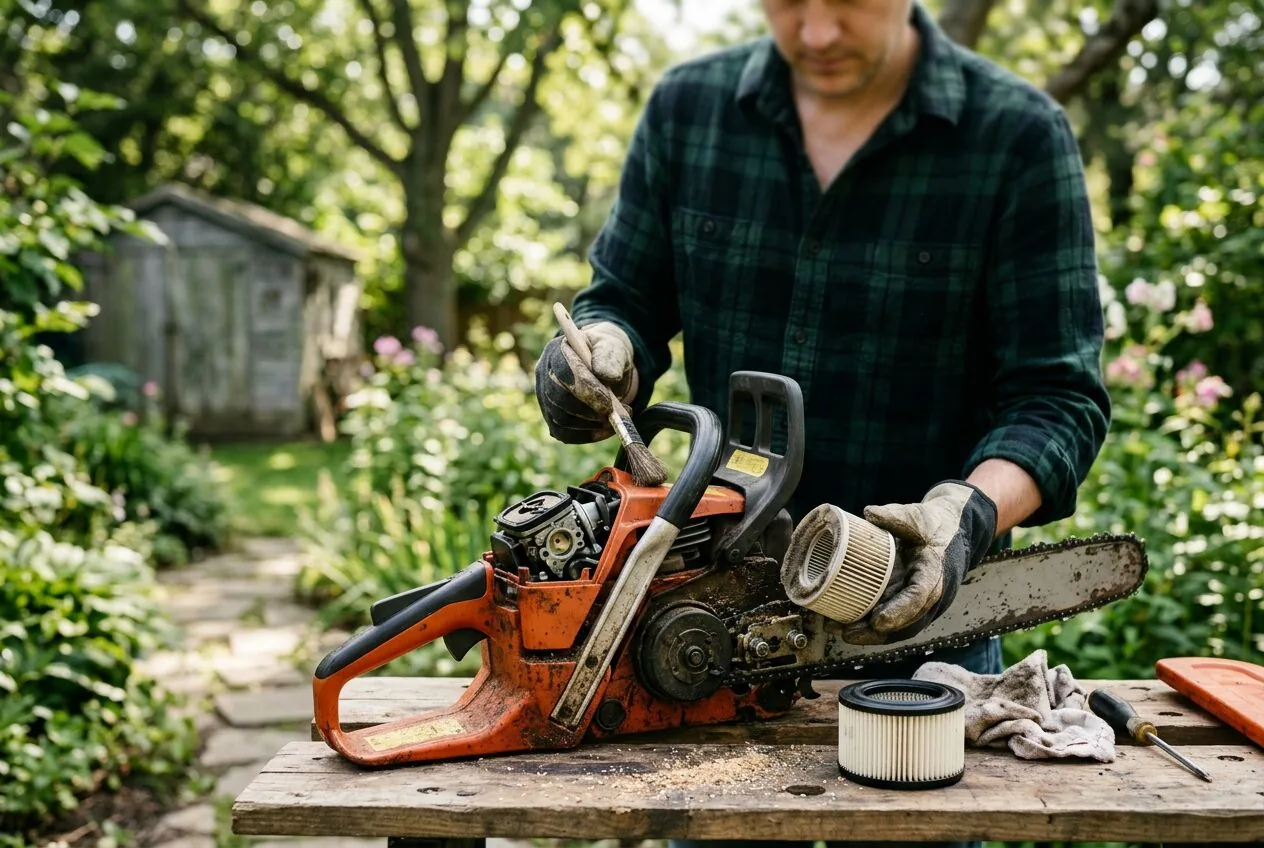
A dirty air filter restricts air flow to the engine, causing a rich fuel mixture that can make starting difficult or impossible. Locate the air filter cover on the side of the saw, remove it, and take out the filter.
If it is a foam filter, wash it with warm soapy water, rinse, squeeze out excess moisture, and let it dry completely before lightly oiling it. Paper filters should be tapped clean or replaced if they look heavily soiled.
Never run a chainsaw without the air filter installed, as debris can damage the engine. While you have the cover off, check for any debris in the air box.
This simple maintenance step restores proper air fuel ratio and can bring a stubborn saw back to life. Pair this check with a look at other components in our saws and cutting tools resource.
4. Check the Choke and Primer Bulb
Improper use of the choke is another frequent culprit. If the engine is cold, close the choke (usually a lever or flap) to enrich the mixture.
After a few pulls, you should hear the engine try to fire; then open the choke. If you flood the engine by pulling too many times with the choke closed, it can become saturated with fuel and refuse to start.
Also inspect the primer bulb. If it is cracked or does not fill with fuel when pressed, the carburetor may not be getting fuel. A simple replacement or cleaning of the primer circuit often solves the problem.
For step by step instructions on choke and primer troubleshooting tailored to various equipment, refer to our guide on using and maintaining chainsaws.
5. Address a Flooded Engine
If you smell gasoline or the spark plug is wet, the engine is flooded. Turn off the choke, open the throttle wide (if your saw has a throttle lock), and pull the starter cord repeatedly until the excess fuel clears.
You can also remove the spark plug, let the cylinder air out for 15 to 20 minutes, and dry the plug before reinstalling.
After clearing a flood, try starting with the choke off and the throttle partially open.
If the saw still refuses to start after these steps, the issue may lie in the carburetor adjustment or ignition module, which may require professional service.
But in most cases, one of the previous checks will get your chainsaw running again. Remember to store your saw with fresh fuel and proper winterization to prevent future problems.
Frequently Asked Questions
Why does my chainsaw start but then die immediately?
This usually indicates a fuel delivery issue. The carburetor may need adjustment, or the fuel filter could be partially clogged. Also check the air filter: a dirty filter can cause the engine to stall after starting.
Can a bad spark plug cause a chainsaw not to start?
Absolutely. A fouled or worn spark plug will not produce a strong enough spark to ignite the fuel air mixture. Cleaning or replacing the plug is a simple and effective fix you can do in a few minutes with basic tools.
How do I know if my chainsaw is flooded?
Signs include a strong gasoline smell, a wet spark plug when you remove it, and the engine sounding like it is choking instead of firing.
To clear a flood, remove the plug, let the cylinder dry, and pull the cord several times with the choke off.
Should I use starting fluid on a chainsaw?
Some experienced users use starting fluid as a quick evaluation, but it is not a long term solution. If your saw only runs with starting fluid, you have a fuel system problem that needs proper diagnosis. Overuse can also damage the engine.
When should I take my chainsaw to a repair shop?
If you have checked fuel, spark, air filter, and cleared a flood, and the saw still will not start, the issue may be a failed ignition module, a damaged carburetor, or low compression. These repairs require specialized tools and knowledge.
It is safer to have a professional handle them.
About the author

admin writes reviews and buying guides for LAT Review.