
How to Extend Battery Life on a Cordless Leaf Blower: Practical Tips That Work
Learn how to extend battery life on a cordless leaf blower with six practical tips covering charge habits, storage, cleaning, and smart use. Keep your lithium-ion pack running longer.
 By admin
Updated November 5, 2026
If you own a cordless leaf blower, you have probably noticed that runtime can drop significantly after a year or two. The good news is that most of the factors that shorten battery life are within your control.
This guide explains how to extend battery life on a cordless leaf blower so you can get more work done per charge and delay the need for a replacement battery.
The advice applies to common lithium-ion packs used in modern leaf blowers and vacuums, regardless of brand.
Use the Correct Charge Cycle for Lithium‑Ion Packs
Lithium‑ion batteries do not need a full discharge before recharging. In fact, deep cycling a lithium pack puts extra stress on the cells.
You will extend the total lifespan by keeping the charge level between 20 and 80 percent for everyday use. Only charge it to 100 percent when you need the full runtime for a big job.
Once the battery reaches full charge on the charger, unplug it rather than leaving it connected overnight. A “top‑off” after short use is perfectly fine; do not wait until the tool dies to plug it in.
Match the Battery Capacity to Your Blower
A higher amp‑hour (Ah) rating usually means longer runtime, but only if the battery is compatible with your blower.
Using a battery that is rated for a tool with a different voltage or current draw can cause the pack to overheat or the cells to degrade faster. Stick to the battery platform recommended by the manufacturer.
Many homeowners buy a second battery so they can swap instead of waiting for a recharge. That approach also avoids the habit of always running a single pack down to zero.
If you are shopping for a new blower, pay attention to the battery compatibility. Cordless and electric leaf blowers from the same brand often share the same battery family, but double‑check before you invest in extras.
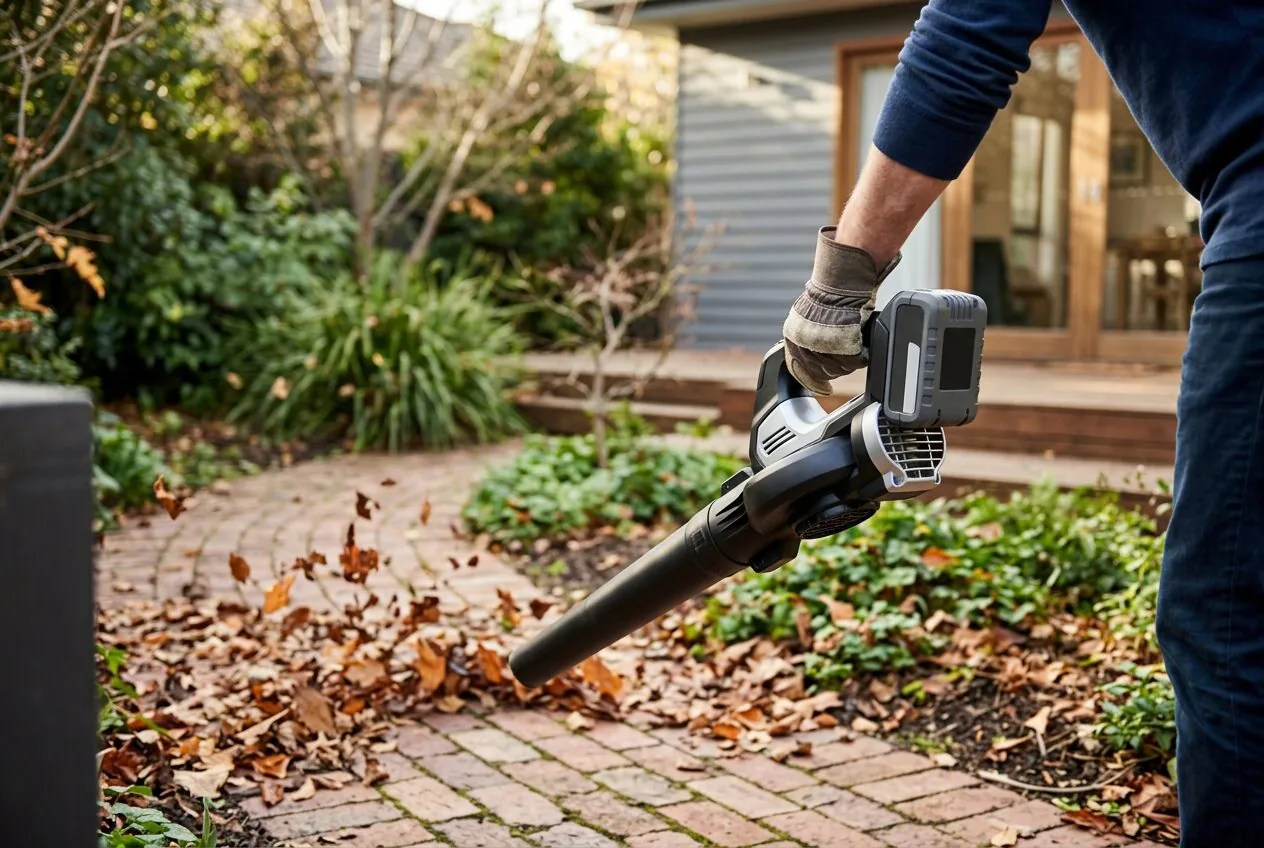
Store Batteries at the Right Temperature
Heat is the number one enemy of lithium‑ion cells. Never leave a battery in direct sunlight, inside a hot car, or on a concrete floor in a garage that gets sun exposure.
High temperatures accelerate chemical degradation and reduce capacity permanently. Similarly, freezing temperatures reduce the effective capacity temporarily and can damage the pack if you try to charge a frozen battery.
Store packs indoors at room temperature, ideally in a cool, dry place. If you live in a region with extreme winters, bring batteries inside for storage and let them warm up to room temperature before use.
Keep the Blower and Battery Clean
Dirt and debris can cause the battery terminals to make poor contact, which forces the cells to work harder and generate extra heat.
After each use, wipe the battery contacts with a dry cloth and remove any grass clippings or dust from the blower’s air intake and battery compartment.
Storing the tool clean also prevents moisture from getting trapped and corroding the terminals.
Avoid High‑Speed Mode When Possible
Most cordless leaf blowers offer variable speed triggers or multiple settings. Running the blower at full turbo speed drains the battery much faster than using a moderate speed.
For light jobs like clearing a small patio or sweeping grass clippings off a walkway, the low or medium setting is sufficient. Save the high speed for wet leaves or deep piles.
Over time, reducing the average current draw reduces stress on the cells and helps maintain the battery’s total capacity.
Use the Correct Charger
Always pair the battery with a charger from the same manufacturer, or at least a charger that is certified for the battery chemistry and voltage. Generic chargers may not have proper cutoff circuitry, leading to overcharging or overheating.
Some modern chargers have a “storage mode” that holds the pack at about 60 percent, which is ideal if you will not use the blower for a few weeks or months.
Frequently Asked Questions
Can I leave the battery on the charger all the time?
It is not recommended. While many chargers stop delivering current after full charge, keeping the battery plugged in for days or weeks exposes it to heat from the charger itself and can accelerate aging. Unplug once the indicator shows a full charge.
How often should I fully discharge the battery?
For lithium‑ion cells, full discharges should be avoided for regular use. Performing a full cycle once every 20 to 30 charges can help the battery management system recalibrate the state‑of‑charge indicator, but it is not necessary for the health of the cells.
Does cold weather permanently damage the battery?
Cold temperatures reduce the effective capacity while the battery is cold, but damage usually does not occur unless you try to charge a frozen pack. Let the battery warm to room temperature before charging.
Store the battery indoors during winter to avoid repeated freeze‑thaw cycles.
Is it okay to use a battery from one brand on a different brand’s blower?
Only if the battery is physically compatible and the voltage matches. Many brands use proprietary connectors and communication protocols. Using a third‑party adapter may cause the battery to overheat or reduce performance.
Stick to the same battery system as your blower for safety and longevity.
About the author

admin writes reviews and buying guides for LAT Review.