
How to Dig Post Holes in Clay Soil: Tips for Easier Digging
Digging post holes in clay soil is tough, but the right technique and tools make it manageable. Learn how to prepare the soil, choose the best digger, and backfill for long-lasting fence posts.
 By admin
Updated October 28, 2026
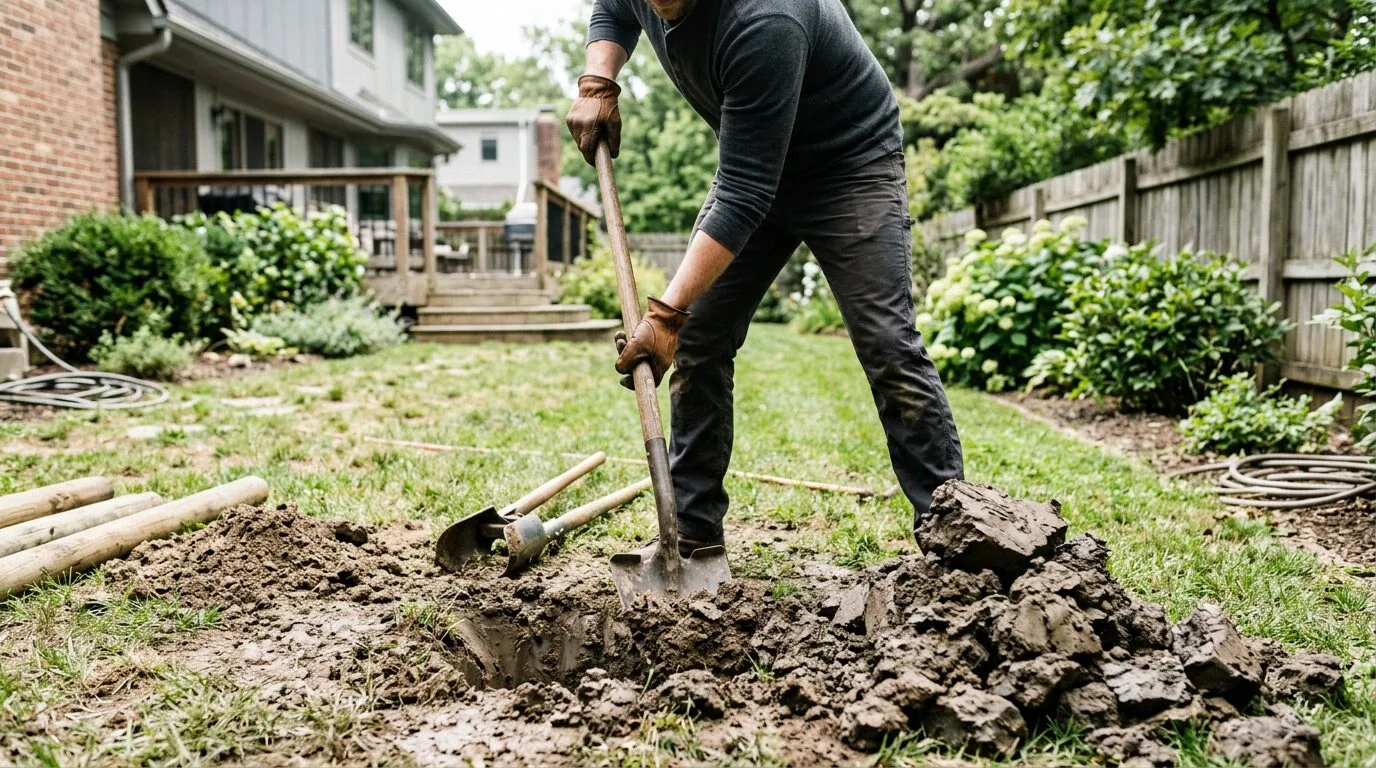
Digging post holes in clay soil often feels like a battle against concrete. The dense, sticky texture makes every shovelful a struggle, especially when the soil is wet or dry.
If you are setting fence posts, building a deck, or installing a mailbox, this guide gives you practical techniques to get the job done with less strain and better results.
Choose the Right Tools
Standard shovels work poorly in clay because the soil clings to the blade. A dedicated post hole digger with sharp clamshell blades cuts through compacted clay more efficiently.
For breaking up the toughest patches, keep a digging bar or heavy‑duty hand trowel nearby. Pairing these with a sturdy pair of hand tools designed for ground work will save your back and speed up the process.
Prepare the Soil Before Digging
Clay changes behavior with moisture. If the ground is bone dry, water the area thoroughly a day ahead. This softens the soil without making it soupier. If the clay is already wet, wait for a few dry days.
To reduce stickiness, you can add a handful of agricultural lime or gypsum to the hole as you dig; these amendments help break down clay particles over time.
Master the Digging Technique
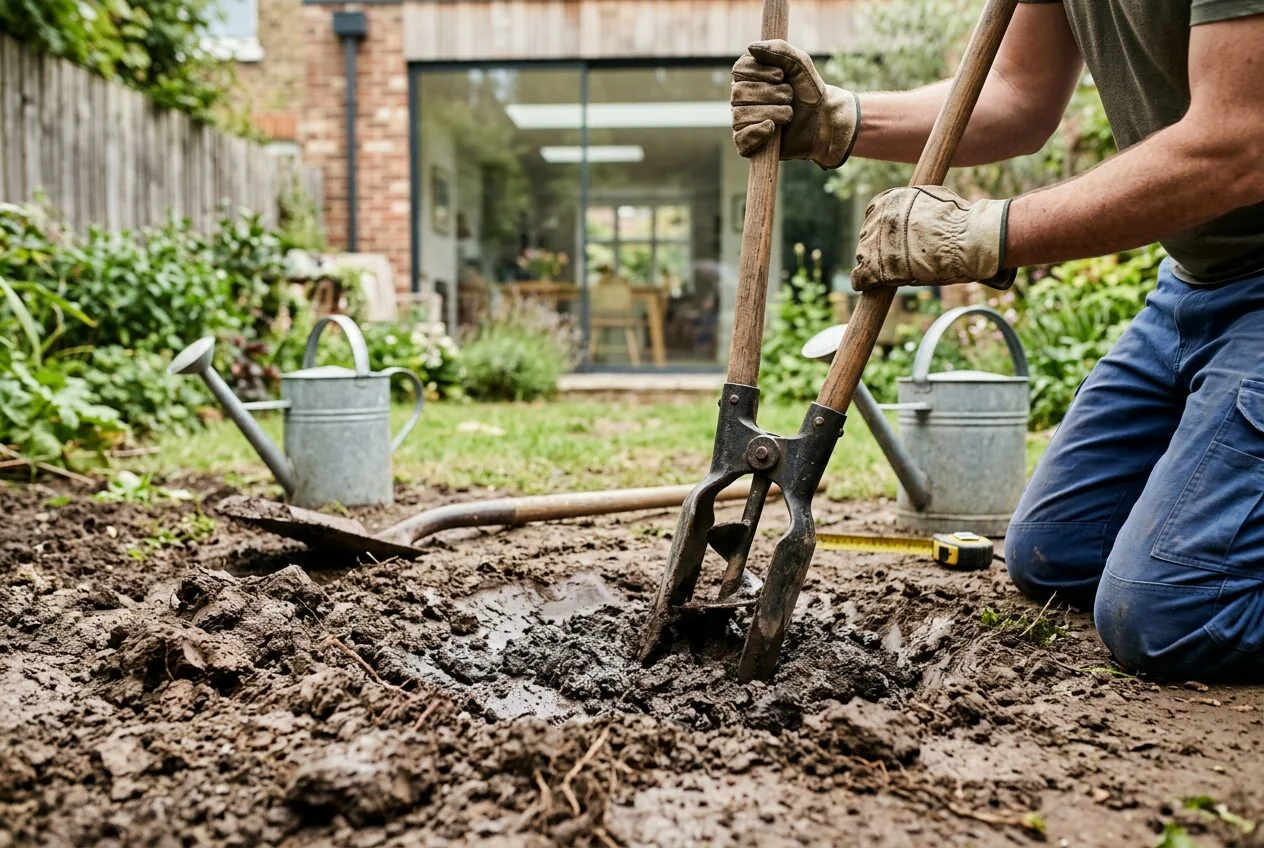
Instead of forcing the digger straight down, rock it side to side to loosen the soil. Twist the handles as you lift to break the suction.
For deep holes, work in layers remove the top 6 to 8 inches first, then continue deeper. This prevents the sides from collapsing and keeps the hole diameter consistent.
Manage Water and Moisture
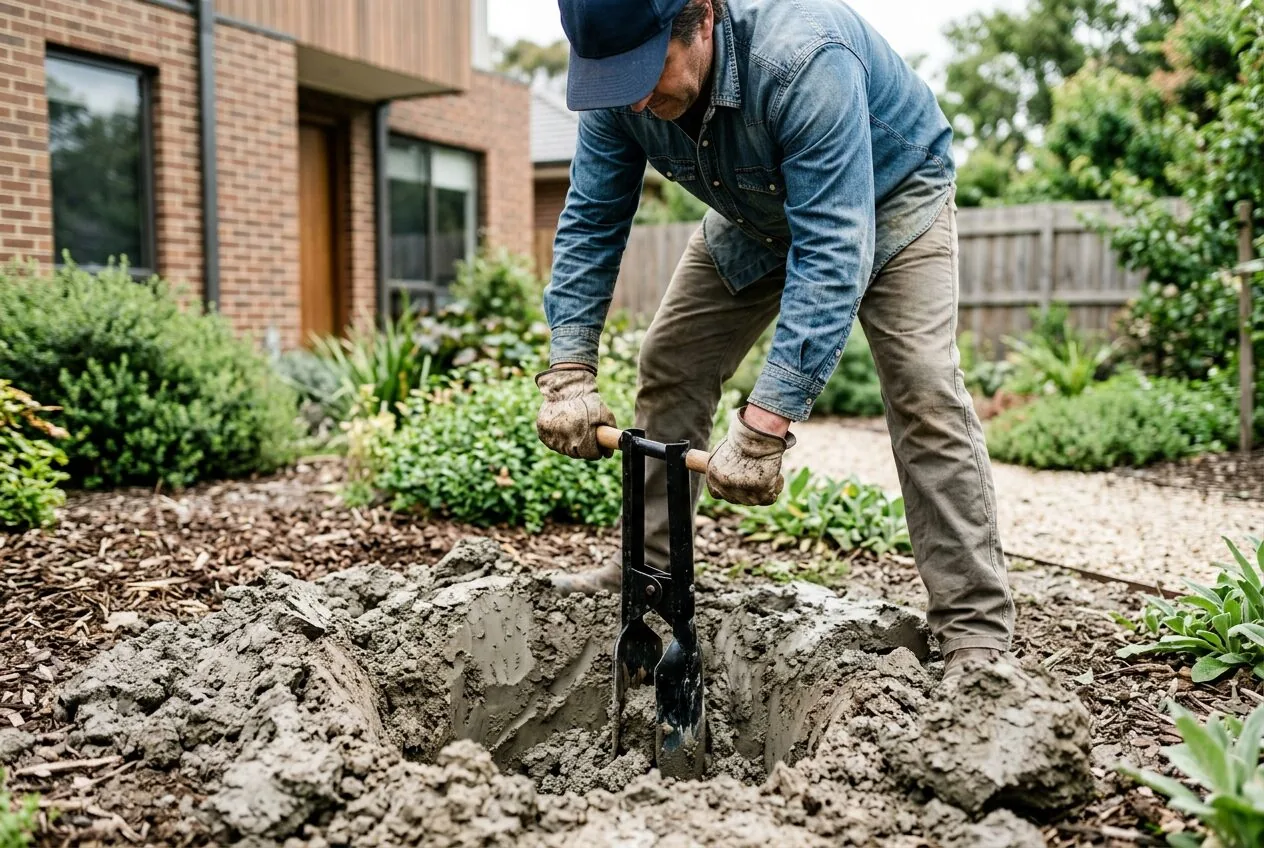
If water seeps into the hole as you dig, bail it out with a small cup or sponge. Standing water makes the clay slippery and harder to control.
For very wet sites, let the hole sit open for a few hours to drain naturally, then resume digging. Sprinkling a bit of dry soil or sand into the hole can absorb excess moisture temporarily.
Backfill Properly
After setting the post, backfill with a mix of the original clay and coarse gravel or crushed stone. Do not use pure clay, it will shrink and crack as it dries.
Tamp every 4 inches with a wooden stake or the end of a shovel to eliminate air pockets. This prevents the post from shifting and keeps rainwater from pooling around the base.
Frequently Asked Questions
Do I need to use a power auger?
Power augers can help, but they are often heavy and can get stuck in sticky clay. For most DIY fence posts, a manual clamshell digger works fine if you follow proper technique.
How deep should I dig post holes?
Depth depends on the frost line in your area and the height of your fence. A common rule is one‑third of the post length underground, but check local codes for specific requirements.
Can I dig post holes in clay when it is wet?
Wet clay is heavy and compacts easily, making digging much harder. It is best to wait until the top few inches are damp but not saturated. If you must dig in wet conditions, use a post hole digger with sharp blades and clean them frequently.
What type of gravel is best for drainage?
Crushed stone or pea gravel with irregular edges locks together and allows water to drain away from the post. Avoid smooth river rock, which does not compact well.
How long should I wait before setting posts?
Once the hole is dug, you can set the post immediately. However, if the ground is muddy, waiting a few hours or overnight for the soil to firm up gives a more stable hold.
About the author

admin writes reviews and buying guides for LAT Review.