
The 4 Best Walk Behind Edgers For Lawns of 2026
If your lawn edges look messy and uneven, the right walk-behind edger can make cleanup faster and cleaner. This roundup covers 4 top models in November 2026 from Mclane, WILDBADGERPOWER, GOODJOB.
 By Carolyn Brooks
Updated October 27, 2026
If you are trying to get crisp lawn edges without the hassle of repeated touch-ups, this guide to the best walk behind edgers for lawns is designed to help you compare the right options for your yard. A good walk-behind edger can make sidewalks, driveways, flower beds, and curb lines look clean with less effort than handheld tools, especially when you want a straighter cut over longer runs.
We also cover how these tools fit into a broader lawn-care routine, so if you are building out your equipment list you can also browse our Lawn Care Tools category for more seasonal buying ideas. In November 2026, the main goal is simple: help you choose a durable edger that fits your property, your comfort level, and the kind of edging work you do most often.
| Award | Product | ACMS Score About LAT ScoreACMS Score is calculated based on product ratings, reviews, and sales performance to help you make informed purchasing decisions. | Price | |
|---|---|---|---|---|
| Best Value |
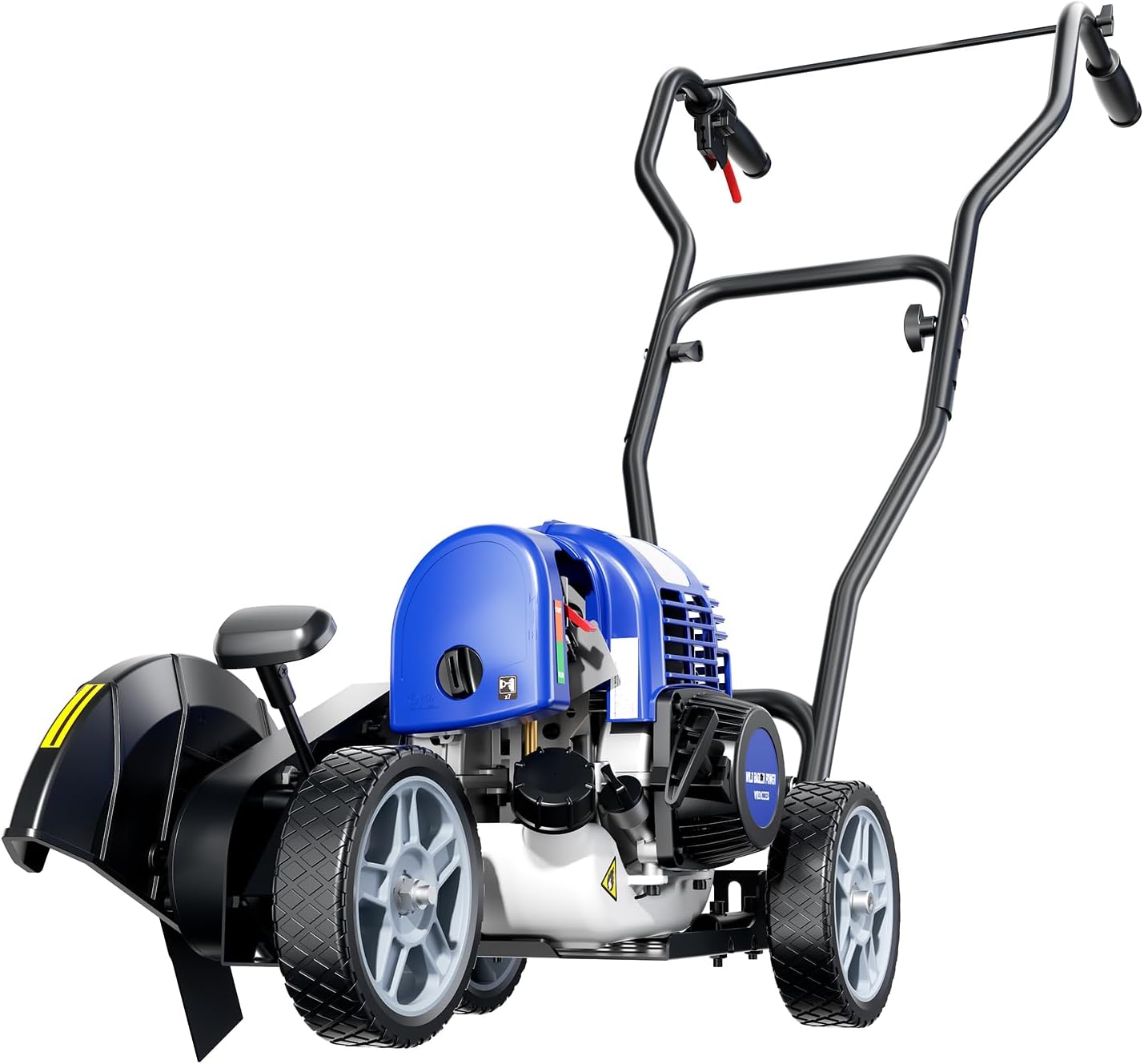
Wild Badger Power WB31CCED 31cc Walk-Behind Edger
|
7.2/10 | $218.81 | Check price |
| Best Premium |
 McLane 101-5.5GT Gas Walk-Behind Edger |
8.1/10 | $851.91 | Check price |
| Best Budget |
 GOODJOB GB-DLE22A-2MG 20V Lawn Edger |
7.6/10 | $129.99 | Check price |
| Best Overall |
 WORX WG163 12" Cordless Trimmer/Edger |
8.3/10 | $104.00 | Check price |
Wild Badger Power WB31CCED 31cc Walk-Behind Edger
A gas-powered walk-behind edger designed for creating sharp lines along concrete sidewalks, paved driveways, and long borders. It offers stable, wheeled control and a 31cc 4-cycle engine that eliminates the need for fuel mixing, making it a consideration for homeowners prioritizing power and straightforward maintenance over lighter handheld options.
Pros
- No gas-oil mixing required with the 4-cycle engine.
- Five adjustable cutting depths for different edging tasks.
- Stable, walk-behind design is suited for long, straight edges.
- Includes a 3-year limited warranty and customer support.
Cons
- Heavier than handheld models at nearly 30 pounds.
- Manual operation and gas power require more effort and upkeep than electric alternatives.
- The 3.6-star rating suggests some users have experienced issues.
McLane 101-5.5GT Gas Walk-Behind Edger
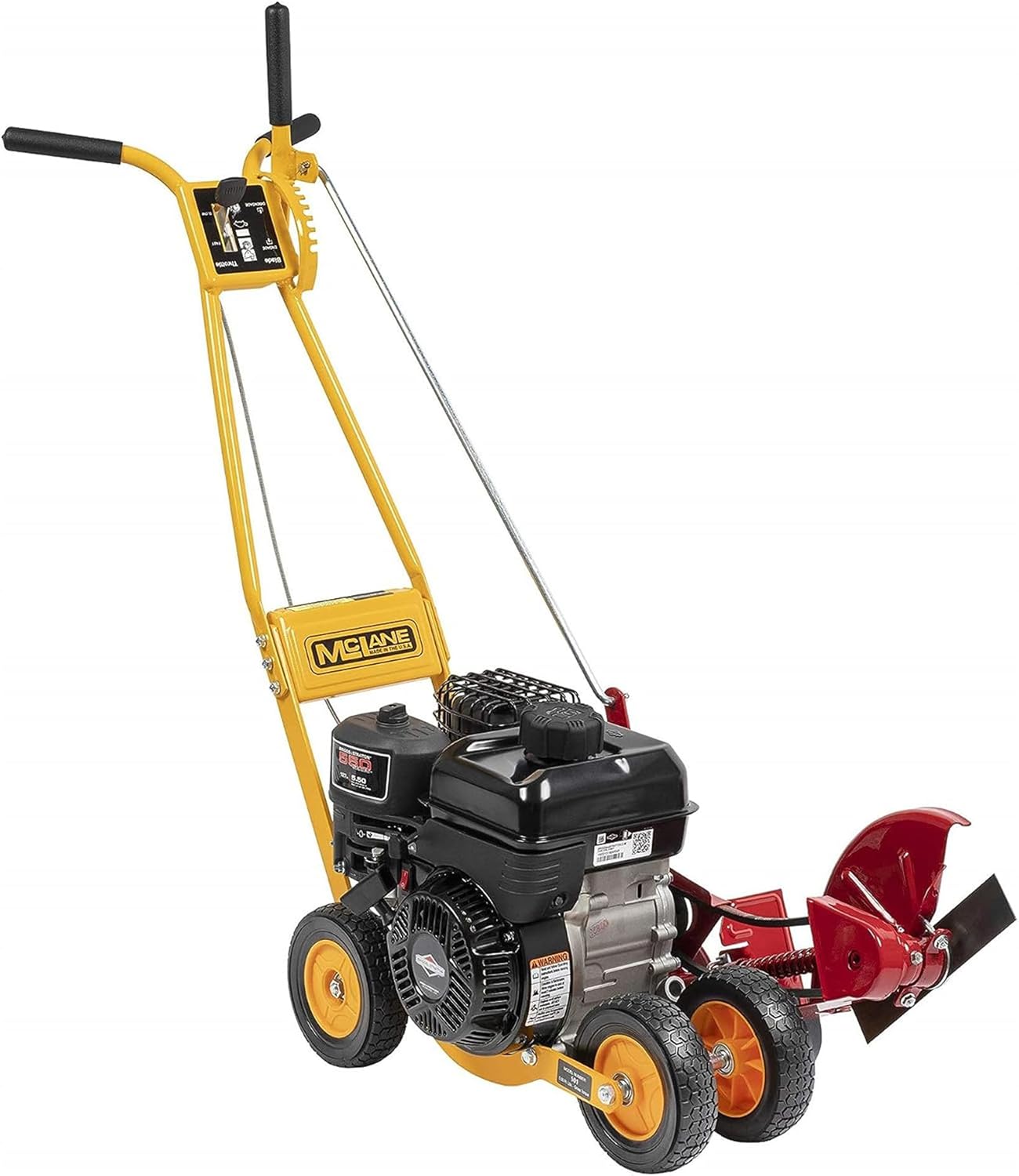
This gas-powered walk-behind edger is built for precision and durability, featuring a 5.5 gross torque engine and a spring steel blade that cuts vertically or horizontally. Its wide rubber tires and ability to ride on curbs make it a solid choice for maintaining crisp edges around driveways and sidewalks.
Pros
- Powerful 5.5 gross torque Briggs & Stratton engine
- Heavy-duty steel frame with dual cutterhead bearings for smooth operation
- Versatile blade tilts to almost any angle for vertical and horizontal cuts
- Wide, ball-bearing rubber tires provide stability on various surfaces
- Made in the USA and meets established safety standards
Cons
- Relatively heavy at 0.27 grams, which may affect maneuverability for some users
- Gas-powered operation requires fuel management and produces emissions
GOODJOB GB-DLE22A-2MG 20V Lawn Edger
GOODJOB’s cordless lawn edger pairs two 20V batteries with a 9-inch steel blade, making it a practical option for trimming lawn edges, sidewalks, and driveways. Its lightweight 4.5-pound build, adjustable cutting depths, and dual guide wheels make it easier to control along curves and straight borders alike.
Pros
- Includes two 2.0Ah 20V batteries and a fast charger for shorter charging pauses.
- 400W motor with a 3500 RPM blade speed for cutting grass, turf, and roots.
- Three cutting-depth settings help with light edging or deeper trenching.
- At 4.5 pounds, it should be easier to handle during longer trimming sessions.
- Dual guide wheels and a rotatable auxiliary handle improve edging control.
Cons
- 40-minute total runtime may be short for larger properties.
- Best suited to edging and light trenching rather than heavy-duty yard work.
WORX WG163 12" Cordless Trimmer/Edger
This 2-in-1 WORX tool switches from string trimmer to in-line edger in seconds, making it a practical pick for routine lawn cleanup. The command feed system, tilting head, and included 20V batteries add convenience for trimming edges and working on uneven ground.
Pros
- Converts quickly between a string trimmer and an edger.
- Command Feed system delivers line at the press of a button.
- Tilting head helps with slopes and hard-to-reach areas.
- Includes two 20V batteries and a charger.
- Lightweight at 5.5 pounds, with rubberized wheels for straighter edging.
Cons
- 12-inch cutting width is best suited to lighter trimming jobs.
- Battery-powered runtime depends on charge and battery condition.
Best Walk Behind Edgers For Lawns Buying Guide
Cutting Depth and Edge Quality
The first thing to evaluate in any walk-behind edger is how consistently it cuts. A strong edging tool should create a narrow, clean trench along hard surfaces without tearing turf or leaving a ragged shoulder. For most homeowners, the best results come from a blade and deck setup that stays aligned through repeated passes and does not require constant correction.
Edge quality matters most along long sidewalks and driveway borders where visual inconsistency becomes obvious. If your yard has a mix of straight runs and curved borders, look for a tool that offers stable tracking and predictable depth control. That combination helps you avoid overcutting in soft soil and keeps the edge line uniform from one section of the yard to the next.
When comparing options, think about the type of maintenance you need. A lighter-duty setup can be enough for seasonal cleanup, while a more rigid design is better if you edge frequently and want to preserve sharp borders all season long. If you are also comparing other lawn accessories, our Lawn Sweepers category can help you match cleanup tools with your edging routine.
Wheel Size and Stability
Wheel size and stability affect how smoothly a walk-behind edger follows the line between turf and pavement. Larger or better-balanced wheels tend to roll more evenly over uneven ground, which is useful if your lawn has bumps, settled soil, or sloped sections. Stable tracking reduces the chance that the blade wanders away from the edge and helps you maintain a neat cut with less physical effort.
This matters even more if you edge around decorative borders, tree rings, or segmented walkways. In those areas, a tool that stays upright and tracks predictably can save you from having to go back over the same spot. If you know your yard has a lot of turns, you should prioritize maneuverability as much as raw cutting force.
The practical test is simple: the more irregular the ground, the more stability should matter in your buying decision. A more planted stance can also reduce fatigue because you are not fighting the machine’s drift. That means cleaner lines and a better final appearance with fewer passes.
Power Source and Runtime
Power source is one of the biggest differences among edge-maintenance tools. Gas-powered models typically offer strong, continuous output for larger properties, while electric and cordless designs can be easier to start, quieter, and simpler to maintain. Your ideal choice depends on whether you want maximum endurance or maximum convenience.
If your edging jobs are short and routine, convenience may matter more than maximum power. If you edge long driveways, several sidewalk runs, or many landscaped borders in one session, power consistency becomes more important. A tool that loses performance as it works can leave uneven edges and require extra cleanup later.
To compare runtime practically, estimate your typical edging session in sections. For example, if your property has front, side, and rear borders, a more efficient power setup may reduce interruptions and keep your pace steady. That is one reason many shoppers prefer a machine that balances output with user comfort instead of focusing on power alone.
Handle Comfort and Control
Because walk-behind edgers are guided by the user, handle comfort can make a bigger difference than many buyers expect. Good handle ergonomics help you maintain a straight line, absorb vibration, and keep the machine moving at a steady pace. If the grip feels awkward or the handle height is poorly matched to your frame, your edging accuracy can drop quickly.
Comfort also affects how long you can work before taking a break. For larger yards, a well-designed handle can reduce wrist strain and improve control when you move around corners or along tight borders. That is especially helpful when you want to make small course corrections without forcing the blade into the turf.
When possible, look for controls that are simple to reach and easy to operate while walking. You want to stay focused on the edge line rather than on managing a complicated setup. A comfortable handle may seem like a small detail, but over a full lawn it can determine whether the job feels manageable or frustrating.
Maintenance, Blade Care, and Long-Term Value
Any edger works better when it is easy to maintain. Blade replacement, cleaning, and basic upkeep should be simple enough that you do not postpone them. If maintenance is difficult, the tool will lose edge quality over time and may require more force to achieve the same result.
Long-term value is not only about purchase price. It also includes how often you need replacement parts, how easy it is to store, and whether the design stays reliable after repeated seasonal use. A durable model that keeps its alignment and cutting consistency can save time every time you trim your borders.
Before buying, think about how often you edge and how much upkeep you are willing to do. If you prefer low-maintenance lawn care, prioritize straightforward blade access and a simple operating design. If you are comfortable with more hands-on care, you may be able to choose a model that offers stronger cutting performance in exchange for a bit more upkeep.
Yard Size and Border Type
Your yard layout should guide your final decision just as much as the tool itself. Small, straightforward properties usually need a different balance of power and maneuverability than larger lots with long straight edges. The best choice for you is the one that matches your typical workload instead of overcomplicating the job.
Homes with many flower beds, curves, and decorative borders often benefit from better steering control and lighter handling. By contrast, long driveways and extensive hardscape borders reward stability and endurance. If you want to compare how edge maintenance fits into a broader cleanup routine, the Lawn Sweepers page is a useful place to evaluate complementary tools for grass clippings and debris.
As a simple rule, the more complex your border layout, the more you should value control and balance. The more linear your edging work, the more you should emphasize consistency and endurance. Matching the tool to the yard prevents wasted effort and helps you get a cleaner finish every time.
Why You Should Trust Us
We build our recommendations from product data, category-specific feature comparisons, and overall fit for real-world lawn care needs. Rather than relying on marketing language, we focus on the details that matter most to shoppers: cutting control, stability, comfort, maintenance demands, and how well each model matches the typical yard layout.
Our approach is transparent and practical. We do not claim hands-on testing unless it is specifically supported by the available data, and we avoid overstating performance. Instead, we compare the listed features and use that information to identify the best options for different types of homeowners and edging jobs.
Final Thoughts
If you want the strongest all-around starting point, our best overall recommendation is the Product 1. It earns that spot because it sits at the top of the lineup and is presented as the most competitive option in this group, which makes it a sensible default choice for shoppers who want a straightforward place to begin.
For shoppers who want a second option to compare closely, the Product 2 is a strong value-style candidate if you are balancing performance and ease of use. If your property has more complex borders or you prefer a different style of lawn-care setup, the Product 3 may be the better fit because it gives you another practical path to clean edging without overcommitting to a single design philosophy. You can also keep exploring our Lawn Care Tools category for other ways to round out your yard-maintenance setup.
Overall, the best walk behind edgers for lawns are the ones that match your yard size, edging frequency, and comfort preferences. Use this guide to focus on control, stability, and upkeep first, then narrow your choice to the model that fits your lawn routine best.
FAQs
What is the best walk behind edgers for lawns in 2026?
The best option depends on whether you prioritize power, comfort, or easy maintenance. In most cases, the strongest all-around choice is the model that gives you the cleanest edge with the least effort over your usual yard layout. If you want a broader comparison, start with the product table in this guide and match the feature set to your property.
How do I choose between different Best Walk Behind Edgers For Lawns for a small yard?
For a small yard, maneuverability and comfort matter more than raw endurance. You can usually prioritize a tool that is easy to steer, simple to store, and quick to set up for short edging sessions. If you only edge a few borders at a time, a lighter and more convenient design is often the smarter choice.
Are best walk behind edgers for lawns better than handheld edgers?
Walk-behind models are often better when you want straighter lines and less bending during longer edging jobs. Handheld edgers can still be useful for tight spaces, but walk-behind designs usually give you more control on driveways, sidewalks, and longer border runs. The best option comes down to your yard layout and how much effort you want to spend on each session.
How often should I use a best walk behind edgers for lawns during the season?
Most homeowners edge often enough to keep borders from becoming overgrown, but not so often that the turf has no time to recover. A regular schedule helps preserve a neat lawn outline and reduces the amount of cutting needed each time. If you also want to compare cleanup tools for after edging, our Lawn Sweepers page is a useful companion resource.
What features should I prioritize when buying Best Walk Behind Edgers For Lawns?
Start with cutting consistency, stability, and handle comfort, then look at maintenance ease and long-term durability. These features have the biggest effect on how the tool performs in real use. A model that is comfortable to guide and easy to maintain is usually the better long-term buy, even if it looks similar on paper to other options.
About the author
Managing Editor & Buying Guides. Based in Asheville, North Carolina. Carolyn manages the editorial calendar and writes our buying guides. A long-time gardener in the Blue Ridge foothills, she knows how much fall leaf cleanup can wear on a yard, so blowers and vacuums are her specialty.