
The 4 Best Edger For Landscaping of 2026
Clean lawn edges can make a yard look sharper right away. 4 edger models for landscaping in November 2026 to help you choose the best fit for crisp borders and neat finishes.
 By admin
Updated October 27, 2026
If you want crisp borders around driveways, walkways, garden beds, and turf lines, choosing the right Best Edger For Landscaping can make routine yard work feel much more manageable. In this guide, we break down 4 options that can help you achieve cleaner edges with less guesswork, whether you are maintaining a small suburban lawn or handling more detailed landscape cleanup. For broader outdoor care comparisons, you may also want to explore our Lawn Care Tools category page.
We focused on the features that matter most for edging performance, ease of control, and long-term usability so you can narrow down the right match faster. If you are comparing other outdoor cleanup equipment too, our Lawn Sweepers category can help you round out your maintenance toolkit alongside the best best edger for landscaping.
| Award | Product | ACMS Score About LAT ScoreACMS Score is calculated based on product ratings, reviews, and sales performance to help you make informed purchasing decisions. | Price | |
|---|---|---|---|---|
| Best Premium |
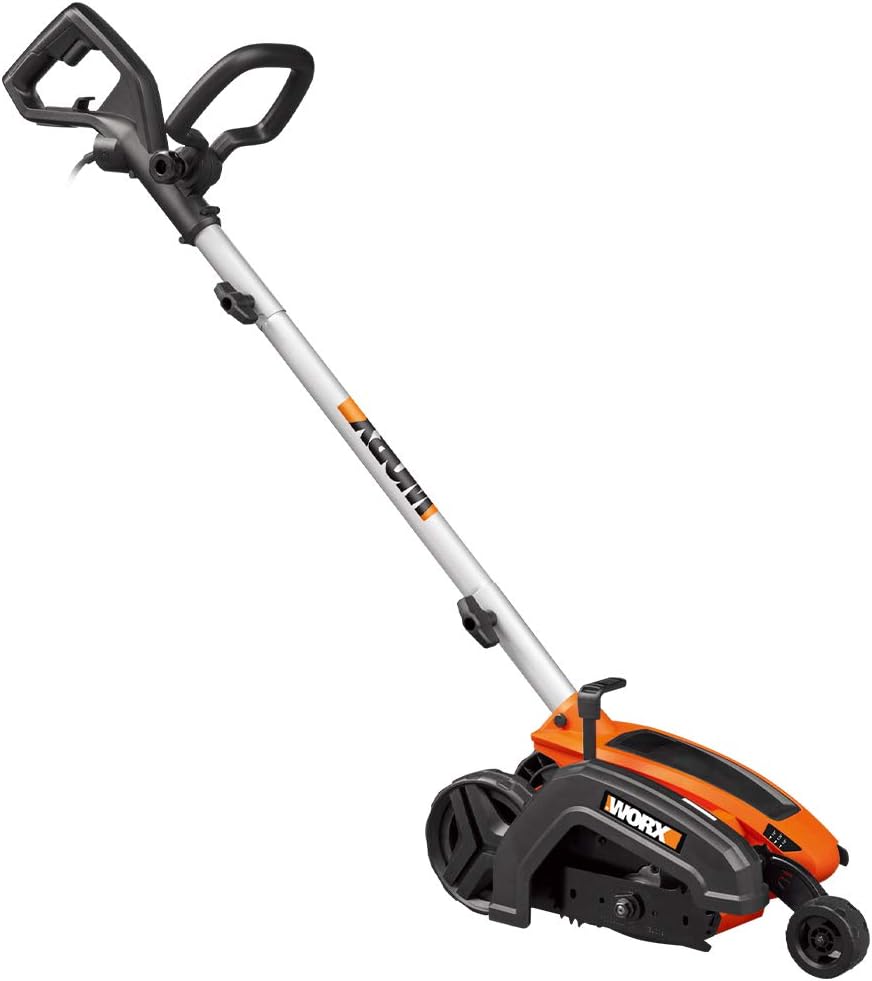
WORX WG896 7.5 Inch Corded Edger/Trencher
|
8.3/10 | $89.99 | Check price |
| Top Rated |
 BlumeTrec WRE-001 75-Inch Manual Lawn Edger |
7.6/10 | $32.99 | Check price |
| Best Budget |
 BlumeTrec ETL-001 Adjustable Lawn Edger |
8.0/10 | $19.99 | Check price |
| Best Overall |
 Amazon Basics 27032 12-Amp Electric Lawn Edger |
8.3/10 | $80.99 | Check price |
WORX WG896 7.5 Inch Corded Edger/Trencher
WORX WG896 is a corded electric edger and trencher with a 7.5 inch blade and 12 amp motor, aimed at users who need straight lawn lines or shallow trenches without gas maintenance. Its three depth settings, adjustable shaft, and cutting line guide make it practical for homeowners who want cleaner edges and wire burying. The 14 pound body and easy blade access help with storage and upkeep, but the short built in cord means extension cord use is expected.
Pros
- 12 amp motor and 7.5 inch serrated steel blade spin at 4700 rpm
- Three cutting depth settings for edging and trenching
- Adjustable shaft and D-grip handle suit different user heights
- Light 14 pound frame with easy blade access for cleaning and replacement
- 3 year limited warranty
Cons
- Requires an extension cord because the built in cord is only 1 ft
- Depth range tops out at 1.5 inches
- Corded design needs outlet access and cord management
BlumeTrec WRE-001 75-Inch Manual Lawn Edger
This manual edger relies on a wide, stable wheel and reinforced frame to make creating clean borders less strenuous. The adjustable handle accommodates different user heights, and the serrated scissor blades are designed for precise cuts along sidewalks and driveways.
Pros
- Wide 2.6-inch wheel provides stability and reduces tipping on uneven surfaces
- Adjustable handle offers four height settings for user comfort
- Reinforced metal frame and rust-resistant blades are built for durability
Cons
- Best performance is limited to flat surfaces, requiring careful handling near flower beds
- The 0.4-inch cutting width is relatively narrow for some edging tasks
BlumeTrec ETL-001 Adjustable Lawn Edger
A manual edging tool built for heavy-duty yard work, featuring a reinforced manganese steel blade to cut through tough turf and soil. Its adjustable handle and wide footplate aim to reduce user strain, making it a candidate for homeowners tackling extensive border maintenance.
Pros
- Reinforced, rust-resistant manganese steel blade designed for durability
- Three-position height adjustment (up to 42 inches) for different users
- Extra-wide footplate intended to improve leverage and reduce back strain
- Saw-tooth blade edge claimed to handle dense soil and roots effectively
Cons
- At over 4.5 pounds, its weight may be taxing for some users during extended tasks
- The fixed blade design lacks the versatility of multi-tool systems
Amazon Basics 27032 12-Amp Electric Lawn Edger
This corded electric edger delivers a powerful 4420 RPM for crisp landscaping lines. Its dual functionality as an edger and trencher makes it a versatile tool for garden beds and utility projects. The adjustable depth control and auxiliary handle aim to provide user-friendly operation.
Pros
- Powerful 12-amp motor with high RPM for efficient cutting
- Dual-purpose design functions as both an edger and trencher
- Adjustable blade depth and auxiliary handle for improved control
- Backed by a 5-year tool warranty
Cons
- Corded design limits range and requires a nearby power outlet
- Relatively heavy at 14.3 pounds, which may affect maneuverability
Best Edger For Landscaping Buying Guide
Cutting Depth and Edge Definition
Edge definition is the whole point of a good edger, so start by thinking about how deep and how cleanly you want the tool to cut. A shallow pass is usually enough for routine maintenance along sidewalks and patios, while overgrown turf edges may need a more assertive cut to re-establish a straight, visible line. The best choice is the one that lets you work consistently without tearing up the lawn.
Look for designs that help you keep the blade tracking along a predictable path. A stable guide, a well-balanced body, and a cutting head that stays aligned can all make a big difference when you are trimming long borders. In practice, the cleanest edging often comes from taking multiple controlled passes instead of forcing the tool to do too much in one go.
For yards with mixed surfaces, such as compacted soil near a garden bed and firmer turf beside a driveway, it helps to choose a model that can handle both without constant readjustment. If you are also comparing broader landscape maintenance gear, our Lawn Care Tools category is a helpful starting point for side-by-side research.
Power Source and Runtime Considerations
Power source strongly affects how convenient an edger feels during real use. Corded models can be a smart pick when you want uninterrupted operation near a power outlet, while battery-powered tools usually offer more freedom around trees, fences, and the far end of the yard. Manual options can still be useful for small spaces, but they demand more effort and are best suited to light edging tasks.
When comparing powered options, think about how long your edging sessions usually last and whether you prefer a lighter tool or a more extended work window. A practical way to decide is to estimate your total edging length first. If you only need to clean up a few dozen feet at a time, a simpler setup may be enough. If you maintain long borders every week, convenience and consistency matter more than the quickest first pass.
The right power choice also affects storage and setup. Some users prefer the simplicity of plug-in operation, while others value the mobility of cordless tools that can be carried from one side of the property to the other. The best edger for landscaping is usually the one that matches your yard layout and your tolerance for cords, batteries, or manual effort.
| Use Case | Best Power Style | Why It Helps |
|---|---|---|
| Small front yard | Manual or compact electric | Simple control and easy storage |
| Long sidewalk borders | Corded electric | Steady runtime without battery swaps |
| Large or scattered property | Cordless electric | Better mobility around obstacles |
Blade Style, Guard Design, and Accuracy
Blade style influences how cleanly the tool slices through the turf edge. A sharper, more focused cutting mechanism tends to produce a neater line, especially when you are refreshing an edge that has started to spread into the walkway. Guard design matters too, because it helps keep debris directed away from you and supports a more controlled cut.
Accuracy is about more than the blade itself. A comfortable front grip, a stable shaft, and a head that is easy to position all help you stay on line as you move along the border. If you have curved landscaping, flower beds, or narrow walkways, a tool that responds quickly to small steering corrections can save time and reduce the need for touch-up work.
One helpful way to compare products is to ask whether the blade setup is better suited for frequent maintenance or for reclaiming a heavily overgrown edge. Frequent maintenance usually favors control and finesse, while reclaiming an edge may require a more aggressive setup. That is why the best edger for landscaping is not always the most powerful one, but the one that best matches your actual edge condition.
The B0D4M8NW5Z option is a useful example of why accuracy matters, because edging performance depends on how confidently you can keep the tool aligned with the border rather than drifting into the turf.
Comfort, Weight, and Handling
Comfort becomes more important the longer you work, especially if your property has multiple borders or detailed curves. A tool that feels balanced in your hands is easier to guide in a straight line, and that stability can reduce fatigue during longer cleanup sessions. If a model feels awkward at the start, that usually becomes more noticeable after several minutes of edging.
Pay attention to the grip layout, the reach of the handle, and how naturally you can control the cutting head from a standing position. Small details such as handle texture and overall balance can make a major difference in comfort. If the tool encourages a natural posture, you are more likely to maintain a steady pace and produce more even results.
Weight is not just about convenience. It also affects precision. A lighter tool may be easier to lift and reposition, but it should still feel planted enough to avoid bouncing along uneven edges. The goal is to find a balance between maneuverability and stability so you can work cleanly without fighting the tool.
The B0GJ4R1RFV model is worth studying here because handling quality often decides whether a tool feels easy to guide around flower beds, tight corners, and narrow hardscape edges.
Maintenance, Durability, and Storage
An edger is only a good long-term purchase if it is easy to maintain. Check whether the design allows you to keep the cutting area clean, protect the working parts during storage, and handle normal wear without constant fuss. For many homeowners, the most valuable product is the one that stays ready between uses with minimal setup.
Durability should be judged by the total build quality, not just by one feature. A sturdy housing, a practical guard, and a straightforward design often last better than a complicated setup that is hard to clean or store. If your workspace is limited, also consider how compact the tool is and whether it can be stored without taking over your garage or shed.
Storage is especially important if you edge only part of the year or only during the busiest growth periods. A tool that packs away neatly will be easier to keep on hand and easier to bring back into service when your borders need attention again. Simple, durable construction often wins for homeowners who value convenience over extra features.
Matching the Tool to Your Yard Layout
The best edger for landscaping for your yard depends on more than product specs. Straight sidewalks favor tools with excellent tracking, while curved garden beds reward models that are easy to steer. If your landscape has mixed terrain, you may benefit from a tool that feels versatile enough to handle both routine touch-ups and more demanding edge resets.
It also helps to think about how often you edge. Weekly maintenance usually means you can prioritize comfort and speed of setup, because the turf has less time to spread. Less frequent edging may require a tool that can take on thicker buildup and still leave a clean finish. That is why many buyers do better when they match the tool to their maintenance habits instead of shopping by headline features alone.
For more lawn-care comparisons, you can also review our Edgers & Trimmers category page, which is a useful hub for comparing related tools and browsing similar options.
Why You Should Trust Us
We aim to make our recommendations as objective and useful as possible by comparing available product data, feature sets, and category-specific performance factors. Rather than relying on vague claims, we focus on how each model fits real landscaping needs such as edge control, handling comfort, and storage practicality. That approach helps us highlight the strengths and trade-offs that matter most when you are shopping.
We also keep our process transparent. When information is limited, we do not fill gaps with assumptions, and we avoid overstating what a product can do. Our goal is to help you choose confidently by presenting the most relevant details in a straightforward way, so you can compare options and decide which tool best matches your yard and your routine.
Final Thoughts
For the best overall pick, we recommend B00Q6EH7DW because it leads the comparison table and should be the first model to check if you want a balanced starting point for landscaping edges. If your main goal is getting a dependable all-around solution, this is the product we would look at first before narrowing down the rest of the field.
For the best value pick, B079PD1TNF stands out as a practical choice for shoppers who want a straightforward tool without overcomplicating the decision. If you are more focused on a specific yard setup or handling preference, B0G7B6LQV4 is a smart option to consider for more specialized edging needs. You can also continue researching related outdoor cleanup tools through our Lawn Sweepers page or return to the broader Lawn Care Tools category.
Overall, the right Best Edger For Landscaping is the one that gives you clean control, fits your yard layout, and feels comfortable enough to use regularly. If you keep edge shape, handling, and maintenance in mind, you will be in a much better position to choose a tool that performs well season after season.
FAQs
What is the best edger for landscaping in 2026?
The best edger for landscaping in 2026 depends on your yard size, edge shape, and how often you maintain your borders. For a balanced choice, start with the model positioned highest in the comparison because it is the most sensible place to begin if you want an all-around solution. From there, compare comfort, control, and storage to decide whether another option fits your routine better.
Do I need a powered edger or will a manual one work?
A manual edger can work well for small yards or occasional touch-ups, but powered models are usually better if you edge regularly or have long borders. If you want faster results and less physical effort, a powered option is often the more practical choice. Manual tools still make sense for simple setups where precision matters more than speed.
How do I choose the right Best Edger For Landscaping for curved landscape borders?
Curved borders are easier to manage with a tool that feels light, balanced, and responsive in your hands. You want a model that tracks smoothly without forcing you to overcorrect while moving around flower beds or decorative stones. If your landscape includes many curves, prioritize control and handling over raw aggressiveness.
What features matter most for clean edging results?
The most important features are cutting accuracy, stable handling, and a design that makes it easy to stay on line. A tool that is comfortable to guide will usually create cleaner borders because you can move more consistently. If you want more help comparing outdoor equipment, our Edgers & Trimmers category is a useful place to continue shopping.
How often should I edge my lawn?
Most lawns benefit from edging regularly enough that the turf does not spread too far over the border. If you maintain your yard often, the work stays easier and the finish tends to look sharper. Less frequent edging usually takes more effort, so consistency is the best way to keep the job manageable.
About the author

admin writes reviews and buying guides for LAT Review.