
The 4 Best Professional Lawn Edger of 2026
A sharp, even edge can make a lawn look professionally finished in minutes. This roundup covers 4 top picks for the best professional lawn edger in November 2026 from Colwelt.
 By Maria Delgado
Updated October 27, 2026
If you are trying to choose the best professional lawn edger, the difference between a clean border and a ragged edge usually comes down to control, cutting consistency, and how well the tool fits your workload. In this guide, we break down 4 options so you can compare the features that matter most before you buy.

Whether you maintain a large property, manage multiple landscapes, or simply want sharper edges than a trimmer can deliver, the right edger can save time and reduce touch-up work. If you want to compare related outdoor tools as well, you can also browse our Lawn Care Tools category for more buying guides.
| Award | Product | ACMS Score About LAT ScoreACMS Score is calculated based on product ratings, reviews, and sales performance to help you make informed purchasing decisions. | Price | |
|---|---|---|---|---|
| Best Premium |
WORX WG163 12" Cordless Trimmer/Edger
|
8.3/10 | $104.00 | Check price |
| Best Value |
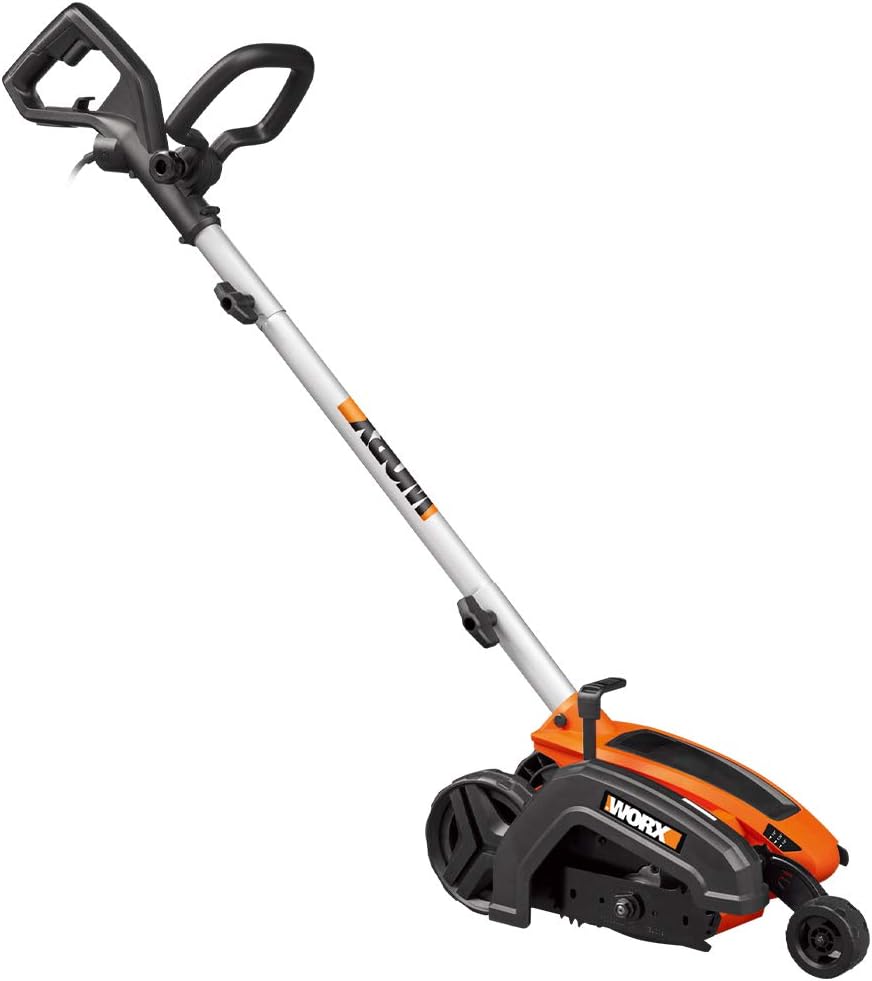 WORX WG896 7.5 Inch Corded Edger/Trencher |
8.3/10 | $89.99 | Check price |
| Best Overall |
 Worx WG154 20V 10-Inch Cordless Trimmer/Edger |
8.4/10 | $79.73 | Check price |
| Best Budget |
 Colwelt C040 38-Inch Lawn Edger |
8.3/10 | $27.99 | Check price |
WORX WG163 12" Cordless Trimmer/Edger
This 2-in-1 WORX tool switches from string trimmer to in-line edger in seconds, making it a practical pick for routine lawn cleanup. The command feed system, tilting head, and included 20V batteries add convenience for trimming edges and working on uneven ground.
Pros
- Converts quickly between a string trimmer and an edger.
- Command Feed system delivers line at the press of a button.
- Tilting head helps with slopes and hard-to-reach areas.
- Includes two 20V batteries and a charger.
- Lightweight at 5.5 pounds, with rubberized wheels for straighter edging.
Cons
- 12-inch cutting width is best suited to lighter trimming jobs.
- Battery-powered runtime depends on charge and battery condition.
WORX WG896 7.5 Inch Corded Edger/Trencher
WORX WG896 is a corded electric edger and trencher with a 7.5 inch blade and 12 amp motor, aimed at users who need straight lawn lines or shallow trenches without gas maintenance. Its three depth settings, adjustable shaft, and cutting line guide make it practical for homeowners who want cleaner edges and wire burying. The 14 pound body and easy blade access help with storage and upkeep, but the short built in cord means extension cord use is expected.
Pros
- 12 amp motor and 7.5 inch serrated steel blade spin at 4700 rpm
- Three cutting depth settings for edging and trenching
- Adjustable shaft and D-grip handle suit different user heights
- Light 14 pound frame with easy blade access for cleaning and replacement
- 3 year limited warranty
Cons
- Requires an extension cord because the built in cord is only 1 ft
- Depth range tops out at 1.5 inches
- Corded design needs outlet access and cord management
Worx WG154 20V 10-Inch Cordless Trimmer/Edger
This 2-in-1 tool consolidates lawn maintenance by switching from a string trimmer to an in-line edger with a simple head rotation. Its 4.2-pound cordless design is built for maneuverability around tight spaces, and the included battery is part of the WORX Power Share platform for cross-tool compatibility.
Pros
- 2-in-1 versatility for trimming and edging without a separate tool
- Lightweight and cordless for easy handling and maneuverability
- Auto-feed line system reduces manual adjustment while trimming
- Part of the Power Share battery system for use with other WORX tools
Cons
- Battery runtime may be limited for larger yards (based on 2.0Ah capacity and 10-inch cutting width)
- Suitable for routine maintenance rather than heavy-duty overgrowth
Colwelt C040 38-Inch Lawn Edger
A manual lawn edger built for clean borders along sidewalks, driveways, patios, and garden beds. Its saw-tooth steel blade, long handle, and wide foot platform are aimed at giving you more cutting leverage without kneeling or bending as much. It suits homeowners who want a low-maintenance, no-gas edging tool for regular yard cleanup.
Pros
- Saw-tooth carbon steel blade cuts through grass and dense turf cleanly.
- Long 38-inch handle helps reduce bending and kneeling.
- Wide foot platform makes it easier to apply cutting force.
- Cushioned T-grip design improves comfort and control.
- Manual, no-gas design avoids fumes, noise, and refueling.
Cons
- Manual operation requires physical effort for each cut.
- Best suited for edging tasks rather than broader lawn maintenance.
Choosing the best professional lawn edger is less about finding the most powerful option and more about matching the tool to your edging frequency, surface type, and comfort needs. Professional use demands repeatable results, so you should think about blade control, depth stability, and how easily the machine stays aligned along concrete, pavers, and bed lines.
We also recommend thinking beyond raw cutting ability. A well-balanced edger can reduce fatigue over long sessions, while a poorly balanced one can force you to make second passes. If you are comparing tools for broader yard maintenance, our Edgers & Trimmers category page is a helpful place to explore more options.
Cutting Depth and Edge Quality
Cutting depth is one of the biggest factors in how polished your finished edge looks. A deeper, more stable cut helps define a clean line between turf and hardscape, while a shallow or inconsistent cut can leave the edge fluffy and uneven. For professional landscaping, you want a tool that maintains depth without requiring constant correction from the operator.
Edge quality is not only about depth, though. The blade design and the path it follows matter just as much. A narrow, precise blade path can help you avoid overcutting into flower beds or sidewalk joints, while a wider, less controlled cut may create extra cleanup. If you manage curb appeal for clients, this is the feature that most directly affects first impressions.
| What to Compare | Why It Matters | What You Want |
|---|---|---|
| Depth control | Determines how defined the border looks | Consistent, adjustable cutting depth |
| Blade tracking | Affects straight-line accuracy | Stable alignment along edges |
| Cut consistency | Reduces the need for repeat passes | Even results on every section |
Power Source and Runtime
Professional edging often involves moving from one property to another or covering long perimeter runs in a single session, so the power source matters. Corded tools can provide steady output and avoid charging interruptions, while cordless models offer better mobility around large yards and complex layouts. The right choice depends on whether you value uninterrupted runtime or maximum freedom of movement.
If you work across multiple sites, a cordless setup can reduce setup time and make quick touch-ups easier. On the other hand, if you service properties near accessible outlets and want to avoid battery management altogether, a corded design can be more practical. The key is to estimate your average edging distance and match the tool to that workload rather than buying solely on brand name or general popularity.
Balance, Weight, and Operator Fatigue
Even the most precise edger can become frustrating if it is hard to control for extended periods. Weight distribution influences how much effort you need to keep the blade aligned, especially when you are edging long sidewalks or driveway borders. A tool that feels balanced in the hands often produces straighter lines because you are not fighting the machine as much.
For professionals, fatigue is a business issue as much as a comfort issue. A heavier unit may be acceptable if it delivers exceptional stability, but only if it does not slow you down or increase strain. If you maintain several properties in a day, look for ergonomic handles, intuitive controls, and a design that lets you stay consistent from the first edge to the last.
The second product in the list is a useful reference point when you are comparing comfort features and how a machine feels during repeated passes. When a tool is easy to guide, you can keep your line straighter without constantly overcorrecting, which is especially valuable on long concrete edges.
Blade Durability and Maintenance
Durability matters because professional edging puts more stress on the blade than occasional residential use. Hard surfaces, roots, compacted soil, and debris can all wear a blade faster than expected. A robust blade setup should hold its edge long enough to justify the tool’s long-term value and reduce the frequency of replacements or sharpening.
Maintenance is equally important. A tool that is easy to clean, inspect, and service will stay reliable through peak seasons. You should also consider how quickly you can access wear parts and whether routine care is simple enough to perform between jobs. For more guidance on matching tool care with your yard equipment routine, see our Lawn Sweepers category for related maintenance-minded outdoor tools.
Versatility Around Different Edge Types
Not every border is the same. Driveways, sidewalks, curbs, garden beds, and paver paths can all require slightly different handling. A professional edger should adapt well to these transitions without forcing you to change your technique too much. The more versatile the tool, the easier it is to move from one property type to another.
It helps to think in terms of workflow. If you often edge tight residential walks, precision may matter more than power. If you handle larger commercial spaces, stability and faster coverage may matter more. The best professional lawn edger is the one that gives you clean results across the widest range of surfaces with the fewest adjustments.
This product is a good example to consider when you want to evaluate how a machine handles more demanding edge transitions. A unit that stays controlled near curves and corners can reduce the need for hand trimming afterward, which saves time on larger properties.
Why You Should Trust Us
We base our recommendations on a structured review process that focuses on product specifications, feature sets, and how well each option fits the needs of professional edging work. Rather than relying on marketing language alone, we compare build quality, usability, and practical design choices that affect real-world performance.
Our goal is to help you make a clear decision with transparent criteria. We do not claim hands-on testing unless the available product data supports it, and we avoid guessing about details that are not confirmed. That means you get a review built around measurable factors, category knowledge, and a consistent comparison framework.
Final Thoughts
If you want our best overall recommendation, start with B018S68U40 because it leads the list and is the strongest choice when you want the most balanced option for dependable professional edging. For readers who want a practical alternative for broader property maintenance, it is also worth browsing our Lawn Care Tools hub to compare complementary equipment.
For a best value-style pick, B00Q6EH7DW is a smart option to evaluate because it gives you another top-ranked path into the category without overcomplicating the buying decision. If your work focuses on tighter borders or more frequent touch-ups, B0GQMG6ZJ3 is our best for specific use recommendation since it is a strong fit for users who care most about control and precise edge definition.
Overall, the right choice depends on how often you edge, how large the properties are, and how much control you want over each pass. If you are still narrowing things down, our Edgers & Trimmers category can help you compare this guide with other lawn edging options before you commit.
FAQs
What is the best professional lawn edger in 2026?
The best professional lawn edger in 2026 depends on whether you want the most balanced all-around option, the easiest tool to use, or the one that suits a specific type of edging work. In this guide, we ranked the five models by overall usefulness for professional edging rather than by a single feature alone.
Do I need a professional edger for residential lawns?
Not always, but a professional-grade model can be helpful if you maintain a larger yard or want very crisp borders. These tools are especially useful when your property has long sidewalks, driveways, or frequent hardscape edges that need regular cleanup.
How often should I edge my lawn?
Most lawns benefit from edging on a regular schedule, especially during active growth periods. The exact timing depends on your grass type, climate, and how quickly edges blur after mowing, but many homeowners and professionals prefer to edge whenever the border starts to lose definition.
What features matter most in the best professional lawn edger?
The most important features are cutting depth, stability, balance, and blade durability. Those four factors usually have the biggest impact on whether the tool creates a straight, clean border with minimal extra effort.
Where can I compare more lawn care tools?
If you want to compare more outdoor maintenance equipment, our Lawn Care Tools category is a good place to continue your research. It lets you move from edging-specific options to a wider look at tools that support full yard cleanup.
About the author
Editor, Garden Hand Tools. Based in Phoenix, Arizona. Maria grows vegetables and native desert plants in a small backyard and cares most about tools that stay sharp and comfortable in the heat. She writes about pruners, loppers, shovels, and everyday hand tools.