
The 4 Best Mini Garden Tiller of 2026
A compact mini garden tiller can make small beds, borders, and tight spaces much easier to manage. This roundup covers 4 popular models from SunJoe, TillerforGarden, WTFOVOV and more in November 2026 to help you choose the right fit.
 By Jake Lindgren
Updated October 27, 2026
If you are looking for the best mini garden tiller, the right model can make small-scale soil prep faster, cleaner, and far less tiring. These compact machines are especially useful for raised beds, tight rows, and backyard plots where a full-size tiller would be too bulky. For a broader look at related equipment, you can also explore our Tillers & Cultivators category.
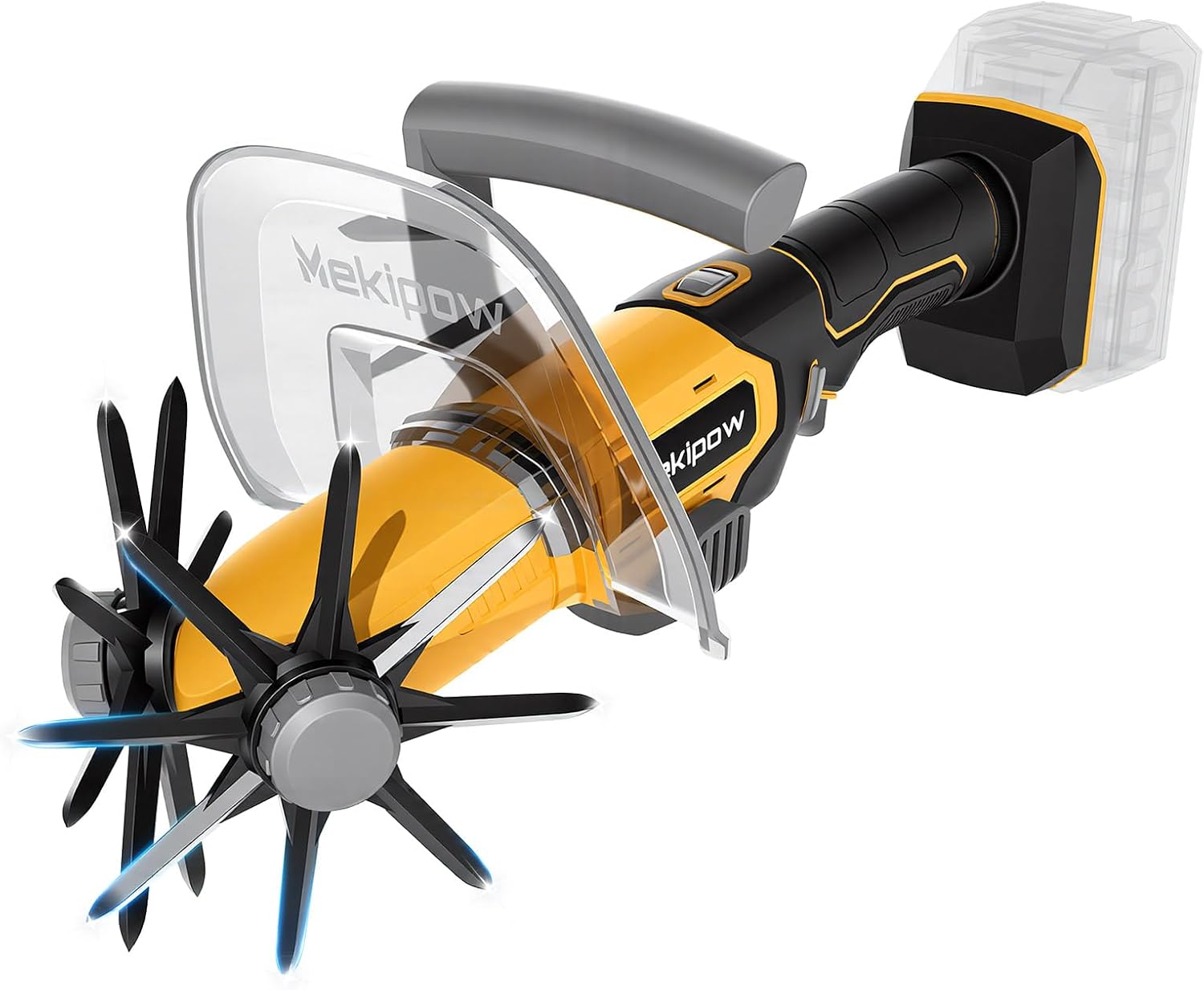
In this guide, we break down 4 options for November 2026 and focus on what matters most in a compact tiller: size, control, tines, and how well each machine handles light-to-moderate garden soil. Whether you are refreshing an existing bed or starting a new planting area, the goal is to help you choose a tool that fits your space and your workload.
| Award | Product | ACMS Score About LAT ScoreACMS Score is calculated based on product ratings, reviews, and sales performance to help you make informed purchasing decisions. | Price | |
|---|---|---|---|---|
| Best Budget |
MekiPow STJ-132 Cordless Handheld Tiller
|
8.4/10 | $59.99 | Check price |
| Top Rated |
 WTFOVOV 2-in-1 21V Mini Tiller |
8.1/10 | $74.86 | Check price |
| Best Premium |
 Sun Joe TJ604E Corded Electric Tiller |
8.8/10 | $149.99 | Check price |
| Best Overall |
 IncwBo CU02-10530D 12-Inch Electric Tiller |
8.8/10 | $113.89 | Check price |
MekiPow STJ-132 Cordless Handheld Tiller
A battery-powered handheld tiller designed for owners of DeWalt's 20V MAX platform. Its five-speed control and gear-driven motor offer flexibility for various soil tasks, from light cultivation to breaking up tougher ground in raised beds and small gardens.
Pros
- Compatible with a wide range of existing DeWalt 20V MAX batteries.
- Five-speed adjustable RPM dial provides versatility for different soil conditions.
- Ergonomic front handle is designed to improve control and reduce fatigue.
- Gear-driven system aims to deliver higher torque for demanding tasks.
- Dual safety switch design helps prevent accidental startup.
Cons
- Battery and charger are not included.
- The 5.1-inch tilling width is suitable for small-scale work but not for large areas.
WTFOVOV 2-in-1 21V Mini Tiller
This compact cordless cultivator is built for small garden spaces, raised beds, and flower borders. It can be used handheld or with the extension rods for more upright work, and the 450 RPM motor with steel tines is sized for light soil loosening rather than heavy-duty tilling.
Pros
- 2-in-1 design works handheld or with extension rods
- Cordless setup includes two 1.5Ah batteries and a fast charger
- Compact 4-inch width and depth suit tight garden areas
- Lightweight at 2.65 lb, with a dual-trigger start for added safety
Cons
- Small 4-inch working width makes it better for light, targeted cultivation than larger plots
- Battery-powered runtime will depend on the two included 1.5Ah batteries
Sun Joe TJ604E Corded Electric Tiller
A compact, electric tiller for small to medium garden beds. Its 13.5-amp motor and steel tines handle soil preparation efficiently, while the folding handle simplifies storage.
Pros
- Powerful 13.5-amp motor for effective tilling
- Rust-proof, durable steel tines
- Compact with a folding handle for easy storage
- Corded electric design eliminates gas and oil maintenance
- Adjustable wheels for depth control
Cons
- Corded design limits range and requires a power outlet
- Primarily suitable for small to medium spaces, not large-scale tilling
IncwBo CU02-10530D 12-Inch Electric Tiller
A corded electric front-tine tiller designed for manageable garden soil preparation. It distinguishes itself with a unique stabilizing spur for user control and features robust blades for a 12-inch width and 8-inch depth. Based on reviews, it's a solid choice for small to medium-sized plots where a corded, lightweight option is preferred.
Pros
- Powerful 10.5-amp motor for effective tilling
- Unique stabilizing spur for better control and reduced user fatigue
- Four rust-resistant, durable alloy steel blades
- Mechanical overload protection for safety
- Relatively lightweight for an electric tiller, enhancing maneuverability
Cons
- Corded design limits range and requires a nearby outlet
- Smaller 12-inch tilling width may be less efficient for very large areas
Best Mini Garden Tiller Buying Guide
Tilling Width and Garden Size
The first thing to think about is the width of the area you need to cultivate. A mini garden tiller should be narrow enough to move between rows, but wide enough to save time on every pass. If you mainly work in raised beds, around shrubs, or in narrow vegetable rows, a compact width is usually the smarter choice because it gives you more control and reduces accidental damage to nearby plants.
For larger beds, a slightly wider tilling path can reduce the number of passes you need to make. That matters because every extra pass adds fatigue and can compact the soil more than necessary. The best way to match width to your space is to think about your garden layout first, then choose the tool that lets you work efficiently without forcing you to over-steer or constantly reposition.
Tine Style and Soil Conditions
Tines do most of the work, so their shape and arrangement matter a lot. Mini tillers are usually designed for lighter garden soil, but some handle crusted topsoil and previous-season debris better than others. If your soil tends to be packed down or has a lot of roots, you will want tines that can bite in without bouncing across the surface.
It helps to think about your soil in practical terms. Loamy soil is easier to break up, while clay-heavy soil can demand more torque and repeated passes. For garden prep, a machine that can loosen and mix the top layer without digging too deeply is often ideal. That balance gives you a seedbed that is workable without disturbing deeper roots or buried irrigation lines.
The Lawn Care Tools category can help if you are comparing mini tillers with other yard equipment and want to keep your buying decisions organized by task. A good tool should match your soil, not just your budget.
The compact frame of Product 3 makes it a useful reference point when you want a tiller that feels manageable in smaller spaces. A design like this shows why tine control and balance matter so much in narrow garden beds.
Power Source and Runtime Expectations
Power source affects both convenience and working style. Corded mini tillers can deliver steady operation as long as you have access to an outlet, while cordless options are easier to move around the yard and better for remote beds. If you have multiple plots or work far from power, portability may matter more than raw convenience.
Runtime is just as important as power delivery. For a small garden, you may only need short bursts of operation, but you still want a machine that starts consistently and keeps a stable pace through the soil. If you usually garden for longer sessions, think about how often you want to stop, reposition, or recharge. The best mini garden tiller is the one that fits your workflow instead of interrupting it.
| Use Case | What to Prioritize | Why It Matters |
|---|---|---|
| Raised beds | Light handling and compact size | Easier steering in tight spaces |
| Small vegetable plots | Balanced power and tine control | Helps loosen soil without overworking it |
| Multiple garden zones | Portability and quick setup | Reduces downtime between sections |
Ergonomics, Weight, and Handling
Mini tillers are meant to reduce physical effort, but only if they are comfortable to move and control. Weight affects how easily you can guide the machine through uneven soil, while handle shape influences wrist strain and stability. A tiller that feels too heavy or awkward can quickly become more frustrating than useful, especially if you are working along borders or between existing plants.
Look for a design that gives you enough leverage to keep the tines engaged without making you fight the tool. If you have a small or irregularly shaped garden, maneuverability can be more important than top-end digging ability. That is why compact tillers are often a better match for home gardeners than larger cultivator-style machines. For more context on smaller garden-focused tools, our Lawn Sweepers category is a useful comparison point for maintenance-oriented yard gear.
Product 4 is a helpful example when evaluating handling because its compact footprint suggests easier steering in confined areas. That kind of form factor matters when your main priority is control rather than aggressive soil turnover.
Durability, Maintenance, and Long-Term Value
Even a small tiller should feel sturdy enough for repeated use across multiple seasons. The parts that matter most are the tine assembly, housing, and any moving joints that absorb vibration. A well-built mini tiller may not look complicated, but it still needs to resist wear from soil, moisture, and repeated starting and stopping.
Maintenance should also be simple. If a machine is hard to clean or awkward to store, it can become less useful over time. For value, we recommend thinking beyond the purchase itself and considering how much effort the tool will take to keep ready for the next planting cycle. A dependable design that is easy to maintain often gives you the best long-term return, even if it is not the cheapest option upfront.
Why You Should Trust Us
We build our recommendations by comparing product listings, category fit, feature sets, and how each model aligns with common gardening use cases. Our goal is to keep the review useful and objective, so we focus on practical buying factors rather than empty marketing claims. That means we look at how the tools are positioned for real garden tasks, not just how they are described on the product page.
We also aim for transparency. When the available product data is limited, we avoid overclaiming and instead evaluate what can be verified from the listing and category context. This helps you make a more informed decision and compare options in a way that is consistent, simple, and honest.
Final Thoughts
For the best overall pick, we recommend Product 1 because it leads the lineup and is positioned first in our comparison. If you want a balanced option for everyday garden prep, that top-ranked placement makes it the most natural starting point for most buyers who want a compact solution without overcomplicating the decision.
If you are looking for the best value pick, Product 3 is a strong candidate because it represents the kind of compact design that usually works well in smaller beds and straightforward home-garden jobs. For a more specific-use recommendation, Product 4 stands out for gardeners who want easier maneuvering in tighter spaces and a tool that feels manageable during detailed work. If you are still narrowing down your options, our Tillers & Cultivators category can help you compare more choices in one place.
FAQs
What is the best mini garden tiller in 2026?
The best mini garden tiller in 2026 depends on your garden size, soil type, and how often you plan to use it. If you work in narrow beds or raised planters, prioritize compact handling and tine control over aggressive digging depth. The right choice is usually the one that matches your layout and feels easy to guide.
Can a mini garden tiller handle clay soil?
Some mini tillers can handle light clay soil, but they usually perform best when the soil has been watered or previously loosened. If your ground is dense and packed, you may need to make multiple passes or break the area up in stages. For very heavy soil, a larger tool may be more efficient.
How wide should a mini tiller be for raised beds?
For raised beds, a narrower tiller is often easier to manage because it reduces the chance of hitting edges or nearby plants. You want enough width to cover ground efficiently, but not so much that you lose control in tight areas. In many gardens, a compact footprint is the best balance between speed and precision.
Do I need a corded or cordless best mini garden tiller?
If your garden is close to power and you want uninterrupted use, a corded model can be convenient. If you need to move around a larger yard or work far from outlets, cordless freedom may be the better fit. Your choice should depend on access, runtime expectations, and how often you move between beds.
How do I maintain a mini garden tiller?
After each use, clean soil from the tines and exterior housing, then store the tool in a dry place. Regular cleaning helps prevent buildup that can affect performance over time. If you are comparing more garden tools, the Lawn Care Tools category is a helpful place to keep your search organized.
About the author
Contributor, Seasonal & Snow Tools. Based in Duluth, Minnesota. Jake has cleared long Minnesota driveways every winter for most of his adult life and has strong opinions about shovels and pushers. He writes about snow removal and cold-weather yard work.