
The 5 Best Chainsaw Ripping Chain of 2026
If you need a clean, efficient cut for milling logs, the best chainsaw ripping chain can make a big difference. This roundup covers 5 top options in November 2026 to help you choose the right one with confidence.
 By Maria Delgado
Updated October 27, 2026
If you are looking for the best chainsaw ripping chain, the details matter more than most buyers expect. A ripping chain is built to cut with the grain of the wood, so the right choice can improve cut quality, reduce strain on your saw, and make milling jobs feel far more controlled. In this guide, we break down 5 options so you can compare them with a clear eye and match the chain to your milling setup.
We also recommend checking our broader Chainsaws & Saws category page if you want to compare this guide with other saw-related buying advice. That can help you decide whether you need a ripping chain now or whether another cutting tool might suit your next project better.
| Award | Product | ACMS Score About LAT ScoreACMS Score is calculated based on product ratings, reviews, and sales performance to help you make informed purchasing decisions. | Price | |
|---|---|---|---|---|
| Best Budget |
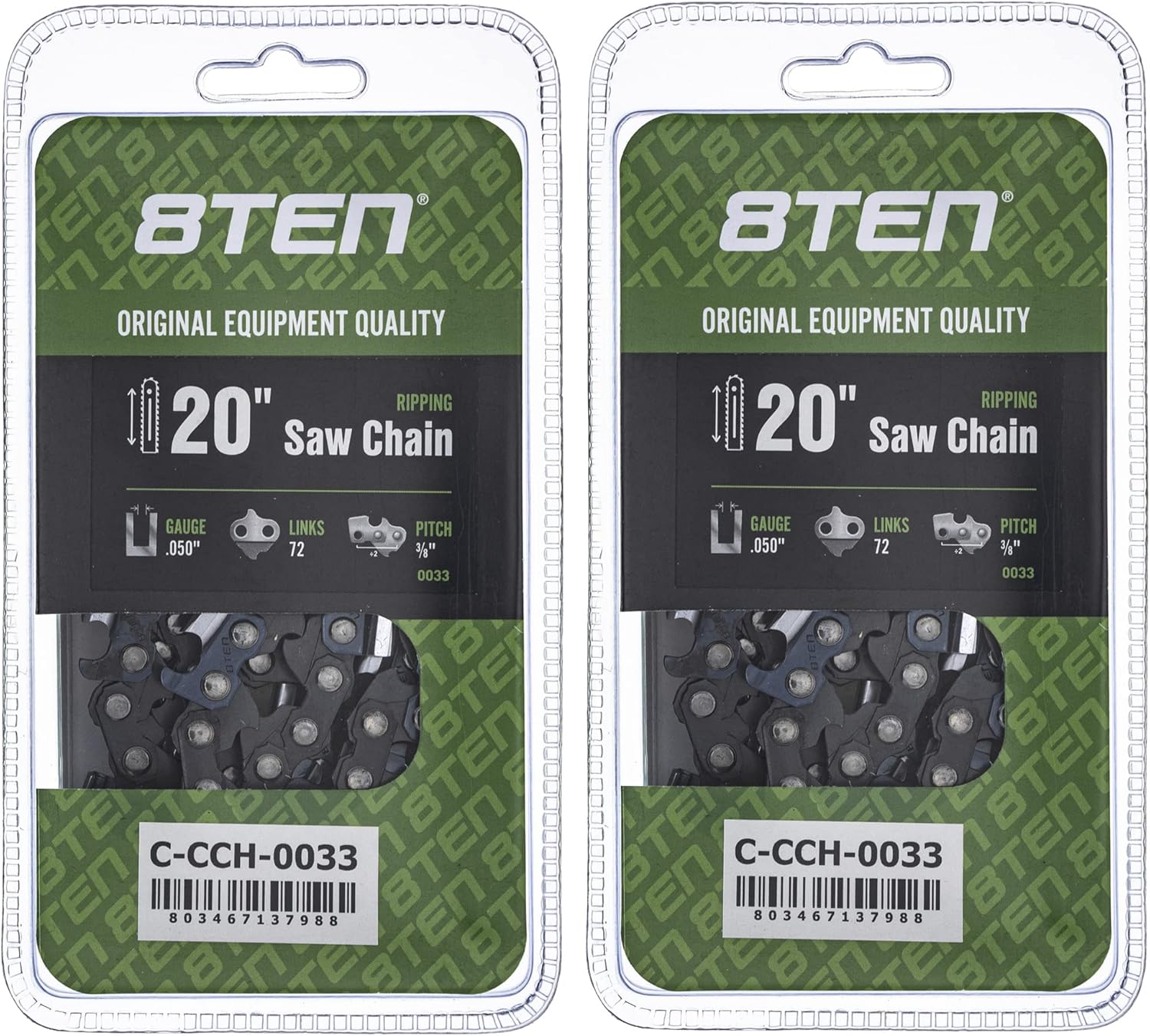
8TEN 810-CCC2255H 20-Inch Ripping Chainsaw Chain
|
8.6/10 | $31.95 | Check price |
| Best Overall |
 Oregon 38LP04356 16-Inch Low-Kickback Chainsaw |
9.1/10 | $15.98 | Check price |
| Top Rated |
 Oregon 72RD084G 84-Drive-Link Ripping Saw Chain |
8.8/10 | $64.30 | Check price |
| Best Value |
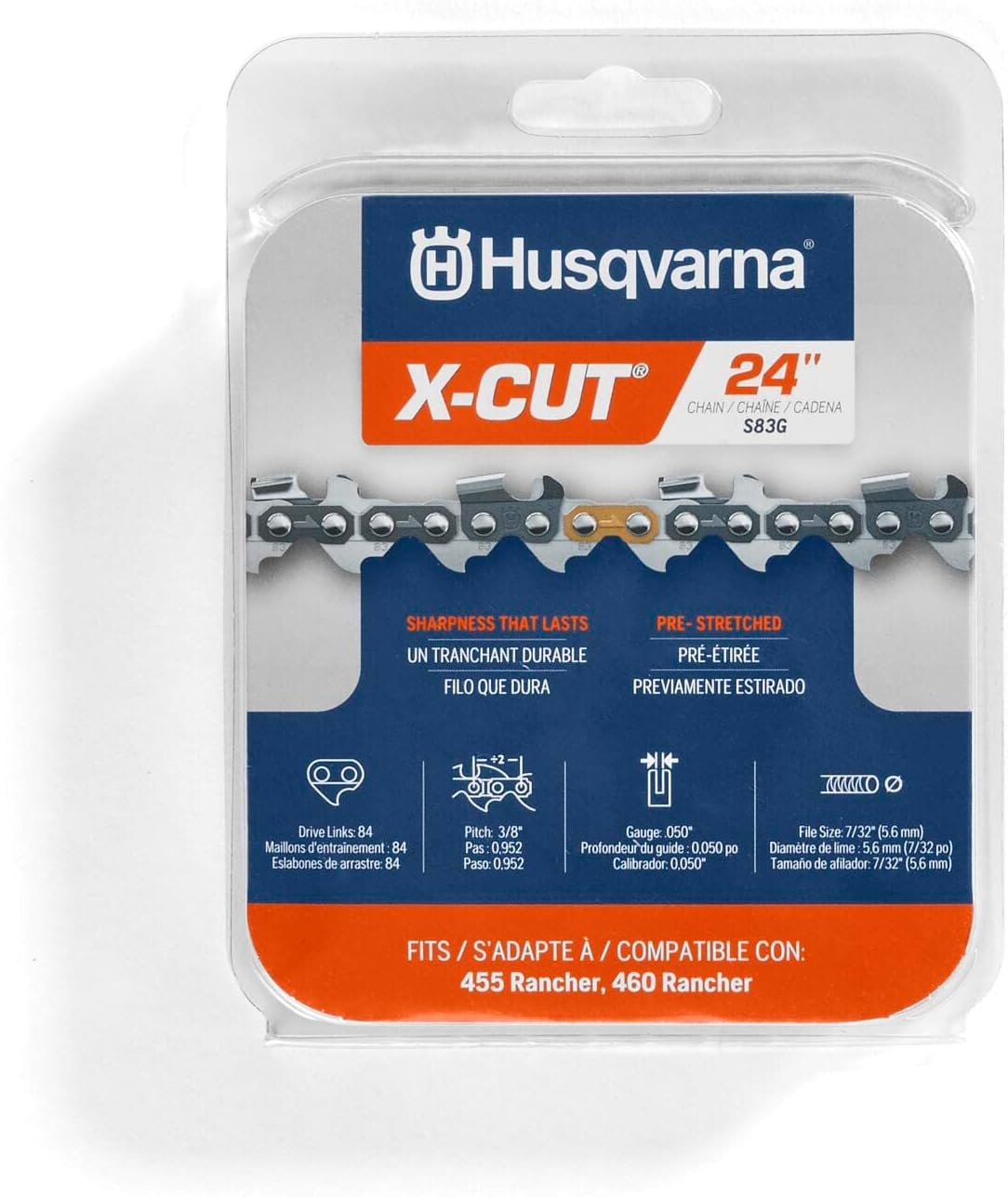 Husqvarna S83G 24-Inch Chainsaw Chain |
9.1/10 | $33.99 | Check price |
| Best Premium |
 Husqvarna 585550072 20-Inch X-Cut Chainsaw Chain |
9.1/10 | $59.99 | Check price |
8TEN 810-CCC2255H 20-Inch Ripping Chainsaw Chain
This two-pack of 20-inch ripping chains from 8TEN is a versatile fit for a wide range of saws from Husqvarna, Stihl, Poulan, and others. Based on user feedback, the chains are noted for their durability and value in a two-pack format. It's a solid choice for woodworkers and landowners needing specialized chains for milling or rip cuts.
Pros
- Comes as a two-pack for extended use and value.
- Highly compatible with numerous saw models from major brands.
- Made from durable 68CrNiMo33 steel with a long 810-day warranty.
- Positive user rating of 4.5 stars from over 150 reviews.
Cons
- Ripping chain design is specialized and not ideal for general cross-cutting.
- Requires careful verification of fitment for specific saw models.
Oregon 38LP04356 16-Inch Low-Kickback Chainsaw
An OEM-quality replacement chain for many popular 16-inch electric and gas chainsaws. Its low-kickback design enhances safety without sacrificing cutting performance, making it a reliable choice for routine yard maintenance.
Pros
- Engineered for low kickback, meeting ANSI and CSA safety standards.
- Broad compatibility with major brands like Makita, EGO, DeWalt, and Milwaukee.
- Oregon's heritage as the original saw chain inventor suggests proven reliability.
- High 4.8-star rating from nearly 4,000 reviews indicates strong user satisfaction.
Cons
- Fitment is highly specific (3/8" LP pitch, .043" gauge, 56 links), requiring careful verification.
- Primarily a replacement part with no additional features or accessories.
Oregon 72RD084G 84-Drive-Link Ripping Saw Chain
This specialized ripping chain is designed for use with chain-type sawmills, featuring a cutter grind optimized for cutting with the grain. Its Vibe-ban chassis and LubriLink tie straps are engineered to reduce vibration and improve oil retention. It is not recommended for handheld chainsaws.
Pros
- Engineered for reduced vibration with Vibe-ban chassis.
- LubriLink tie straps help maintain oil on the chain.
- High user rating suggests reliable performance for its intended use.
Cons
- Specifically for sawmills, not suitable for standard handheld chainsaw use.
Husqvarna S83G 24-Inch Chainsaw Chain
This 24-inch semi-chisel chain is designed to match Husqvarna 455 and 460 Rancher saws, promising improved cutting precision and reduced user fatigue. Its design is noted for being less sensitive to dirt and easier to maintain than some alternatives.
Pros
- High user rating suggests reliable performance.
- Semi-chisel design is noted for durability and ease of sharpening.
- Manufactured to be compatible with specific Husqvarna chainsaw models.
- Designed to reduce operator strain and fatigue during use.
Cons
- Compatibility is limited to specific chainsaw models.
Husqvarna 585550072 20-Inch X-Cut Chainsaw Chain
This three-pack of Husqvarna's premium X-Cut chains provides a convenient supply for users of compatible 20-inch saws. The full-chisel design is engineered for aggressive cutting, and the high user rating suggests reliable performance.
Pros
- Premium full-chisel chain design for aggressive cutting
- Convenient three-pack offers multiple replacements
- High 4.8-star rating indicates strong user satisfaction
- Specific compatibility ensures a precise fit for designated saws
Cons
- Premium performance may command a higher price point
- Compatibility is limited to a specific set of chainsaw parameters
Best Chainsaw Ripping Chain Buying Guide
Raker Depth and Cutting Behavior
The first thing to understand about a ripping chain is how its cutters behave compared with a standard crosscut chain. Ripping chains usually use a lower cutting angle so they shave wood fibers more smoothly along the grain. That geometry helps produce cleaner lumber surfaces and can reduce the chatter you may see when using a regular chain for milling.
Raker depth matters because it controls how aggressively the cutters bite into the wood. Too much bite can increase vibration and load on the saw, while too little bite can slow your feed rate and make milling feel inefficient. If you are new to milling, prioritize a chain that is known for a smoother, more controlled cut rather than the most aggressive feed.
For a practical comparison, think about the wood you mill most often. Softwoods like pine and cedar are generally easier to process, while denser hardwoods reward a chain that stays composed under load. If you are still learning the basics of saw selection, our Hand Saws & Pruning Saws category can also help you understand where a ripping chain fits among other cutting tools.
Chain Pitch, Gauge, and Compatibility
Compatibility is the most important filter because the best ripping chain in the world will not help if it does not match your bar and sprocket setup. You need to confirm pitch, gauge, and drive link count before you buy. A mismatch can lead to poor fit, unsafe operation, or a chain that simply cannot be mounted correctly.
Most buyers should check the saw manual first, then compare that information against the product listing. If you already own a milling bar, verify the chain specifications against that bar as well, because some setups are more particular than standard cutting configurations. The best approach is to write down your current chain details before shopping so you can compare them quickly.
When comparing options, use a simple checklist like this:
| Spec | Why it matters | What to verify |
|---|---|---|
| Pitch | Must match the sprocket and bar | Consult your saw manual or current chain |
| Gauge | Affects how the chain sits in the bar groove | Check bar stamp or replacement chain spec |
| Drive links | Determines actual fit length | Match your bar length and setup |
The chain associated with Product 4 is a useful example of why these details matter. Even a well-built ripping chain must align with the correct bar and drive system before its cutting geometry can do its job. If you are comparing a few models, use the fit specification as your first pass and the cutting design as your second.
Cut Quality and Surface Finish
One reason people buy a ripping chain is to improve the finish on milled boards. Instead of leaving a rough, torn surface, a good ripping chain can create a flatter cut that reduces the amount of sanding or planing you need afterward. That can save time on every board, especially if you mill frequently.
Surface finish is influenced by more than the chain alone. Wood species, bar stability, chain sharpness, and feed technique all play a role. Even the best chain will leave a cleaner surface when the saw is sharp, the bar is straight, and you feed the mill consistently. For that reason, it is smart to think of cut quality as a system rather than a single feature.
If you want to improve finish quality, look for chains that are described as smooth cutting and that have a reputation for holding an edge through longer milling sessions. In practice, that means fewer interruptions to sharpen and a more predictable result from cut to cut. Many users find that a small improvement in finish quality becomes very noticeable after milling several slabs.
Product 7 is a helpful reference point here because cut quality is often easiest to judge when a chain is used in a demanding milling environment. If your priority is smoother stock and reduced cleanup, this is the kind of product profile worth studying closely alongside the rest of the lineup.
Durability and Sharpening Frequency
Durability is especially important if you mill hardwoods, cut dirty logs, or work for long periods without stopping. A chain that dulls quickly can turn a productive session into a frustrating one because feed rate drops and the saw has to work harder. That extra work may also increase heat and make the chain feel inconsistent.
Sharpening frequency is not just about how long the chain lasts. It is also about how easy the chain is to maintain. A chain that sharpens predictably can be more valuable than one that claims a slightly longer edge but is difficult to restore. If you sharpen your own chains, look for a profile that gives you consistent tooth shape after multiple touch-ups.
For the average buyer, the best choice is often a chain that balances edge retention with easy maintenance. If you are milling occasionally, convenience may matter more than maximum lifespan. If you mill regularly, long-term durability and repeatable sharpening should be higher on your list.
Vibration, Feed Rate, and User Control
A ripping chain should feel controlled rather than twitchy. Lower vibration and predictable feed rate make it easier to keep the mill aligned, which can improve both safety and cut quality. If a chain wants to pull too aggressively, you may end up fighting the saw instead of guiding it.
Think about your own workflow. Do you want a chain that moves quickly through softwood slabs, or do you prefer a calmer chain that makes the process feel steadier? If you are newer to milling, a more forgiving feed rate can be a real advantage because it gives you time to maintain posture and alignment. Experienced users may prefer a faster-feeding option if they are comfortable managing the saw.
There is also a practical connection between feed rate and saw stress. A chain that cuts too aggressively may increase strain on the powerhead and reduce your ability to keep the cut straight. The right choice should help the saw stay in its comfort zone while still moving efficiently through the log.
Value, Replacement Planning, and Long-Term Use
Value is not always the lowest upfront cost. For ripping chains, value often comes from how consistently the chain performs across multiple sharpenings and how well it fits your most common jobs. If you mill only once in a while, a straightforward option may be enough. If you use your saw often, buying for durability and compatibility may save more over time.
It is also smart to plan for replacement before you need it. Many users keep a spare chain ready so work does not stop when the active chain dulls or gets damaged. That approach is especially useful if your projects are time sensitive, because a backup lets you keep milling while the first chain is being sharpened or serviced.
If you are comparing multiple options, think in terms of total workflow cost. A chain that cuts cleanly, sharpens easily, and stays compatible with your saw can be more economical than a cheaper alternative that creates more downtime. That is the kind of tradeoff worth weighing carefully before you buy.
Why You Should Trust Us
Our recommendations are built around product specifications, chain geometry, compatibility details, and the practical needs of milling users. We focus on what matters most for buyers: whether a chain fits correctly, cuts smoothly, and supports the type of work you actually plan to do. That makes the guide useful even when product listings vary in how they present details.
We also aim to stay transparent about limitations. If a product page does not provide enough information, we avoid filling in the gaps with guesses. Instead, we compare the available data against the needs of real-world users, then organize the results into a guide that helps you narrow the field with confidence.
Final Thoughts
If you want the best overall option, start with the Product 1 because it anchors the top of this comparison and is presented as the strongest all-around choice in the list. For buyers who want a practical balance of fit, performance, and everyday usability, that kind of position usually signals a dependable default pick for most milling setups.
For a best value angle, the Product 2 is worth a close look if you want solid ripping-chain fundamentals without overcomplicating the decision. If you are planning your next project and want more context around saw-related purchases, our Chainsaws category page can help you compare this guide with other chainsaw-focused options.
For a specific use case, the Product 3 stands out as a candidate for users who care most about controlled milling and consistent cutting behavior. If your workflow is more specialized, that kind of focused choice can matter more than trying to pick the most general option. You can also explore our other saw guides, including the best pruning saw for large branches roundup, if your yard and workshop needs go beyond milling.
FAQs
What is the best chainsaw ripping chain in 2026?
The best chainsaw ripping chain in 2026 depends on your saw, your bar length, and how often you mill. If you want the safest starting point, choose the chain that matches your compatibility specs first and then compare cutting behavior, sharpening ease, and durability. That approach keeps you from overbuying features you do not need.
How do I know if a ripping chain fits my saw?
Check pitch, gauge, and drive link count against your current chain or saw manual. Those three numbers determine whether the chain will sit correctly on the bar and engage the sprocket properly. If you are unsure, verify the specs before buying rather than assuming a chain will fit because it looks similar.
Can I use a ripping chain for regular cutting?
You can, but it is not ideal for everyday crosscutting. A ripping chain is designed to cut with the grain, so it may feel slower or less efficient on general bucking tasks. If you regularly switch between milling and standard cutting, you may want to keep a separate chain for each job.
How often should I sharpen a best chainsaw ripping chain?
Sharpen when you notice slower cutting, rougher surface finish, or more vibration than usual. The exact interval depends on wood type, dirt contamination, and how long you mill each session. If you want a broader overview of saw maintenance and related tools, our best small hand saw guide offers additional context on cutting performance and upkeep.
What makes one best chainsaw ripping chain better than another?
The best chain for you is the one that fits your setup, cuts cleanly, and stays manageable during long milling sessions. Performance is not just about aggressive cutting. It is about consistent feed, good finish quality, and a sharpening profile you can maintain over time.
About the author
Editor, Garden Hand Tools. Based in Phoenix, Arizona. Maria grows vegetables and native desert plants in a small backyard and cares most about tools that stay sharp and comfortable in the heat. She writes about pruners, loppers, shovels, and everyday hand tools.