
The 7 Best Chainsaw Protective Gloves of 2026
Chainsaw work demands gloves that protect your hands without getting in the way. These picks cover 7 top options from Oregon, Vgo in November 2026 to help you choose with confidence.
 By Carolyn Brooks
Updated October 27, 2026
Choosing the Best Chainsaw Protective Gloves is about more than comfort. When you are handling a chainsaw, your gloves need to support grip, control, dexterity, and abrasion resistance without making your hands feel clumsy. In this guide, we break down 7 options so you can compare the details that matter most before you buy. If you are also upgrading other gear, you may want to explore our Chainsaws & Saws category for more related advice.

Because glove features can look similar at first glance, the real differences often show up in the materials, reinforcement zones, fit, and how well each pair balances protection with flexibility. We focused on the practical details that affect real use, from palm grip to cuff design, so you can make a smarter choice in November 2026.
| Award | Product | ACMS Score About LAT ScoreACMS Score is calculated based on product ratings, reviews, and sales performance to help you make informed purchasing decisions. | Price | |
|---|---|---|---|---|
| Best Value |
Vgo CA9760CS Leather Chainsaw Gloves
|
8.8/10 | $42.73 | Check price |
| Best Overall |
 Husqvarna 590091101 Classic Safety Kit with Chaps |
8.9/10 | $176.99 | Check price |
| Also Great |
 Vgo Leather Chainsaw Gloves with A5 Cut Resistance |
8.0/10 | $36.78 | Check price |
| Most Popular |
 Vgo GA8912 Leather Chainsaw Gloves |
8.6/10 | $37.98 | Check price |
| Also Great |
 Oregon 564449 Left-Hand Chainsaw Gloves |
8.6/10 | $19.40 | Check price |
| Best Budget |
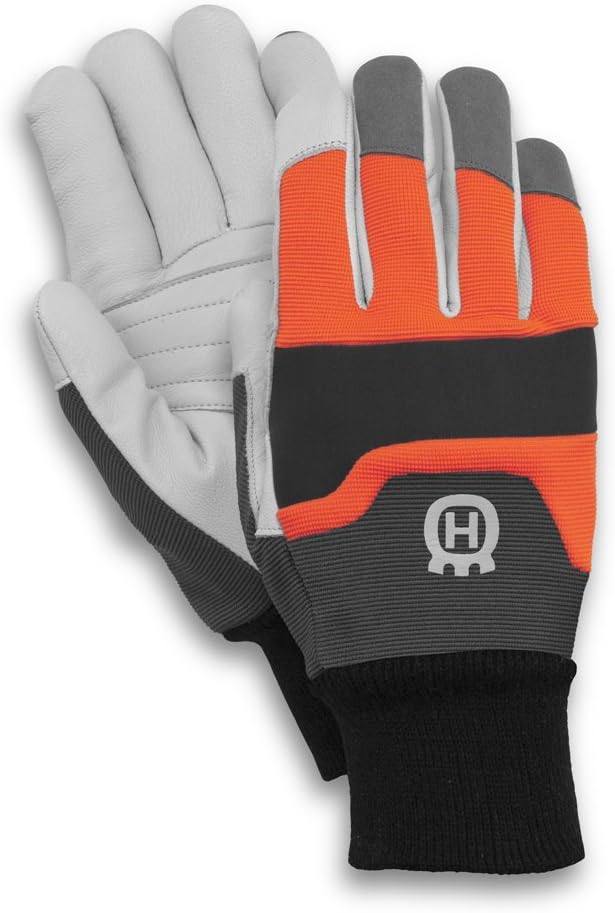 Husqvarna 529520001 Chainsaw Protection Gloves |
8.8/10 | $36.93 | Check price |
| Top Rated |
Vgo CA9760CS Chainsaw Gloves
|
8.8/10 | $42.73 | Check price |
Vgo CA9760CS Leather Chainsaw Gloves
Vgo CA9760CS gloves are chainsaw protection gloves for logging, forestry, and power tool work. The 12-layer cowhide construction, textured PVC palm, and precurved fingers aim to balance cut resistance with dexterity. Their EN ISO 11393-4 level 1 rating and hi-viz orange color make them a practical choice for outdoor cutting tasks.
Pros
- 12-layer cowhide construction with textured PVC palm patches
- EN ISO 11393-4 level 1, class 1, 20 m/s chainsaw protection
- Precurved fingers and stretch spandex back support dexterity and breathability
- Neoprene cuff with hook and loop closure for a secure fit
- Hi-viz orange color improves visibility in outdoor work
Cons
- Not water resistant
- Hand wash only
- 3-month manufacturer warranty
Husqvarna 590091101 Classic Safety Kit with Chaps
This comprehensive safety kit bundles essential personal protective equipment for casual chainsaw users. It provides certified leg, head, and hand protection in a single, cost-effective package, making it a straightforward choice for new owners or as a gift.
Pros
- Includes all essential PPE (chaps, helmet, gloves) for basic chainsaw work in one kit.
- Chaps and helmet meet key ASTM, ANSI, and OSHA safety standards for certified protection.
- Helmet integrates hearing protection and a face shield, offering multi-point defense.
- High-visibility color enhances user visibility on job sites.
- Rated highly by users with a 4.7-star average from hundreds of reviews.
Cons
- Gloves are described as general-purpose, not specialized heavy-duty chainsaw gloves.
- Chaps are sized for a specific inseam (32 inches), which may not fit all users.
- Manufacturer warranty period is relatively short at 90 days.
Vgo Leather Chainsaw Gloves with A5 Cut Resistance
These leather-palmed gloves are engineered for chainsaw and power tool work, offering certified A5-level cut resistance and integrated anti-vibration padding. They balance safety features like a chainsaw stopper patch with practical touches, including touchscreen-compatible fingertips. A solid option for forestry and demanding DIY tasks where hand protection is paramount.
Pros
- Features ANSI A5 / EN388 Level E certified cut-resistant fabric for high protection.
- Includes UHMWPE chainsaw stopper patches on the back of both hands for added safety.
- Abrasive cow leather palm with PVC reinforcement enhances durability.
- 5mm memory foam padding helps reduce vibration from power tools.
- Touchscreen-compatible fingertips and a pre-curved design offer practical dexterity.
Cons
- Care instructions specify hand wash only, which may be less convenient than machine-washable options.
- Requires careful storage away from sunlight and heat to avoid deformation.
Vgo GA8912 Leather Chainsaw Gloves
These left-handed chainsaw gloves are designed for professional-grade hand protection, meeting the EN ISO 11393-4 safety standard. They combine a goatskin leather palm with high-visibility, breathable fabric for dexterity in demanding tasks like logging and metalworking.
Pros
- Features a specialized chainsaw stopper patch on the left hand for cut resistance to a recognized safety standard.
- Premium goatskin leather palm offers comfort and dexterity for extended wear.
- High-visibility orange back and neoprene cuff with velcro provide a secure, adjustable fit.
- Versatile for various heavy-duty applications beyond chainsaw use.
Cons
- Protection is specifically designed for the left hand, which may not suit all users or tasks requiring ambidextrous safety.
- Requires careful maintenance, including storage away from sunlight and heat to avoid deformation.
Oregon 564449 Left-Hand Chainsaw Gloves
These Oregon chainsaw gloves are built for left-hand protection, which makes sense for users who want extra coverage on the free hand while keeping the operating hand more comfortable. The washable material adds easy upkeep, and the 4.5-star rating from 454 reviews suggests broad buyer approval.
Pros
- Left-hand chainsaw protection targets the hand that needs the most coverage.
- Washable material makes cleanup straightforward.
- Strong customer rating based on 454 reviews.
Cons
- Left-hand protection only, so it is not a full-pair protection solution.
Husqvarna 529520001 Chainsaw Protection Gloves
Designed for forestry work, these gloves offer critical cut resistance specifically in the left hand for chainsaw users. They combine a durable goatskin palm with a high-stretch spandex back and high-visibility colors for a secure, dexterous fit. Based on user reviews, they are noted for a positive fit and reliable protection.
Pros
- Cut-resistant protection in the left-hand glove, crucial for chainsaw safety.
- Durable goatskin palm with reinforced stitching and thumb for abrasion resistance.
- High-visibility colors and a reflective logo enhance safety in low-light conditions.
- Spandex fabric back provides a high-stretch, flexible, and comfortable fit.
- Free from common chemical irritants like latex, BPA, and phthalates.
Cons
- Water resistance is not a feature, which could be a limitation in wet conditions.
- The cut resistance is only specified for one hand, not both.
Vgo CA9760CS Chainsaw Gloves
These Vgo chainsaw gloves are built for forestry and other heavy-duty outdoor work, with cow leather construction, cut-resistant backing, and an extended cuff to help keep sawdust out. The pre-curved fingers, reinforced palm, and touchscreen feature make them more practical for all-day use than a basic work glove.
Pros
- Chainsaw protection rated to EN ISO 11393-4 Level 1, Class 1, 20 m/s.
- Cow leather construction with reinforced palm and reinforced stitching.
- Breathable stretch spandex back and pre-curved fingers for better dexterity.
- Extended cuff and hook-and-loop closure help improve fit and keep debris out.
- Touchscreen-compatible design.
Cons
- Not waterproof.
- Heavyweight build may feel bulkier than lighter-duty work gloves.
Best Chainsaw Protective Gloves Buying Guide
Protection and Cut Resistance
The first thing to evaluate is how much real protection the gloves provide. For chainsaw work, you want gloves that are built to reduce the risk of abrasion and contact injury while still letting your hands move naturally. Reinforced palms, impact-prone stitching, and protective material placement all matter here.
Not every pair is designed for the same level of defense. Some gloves emphasize light yard work and general handling, while others are built with stronger reinforcement for tougher tasks. If your work involves frequent cutting, limbing, or cleanup around sharp branches, it is better to prioritize stronger protection over a softer, more casual feel.
| What to Compare | Why It Matters | What You Want |
|---|---|---|
| Palm reinforcement | Helps reduce wear in high-contact areas | Durable overlay or reinforced zones |
| Finger coverage | Protects exposed joints and edges | Full, comfortable coverage without stiffness |
| Material thickness | Influences how much protection you feel | Balanced thickness, not bulky |
For readers comparing protective gear across the site, our Hand Saws & Pruning Saws category also covers tools that pair well with safer, more controlled trimming tasks. The same mindset applies here: choose protection that matches the job, not just the label.
Grip and Control in Wet or Dusty Conditions
A chainsaw glove is only useful if it helps you maintain control of your tool, especially when your hands get sweaty, dusty, or damp. The best options use textured palms, secure seams, and materials that do not slide against the handle. Good grip reduces fatigue and helps you keep a steadier hold during repetitive tasks.
If you have ever felt your hand slipping while repositioning a tool, you already know why grip matters so much. Gloves that are too smooth can make you over-squeeze the handle, which tires your hands faster. A well-designed palm should help you hold the saw securely without forcing extra effort from your fingers and forearm.
The %product:2:name% is a useful example of why grip design matters. When a glove has a secure palm structure and a shape that follows the hand naturally, it can improve control during long sessions and reduce the need for constant readjustment.
Fit, Dexterity, and Finger Mobility
Chainsaw work often demands a surprising amount of finger precision. You may need to adjust chain tension, clear debris, fasten gear, or handle small tools while wearing gloves. That means the fit should be snug enough to avoid excess material in the fingers, but not so tight that it limits circulation or movement.
Dexterity is especially important if you switch between cutting and cleanup tasks. Gloves that are too stiff can slow you down, while overly thin gloves may feel nimble but offer less confidence. The best balance is a glove that bends easily at the knuckles and allows you to grip and release quickly without fighting the material.
Fit also affects safety. Loose fingertips can interfere with your grip, and bunching at the palm can create pressure points over time. When possible, compare size guidance carefully and look for gloves that mention flexibility features, ergonomic shaping, or pre-curved fingers.
Durability and Reinforced Wear Zones
Durability is a major factor because gloves take constant abuse from bark, branches, rough handles, and general jobsite wear. A glove with stronger stitching and reinforced wear zones will usually last longer than one that only looks protective on the outside. Pay attention to the palm, thumb saddle, fingertips, and seams, since these are the areas that fail first.
Long-term value often comes from construction quality rather than flashy features. If the seams pull apart or the palm surface wears thin quickly, you will end up replacing the gloves more often. That is why we look for builds that appear ready for repeated use rather than occasional light chores.
One helpful habit is to match durability to your workload. If you only prune occasionally, a lighter pair may be enough. If you handle cleanup after frequent cutting sessions, choose something with stronger reinforcement and a more robust shell, even if it feels a little firmer at first.
Comfort, Breathability, and All-Day Wear
Even protective gloves need to stay comfortable over longer periods. Breathability helps prevent sweaty hands, while padded areas can reduce pressure without making the glove feel stiff. This matters because discomfort often leads to poor hand positioning, more frequent breaks, and less control of the saw.
Comfort is not just about softness. A glove can feel pleasant for ten minutes and still become annoying after an hour if it traps heat or rubs in the wrong place. Look for a design that balances cushioning with airflow and does not create hot spots across the knuckles or thumb webbing.
If you are shopping for a broader equipment setup, pairing comfortable gloves with other well-matched tools can make a big difference. For additional cutting-tool comparisons, our best Japanese hand saw for wood guide is a useful companion read.
The %product:3:name% is a good reminder that comfort and protection should work together. A glove can only perform well if you are willing to keep it on for the full job, so features that reduce fatigue can be just as important as reinforced materials.
Cuff Design and Ease of Use
Cuff style affects how fast you can put the gloves on and take them off, and it also influences how much debris gets inside. A secure cuff can improve coverage and keep the glove in place, while a poorly designed opening can make the glove feel loose or awkward during active work.
Think about your typical workflow. If you move between the truck, the yard, and cutting tasks repeatedly, easy on-off performance matters. If you stay on one job for longer stretches, a more secure cuff may be worth a little extra effort to get a snugger fit and better debris control.
| Cuff Style | Typical Benefit | Best For |
|---|---|---|
| Slip-on | Fast to wear and remove | Quick tasks and frequent breaks |
| Elastic wrist | More secure hold | Active cutting and climbing around brush |
| Extended cuff | Added coverage | Messier cleanup and rough terrain |
As you compare options, remember that the best glove is the one you will actually keep using. For that reason, cuff comfort, wrist security, and overall convenience should be part of your decision, not afterthoughts.
Why You Should Trust Us
We base our recommendations on product data, feature comparison, and a structured review process designed to reduce guesswork. Rather than focusing on marketing claims alone, we look at the practical details that matter for chainsaw work: protection, fit, grip, durability, and comfort.
Our goal is to help you compare options objectively, so we use the same criteria across all products in the list. We also keep the buying advice transparent, which means we highlight where a glove is likely to excel and where it may be less suitable for demanding jobs. That approach gives you a clearer basis for choosing the right pair for your needs.
Final Thoughts
If you want our best overall recommendation, the %product:1:name% stands out as the most balanced pick in this lineup. It is the kind of option we would favor when we want a glove that can handle repeated use while still offering the kind of control and comfort you need for real chainsaw work.
For a best value style choice, the %product:2:name% is worth close attention because value is not only about cost, but about how well a glove delivers usable protection and grip for everyday tasks. If your needs are more specific, the %product:3:name% is a smart option to consider for users who prioritize dexterity and comfort during longer sessions or mixed yard work.
To keep comparing related gear, check out our best garden hand saws guide and our broader Chainsaws & Saws category. Those pages can help you match your gloves with the right cutting tools and overall workflow.
FAQs
What is the best chainsaw protective gloves in 2026?
The best chainsaw protective gloves in 2026 depends on whether you value protection, dexterity, or comfort most. In this roundup, our top pick is the one that best balances those priorities while still feeling practical for regular chainsaw use. If you need a starting point, focus on grip, reinforced wear zones, and a secure fit.
How tight should Best Chainsaw Protective Gloves fit?
Best Chainsaw Protective Gloves should fit snugly without cutting off circulation or forcing your fingers into an awkward position. You want enough room to flex your hands naturally, but not so much extra space that the glove bunches in the palm or fingertips. A secure fit usually gives better control and reduces fatigue during long jobs.
Do I need reinforced palms for chainsaw work?
Reinforced palms are very helpful because they improve durability in one of the highest-wear areas of the glove. They can also make the grip feel more secure when you are holding a tool for extended periods. If you use your gloves often, reinforcement is usually worth prioritizing over a lighter build.
Can I use the same gloves for pruning and chainsaw cleanup?
Yes, many people use one pair for both pruning and cleanup, but the ideal choice depends on how demanding the work is. If you move between light trimming and heavier debris handling, choose a glove that offers a good mix of dexterity and abrasion resistance. For more pruning-focused comparisons, our pruning saw guide can help you build out the rest of your toolkit.
What features should I prioritize when buying Best Chainsaw Protective Gloves?
Prioritize protection, grip, fit, and durability first, then look at comfort and cuff design. Those are the features that influence how safely and effectively you can work. If a glove looks protective but feels stiff or slips on the handle, it is probably not the right choice for frequent use.
About the author
Managing Editor & Buying Guides. Based in Asheville, North Carolina. Carolyn manages the editorial calendar and writes our buying guides. A long-time gardener in the Blue Ridge foothills, she knows how much fall leaf cleanup can wear on a yard, so blowers and vacuums are her specialty.