
The 4 Best Chainsaw Blade Sharpener of 2026
A dull chainsaw blade can slow your work and make every cut harder than it should be. This roundup covers 4 top best chainsaw blade sharpener options from Stihl, Oregon, SharpPebble and more in November 2026.
 By Daniel Whitaker
Updated October 27, 2026
If you want the Best Chainsaw Blade Sharpener that fits your workshop, you need more than a sharp edge. You need a tool that matches your chain type, holds angle consistently, and helps you maintain cutting performance without wasting metal. In this guide, we compare 4 options for November 2026 and focus on the features that matter most for clean, repeatable sharpening.

We also looked at how these products fit into a broader home-maintenance routine. If you are organizing your yard-care setup, you may also want to compare related gear in our Lawn Care Tools category so you can keep your equipment working efficiently across the season.
| Award | Product | ACMS Score About LAT ScoreACMS Score is calculated based on product ratings, reviews, and sales performance to help you make informed purchasing decisions. | Price | |
|---|---|---|---|---|
| Top Rated |
Sharp Pebble S1J-AJ6-10 Electric Chainsaw
|
8.4/10 | $39.99 | Check price |
| Best Overall |
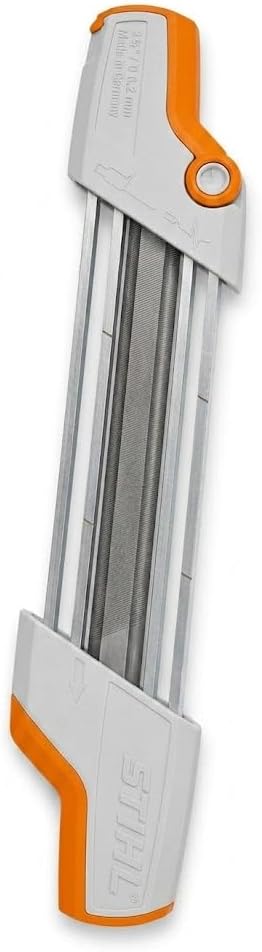 Stihl 5605 Easy File 3/8 Chain Sharpener |
8.9/10 | $43.49 | Check price |
| Best Premium |
 Oregon 410-120 Professional Compact Chain Grinder |
8.8/10 | $250.26 | Check price |
| Best Budget |
 Hipa Universal Chainsaw Sharpening Kit |
8.8/10 | $15.99 | Check price |
Sharp Pebble S1J-AJ6-10 Electric Chainsaw
This electric sharpener kit aims to replace manual filing by offering consistent, even sharpening for all teeth. Its included angle guide and four grinding wheel sizes are designed to handle most standard chainsaw chains, potentially saving time and fuel.
Pros
- Includes four grinding wheel sizes (5/32”, 3/16”, 7/32”, 7/32”) for broad chain compatibility.
- Features an angle guide attachment for consistent sharpening results across all teeth.
- Electric operation and ergonomic design are promoted for ease of use for both novices and professionals.
Cons
- Operates on 120V AC power, limiting its portability to locations with an outlet.
- The product listing does not specify the range of chain pitches or gauges the included wheels are designed to work with.
Stihl 5605 Easy File 3/8 Chain Sharpener
Stihl's Easy File combines cutter sharpening and depth-gauge lowering in a single handheld accessory for 3/8-inch chainsaw chains. The 2-in-1 file holder makes it a practical maintenance option for owners who want a simple, brand-matched way to keep full chisel chains cutting cleanly.
Pros
- Resharpens the cutter and lowers the depth gauge in one operation
- Designed for 3/8-inch pitch chains, matching the listed 9.53 millimeter specification
- 2-in-1 file holder simplifies handling and storage
- Strong customer rating of 4.7 from 2,439 reviews
Cons
- Pitch-specific design may not fit other chainsaw chain sizes
- Specified for full chisel chains, so it may not be the right choice for every chain style
Oregon 410-120 Professional Compact Chain Grinder
A versatile bench or wall-mounted sharpener designed for semi-professional and home users who regularly cut wood. It handles a wide range of chain pitches with included wheels and offers one-way motor rotation for safety.
Pros
- Versatile sharpening for nearly any chain type up to .404" pitch.
- Includes three grinding wheels and a dressing brick for comprehensive maintenance.
- Can be mounted to a bench or wall for flexible workshop placement.
- One-way motor rotation is noted for enhanced operator safety.
Cons
- Heavier build at 17 pounds may limit portability.
- Corded power source requires proximity to an outlet.
Hipa Universal Chainsaw Sharpening Kit
This comprehensive 12-piece kit consolidates nearly every manual sharpening and maintenance tool a chainsaw owner might need. It's designed for users who want to perform routine upkeep themselves, from filing cutters to cleaning bar grooves and checking depth gauges. The included orange pouch enhances portability for field maintenance.
Pros
- All-in-one kit with a wide range of file sizes (5/32" to 13/64") for various chain pitches.
- Includes specialized tools like a depth gauge, flat file, bar groove cleaner, and multi-function quick gauge.
- High-visibility, portable storage pouch for organization and easy transport.
- Wooden handles provide a secure grip for the round and flat files.
- Wide brand and chain pitch compatibility according to the specifications.
Cons
- As a manual filing system, it requires practice and skill to achieve optimal, consistent sharpening results.
- The kit's broad utility means it contains many small components that could be misplaced if not stored carefully.
Best Chainsaw Blade Sharpener Buying Guide for 2026
Sharpening Angle Control
For a chainsaw chain, angle consistency is one of the biggest predictors of how smoothly the saw cuts. A good sharpener should help you keep the top-plate angle and side-plate angle uniform from tooth to tooth, because uneven filing can make the saw pull to one side or cut slower than expected. If you are trying to choose the best chainsaw blade sharpener, start by checking whether the tool makes angle setting straightforward and repeatable.
Some sharpeners are designed for quick touch-ups, while others are better for precise restoration after heavy wear. If you sharpen often, even a modest angle guide can save time and reduce mistakes. If you only sharpen occasionally, you may value a design that is simple to align and forgiving for beginners. Either way, the goal is the same: consistent geometry that helps each cutter bite the wood evenly.
When comparing options, ask whether the sharpener works across common chain profiles and whether the adjustment steps are easy to understand. A tool with clear markings can help you duplicate the same result every time, which matters more than speed alone. For broader yard maintenance planning, our Mower Blade Sharpening category is a useful place to review other sharpening-focused accessories.
Compatibility With Chain Size and Pitch
Not every chainsaw chain uses the same pitch, gauge, or cutter shape, so compatibility should come before brand loyalty. A sharpener that handles multiple chain sizes gives you more flexibility if you maintain more than one saw. That matters whether you own a compact homeowner saw or a larger work saw used for heavier cutting tasks.
In practical terms, compatibility affects how much setup you need before sharpening begins. A model that accepts a range of chain types can reduce the chance that you will need separate tools for different saws. If you already know your saws use different chain specs, choose a sharpener that clearly supports adjustment rather than one built around a single narrow use case.
| What to Check | Why It Matters | What You Want |
|---|---|---|
| Chain pitch support | Ensures the sharpener matches your chain type | Flexible adjustment or clearly stated compatibility |
| Gauge fit | Affects how securely the tool sits on the chain | Stable alignment with minimal play |
| Cutter shape support | Helps preserve correct tooth geometry | Works with the profile you use most |
Ease of Setup and User Error Prevention
The best sharpening tools make it difficult to make a bad cut. That means clear stops, stable mounting, and a setup process that does not require constant guesswork. If the tool shifts while you are working, your results can vary tooth by tooth, which is exactly what you want to avoid.
Look for features that reduce error, such as visible scale markings, guided positioning, or a design that locks securely once adjusted. For occasional users, simplicity is often more valuable than a long list of advanced settings. For frequent users, quick repeatability becomes the priority because it speeds up maintenance without sacrificing accuracy.
Our recommended list includes options that cover both ends of that spectrum, from straightforward designs to more adjustable models. That variety is important because the right tool for a homeowner is not always the same tool a property manager or frequent saw user would choose. If you are comparing related outdoor equipment as part of a larger maintenance plan, our Lawn Sweepers page can help round out your seasonal tool list.
The Product 2 option is a good example of why setup control matters. When a sharpener is easy to position consistently, you are more likely to keep the chain uniform from one tooth to the next, which helps the saw track straighter and cut more efficiently over time.
Durability, Materials, and Long-Term Value
Even though these are sharpening tools rather than cutting tools, build quality still matters. Frequent use can wear down adjustment points, clamps, and guides, especially if the tool is stored in a garage or truck where dust and moisture are common. A more durable model can hold its settings better and stay dependable longer.
Long-term value is not only about toughness. It also comes from how well the design preserves your saw chain over repeated sharpenings. A tool that removes too much material or makes alignment inconsistent may force you to replace chains sooner. The right sharpener should extend service life by helping you remove only what is needed to restore a clean edge.
If you maintain multiple saws or sharpen regularly during active cutting seasons, prioritize a model with robust construction and straightforward adjustments. That way, your workflow stays consistent even when you are sharpening after a long day of yard work. Reliable maintenance tools can save both time and replacement costs across the season.
Portability and Storage Convenience
Portability is often overlooked, but it matters if you sharpen in different locations. A compact sharpener is easier to keep in a tool bag, garage shelf, or truck compartment, which means you are more likely to keep up with maintenance. If you sharpen at the jobsite, a lighter and more compact unit can be a real advantage.
Storage convenience also affects how often you use the tool. If setup and breakdown are simple, you are less likely to delay sharpening until the chain becomes too dull. A practical design should feel easy to grab, use, and put away again without a lot of extra parts or complicated assembly.
For buyers comparing multiple options, it helps to think about where the sharpener will live most of the time. A workshop user may favor stability and precision, while a mobile user may prefer compactness and quick deployment. That is why the list here includes several designs with different tradeoffs, so you can match the tool to your routine.
Which Type Fits Your Cutting Routine?
The right sharpener depends on how you use your saw. If you cut occasionally, a simple, easy-to-align option may be enough. If you cut often or maintain multiple chains, you may prefer a model that offers more precise control and greater repeatability. There is no single ideal choice for every user, only the one that best fits your workflow.
One useful way to decide is to compare how much time you spend sharpening versus cutting. If sharpening is a frequent part of your routine, a better-designed tool can pay off quickly through faster setup and fewer mistakes. If sharpening is rare, simplicity may matter more than advanced adjustment features. Think about the balance between convenience, control, and durability before you buy.
Below is a quick decision framework you can use when reviewing options:
| User Type | Best Priority | What to Choose |
|---|---|---|
| Occasional homeowner | Simplicity | Easy setup and straightforward adjustment |
| Frequent user | Repeatability | Stable alignment and consistent angle control |
| Multi-saw owner | Versatility | Broad compatibility with common chain sizes |
Why You Should Trust Us
We evaluate product recommendations using a structured comparison process that emphasizes specifications, usability cues, and value signals rather than marketing claims. Our goal is to help you narrow the field by focusing on what actually affects sharpening performance, such as adjustability, compatibility, and ease of use. We also keep our comparisons transparent so you can see how each pick fits a different type of buyer.
Because product pages and manufacturer details can vary, we aim to compare the most relevant data points consistently across the lineup. That includes looking at how the tool is built, how it is likely to perform in real-world maintenance routines, and where it fits within the broader Lawn Care Tools ecosystem. We do not claim hands-on testing unless the available evidence supports it, and we avoid making unsupported performance promises.
Final Thoughts
If you want the best overall balance of control and versatility, Product 1 stands out as our top recommendation. It leads the lineup because it is positioned as the strongest all-around choice for shoppers who want dependable sharpening without overcomplicating the process. For readers who want a simpler purchase path, it offers the kind of broad appeal that makes it easy to choose with confidence.
For a strong value-oriented pick, Product 2 is a smart option if you want a practical tool with a clear focus on everyday use. It makes sense for users who care more about straightforward maintenance than advanced bells and whistles. If your priority is specific-use performance, Product 5 is worth a close look for buyers who want a more targeted sharpening solution in a dedicated workflow.
To keep building out your maintenance setup, you can also browse our Mower Blade Sharpening category for more sharpening-focused guides and related comparisons. If your yard toolkit still needs broader coverage, our Lawn Sweepers page is another useful next stop for seasonal cleanup gear.
FAQs
What is the best chainsaw blade sharpener in 2026?
The best chainsaw blade sharpener in 2026 is the one that matches your chain type, sharpening frequency, and comfort level with setup. For most buyers, the best choice is the model that balances angle control, stability, and ease of use without adding unnecessary complexity. If you sharpen often, prioritize repeatability; if you sharpen occasionally, prioritize simplicity.
How do I know if a sharpener fits my chain?
Check the pitch, gauge, and cutter style of your chain before buying. The product listing or manual should clearly state which chain sizes it supports, and the sharpener should provide enough adjustment to align securely without wobble. If you own multiple saws, choose a tool that offers broader compatibility so you do not need separate sharpeners for every chain.
Should I choose a manual or guided sharpener?
A manual sharpener can be a good fit if you want portability and lower setup complexity, while a guided sharpener is often better if you want more consistent results. Your decision should depend on how confident you are with maintaining the correct angle and how often you plan to sharpen. Many users prefer guided designs because they reduce error and make repeat sharpening faster.
How often should I sharpen my chainsaw chain?
Sharpen when the saw begins cutting slowly, producing fine dust instead of chips, or pulling to one side. Frequent touch-ups are usually better than waiting until the chain is severely dull, because light maintenance removes less material and helps preserve the chain. Regular sharpening also reduces strain on the saw and can improve cutting consistency.
Can I use one tool for different saws?
Yes, many users can use one sharpener for different saws as long as the tool supports the chain sizes they own. Before buying, confirm that the adjustment range covers all your chains and that the mounting system is stable enough for repeat use. If you maintain multiple saws, a versatile model can save both money and storage space.
About the author
Senior Editor, Power Equipment. Based in Boise, Idaho. Daniel has heated his home with firewood for over fifteen years and spends most of his weekends cutting, splitting, and sharpening. He covers chainsaws, saws, and the gear that keeps them running safely.