
How to Remove Rust from a Garden Shovel in 4 Steps
Rust on a garden shovel is easy to fix with common household items. Follow these steps to clean, protect, and extend the life of your tools.
 By admin
Updated November 5, 2026
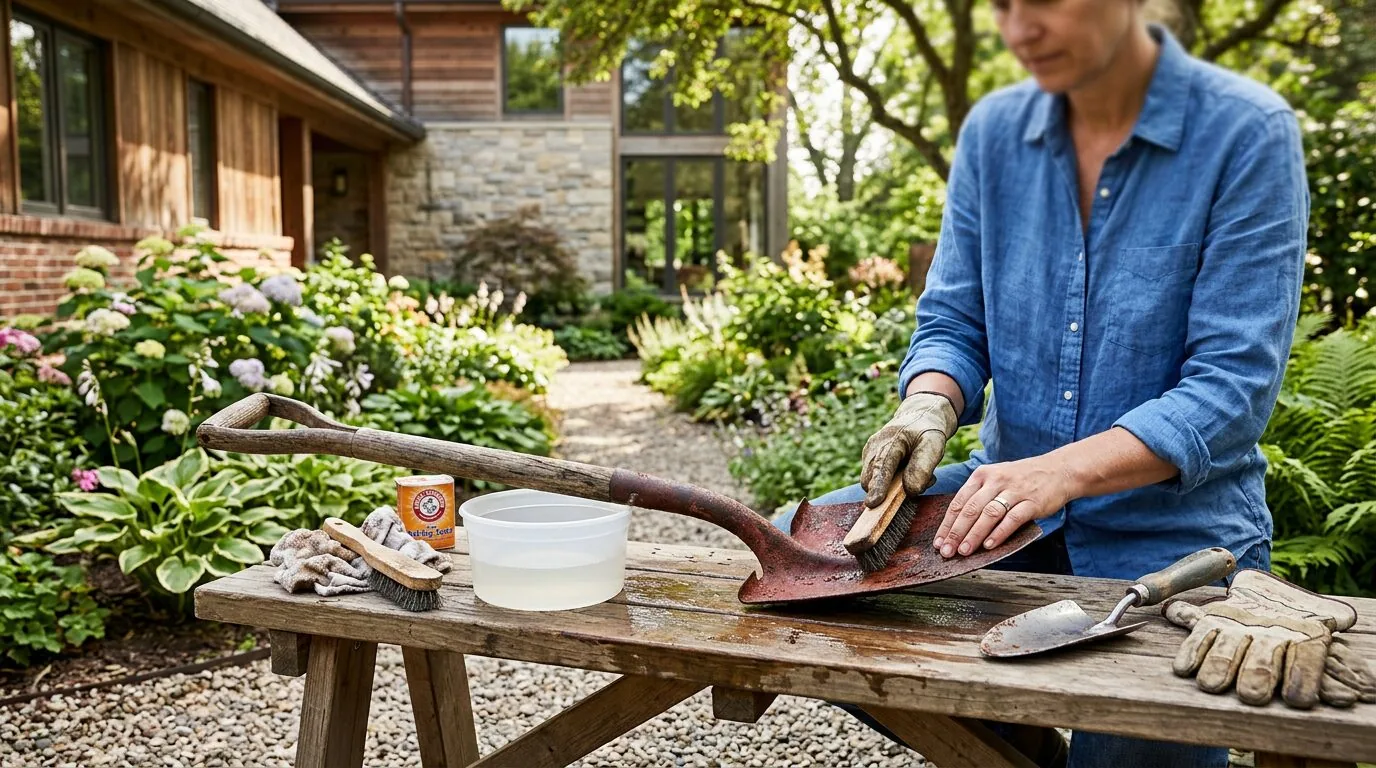
A garden shovel that stays damp or dirty will eventually grow rust along the blade and edge. You do not need to throw it away.
In most cases you can remove the rust with supplies you already have, such as white vinegar, steel wool, and a little oil.
The steps below explain the process in order so you can bring an old shovel back to working condition.
What You Need to Remove Rust
Gather a few basic items before you start. Most of them are common around the house.
- wire brush or stiff nylon brush
- white vinegar (or lemon juice)
- baking soda for neutralizing
- steel wool or medium-grit sandpaper
- clean rags
- mineral oil or paste wax
If you are unsure whether the blade is worth the effort, compare its condition with other garden shovels and then decide.
Step 1: Remove Loose Dirt and Rust
Use a wire brush or stiff brush to knock off dried soil and loose flakes of rust. Work outdoors or over a trash bin. This step keeps the rust remover from being blocked by a layer of dirt.
For thicker rust, rub the area with sandpaper or steel wool. The goal is to expose the bare metal so the next step can work.
Step 2: Soak the Shovel Blade in Vinegar
Pour white vinegar into a container that is wide enough for the blade, or soak a rag in vinegar and press it against the rust. Leave it for 30 minutes to two hours depending on the buildup. Check often to avoid over-etching the metal.
Vinegar works best on steel. Avoid using it on aluminum or painted blades, since the acid can damage the finish.
Step 3: Scrub and Neutralize the Surface
After the soak, scrub the blade with steel wool or the same brush. The rust should lift off in the direction of the grain. Rinse the shovel with water to wash away vinegar and rust residue.
Mix a spoonful of baking soda with water and wipe the blade to neutralize the acid. Rinse again and dry the shovel thoroughly with a clean rag.
Step 4: Dry, Oil, and Store the Shovel
Dry the blade completely. Apply a light coat of mineral oil or paste wax to keep moisture away. If the handle is wooden, wipe it with linseed oil or a wood protector, but avoid getting oil on the grip area.
Store the shovel off the floor and away from damp conditions. Hanging it in a shed or garage helps air circulate around the blade. Keeping up with this routine is part of owning hand tools that last.
Frequently Asked Questions
Does vinegar damage a shovel blade?
Vinegar is safe for steel blades when used for short periods. Rinse and dry the blade right after, then apply a light oil to prevent new rust from forming.
Can I remove rust with a potato and dish soap?
Some people cut a potato in half and use it with dish soap to scrub rust. The potato works as a mild abrasive, but vinegar and steel wool are usually faster and easier.
How often should I oil my shovel?
A thin coat of oil once or twice a season is usually enough for a shovel used regularly. Shovels that sit in storage for months may need a fresh coat before they go back into the shed.
What if the rust has eaten holes in the blade?
If you see deep pits or holes, the blade has lost too much metal. Replacing the shovel is the safer choice, since a weakened blade can bend or snap under pressure.
About the author

admin writes reviews and buying guides for LAT Review.