
How to Prune Roses With Pruning Shears: A Practical Guide
Learn the proper techniques for pruning roses using pruning shears, including when to cut, how to make clean cuts, and aftercare tips to keep your roses healthy.
 By admin
Updated November 5, 2026
Pruning roses with pruning shears is one of the most effective ways to maintain healthy, blooming plants. The first question most gardeners ask is when and how to cut.
The simple answer: prune in early spring after the last frost, using sharp, clean shears to make angled cuts just above outward‑facing buds.
Beyond the basics, proper technique ensures your roses thrive. This guide walks through key steps and considerations for pruning roses with standard pruning shears.
When to Prune Roses
The best time for major pruning depends on your climate and rose type. For most hybrid teas, grandifloras, and floribundas, prune when the leaf buds begin to swell but before new growth emerges. In colder zones, wait until the danger of hard frost has passed.
- Spring pruning: Remove dead, diseased, or crossing canes.
- Summer deadheading: Cut spent flowers to encourage rebloom.
- Fall: Avoid heavy pruning; just remove very long canes to prevent wind damage.
Choosing the Right Pruning Shears
Not all pruning shears are created equal. For roses, bypass pruners are preferred because they make a clean, scissor‑like cut that heals quickly. Anvil pruners can crush the stem.
Look for shears that fit your hand comfortably and can be sharpened. If you need to cut thicker canes, a pair of loppers may be necessary. For more guidance on tool types, see our overview of pruning shears and loppers.
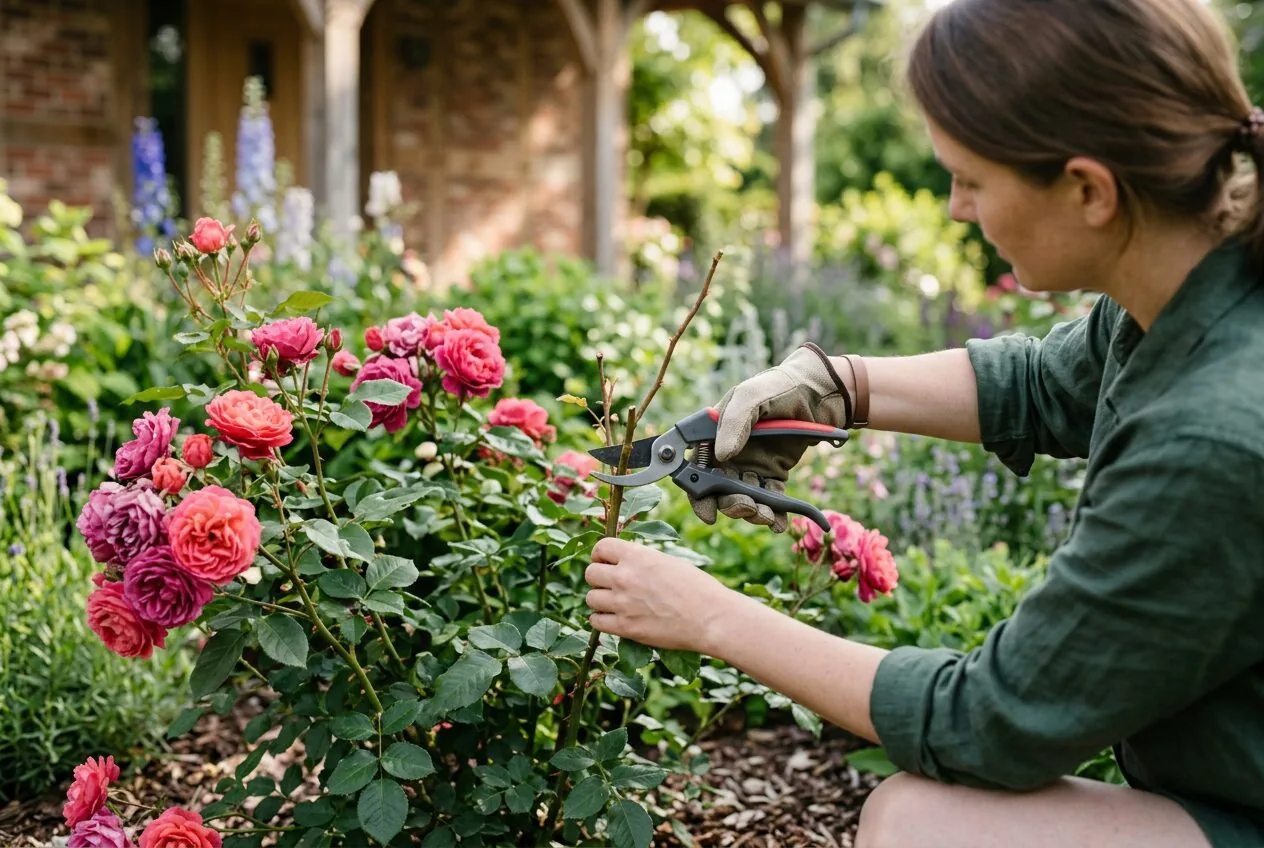
Step by Step Pruning Technique
Follow these steps for a successful prune:
- Remove all dead, damaged, or diseased wood first.
- Cut at a 45-degree angle sloping away from the bud to allow water runoff.
- Remove inward‑growing canes to open the center.
- Reduce the overall height by about one‑third for vigorous growers.
- Seal large cuts with pruning paint only if needed.
Always clean your shears between cuts if you suspect disease. A dip in rubbing alcohol or a bleach solution prevents spreading pathogens.
Aftercare and Maintenance
Once you’ve finished pruning, clean up fallen leaves and debris around the base to reduce disease. A light application of balanced fertilizer helps new growth.
For broader garden tasks, you may also want to invest in other hand tools to maintain your garden efficiently. For cleaning up clippings, a leaf blower and hedge trimmer combo can make quick work of fallen leaves and trimmings.
Common Pruning Mistakes to Avoid
- Pruning during a wet spell can invite fungal infections.
- Cutting flush with the main stem removes the bud and invites dieback.
- Using dull shears crushes stems instead of cutting cleanly.
- Ignoring the angle of the cut can hold water and rot the cane.
Taking a few extra seconds to make proper cuts saves you problems later.
Frequently Asked Questions
What type of pruning shears are best for roses?
Bypass pruners are the best choice for roses. They make a clean cut that minimizes damage to the cane. Anvil pruners tend to crush the stem, which can lead to disease.
When is the ideal time to prune roses?
Early spring, just as buds begin to swell but before leaves emerge, is the main pruning window. After the first bloom, you can deadhead faded flowers to encourage repeat blooming.
Should I seal pruning cuts on roses?
Sealing is rarely necessary. Most roses heal naturally. If you cut a very large cane, a thin layer of pruning paint can protect against moisture and disease in cold climates.
How often should I sharpen my pruning shears?
Sharpen your shears after every few heavy pruning sessions, or whenever you notice the blades crushing rather than slicing stems. A sharp tool makes cleaner cuts and is easier on you hands.
Can I prune roses in the fall?
Fall pruning is risky in moderate to cold climates. Cutting in autumn can stimulate new tender growth that will be killed by frost. Only remove very long canes to reduce wind damage, and save major pruning for spring.
About the author

admin writes reviews and buying guides for LAT Review.