
How to Choose a Pruning Saw: Key Factors for Gardeners
Learn how to choose the best pruning saw for your garden by matching blade length, tooth type, handle design, and safety features to your specific cutting needs.
 By admin
Updated November 5, 2026
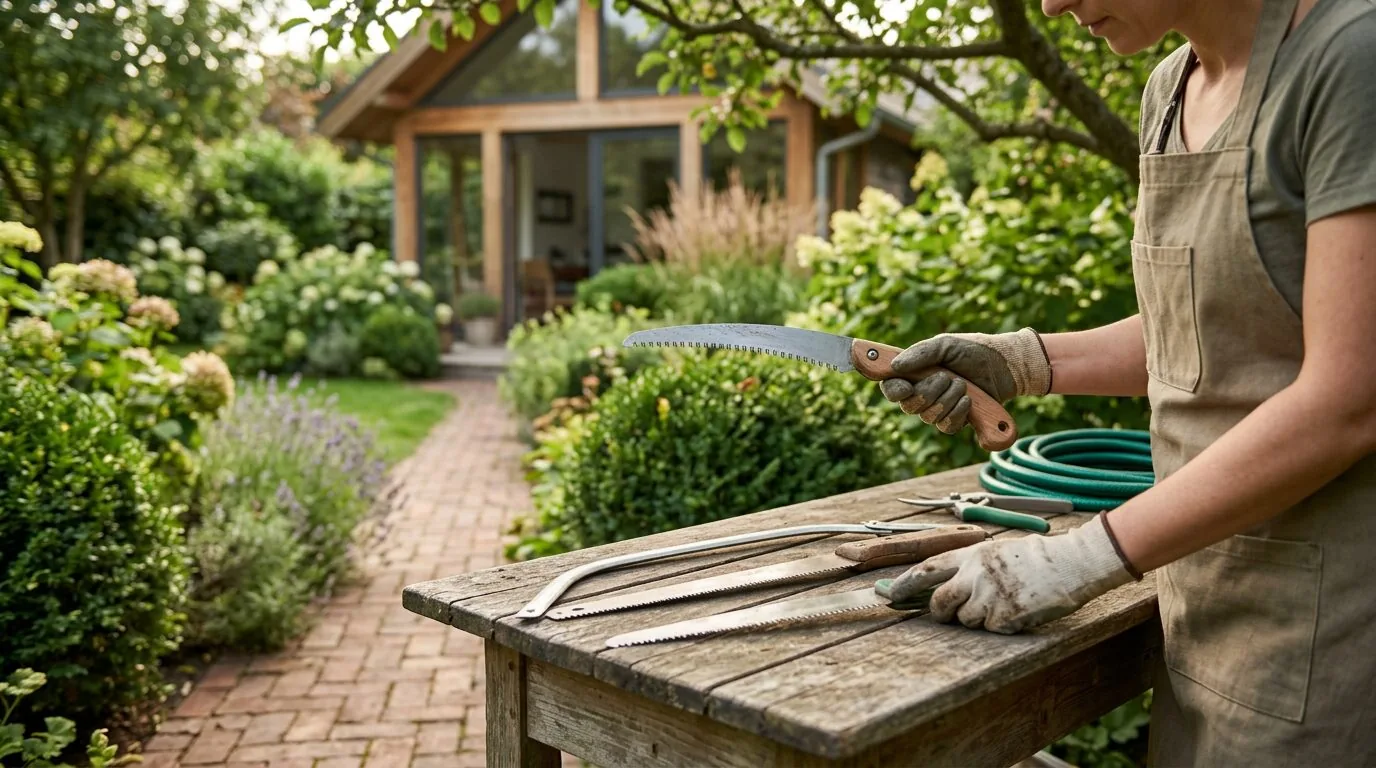
Choosing the right pruning saw doesn’t have to be complicated. Start by thinking about the branches you cut most: slim twigs call for a compact blade, while thick limbs need a longer saw with bigger teeth.
This guide walks you through the main decisions so you end up with a saw that fits your specific yard work.
Match Blade Length to Branch Size
Blade length is the quickest way to match a saw to your typical job. For trimming thin shoots and deadheads under two inches thick, a small hand saw with a six to eight inch blade gives you great control.
If you regularly tackle thicker limbs, look for a blade of ten inches or more; the extra length provides better leverage for cleaner cuts.
Tooth Type and Cutting Action
Pruning saw teeth come in two main styles: impulse hardened (factory-sharpened, cannot be resharpened) and ground teeth (can be filed at home). The geometry matters too.
Traditional western saws cut on the push stroke, while a Japanese hand saw cuts on the pull stroke, allowing a thinner blade that makes smoother, more precise cuts.
Consider how often you want to sharpen and how much cleanup you value.
Handle Design and Grip Comfort
A saw handle that slips or cramps your hand leads to frustration and safety risks. Curved handles help you reach tight spots near the trunk, while straight handles let you use both hands for extra force.
Many pruning saws now come with rubberized grips that absorb shock and stay comfortable even during long sessions.
Safety Features and Storage
A good pruning saw includes a blade lock to prevent accidental opening and a sheath that protects the teeth when not in use. Regular cleaning and light oiling keep the blade rust-free.
If your cutting tasks regularly go beyond what a hand saw can handle easily, you might want to look at chainsaws or other power saws for heavy-duty work.
Frequently Asked QuestionsWhat blade length is best for general yard pruning?
For most shrubs and small tree branches, a seven to ten inch blade gives a good balance between control and cutting capacity. Longer blades are better for thick, hard limbs.
Should I choose a curved or straight pruning saw?
Curved blades excel at making pull cuts close to the trunk, which is common in pruning. Straight blades are easier to use with both hands and work well for cutting logs into pieces.
How often should I sharpen my pruning saw?<psSharpening frequency depends on use. For occasional pruning every few months, a blade with impulse hardened teeth can stay sharp for seasons. If you cut often or through dirty wood, a ground tooth saw that you can file at home may be more convenient.Can a pruning saw replace a chainsaw?
No. A pruning saw is ideal for branches up to about four inches on diameter. For larger limbs or heavy firewood cutting, a chainsaw or reciprocating saw is much faster and safer.
About the author

admin writes reviews and buying guides for LAT Review.