
How to Change a Chainsaw Chain: A Step by Step Guide
Learn how to change a chainsaw chain safely and efficiently. This step-by-step guide covers loosening tension, removing the old chain, installing a new one, and adjusting for proper performance.
 By admin
Updated November 5, 2026
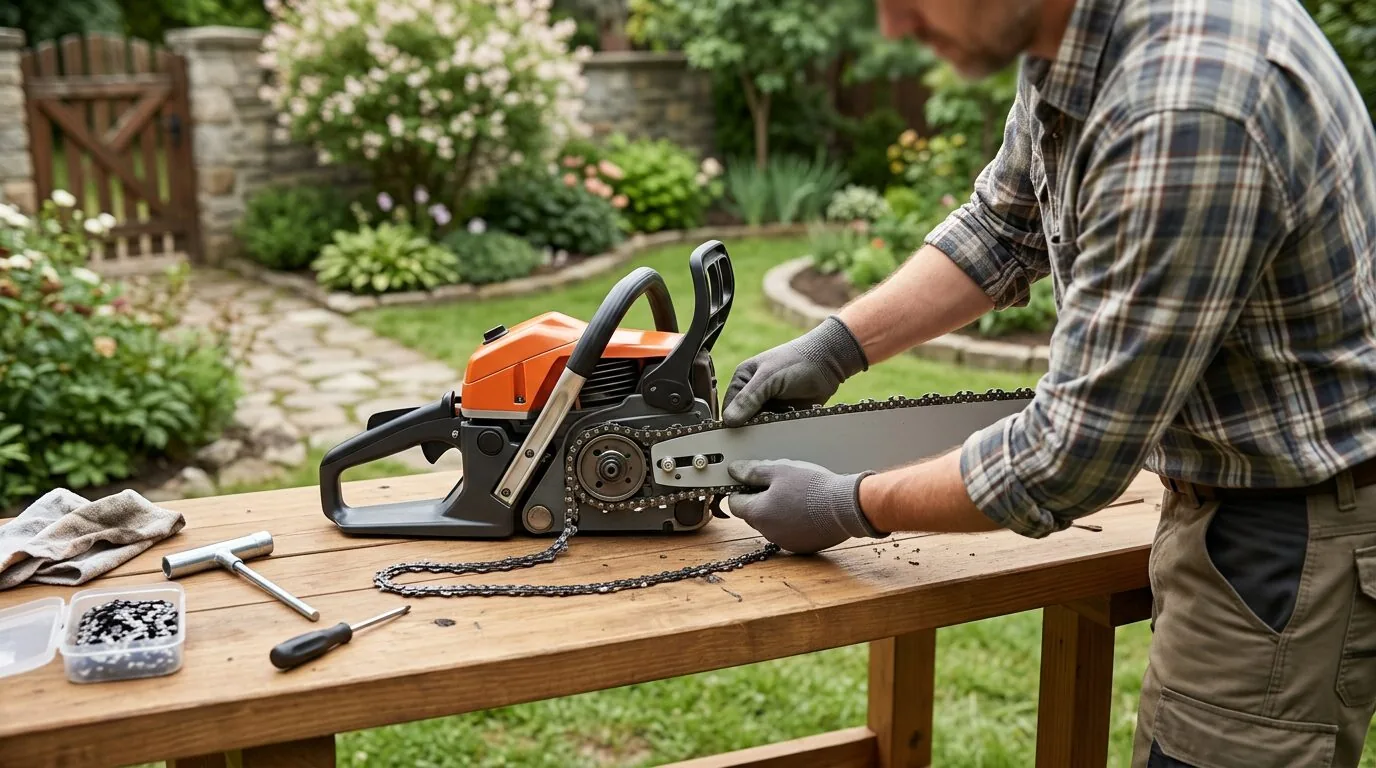
If your saw is throwing sawdust instead of chips or the chain feels loose, it is time to change the chain.
To change a chainsaw chain, you need to release the tension, remove the old chain, install the new one, and adjust the tension correctly.
This guide walks you through the entire process so you can get back to cutting safely and efficiently. For more on choosing the right saw for your needs, explore our chainsaws & saws section.
Safety First
Before you start, make sure the engine is off and the spark plug wire is disconnected to prevent accidental starts. Wear heavy gloves to protect your hands from the sharp chain.
Work on a stable surface and set the chainsaw on its side with the clutch cover facing up. For additional safety tips, refer to your owner manual.
Gather the Right Tools and Parts
You will need a few specific items to complete the job easily. Having everything ready before you start saves time and frustration.
- A new chain that matches your chainsaw bar length and pitch. Check the bar or manual for the correct size.
- A socket or wrench to loosen the bar nuts. Most chainsaws use a combination tool that fits the nuts and spark plug.
- A flathead screwdriver or the tool’s built-in bar adjuster to move the tensioning screw.
- A stiff brush to clean sawdust and debris from the bar groove and sprocket.
- Bar and chain oil for lubrication after installation.
If you need help selecting a replacement, bookmark our chainsaw category for specifications and recommendations.
Loosen the Bar Nuts and Release Tension
Place the saw on a flat surface with the clutch cover up. Use the socket or combination tool to loosen the bar nuts on the side of the saw.
Do not remove them completely; just loosen them until the clutch cover can slide slightly. Then turn the tensioning screw counterclockwise to retract the bar, releasing tension from the chain. The chain should sag noticeably.
Remove the Clutch Cover and Old Chain
Once the bar nuts are loose, lift off the clutch cover. You may need to wiggle it gently. Remove the bar from the studs, carefully pulling it away from the saw body.
Lift the old chain off the sprocket and out of the bar groove. Dispose of the old chain responsibly; many recycling centers accept scrap metal.
Install the New Chain and Reassemble
Place the new chain around the drive sprocket first, then fit it into the bar groove, ensuring the cutting edges face the direction of rotation (usually marked on the bar or chain).
Reattach the bar to the studs, aligning the chain’s drive links with the sprocket teeth. Slide the clutch cover back on and hand tighten the bar nuts. Do not fully tighten them yet, you need to adjust tension next.
Adjust Chain Tension and Tighten
Turn the tensioning screw clockwise to pull the bar forward and increase tension. The chain should be snug against the bar’s underside but still allow you to rotate it by hand with slight resistance.
Lift the chain in the middle of the bar; the drive links should stay in the groove. When the tension feels right, fully tighten the bar nuts. Double check the tension again because tightening the nuts can affect it.
Finally, lubricate the chain with bar oil and reconnect the spark plug wire.
evaluation the New Chain
Start the chainsaw at a safe distance from the ground and let it run at idle for a few seconds. Rev the engine briefly to ensure the chain runs smoothly and does not wobble or bind.
If the chain throws off or makes unusual noise, stop and recheck tension and alignment. A properly installed chain should rotate freely and cut cleanly without excessive vibration.
Frequently Asked Questions
How often should I change my chainsaw chain?
Replace the chain when it becomes dull and no longer cuts efficiently, typically after several sharpenings or when the teeth are too worn to sharpen. Signs include excessive vibration, sawdust instead of chips, and the need to force the saw through the cut.
Can I use any chain on my chainsaw?
No. The chain must match your chainsaw’s bar length, pitch, gauge, and drive link count. Using an incorrect size can cause poor performance, safety hazards, or damage. Always consult your manual or the bar markings.
What do I do if the new chain keeps coming off?
Check that the chain is installed with the cutting edges facing forward, the tension is correct, and the bar nuts are tight. Also ensure the bar is not worn or bent. If the problem continues, inspect the drive sprocket for damage.
Do I need to lubricate the chain after changing it?
Yes. Always fill the oil reservoir with bar and chain oil before starting the saw. The oil lubricates the chain as it runs, reducing friction and heat. Running a dry chain will quickly damage both the chain and bar.
Is it safe to sharpen a chain instead of replacing it?
Sharpening can extend the life of a chain, but eventually the teeth become too short to sharpen properly. Follow the manufacturer’s guidelines for maximum sharpening depth; once reached, replace the chain for safety and performance.
About the author

admin writes reviews and buying guides for LAT Review.