
How to Fell a Tree with a Chainsaw: A Practical Guide
Learn the essential steps to felling a tree with a chainsaw safely. From planning your escape route to making proper cuts and handling problem trees, this guide covers it all.
 By admin
Updated November 5, 2026
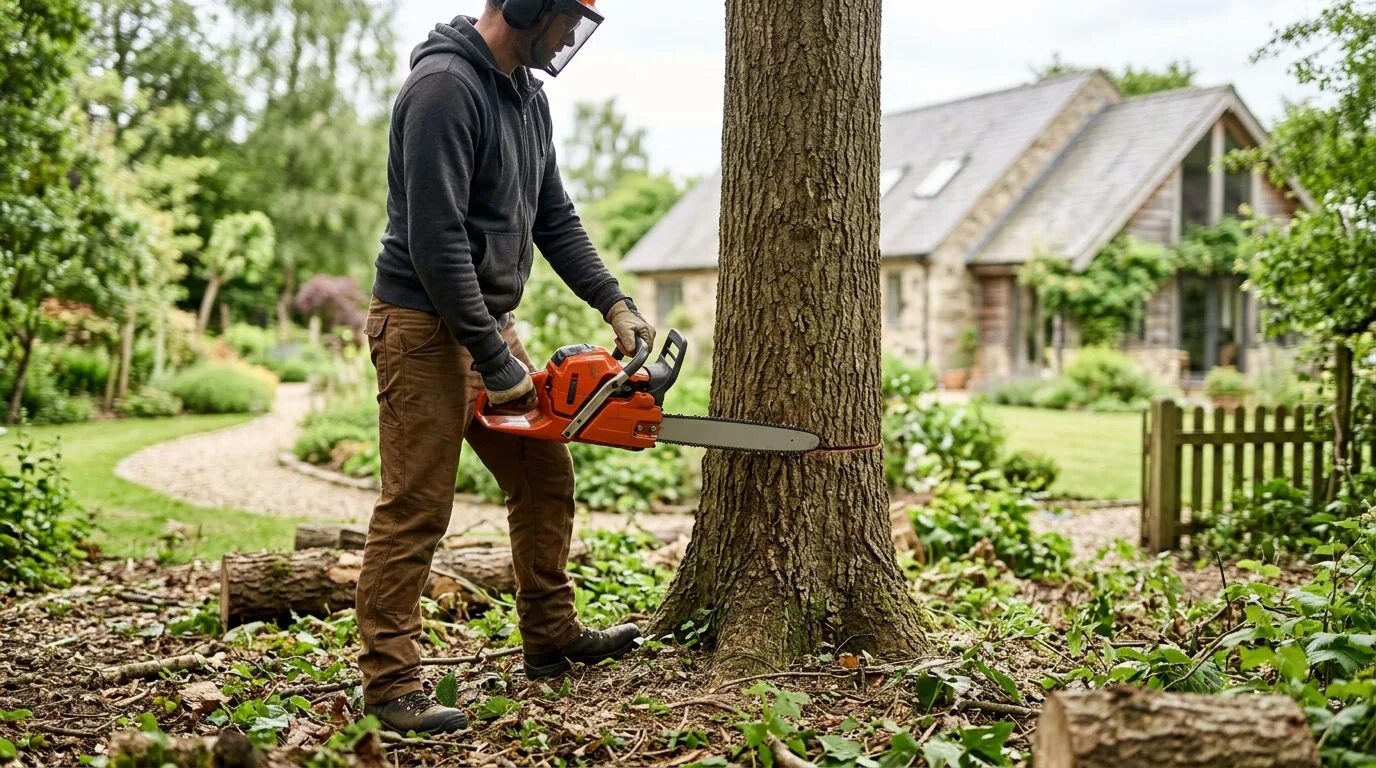
If you are wondering how to fell a tree with a chainsaw, the answer starts with careful planning and safety.
Whether you are clearing storm damage or managing a woodlot, cutting down a tree requires understanding its lean, escape routes, and proper cutting techniques. A reliable chainsaw is essential, but technique matters just as much.
This guide walks you through the practical steps to fell a tree safely and effectively.
Evaluate the Tree and Your Surroundings
Before making any cuts, examine the tree for signs of rot, cracks, or dead limbs that could break unexpectedly. Identify the natural lean of the trunk and any overhead hazards like power lines or nearby structures.
Determine at least two escape routes at a 45-degree angle away from the falling direction. Clear the base of the tree of vines and brush that could trip you during retreat.
Make the Proper Cuts: Notch, Felling Cut, and Hinge
The conventional three-cut method consists of a directional notch, a felling cut, and a hinge that guides the tree down safely.
Cut the Directional Notch
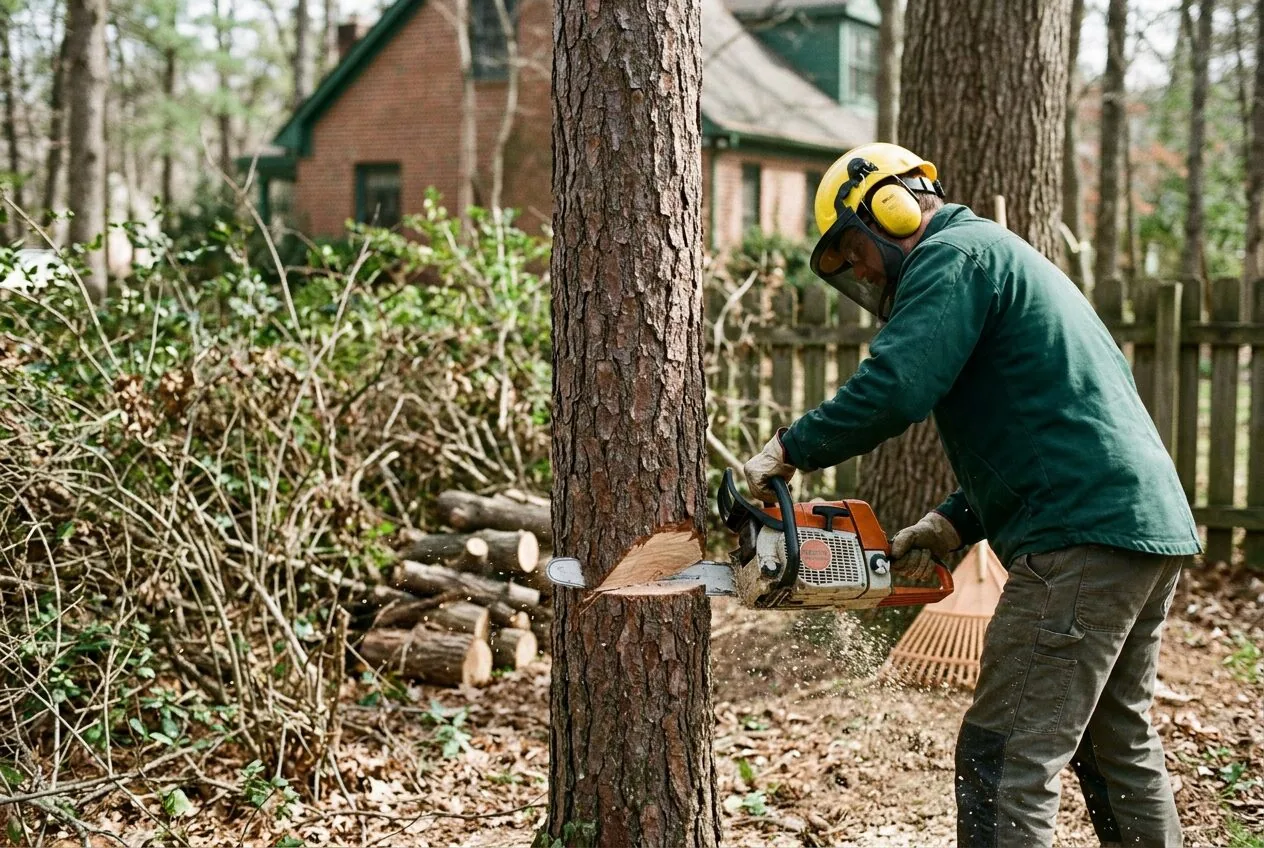
Begin with a notch on the side of the tree facing the direction you want it to fall. First make a top cut downward at a 60-degree angle, then a bottom cut upward to meet it.
Remove the wedge of wood to create an open notch. The notch should extend about one quarter of the tree’s diameter deep.
Make the Felling Cut
Move to the opposite side of the tree and start the felling cut about 2 inches above the bottom of the notch. Cut straight in, leaving a thin strip of wood (the hinge) between the felling cut and the notch.
The hinge controls the tree’s fall. As you cut deeper, watch for the tree to begin leaning. Stop cutting when you have enough hinge left, then use your escape route once the tree starts to fall.
Handle Problem Trees with Extra Precautions
Some trees require different approaches. For a tree that is leaning heavily in a direction you don’t want, you may need to use wedges to steer it.
For a hung up tree that is lodged in another limb, consider using a rope or calling a professional. Never stand directly behind the tree on the side opposite the notch, as that is the danger zone for kickback.
Always wear proper safety gear, including a hard hat, eye protection, gloves, and chainsaw chaps.
If you are new to felling, take time to study the correct procedures. The right safety equipment from the chainsaws and saws section can make a significant difference in your protection.
Frequently Asked Questions
What size chainsaw do I need to fell a tree?
The bar length should be longer than the diameter of the tree. For most residential felling, a 16 to 20 inch bar chainsaw with adequate power will suffice. Match the saw to the tree size and your experience level.
Do I need to notch every tree I fell?
Yes, a directional notch is essential for controlling the fall. Without it, the tree could split unpredictably or fall in an unintended direction.
What if the tree is leaning against another tree?
A hung up tree is extremely dangerous. Do not cut the supporting tree. Use a winch or rope to pull it down, or hire a professional arborist. Never work under a hung up tree.
How do I safely fell a tree that is leaning the wrong way?
Use wedges inserted into the felling cut to gradually lift the tree and redirect its fall. Alternatively, you can use a rope and pull from a safe distance. Practice on smaller trees first.
About the author

admin writes reviews and buying guides for LAT Review.