
How to Choose Pruning Shears for Small Hands
Finding pruning shears that fit small hands can be tricky. This guide explains key factors such as handle size, cutting mechanism, weight, and ergonomic features to help you choose the right tool without discomfort.
 By admin
Updated October 28, 2026
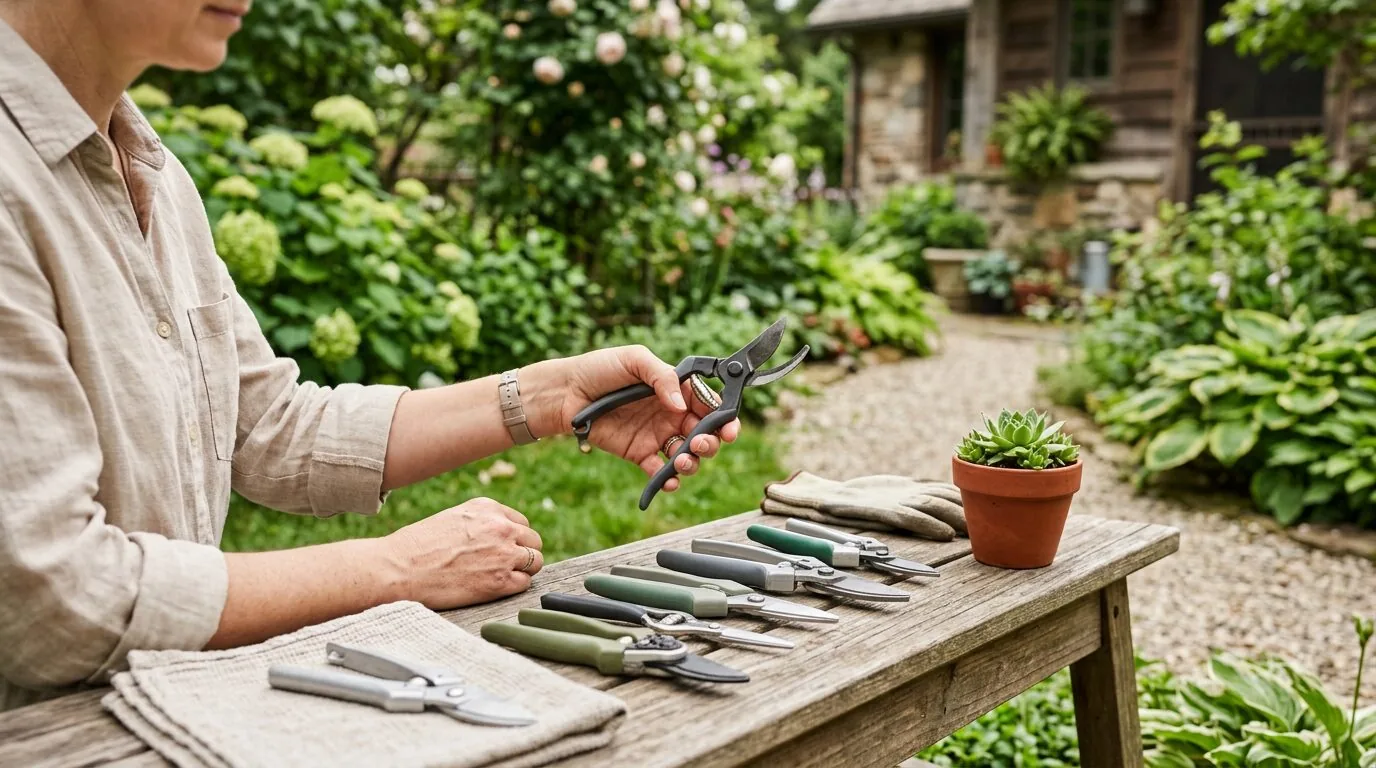
If you have small hands, finding a pair of pruning shears that fits comfortably can be a challenge. Most standard models are designed for average to large hands, leaving you with a grip that feels awkward and hard to control.
When the tool doesn’t fit, tasks like deadheading roses or trimming small branches become frustrating and can even lead to hand fatigue or pain.
In this guide, we will walk through the key factors to look for so you can find pruning shears that work with your hands, not against them.
Whether you are a dedicated gardener or just need to maintain a few shrubs, choosing the right shears can make a significant difference in your comfort and the health of your plants. Below are practical steps and considerations to help you narrow down your options.
Understand Your Grip and Why Handle Size Matters
The most critical aspect for small hands is the handle size. Standard pruning shears often have handles that are too wide or too long for a small palm, forcing you to stretch your fingers or overextend your wrist.
Over time this can cause discomfort and reduce cutting precision.
Measure the length of your palm from the base of your wrist to the tip of your middle finger.
If that measurement is under about seven inches, you will likely benefit from a model labeled as compact, petite, or with smaller handles. Many manufacturers now make versions specifically for smaller hands, and these are often sold alongside standard sizes.
When shopping, look for handles that are contoured to fit a smaller palm. Some designs have a narrower grip area that allows the pads of your fingers to wrap around comfortably.
Avoid shears with a wide, bulky handle barrel, even if the overall length of the tool is short.
Look for Adjustable or Rotating Handles
Some pruning shears come with adjustable handles or a rotating lower handle. These features can be a game changer for small hands.
An adjustable pivot point lets you change the handle opening width so that you can set it to a size that feels natural for your fingers.
Rotating handles allow the lower handle to move independently during a cut, which reduces friction on your palm and makes it easier to maintain a secure grip.
If you are buying online, look for descriptions that mention small hand compatibility or adjustable handle opening. Many brands provide handle circumference measurements in the product details.
If you are shopping in a physical store, always evaluation the shears by holding them with your dominant hand. Squeeze the handles fully open and closed several times to see if the stretch feels comfortable.
If you have to overextend your palm to reach the fully open position, the tool is probably too large for you.
Choose the Right Cutting Mechanism
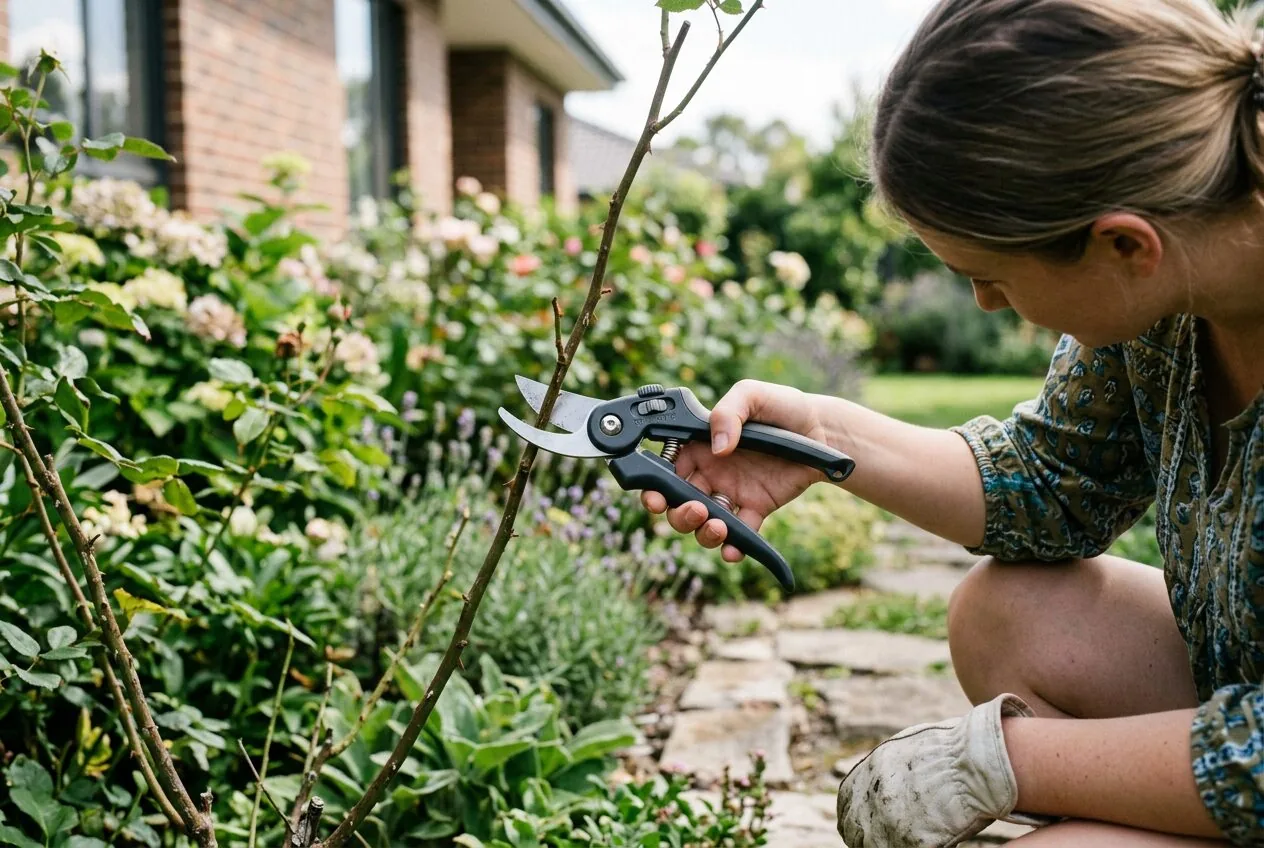
Pruning shears generally come in two main cutting styles: bypass and anvil. Bypass shears have two curved blades that slide past each other like scissors, providing a clean cut that is better for live plants.
Anvil shears have a single straight blade that closes onto a flat surface, which can crush stems if not used carefully.
For small hands, bypass shears are often the better choice because they require less hand strength to create a clean cut. The slicing action uses leverage more efficiently than a crushing action.
However, some lightweight anvil models with a gear or ratcheting mechanism can also be effective for small hands because they multiply your force, allowing you to cut through thicker branches with less effort.
Just be sure the handle size still fits you well.
If you are new to pruning, consider starting with a bypass style. It is more forgiving on plants and easier on small hands.
The pruning shears and loppers category groups many models that vary in handle size and cutting style, so you can compare options side by side.
Pay Attention to Weight and Spring Mechanism
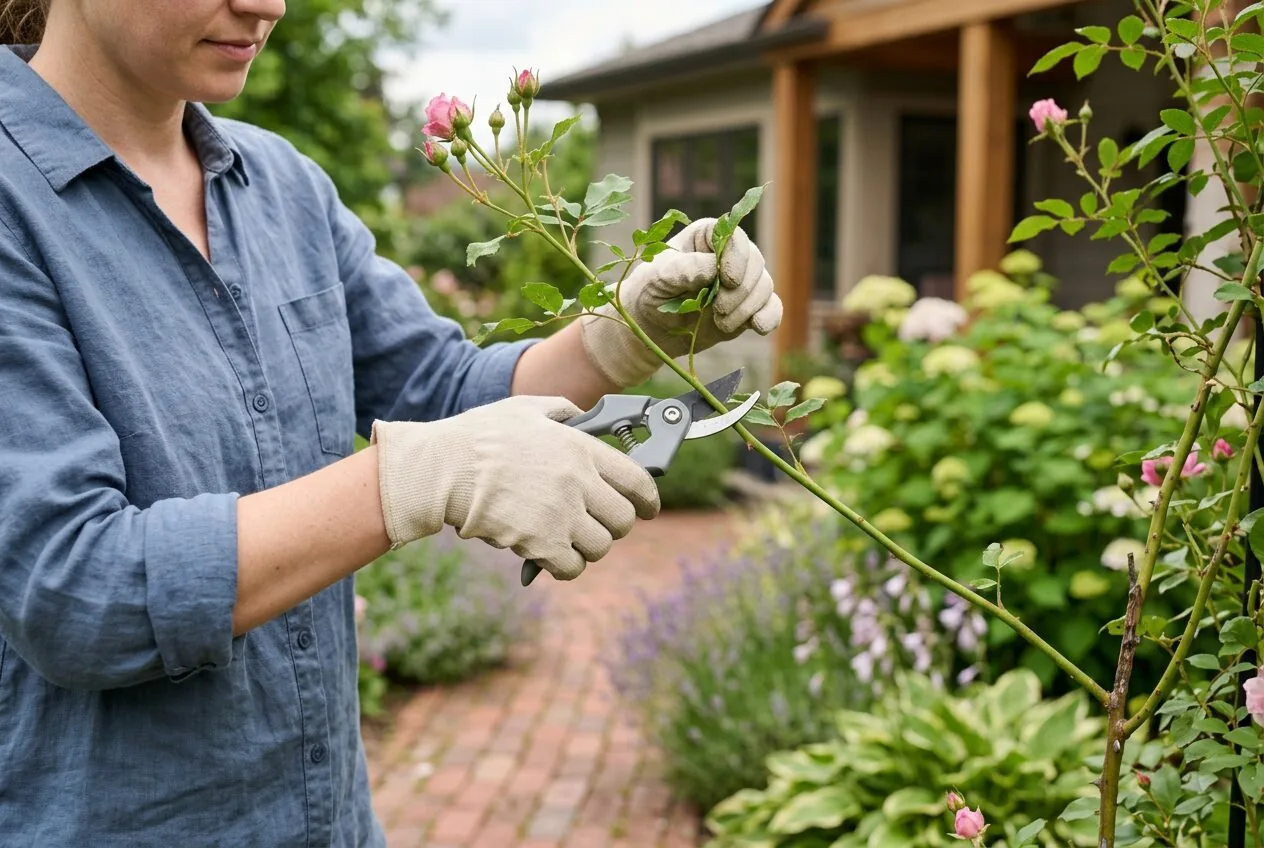
Weight matters more than you might think when you have small hands. A heavy tool at the end of a short arm can quickly cause fatigue.
Look for pruning shears made from lightweight materials such as aluminum handles or reinforced nylon. Avoid steel handles unless they are part of a particularly compact design.
The spring mechanism is another factor. Most shears have a spring that opens the handles after each cut.
On some models the spring is too stiff, which can be hard to compress if you have less hand strength. evaluation the spring tension if possible. A softer spring makes repeated cuts easier on small hands.
Some shears even have a small thumb lock that keeps the blades closed when not in use; this should be easy to operate without excessive force.
When you browse hand tools in garden centers, pick up several pairs and simulate cutting motions. The weight and spring feel will become apparent after just a few squeezes.
Check Ergonomic Features and Grip Texture
Look for ergonomic touches such as a soft rubber coating on the handles, which provides a more secure grip and reduces slip. For small hands, a textured grip can compensate for a less-than-perfect handle circumference.
Also consider whether the handles are straight or angled. Angled handles (sometimes called offset handles) allow your wrist to stay in a natural position while cutting, which can reduce strain.
Some shears include a shock absorber to reduce jarring when the blades close. While this feature is more common on larger pruners, some compact models now include it. Any feature that reduces fatigue will benefit someone with smaller hands over a long pruning session.
If you are also looking for power tools to handle larger yard tasks, a leaf blower and hedge trimmer combo might interest you for hedge maintenance, but for fine pruning work you still need a pair of shears that fit your hand properly.
evaluation the Fit Before You Buy
The best way to know if a pruning shear works for your small hands is to try it in person. If that is not possible, check detailed dimensions and look for user reviews that mention hand size.
Some online stores include handle circumference or palm length recommendations in the product description.
When you evaluation a pair, hold it as you would during actual use. Squeeze the handles fully closed and open a few times.
Your palm should not feel like it is stretching to reach the full open position, and the handle should not dig into the fleshy part of your hand.
If you feel any pinching or awkward pressure points, move on to another model.
Frequently Asked Questions
What handle size is best for small hands?
Look for handles with a circumference of about four inches or less, though exact measurements vary by brand. If you cannot find the measurement, look for models labeled as petite or compact. Your fingers should wrap around the handle fully without overlapping too much.
Are bypass or anvil shears better for small hands?
Bypass shears are generally recommended for small hands because they require less hand strength to make a clean cut on live stems. However, some anvil shears with a ratcheting mechanism can also work well if the handle fits.
Choose based on the cutting comfort and the type of plants you prune.
Can I use standard size shears if I have small hands?
You can, but you may experience hand fatigue, blisters, or poor cutting control. Using a tool that is too large for your hand can also cause you to grip harder than necessary, increasing the risk of repetitive strain injuries.
It is worth investing in a properly sized pair.
What features reduce hand fatigue for small-handed users?
Lightweight materials, a soft rubber grip, a smooth spring with low tension, and an angled handle design all help reduce fatigue. A rotating handle can also minimize friction on the palm during repeated cuts.
How do I measure my hand to find the right pruning shears?
Measure the length from the base of your palm (just above the wrist) to the tip of your middle finger. Also measure the width of your palm at its widest point.
Compare these measurements to the handle dimensions provided by the manufacturer. A good rule of thumb is that if the handle seems too large in your hand when you grip it, it probably is.
About the author

admin writes reviews and buying guides for LAT Review.