
How to Sharpen a Mower Blade Without Removing It: Safe and Effective Tips
Learn how to sharpen a mower blade without removing it safely. Step by step guide with tools, safety tips, and when removal is better.
 By admin
Updated October 28, 2026
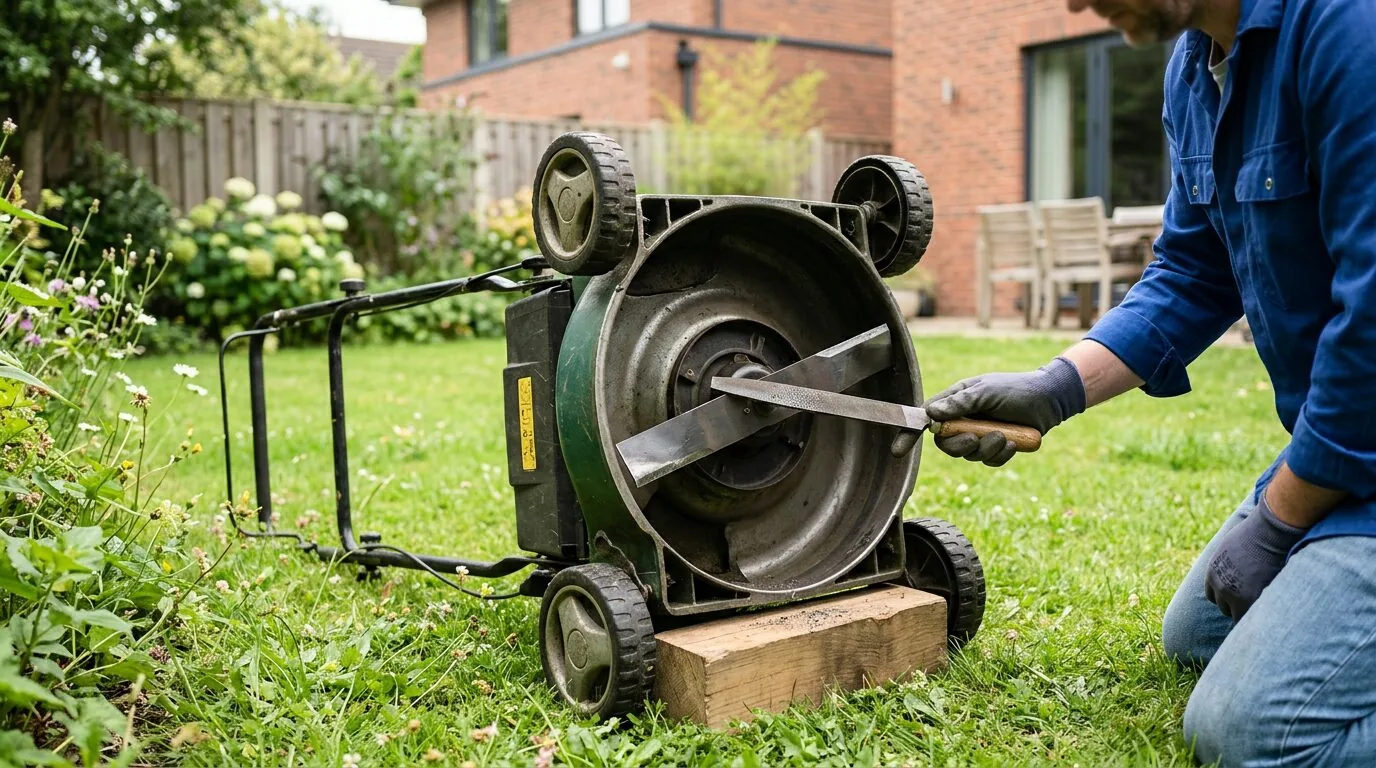
If you want a clean, even cut from your lawn mower, sharp blades are non-negotiable. Dull blades tear grass instead of cutting it, leaving a ragged lawn that is more prone to disease.
Removing the blade for sharpening can be time consuming and requires tools like a socket wrench and a blade balancer. But there is a faster method: sharpening the blade while it is still attached to the mower.
This technique works well for routine touch ups between full sharpenings. However, it requires careful attention to safety and technique to avoid damaging the blade or injuring yourself.
This guide explains how to sharpen a mower blade without removing it, including the tools you need, safety precautions, and when it makes more sense to take the blade off instead.
For more comprehensive information on maintaining your mower, be sure to explore the lawn care tools section on our site, which covers everything from blade care to engine maintenance.
Safety First: Preparing the Mower
Before you touch the blade, you must make sure the mower cannot start accidentally. Start by disconnecting the spark plug wire and grounding it against the engine.
This prevents any chance of the engine firing while you work near the blade. If your mower has a battery, disconnect the negative terminal as well.
Next, tilt the mower onto its side with the carburetor and air filter facing up. This prevents oil or fuel from leaking onto the air filter or the ground.
For added stability, place a block of wood under the side of the mower so it does not rock. Wear heavy duty gloves and safety glasses throughout the process.
Tools You Will Need
The beauty of on mower sharpening is that you only need a few basic tools. A flat file or a specialized blade sharpening tool is the primary instrument.
A 10 inch or 12 inch bastard cut file is ideal for carbon steel blades.
You will also need a pair of locking pliers or a blade stabilizer to hold the blade steady, and a marker or paint pen to mark the cutting edge so you can track your progress.
A wire brush or scraper helps remove grass buildup before you start filing. Some people prefer a drill mounted sharpening attachment for faster work, but hand filing gives you more control and reduces the risk of overheating the blade.
For more details on maintaining your mower, check out our mower blade sharpening details.
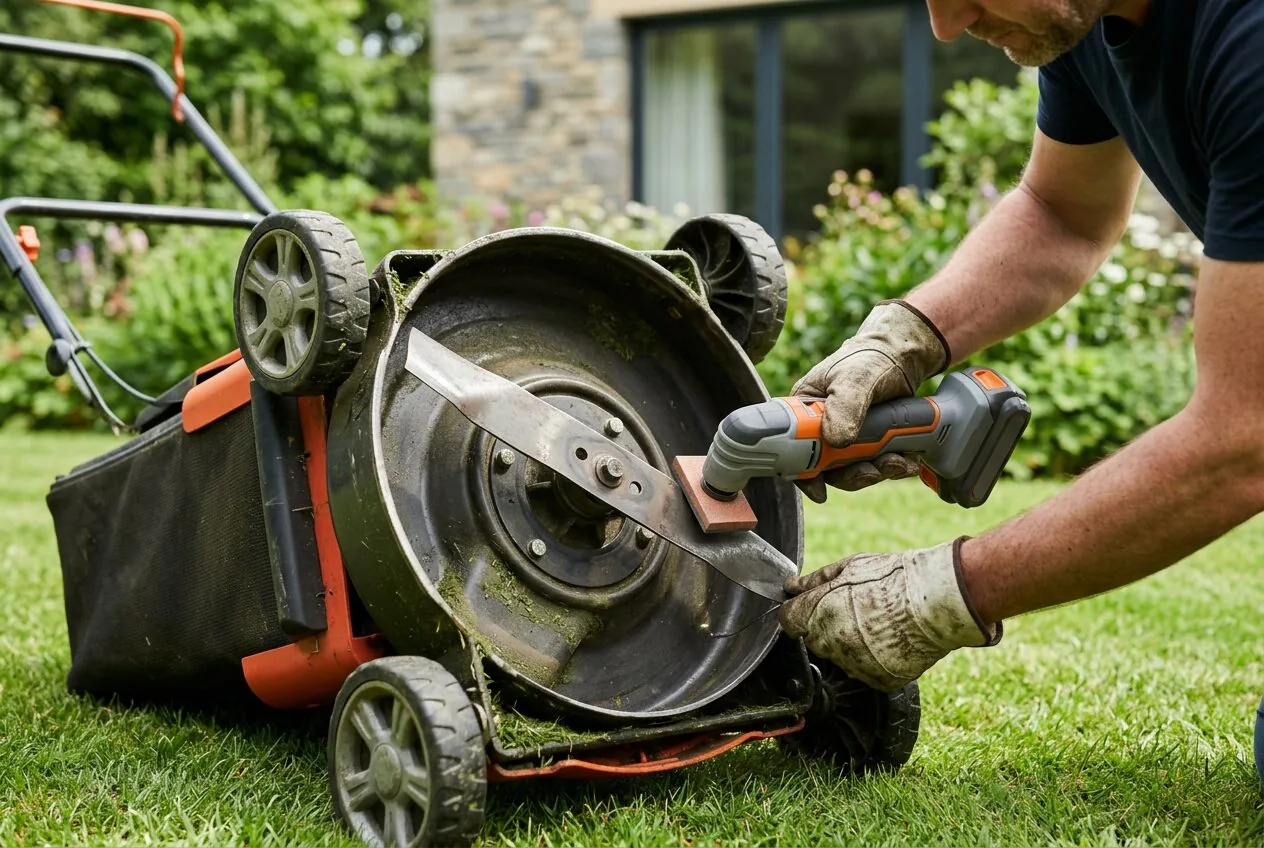
Step by Step: How to File the Blade on the Mower
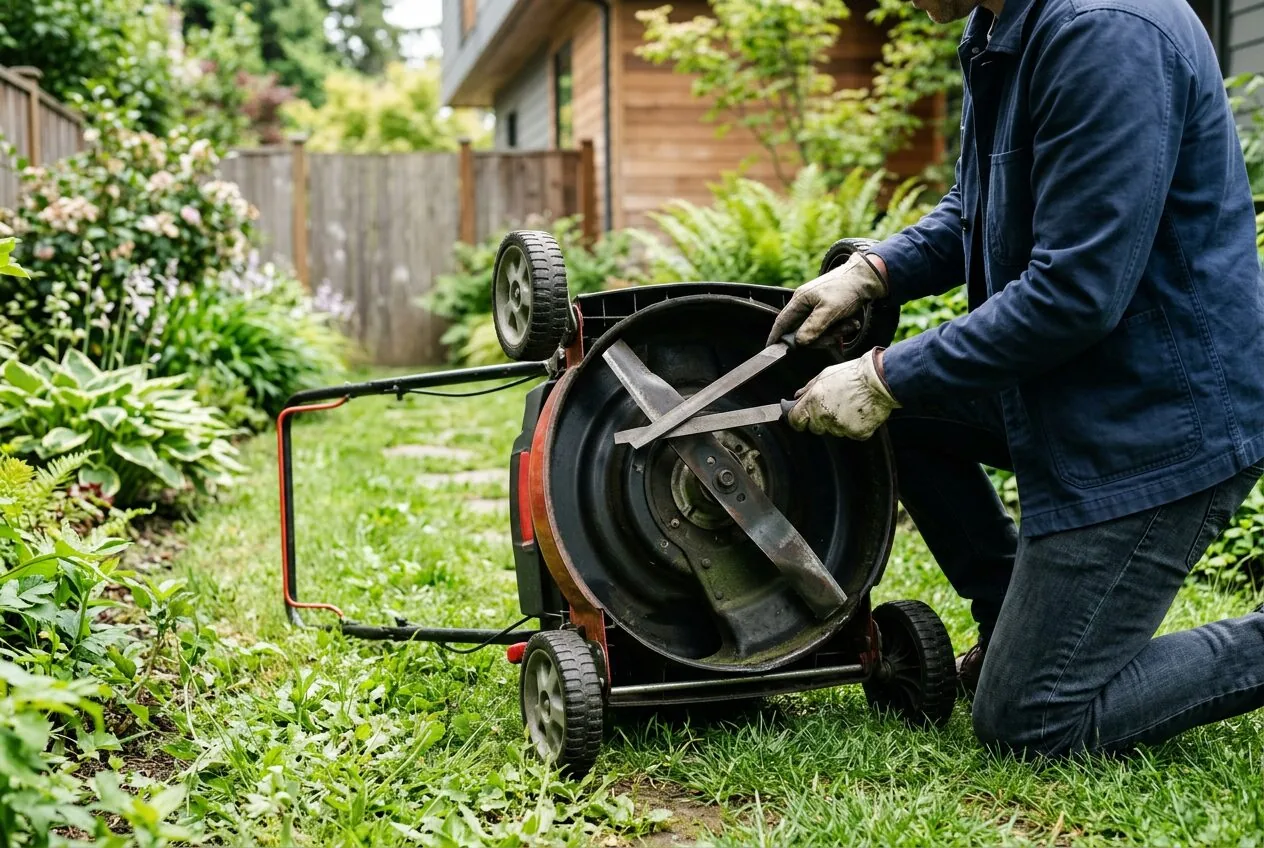
Once the mower is secure and the blade is clean, you can begin filing. Work from the top of the cutting edge toward the edge, following the existing bevel angle. Most mower blades have a bevel between 30 and 45 degrees.
Do not attempt to change the angle; simply match what is already there. Use long, smooth strokes with the file, applying pressure on the forward stroke only. Lift the file on the return stroke to avoid dulling it.
File until you have a bright, sharp edge along the entire length of the blade. Repeat the process on the other side of the blade. After filing, check the blade balance.
An unbalanced blade will cause vibration and wear out the mower spindle. Even though the blade is still attached, you can check balance by rotating it slowly by hand.
If one side feels heavier, file a little more off that side. A balanced blade is just as important as a sharp one.
When Should You Remove the Blade Instead?
Sharpening without removal works best for maintenance sharpening where the blade is only slightly dull. However, there are times when removal is the better choice.
If the blade has a deep nick, is badly bent, or is severely out of balance, you should take it off. On mower sharpening also cannot correct a blade that has been sharpened at the wrong angle many times.
Removal gives you access to a bench grinder or other tools for more aggressive reshaping. Additionally, if you need to replace the blade entirely, removal is required.
Another consideration is safety: on mower sharpening puts you in close contact with the blade while it is mounted. If the mower is unstable or you cannot tilt it safely, it is safer to remove the blade.
Always judge your own comfort level and the condition of your equipment before deciding which method to use.
Frequently Asked Questions
Is it safe to sharpen a mower blade without removing it?
Yes, if you follow safety precautions such as disconnecting the spark plug, tilting the mower properly, and wearing gloves and eye protection. The risk is low for an experienced DIYer, but removal is safer if you are unsure.
What tools do I need to sharpen a blade on the mower?
A flat file or sharpening tool, locking pliers or a stabilizer, a wire brush, a marker, and safety gear. You do not need a socket set or blade balancer, though a balancer is helpful later.
How often should I sharpen my mower blade?
Sharpening after every 8 to 10 hours of mowing is a good rule of thumb. If you mow in sandy soil or over debris, you may need to sharpen more frequently.
Regular touch ups using the on mower method can keep the blade in good shape between full sharpenings.
Can I sharpen a mower blade with a drill attachment while it is on the mower?
It is possible, but riskier. Drill attachments spin at high speed and can overheat the blade or cause uneven sharpening. Hand filing gives more control and is recommended for on mower sharpening. If you do use a drill attachment, go slowly and wear extra protection.
Will sharpening on the mower void the warranty?
Probably not, but it depends on the manufacturer. Sharpening the blade itself does not typically affect the warranty. However, if you damage the blade or mower deck during the process, that may not be covered. Check your owner manual for specific guidance.
About the author

admin writes reviews and buying guides for LAT Review.