
The 4 Best Chainsaw Gas of 2026
Running out of the right fuel mix can slow down any cutting job fast. This roundup highlights 4 top options for best chainsaw gas in November 2026 from PROYAMA.
 By Daniel Whitaker
Updated October 27, 2026
If you are shopping for the best chainsaw gas, you probably want a tool that starts reliably, cuts cleanly, and matches the kind of work you actually do. Some gas chainsaws are built for quick yard cleanup, while others are better suited for trimming storm-damaged limbs, cutting firewood, or handling larger rural property jobs. In this guide, we break down 4 options so you can compare them with confidence and choose the right fit for your needs.

To help you narrow things down, we also recommend browsing our Chainsaws & Saws category for more outdoor cutting tools and related buying guides. The models in this roundup are arranged to make comparison easier, but the right choice still depends on bar length, engine behavior, comfort, and how often you plan to use the saw.
| Award | Product | ACMS Score About LAT ScoreACMS Score is calculated based on product ratings, reviews, and sales performance to help you make informed purchasing decisions. | Price | |
|---|---|---|---|---|
| Best Budget |
Husqvarna 120 Mark III 16-Inch Gas Chainsaw
|
8.3/10 | $219.99 | Check price |
| Best Value |
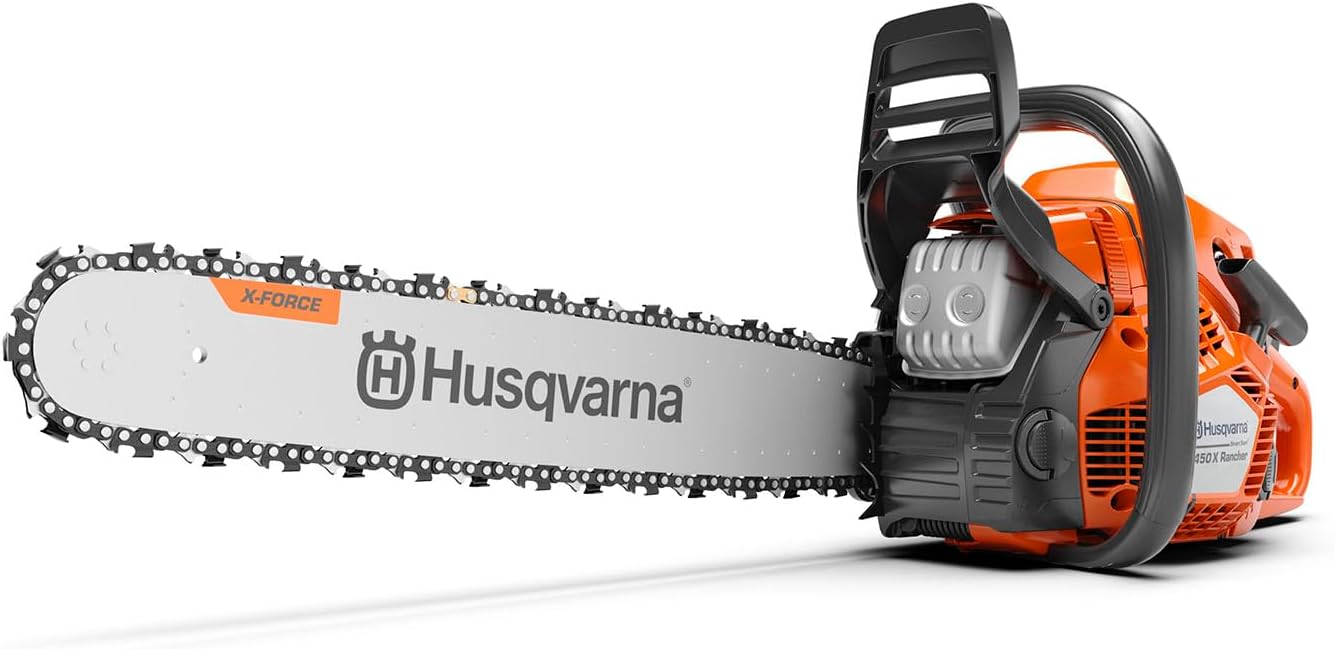 Husqvarna 450X Rancher 20-Inch Chainsaw |
8.3/10 | $549.99 | Check price |
| Best Overall |
 Husqvarna 460 Rancher 24-Inch Gas Chainsaw |
8.6/10 | $649.00 | Check price |
| Top Rated |
 PROYAMA PCS68 68cc Gas Chainsaw |
7.8/10 | $215.00 | Check price |
Husqvarna 120 Mark III 16-Inch Gas Chainsaw
A lightweight 16-inch gas chainsaw built for home and garden tasks like cutting firewood and limbing. It's designed for easier starting and handling, with features like an air purge system and LowVib technology to reduce operator fatigue.
Pros
- Air purge system and combined choke/stop control aim to simplify starting and reduce engine flooding.
- LowVib technology is intended to lower vibration for reduced operator fatigue during use.
- Air Injection centrifugal cleaning system helps protect the engine by removing larger debris before it reaches the air filter.
- Inertia-activated chain brake is a standard safety feature to help reduce kickback injury risk.
Cons
- As a gas-powered tool, it requires fuel mixing and regular engine maintenance.
- At 10.7 pounds, it may be heavier than some electric or battery-powered models for similar tasks.
Husqvarna 450X Rancher 20-Inch Chainsaw
A gas chainsaw built around easier starting, automatic engine tuning, and steady cutting power. With a 20-inch bar, 3.4 HP, and LowVib dampeners, it suits homeowners and woodcutters who want a more capable saw for outdoor yard work and firewood cutting.
Pros
- AutoTune automatically adjusts engine settings for performance
- Simple starting procedure is designed to be 40% easier
- X-TORQ engine delivers strong power even at low RPMs
- LowVib dampeners help reduce vibration during use
- Optimized crankcase design supports engine cooling and durability
Cons
- Gas-powered design requires more upkeep than battery models
- At 14.9 pounds, it is not a lightweight saw
Husqvarna 460 Rancher 24-Inch Gas Chainsaw
A high-power, 60.3-cc gas chainsaw designed for demanding tasks like felling trees and processing firewood. It balances robust performance with user-focused features, including easy-start technology and vibration dampening. This model is well-suited for landowners and professionals tackling heavy cutting work.
Pros
- Powerful 3.6-HP X-Torq engine for demanding cutting jobs
- Smart Start system and side-mounted tensioner for easier operation
- LowVib technology and ergonomic handle reduce user fatigue
- Air Injection centrifugal air cleaning extends engine life
- Warranty can be extended to 5 years with fuel purchase
Cons
- Heavy-duty 60.3-cc engine and 24-inch bar make it a substantial tool, weighing 13.2 pounds
- Requires mixing 2-stroke oil with gasoline, adding maintenance complexity
- Large bar size may be unwieldy for lighter tasks or less experienced users
PROYAMA PCS68 68cc Gas Chainsaw
A commercial-grade gas chainsaw built for heavy-duty work like tree felling and storm cleanup. Its 68cc engine and magnesium alloy construction prioritize power and durability, while the included 20-inch and 24-inch bar options offer versatility for different cutting tasks.
Pros
- Powerful 68cc 2-cycle engine (4.5HP) for demanding cutting jobs
- Durable magnesium alloy chain brake and case for enhanced safety and longevity
- Includes both 20-inch and 24-inch guide bars for task versatility
- Features an anti-vibration system and easy-start design for user comfort
Cons
- Weighs 14.5 pounds, which is substantial for prolonged use
- Gas-powered operation requires fuel mixing and produces emissions
Best Chainsaw Gas Buying Guide
Engine Power and Cutting Demand
Engine power is the first thing most buyers should evaluate when comparing gas chainsaws. A more powerful engine generally helps the saw maintain chain speed under load, which matters when you are cutting hardwood, larger limbs, or multiple logs in one session. If your work is mostly light pruning and occasional branch clearing, you may not need the most aggressive setup in the lineup. For heavier property maintenance, though, extra cutting reserve can reduce the frustration that comes from bogging down in dense wood.
Think about the type of cuts you make most often. If you mainly trim smaller branches, a lighter-duty saw can be easier to control and less tiring to carry. If you regularly buck firewood or tackle storm cleanup, you will usually benefit from a chainsaw with stronger torque and a bar length that matches the diameter of the wood you are cutting. A good rule is to choose a saw that can handle your typical job without forcing you to work at the edge of its capacity every time.
For broader context on how chainsaws fit into yard care, our Hand Saws & Pruning Saws category is a useful complement when you need a quieter manual tool for selective cutting. Gas chainsaws are best when speed and raw cutting ability matter, but not every job requires maximum output.
Bar Length and Cutting Capacity
Bar length plays a major role in what a chainsaw can handle comfortably. A shorter bar is easier to maneuver and can feel safer for trimming or limbing, while a longer bar gives you more reach and lets you cut thicker material in fewer passes. The right bar is not always the longest one available. In fact, an oversized bar on a saw that lacks sufficient power can slow you down and make the cut less efficient.
When comparing models, it helps to match the bar length to the wood size you expect to cut. If most of your work involves small to medium branches, a compact setup usually offers better balance. For repeated firewood cutting or larger trunks, a longer bar can save time, but only if the engine and chain speed are up to the task. That balance between reach and control is a key reason some buyers prefer a more versatile mid-size saw over a maximum-length option.
The best pruning saw for large branches can also be a smart backup for close-quarters work where a gas saw would be overkill. In many yards, the ideal toolkit includes both powered and manual cutting options so you can choose the fastest tool without sacrificing precision.
The B0GX1FYGH7 model is the kind of product you would examine closely if your main concern is cutting capacity rather than compact handling. A saw like this is most useful when you want enough reach to get through larger wood efficiently and do not want to spend extra time repositioning for every cut.
Starting System and Everyday Ease of Use
One of the biggest frustrations with gas equipment is inconsistent starting. A chainsaw may have strong specs on paper, but if it is difficult to start, it becomes a headache every time you need it. That is why ignition behavior, primer assistance, choke design, and general start-up friendliness matter more than many shoppers realize. A saw that starts predictably can save time and reduce the stress that comes with seasonal use.
Ease of use also includes how the saw feels once it is running. Pay attention to trigger response, handling comfort, and how quickly you can get back to work after a pause. If you plan to use the saw only occasionally, a simpler and more forgiving start process may be worth prioritizing over features you will rarely notice. For frequent users, small convenience details can add up to a smoother overall experience.
In practical terms, the best gas chainsaw is often the one you will actually start and use without hesitation. That is especially important for homeowners who may only need the saw a few times each season. If you want to compare categories of cutting tools before deciding, the best small hand saw guide can help you decide when a manual tool is enough.
Weight, Balance, and Fatigue
Gas chainsaws are inherently more demanding to carry than many electric alternatives, so weight and balance deserve close attention. A saw that feels front-heavy can be tiring during limbing and overhead work, while a balanced chassis makes it easier to guide the bar accurately through a cut. If you expect longer sessions, comfort becomes more than a luxury. It directly affects how safely and confidently you can work.
Balance matters as much as total weight. Two saws can weigh similarly but feel very different in the hand if one is better distributed from the front handle to the rear grip. If possible, choose a model that seems manageable for your typical working position. For cutting on a ladder, trimming at shoulder height, or making repeated small cuts, a lighter and more balanced saw is usually the better choice.
| Use Case | What to Prioritize | Why It Matters |
|---|---|---|
| Light pruning | Lower weight, easy handling | Reduces fatigue and improves control |
| Firewood cutting | Better balance and stronger power | Helps maintain speed through thicker wood |
| Storm cleanup | Comfortable grip and reliable starting | Speeds up repeated use in real-world conditions |
| Large limbs | Longer bar with stable handling | Improves reach and cutting efficiency |
The B0GYZZLC8Z model is a good example of why balance should never be ignored. Even when two saws look similar on a listing page, one may feel noticeably easier to guide through repeated cuts. That difference can have a real impact when you are working for more than a few minutes at a time.
Safety Features and Maintenance Practicality
Safety should be part of every chainsaw decision, especially with gas models that can deliver serious cutting force. Look for a dependable chain brake, accessible controls, and a design that helps you maintain a secure grip. Good safety features do not replace careful use, but they can give you a more predictable operating experience and faster reaction time if something goes wrong.
Maintenance is another area where buyers can save themselves trouble later. A saw that is easier to tension, clean, and inspect will likely stay in better condition with less effort. Since gas chainsaws require more upkeep than many electric tools, you should assume you will spend time on chain adjustment, cleaning debris from the housing, and checking the bar and chain more regularly. A model that makes those tasks simpler can be worth prioritizing even if it is not the flashiest option.
When you compare options, think beyond the cut itself. If a saw fits your maintenance routine and you feel comfortable inspecting it before each use, you are more likely to keep it performing well over time. That is one reason experienced users often value practical design details just as highly as raw cutting performance.
Value, Intended Use, and Long-Term Fit
Value is not only about getting the lowest possible cost. It is about matching the saw to the work you actually do so you are not overpaying for capability you will never use or underbuying and ending up frustrated. If you only need a saw for occasional yard cleanup, a more modest model may be the smartest purchase. If you rely on the tool for frequent property maintenance, paying for better comfort and capability can make sense over the long run.
Before you decide, picture your hardest typical task. If that task is cutting down medium limbs after a storm, choose a saw that can manage that workload without strain. If your work is mostly occasional trimming, a more manageable saw can be easier to live with. The best gas chainsaw is the one that fits your routine now, not just one that looks impressive in a spec list.
For readers comparing multiple categories of outdoor cutting gear, the Chainsaws & Saws category is the best place to browse related options side by side. That broader view can help you decide whether a gas saw, a manual saw, or another tool is the right answer for your property.
Why You Should Trust Us
We build our recommendations by comparing available product data, listing details, feature sets, and how each saw fits common homeowner and property-care use cases. Our goal is to make the buying process easier by focusing on practical differences that matter in real-world use, not just on generic marketing language. We look for patterns in handling, safety design, cutting capacity, and overall suitability for typical chainsaw tasks.
We also aim to be transparent about what the data can and cannot tell us. If a listing does not provide much detail, we avoid pretending otherwise and instead evaluate the product based on the information that is available. That keeps the guidance grounded, consistent, and useful for readers who want a clearer path to the right purchase.
Final Thoughts
After comparing the lineup, our best overall recommendation is the B0GX16NX1H model. It stands out as the first choice for most buyers because the top-ranked position suggests the strongest overall mix of performance and usability in this roundup. If you want a single saw to cover the broadest range of typical gas chainsaw tasks, this is the one we would start with.
For a best value style pick, the B0D1GXMQRJ model is a smart option to consider if you want a practical saw without chasing unnecessary extras. It is a good fit for homeowners who want dependable cutting ability for routine yard work and seasonal cleanup. For readers who need a more task-focused choice, the B0GX1FYGH7 model is the best for larger cutting jobs, especially when reach and cutting capacity matter more than compact handling.
If you are still narrowing down your choice, it may help to revisit our Hand Saws & Pruning Saws category for lighter-duty alternatives or explore the full Chainsaws & Saws category for more outdoor cutting tools. The right pick depends on your property, your comfort level, and how often you expect to use the saw throughout the season.
FAQs
What is the best chainsaw gas for homeowners in 2026?
The best option for homeowners is usually the saw that balances power, handling, and easy starting rather than the most aggressive model in the lineup. If your work is mostly trimming, storm cleanup, and occasional firewood cutting, a well-balanced gas chainsaw will usually feel easier to use and maintain. A strong all-around pick is often better than a specialized saw if you only own one chainsaw.
How do I choose the right bar length for best chainsaw gas?
Choose bar length based on the wood size you cut most often. Shorter bars are easier to control for limbing and light pruning, while longer bars are more useful for thicker logs and larger property work. If you routinely cut wood larger than the bar can comfortably handle, you may end up working harder than necessary and reducing efficiency.
Are gas chainsaws harder to maintain than electric models?
Yes, gas models usually require more routine upkeep because they involve fuel, spark-related components, and more frequent cleaning. You will need to stay on top of chain tension, bar maintenance, and general engine care. That extra maintenance is part of the tradeoff for the cutting power and mobility gas saws provide.
Which best chainsaw gas is best for cutting larger branches?
A model with more reach and better cutting capacity is usually the better choice for larger branches. If your main goal is to handle thick limbs efficiently, prioritize a saw that feels stable under load and does not force you to make repeated half-cuts. For related guidance, our best pruning saw for large branches guide can also help you decide when a manual tool may be the better fit.
How often should I inspect my best chainsaw gas during the season?
You should inspect the saw before each use and check it regularly during the season, especially if you use it frequently. Look at chain tension, bar condition, lubrication, and general cleanliness before starting work. A few minutes of inspection can help prevent poor cutting performance and unnecessary wear over time.
About the author
Senior Editor, Power Equipment. Based in Boise, Idaho. Daniel has heated his home with firewood for over fifteen years and spends most of his weekends cutting, splitting, and sharpening. He covers chainsaws, saws, and the gear that keeps them running safely.