
The 4 Best Post Hole Digger of 2026
Digging fence posts and planting holes takes the right tool. This roundup covers 4 options from Nohovu, DCHOUSE, YEELOR and more in November 2026 to help you choose the best post hole digger.
 By Jake Lindgren
Updated October 27, 2026
Finding the right best post hole digger can save a lot of time, effort, and frustration when you are setting fence posts, garden stakes, or mail supports. The best tool depends on your soil type, how often you dig, and how much leverage you need, which is why this guide breaks down the top options in a way that is easy to compare and use. If you are also comparing other hand tools for yard work, our Hand Tools category is a helpful place to start.

We reviewed 4 options for this guide so you can narrow your search without sorting through dozens of similar-looking tools. Whether you need a manual digger for occasional projects or a more durable option for frequent use, the picks below focus on practical performance, comfort, and long-term usefulness in the field.
| Award | Product | ACMS Score About LAT ScoreACMS Score is calculated based on product ratings, reviews, and sales performance to help you make informed purchasing decisions. | Price | |
|---|---|---|---|---|
| Best Overall |
Nohovu NH_03 Post Hole Digger
|
8.9/10 | $53.99 | Check price |
| Best Value |
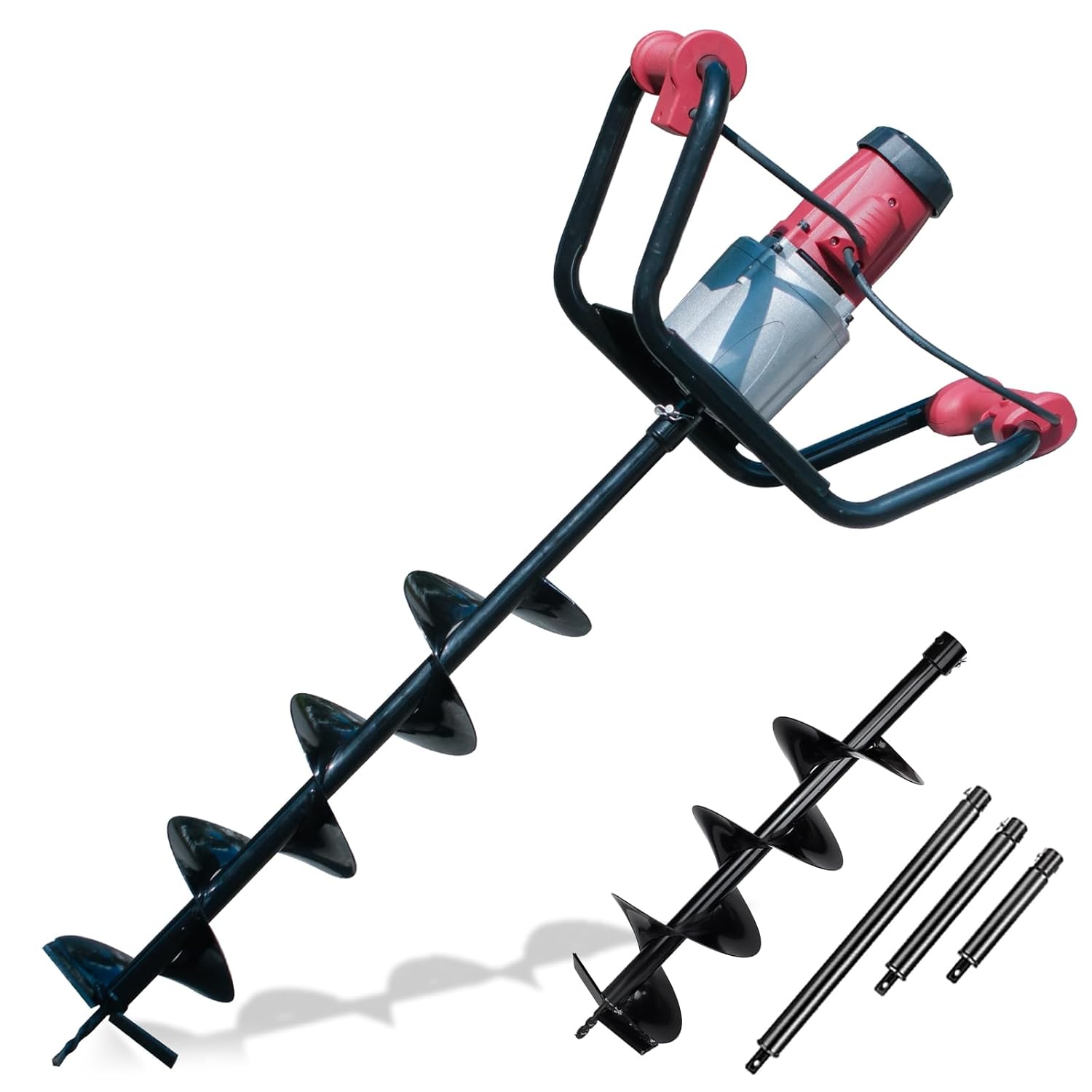 DC HOUSE DZ1500W 6-Inch Auger |
8.8/10 | $149.99 | Check price |
| Best Budget |
 YEELOR YLUS1174 Adjustable Post Hole Digger |
7.5/10 | $49.99 | Check price |
| Best Premium |
 WORKPRO X Series 40V 8-Inch Auger |
8.4/10 | $299.99 | Check price |
Nohovu NH_03 Post Hole Digger
This manual post hole digger uses carbon steel blades and thick fiberglass handles to handle tough soil more efficiently. Its 58-inch length also helps reduce bending, which makes it a practical pick for fence posts, planting, and mailbox installation.
Pros
- Sharp carbon steel blades are designed to dig through hard and clay soil.
- Thickened fiberglass handles add durability and a non-slip grip.
- 4-screw construction is built for a solid, reliable connection.
- 58-inch length helps reduce back strain from bending.
Cons
- At 9.6 pounds, it may feel heavy for some users.
DC HOUSE DZ1500W 6-Inch Auger
A corded post hole digger built around a 1500W motor and a 6-inch auger bit, aimed at fence posts, planting jobs, and similar digging tasks. It adds reverse mode, an ergonomic anti-slip handle, and a safety lock for more controlled use.
Pros
- 1500W motor with 90 ft-lb of torque and 270 RPM for efficient digging.
- Includes reverse function to help clear soil faster.
- Anti-slip, anti-vibration handle and safety lock support more controlled operation.
- Aluminum motor housing and manganese steel auger bit add durability.
Cons
- Single 6-inch cutting diameter may be too narrow for larger holes.
YEELOR YLUS1174 Adjustable Post Hole Digger
This adjustable post hole digger from YEELOR aims to reduce user fatigue with its customizable handle length and features a robust one-piece carbon steel blade for durability. Its design, secured with multiple bolts and turning threads, prioritizes structural stability for tackling hard soil.
Pros
- Adjustable handle length for user comfort and varying work heights
- One-piece integrated steel blade for enhanced strength and lasting sharpness
- Secure eight-bolt and turning-thread connection for stability during intense use
- Includes assembly tools and manual, backed by professional after-sales service
Cons
- Requires simple assembly upon receipt
- Product rating of 3.8 stars suggests some users may have experienced issues
WORKPRO X Series 40V 8-Inch Auger
A cordless post hole digger built for fence posts, tree planting, and other digging jobs in hard or rocky soil. Its brushless motor, two-speed control, and reverse function make it a practical pick for users who want less vibration, less noise, and easier handling than a gas model.
Pros
- Brushless motor delivers 90 N·m of torque for digging through tough soil
- 8-inch interchangeable bit drills holes up to 32 inches deep
- Lightweight at 29.5 lbs, with wide handles that help reduce vibration and fatigue
- Two speed settings plus reverse help with both digging and clearing stuck augers
- Includes dual 20V 4.0Ah batteries, Type-C charging, and a battery level display
Cons
- The 8-inch bit may be too large for smaller planting or post holes
- At 29.5 lbs, it is still a two-handed tool and not especially compact
Best Post Hole Digger Buying Guide for 2026
Digging Head Design and Soil Penetration
The digging head is the part that does the real work, so it should match the kind of soil you have. In loose or sandy ground, a narrower head can give you cleaner holes with less collapse, while heavier clay often calls for a more rigid head that can cut through compact material without twisting.
Look closely at the shape of the blades or spoon ends, because that affects how easily the tool bites into the ground. A well-formed head can reduce the number of lifts you need per hole, which matters when you are digging multiple post locations in a row. If your property includes mixed soil, choose a design that balances cutting ability with easy cleanup from the hole.
The 4 products in this guide vary in how they would handle repeated digging, so think about your typical project before choosing. For broader comparisons across the category, you can also browse the Shovels, Spades & Hoes section to see related digging tools that solve different yard tasks.
Handle Length and Leverage
Handle length affects how much leverage you get when you lift soil and widen the hole. Longer handles usually make it easier to apply force with less bending, which can help reduce strain on your back and arms, especially if you are working on several posts in one session.
Shorter handles can feel more controlled in tight spaces, but they may demand more effort from your upper body. If you are comparing tools for repeated use, pay attention to whether the handle geometry lets you keep a comfortable posture while still delivering enough downward pressure for compact soil. That balance often matters more than any single spec.
In practice, a good handle should help you keep the blades aligned while you lift out soil instead of forcing you to fight the tool. If a model feels awkward, you may waste energy on every cycle, and that adds up quickly when you are digging more than one hole.
Weight, Balance, and Day-Long Comfort
Weight is not just about whether a tool feels heavy in your hands. It also affects how smoothly you can position it, drive it into the soil, and pull it back out. A balanced tool often feels lighter in use than a lighter tool with poor balance, because you spend less energy correcting its movement.
If you are working on a fence line or a row of garden posts, comfort becomes just as important as cutting power. Small design details such as grip shape, handle spacing, and how the head sits relative to the handles can make a noticeable difference over time. This is why the best option is not always the one that looks the most aggressive.
For shoppers who want to compare other utility tools with similar comfort concerns, the Rakes category can be useful for understanding how handle design and control influence real-world performance across outdoor tasks.
| What to compare | Why it matters | What to look for |
|---|---|---|
| Head shape | Controls how easily the tool enters soil | Narrower profile for tight digging, stronger edges for dense ground |
| Handle length | Changes leverage and posture | Enough reach to reduce bending without losing control |
| Balance | Reduces fatigue during repeated use | Even weight distribution between head and handles |
| Grip comfort | Improves control during lifting and twisting | Non-slip feel and a shape that fits your hands |
Durability and Material Quality
Durability matters because post hole digging can put a lot of stress on the tool at once. When a blade hits compact soil, roots, or stones, the material must resist bending, loosening, or excessive wear. A stronger build can extend the life of the tool and keep it performing consistently through repeated projects.
Look for signs that the construction is meant for sustained outdoor use rather than only occasional light duty. Strong joints, secure handle connections, and a finish that stands up to moisture all help the tool last longer. If you store tools in a shed or garage, corrosion resistance can matter just as much as cutting strength.
The most durable option is usually the one that handles stress without developing wobble at the connection points. That matters more than flashy features because a loose or weak joint can make the tool harder to control and less effective in the soil.
Hole Size, Project Type, and Efficiency
Not every post hole job needs the same tool behavior. A small decorative fence post may need a neat, narrow hole, while a larger structural post may require deeper and wider excavation. Matching the tool to the project reduces unnecessary digging and helps you finish faster with less cleanup.
Before you buy, think about whether you need a tool for occasional home projects or a model that can keep up with frequent landscape work. The more holes you plan to dig, the more important it becomes to prioritize comfort, consistency, and durability rather than simply choosing the first option that looks sturdy.
Project planning also affects how you compare the products in this guide. If you are building out a full yard-care toolkit, it can help to pair your choice with other hand tools from our Pruning Shears & Loppers category for a more complete outdoor maintenance setup.
Why You Should Trust Us
We build our recommendations by comparing available product data, category fit, and the kinds of features that matter most in real digging tasks. That means we focus on the tool design, ease of use, material quality, and how well each product aligns with common post hole projects, rather than relying on marketing claims alone.
Our goal is to give you a clear and practical buying guide that helps you make a confident decision. We do not assume every product performs the same, and we do not rely on vague praise. Instead, we weigh the information that is available, identify the strengths that matter most, and present the options in a way that is easy to compare.
Final Thoughts
For the best overall pick, we recommend the B0CYPVLGGB because it sits at the top of the list and is positioned as the strongest all-around choice in this guide. If you want a tool that is easy to justify for most typical yard projects, this is the first option we would compare against the rest of the field.
For a best value angle, the B0F1FT1JLF is worth a close look because value-oriented buyers usually want dependable digging performance without overcomplicating the purchase. For a more specific-use recommendation, the B0G2VD5RGF is a smart place to focus if you know your projects will demand a more specialized fit for repeated post digging.
If you are still narrowing your options, revisit the Hand Tools category and compare these choices against other outdoor tools that may suit your workflow better. You can also use our broader guide to The 4 Best Post Hole Digger of 2026 to see how related digging tools are organized across the site.
FAQs
What is the best post hole digger in 2026 for home projects?
The best choice for home projects is usually the one that balances ease of use, solid digging performance, and comfort over multiple holes. If you are only tackling occasional fence or garden work, prioritize a tool that feels stable in the hands and does not require excessive effort to lift soil.
How do I choose the right best post hole digger for hard soil?
For hard soil, look for a design with stronger digging edges, good leverage, and enough rigidity to resist flexing under pressure. You want the tool to cut into compact ground without forcing you to use extra body weight for every stroke, because that quickly increases fatigue.
What size best post hole digger do I need for fence posts?
The right size depends on the post dimensions and the amount of room you need for setting material around the post. In general, your goal is to create a hole that gives you enough working space without removing more soil than necessary, since oversized holes take longer to refill and compact properly.
Are manual best post hole digger good for frequent use?
Yes, manual tools can be a good fit if they are well balanced and built for repeated digging, but comfort becomes increasingly important as frequency goes up. If you plan to use one regularly, choose a model that reduces strain on your back and arms and has durable construction for long-term reliability.
Where can I find more hand tool comparisons?
We recommend exploring the broader Hand Tools category for more outdoor tool guides. That makes it easier to compare related items side by side and build a more complete yard maintenance setup around the tasks you do most often.
About the author
Contributor, Seasonal & Snow Tools. Based in Duluth, Minnesota. Jake has cleared long Minnesota driveways every winter for most of his adult life and has strong opinions about shovels and pushers. He writes about snow removal and cold-weather yard work.