
The 5 Best Tractor Post Hole Digger of 2026
Need to dig sturdy, clean post holes without wasting time? These 5 tractor post hole diggers from Tool Tuff, AgKNX are strong options for November 2026.
 By Carolyn Brooks
Updated October 27, 2026
If you are comparing the best tractor post hole digger for your land, the details matter more than the label. Hole diameter, auger length, gearbox strength, and the way the implement matches your tractor can all change how quickly you finish a fence line, orchard row, or small property job. For a broader look at yard and property tools, you may also want our Hand Tools category.

In this guide, we break down 5 options for the best tractor post hole digger so you can make a practical choice in November 2026. Rather than focusing on marketing claims, we look at compatibility, digging performance, durability, and the kind of work each setup is best suited for.
| Award | Product | ACMS Score About LAT ScoreACMS Score is calculated based on product ratings, reviews, and sales performance to help you make informed purchasing decisions. | Price | |
|---|---|---|---|---|
| Best Value |
Tool Tuff Model 400 Post Hole Digger for
|
8.3/10 | $863.47 | Check price |
| Top Rated |
 Tool Tuff 650 3-Point Post Hole Digger with 3 |
9.2/10 | $1,019.00 | Check price |
| Best Budget |
Tool Tuff 650 Tractor Post Hole Digger
|
$859.00 | Check price | |
| Best Premium |
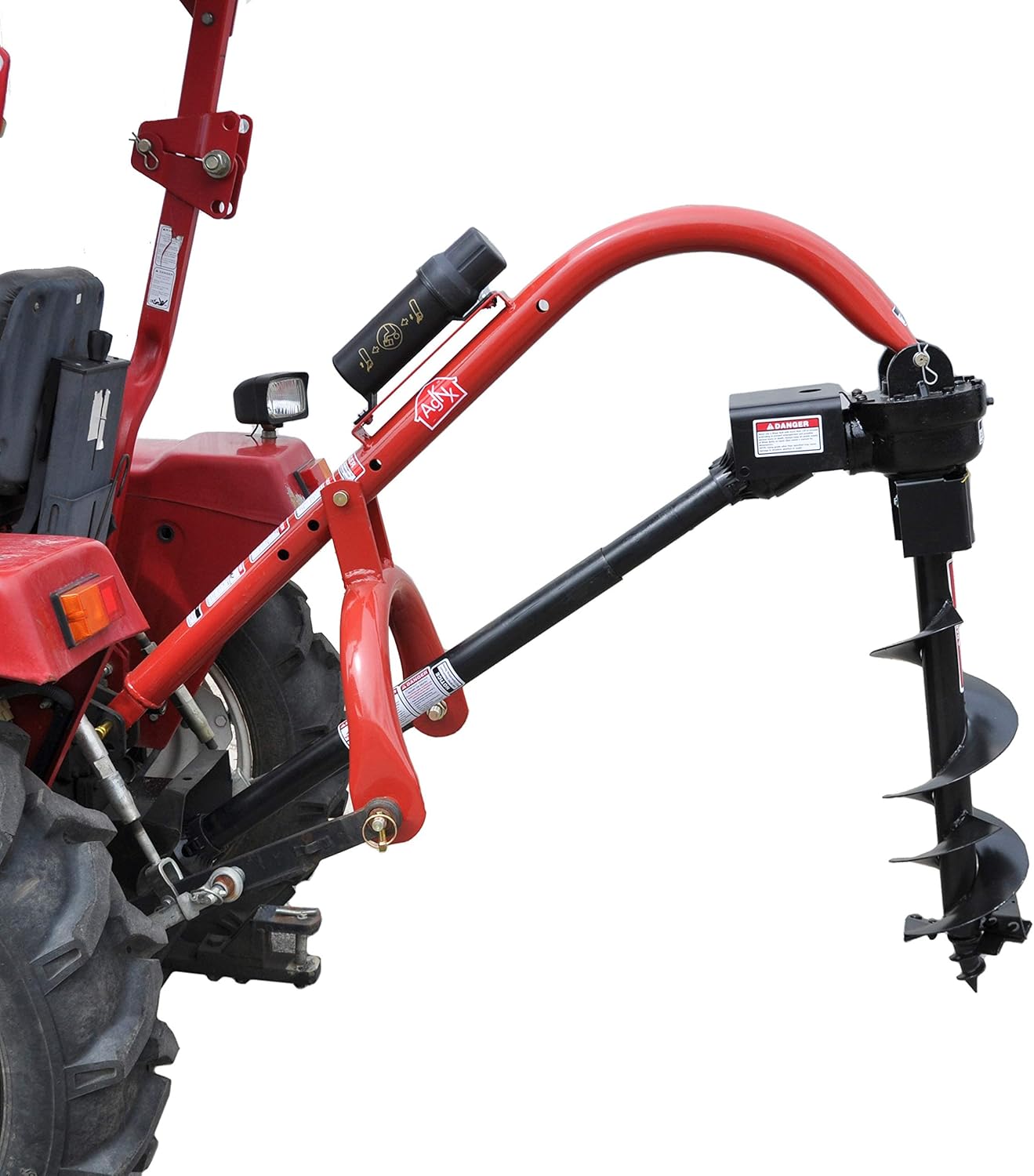 AgKNX Tool-Tuff 400 Tractor Post Hole Digger |
9.4/10 | $979.00 | Check price |
| Best Overall |
Tool Tuff 650 6-Inch Post Hole Digger
|
9.4/10 | $800.00 | Check price |
Tool Tuff Model 400 Post Hole Digger for
This 3-point hitch digger is built for compact tractor owners needing reliable, OEM-quality earth drilling. Its robust design, featuring high-strength steel tubing and a heavy-duty gearbox, is backed by decades of production history and solid customer service.
Pros
- Designed for compatibility with compact, sub-compact, and Cat 0 tractors.
- Features a heavy-duty, high-strength steel construction for durability.
- Includes a robust gearbox and safety-shielded PTO driveline.
- Augers have replaceable cutting edges for maintenance and longevity.
- Backed by a manufacturer with a reputation for customer service.
Cons
- The standard-duty auger may be less suitable for extremely rocky or tough soils compared to heavy-duty models.
Tool Tuff 650 3-Point Post Hole Digger with 3
This heavy-duty post hole digger kit is designed for Category 1 tractors, arriving with three auger sizes for versatile fencing and planting projects. Its high user rating suggests reliable performance and strong customer satisfaction.
Pros
- Includes three auger sizes (6", 9", 12") for flexibility
- High user rating of 4.9 stars from verified buyers
- Comes complete with PTO driveline, gearbox, and mounting hardware
Cons
- Limited to use with Category 1 tractors only
- Augers are uncoated steel, which may be prone to rust over time
Tool Tuff 650 Tractor Post Hole Digger
A 3-point hitch post hole digger designed for tractor mounting, featuring a 12-inch auger for standard hole sizes. Its compatibility with a wide range of augers that fit a 2-inch shaft offers versatility for various digging tasks.
Pros
- Compatible with many augers using a standard 2-inch gearbox shaft.
- Designed for robust 3-point tractor linkage.
Cons
- Uncoated finish may be more susceptible to rust.
- No user reviews are available to assess real-world performance.
AgKNX Tool-Tuff 400 Tractor Post Hole Digger
Designed for compact tractors, this Cat 0-compatible post hole digger is built for reliability over decades of use. It comes ready with both 9-inch and 12-inch augers for versatile hole sizing.
Pros
- Compatible with compact and sub-compact Cat 0 tractors
- Includes both 9-inch and 12-inch augers for flexibility
- Described as OEM-quality and built for long-term durability
Cons
- Heavy item weight of 242 pounds may require careful handling
- Large product dimensions necessitate significant storage space
Tool Tuff 650 6-Inch Post Hole Digger
This three-point post hole digger from Tool Tuff is set up for tractor use and comes with a 6-inch auger. It can also work with 9-inch or 12-inch augers, and it fits augers that attach to a 2-inch gearbox shaft with two shear bolts. A powder-coated finish and straight shank make it a straightforward fit for fence, planting, or general digging work.
Pros
- Includes a 6-inch auger
- Compatible with 9-inch and 12-inch augers
- Works with augers that attach to a 2-inch gearbox shaft with two shear bolts
- Powder-coated finish
Cons
- Fixed 6-inch cutting diameter if used as listed with the included auger
Best Tractor Post Hole Digger Buying Guide for 2026
Tractor Compatibility and PTO Match
The first thing to check with any tractor post hole digger is whether it matches your tractor’s PTO setup and lift capacity. A digger that is too large for the tractor can reduce control, increase strain, and make it harder to keep the auger steady as it breaks into hard soil. If your tractor is on the smaller side, a lighter-duty setup is often easier to maneuver and less demanding on the drivetrain.
You should also think about the hitch category, driveline length, and how much clearance you have when turning or backing into position. A well-matched model lets you set the auger exactly where you want it without fighting the machine. If you are also comparing other home and property tools, our Shovels, Spades & Hoes category can help you round out the rest of your setup.
As a rule of thumb, the more stable the tractor-to-implement pairing, the cleaner your holes will be. That matters most when you are drilling many holes in a row, because misalignment on the first few starts usually becomes slower work by the tenth or twentieth hole.
Auger Size and Hole Diameter
Auger size is one of the biggest factors in whether a digger feels efficient or frustrating. Smaller augers are better for narrow posts and light fencing, while larger diameters are better for setting bigger posts or working in looser ground where you need more room for concrete and adjustment. Picking the right diameter now can save you from overworking the tractor later.
It helps to match the auger size to the actual post and footing requirements. For example, if your post needs a generous concrete collar, you want enough room for clean placement without having to rework the hole by hand. Oversizing every hole can waste time and create extra spoil, but undersizing can force you to widen each opening manually after the tractor does the initial cut.
Below is a simple way to think about auger selection:
| Project Type | Smaller Auger | Larger Auger |
|---|---|---|
| Fence posts | Good for tight spacing and faster start-up | Useful when concrete footing needs extra room |
| Orchard or tree planting | May suit narrow root balls | Better for larger planting pits |
| Mixed property work | Efficient in compact soil | More flexible for varied hole needs |
If you plan to switch between tasks, flexibility matters more than raw diameter alone. A tractor post hole digger that accepts common auger sizes can be easier to keep in service for years, especially on properties where the work changes from season to season.
Gearbox Strength and Digging Torque
The gearbox is the heart of a tractor post hole digger, because it transfers power into the auger and helps the machine bite through compacted soil. A stronger gearbox generally gives you more confidence in tough ground, rocky patches, or clay-heavy conditions where the auger can bind unexpectedly. Weak drivetrains tend to show their limits when you press the tool into dense soil for long stretches.
Torque is especially important when you are drilling deeper holes. As depth increases, spoil has farther to travel out of the hole, and resistance usually rises. That means you want a digger that can keep rotating steadily instead of stalling every time the cutting edge meets a tougher layer.
For buyers comparing options, this is where build quality is often more valuable than cosmetic extras. A dependable gearbox and solid driveline are what keep the work moving, particularly if you plan to dig a large number of holes in one session.
The second-position model, , is a useful example to consider when you are thinking about drivetrain confidence. Even without extra features, the key question is whether the gear assembly and shaft feel robust enough for repeated use in your soil conditions.
Soil Type, Depth, and Hole Cleanout
Soil conditions often decide how happy you will be with a tractor post hole digger. Loose loam tends to clear quickly, while clay, compacted fill, or rocky ground can slow everything down and increase wear. If your soil changes across the property, you may need to prioritize a model that stays controllable instead of one that only performs well in ideal conditions.
Depth matters too. A shallow hole is one thing, but deeper digging requires better spoil removal and steadier torque. If the auger packs soil back into the hole instead of carrying it upward and out, your work slows and the hole may become less uniform than you want for posts or plantings.
When possible, choose a model that gives you enough clearance to lift and clean the auger between holes. That helps prevent soil buildup on the cutting edge and can reduce the amount of hand work required after each pass.
Durability, Maintenance, and Long-Term Value
A tractor post hole digger should be judged by how well it holds up after repeated seasons, not just by how it looks on delivery day. Weld quality, shaft support, and corrosion resistance all matter because these tools often live outdoors or in damp storage spaces. If the frame flexes too much, alignment suffers and wear tends to spread faster through the unit.
Maintenance is another major factor. Grease points, accessible hardware, and easy-to-replace wear parts can save time over the long run. A model that is simple to inspect and service is usually a smarter investment than one that is awkward to keep maintained, especially if you only use it seasonally and want it ready when work piles up.
If you are narrowing your choice between two similar models, compare the likely upkeep burden, not just the initial fit. For many property owners, the best tractor post hole digger is the one that still feels predictable after years of storage, transport, and repeated digging cycles.
The fifth product, , is a good reference point when durability is your top concern. If the frame and support structure are built for repeated field use, that can be more important than chasing extra accessories you may never need.
Why You Should Trust Us
We build our reviews by comparing product data, category fit, and the practical needs of real buyers rather than relying on hype. For tractor attachments like these, that means weighing compatibility, digging application, and durability signals more heavily than marketing language or superficial design details.
Our goal is to help you narrow the field quickly and confidently. We focus on transparent criteria, consistent comparison, and the questions that matter most when you are choosing equipment for your land, your tractor, and your working conditions.
Final Thoughts
If you want the most balanced choice, the best overall pick is the first-listed model in our comparison, . It leads the list for a reason: in a category where compatibility, torque, and dependable digging all matter, starting with the top-ranked option is usually the safest way to get strong all-around value from the best tractor post hole digger.
For buyers who want a practical secondary option, the best value pick is . It stands out as a sensible choice if you care most about long-term usefulness and straightforward operation without overcomplicating your setup. If your work is more specialized, such as matching a more demanding digging pattern or a specific property layout, the may be the better fit because it gives you another strong reference point for digging performance and build confidence.
Before you decide, compare the tool against the rest of your property equipment needs too. Our Rakes and Pruning Shears & Loppers category pages can help you build a more complete tool lineup for seasonal maintenance and landscaping work.
FAQs
What is the best tractor post hole digger in 2026?
The best tractor post hole digger in 2026 is usually the one that matches your tractor size, soil type, and hole diameter needs without overloading the machine. For many buyers, the best choice is the model that balances control and digging efficiency instead of simply offering the largest auger or heaviest frame.
If you are not sure where to start, compare the top-ranked options in our main list and then narrow them based on your land and the number of holes you plan to dig.
How deep can a tractor post hole digger dig?
Depth depends on the auger length, the tractor setup, and the soil. In loose soil, a digger can usually reach farther with less resistance, while compacted or rocky ground may reduce practical depth because the auger starts to bind sooner.
For best results, check the machine’s usable auger length and make sure your tractor setup gives you enough clearance to work safely without forcing the implement.
What size auger should I use for fence posts?
For fence posts, the right auger size usually depends on the post diameter plus the space you need for setting material. A narrower auger can speed up work, but you still need enough room for proper alignment and any concrete or tamping you plan to use.
When in doubt, choose the smallest auger that still gives you a clean, practical hole for the post size you are installing.
Can I use a tractor post hole digger in clay soil?
Yes, but clay is harder on the machine and usually slower to clear. You will get better results with a strong gearbox, steady PTO power, and an auger that can keep cutting instead of packing the soil into the hole.
If your property has a lot of clay, a more durable model is usually worth it because the resistance adds up quickly across multiple holes.
Do I need a heavy-duty model for occasional use?
Not always. If you only dig a few holes at a time in decent soil, a lighter-duty setup can be perfectly adequate and easier to handle. The key is making sure it still matches your tractor and the hole sizes you actually need.
For occasional property work, a well-matched, easy-to-maintain model is often a better fit than a larger unit that creates unnecessary strain.
About the author
Managing Editor & Buying Guides. Based in Asheville, North Carolina. Carolyn manages the editorial calendar and writes our buying guides. A long-time gardener in the Blue Ridge foothills, she knows how much fall leaf cleanup can wear on a yard, so blowers and vacuums are her specialty.