
SakerPlus GJ70486 Review: Effortless Spring-Loaded Aeration
The SakerPlus GJ70486 is a manual spike aerator featuring a rebound spring for automatic ejection and reinforced iron construction, designed for efficient lawn care on soft and loose soil.
 By Rachel Thompson
Updated November 1, 2026
Quick Verdict
8.4/10This manual lawn aerator uses a spring-loaded double-layer design for easier operation, automatically ejecting from the soil after each plunge. Its reinforced iron construction and adjustable height aim for durability and user comfort.
What we like
- Reinforced heavy-duty iron construction with rust-resistant coating
- Rebound spring design for automatic soil ejection and debris clearing
- Adjustable height handle (32.2 to 35.4 inches) for user comfort
- 15 sharp spikes for efficient aeration coverage
Watch out for
- Designed primarily for soft and loose soil, may struggle with harder ground
- Manual operation requires physical effort, despite the rebound spring
For homeowners seeking a simple, mechanical solution to lawn compaction, manual spike aerators remain a popular choice. The SakerPlus GJ70486 enters this category with a specific design philosophy: to reduce the physical effort typically associated with these tools. This review analyzes the specifications, design, and intended performance of this hand-powered aerator to determine if its features translate to a genuinely easier user experience.

This tool is squarely aimed at the DIY gardener with a small to medium-sized lawn who prefers a straightforward, no-fuel, no-cord tool for seasonal lawn care. Its core promise is a more efficient manual aeration process, thanks to an innovative spring mechanism. In short, the SakerPlus GJ70486 manual lawn aerator aims to make a necessary chore less of a grind by automating the most strenuous part of the process.
Prime SakerPlus GJ70486 Manual Lawn Aerator with Rebound




As an Amazon Associate we earn from qualifying purchases. Product prices and availability are accurate as of the date/time indicated.
SakerPlus GJ70486 at a Glance
| Specification | Detail |
|---|---|
| Brand | SakerPlus |
| Model Number | GJ70486 |
| Operation Mode | Manual / Hand-Powered |
| Key Feature | Double-Layer Design with Rebound Spring |
| Construction Material | Heavy-Duty Iron with Rust-Resistant Coating |
| Spike Count | 15 Sharp Spikes |
| Handle Height Adjustment | 32.2 to 35.4 inches (via 3 alignment holes) |
| Foot Pedal Design | Reinforced, secured with high-strength screw connections |
| Item Highlight | Automatic Soil and Debris Cleaning |
| Intended Soil Type | Soft and Loose Soil |
Design and Build
The SakerPlus GJ70486 is built around a promise of durability and reduced user strain. The primary construction material is thickened iron, which the manufacturer claims provides a higher load capacity. This iron frame is treated with a rust-resistant powder-coated finish, a critical feature for a tool that will be repeatedly driven into moist soil and then stored. This coating is intended to ensure long-lasting durability and reliable performance across seasons.
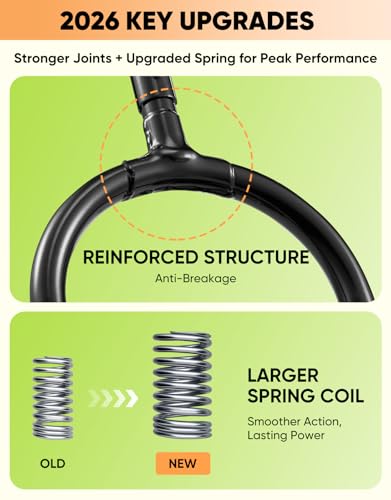
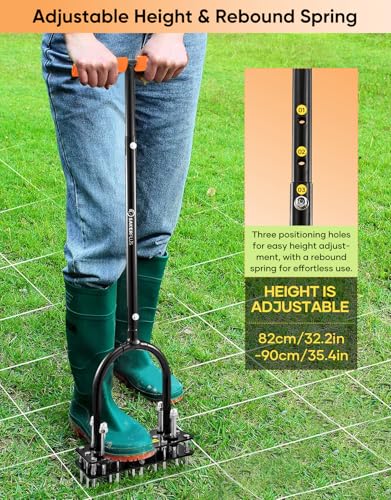
A notable design choice is the connection of the foot pedal. Instead of welding, SakerPlus uses high-strength screw connections to secure the pedal to the main frame. The manufacturer states this design aims for better stability and a significantly lower risk of breakage compared to welded joints, which can be stress points. The footplate itself is described as sturdy, intended to add stability and safety during the downward stepping motion. For user comfort, the T-handle is adjustable, offering three alignment holes that allow the user to set the tool’s height between 32.2 and 35.4 inches, accommodating different user statures.
Performance and Features
The Rebound Spring Mechanism
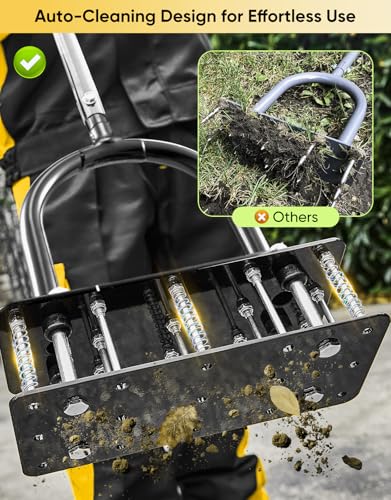
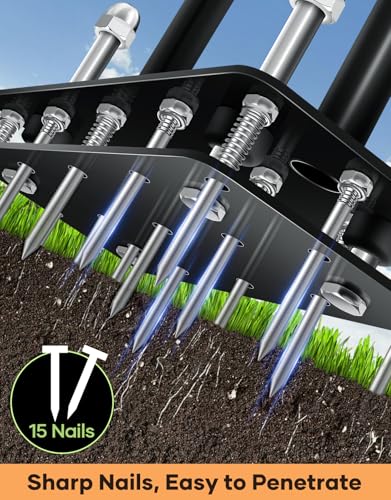
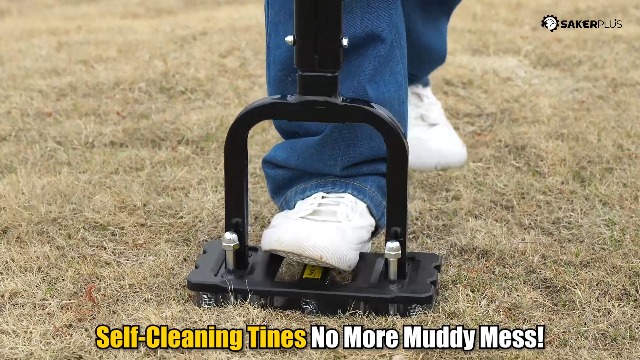
This is the centerpiece feature of the SakerPlus aerator. The tool employs a double-layer design integrated with a rebound spring. After the user steps on the foot pedal to drive the 15 spikes into the ground, this spring is designed to automatically eject the spike plate from the soil. The intended benefit is twofold: it saves the user from having to manually pull the tool back out, and the action helps clear soil and debris from the spikes, keeping them cleaner for the next plunge. This feature directly targets the main complaint about manual aerators—the repetitive bending and pulling effort.
Aeration Action and Soil Compatibility
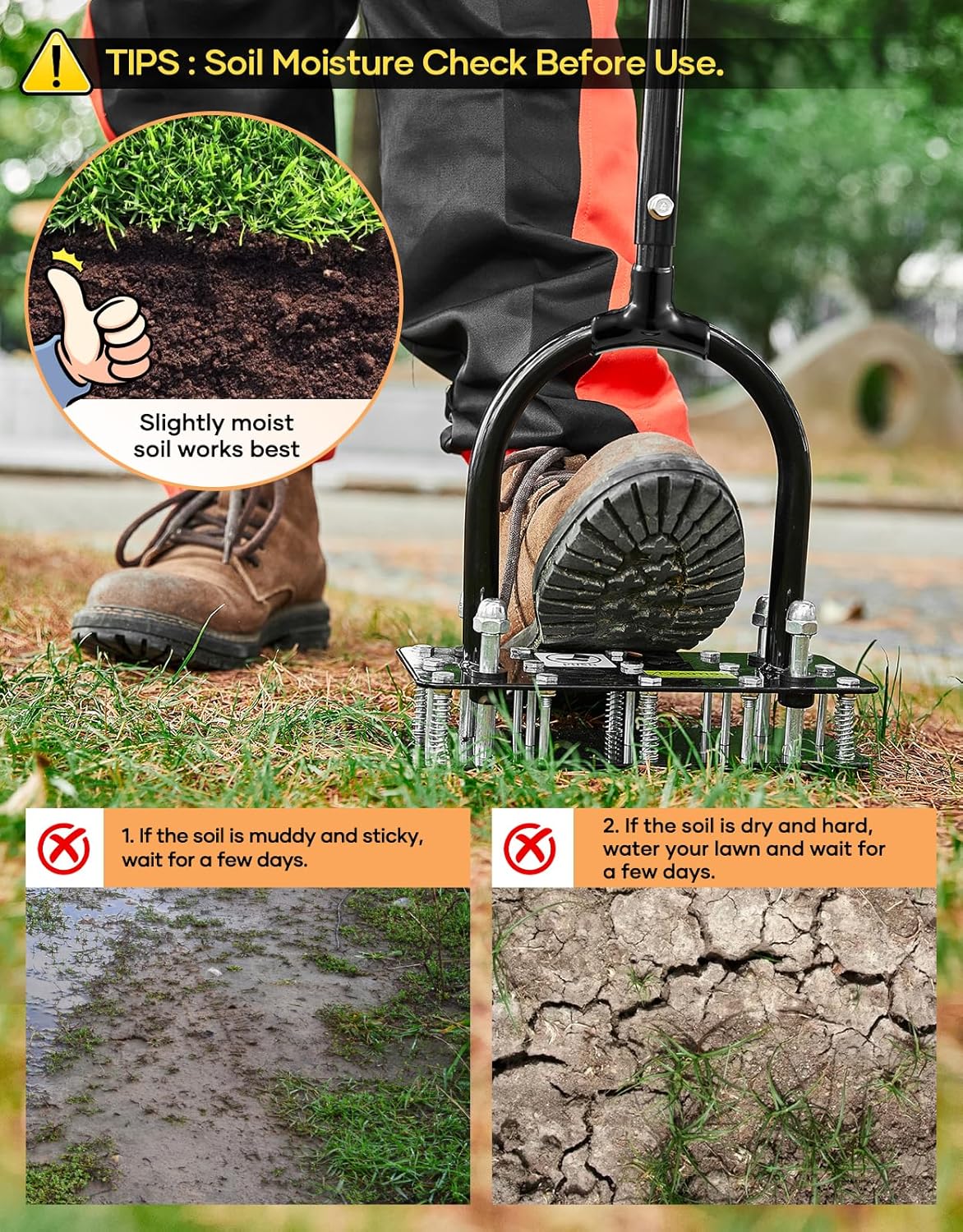
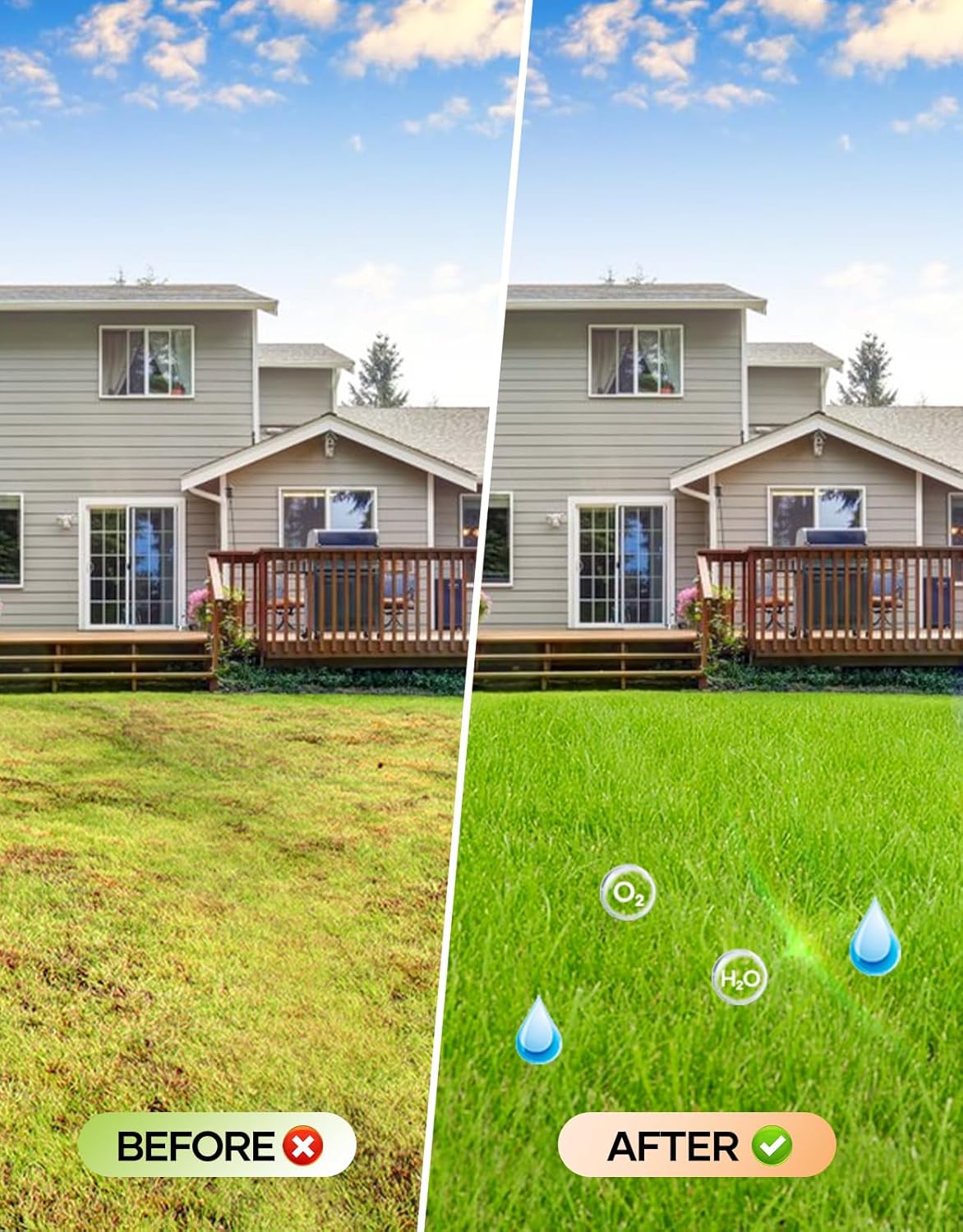
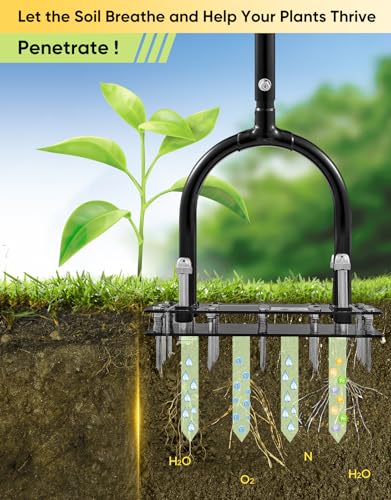
The manufacturer is explicit about the tool’s intended use case: it is designed for soft and loose soil. Under these conditions, the sharp spikes should penetrate the ground effortlessly. The action of creating holes loosens compacted soil, theoretically allowing improved flow of air, water, and nutrients to grass roots. The design, with 15 spikes, is meant to cover more ground with fewer strokes compared to single-spike tools, improving efficiency. However, the performance is inherently linked to soil condition; the manufacturer advises preparing the lawn by mowing and checking moisture levels, noting the tool may struggle in overly dry, hard, or muddy conditions.
Ergonomics and Usability
Beyond the spring, the tool’s usability is influenced by its adjustable handle and footplate. The adjustable height allows users to find a comfortable working position to avoid excessive bending, which can reduce back strain. The wide footplate aims to provide a stable platform for the user’s foot, increasing control and safety during the downward force application. As a completely manual tool, its performance is directly proportional to the user’s physical input, though the spring mechanism aims to mitigate the recovery part of that effort.
Maintenance and Running Costs
As a non-motorized, hand-powered tool, the SakerPlus GJ70486 has minimal ongoing running costs. There are no batteries to charge, no fuel to purchase, and no electrical components that could fail. The primary maintenance consideration involves the physical condition of the tool itself. The rust-resistant powder coating is a key feature meant to reduce maintenance, but after use, cleaning off soil and debris is recommended to preserve the finish and prevent corrosion. Storing the tool in a dry place will further extend its life.
The mechanical parts that may require attention over time are the rebound spring and the screw connections. The spring is under repeated tension and compression, so its long-term durability is a factor. The manufacturer’s choice of screw connections over welding may facilitate repairs if needed, though specific information on part availability or a warranty is not listed in the provided data. The spikes, being made of iron, should remain sharp under normal use in soft soil, but their longevity in rocky or very hard ground is not specified.
What Owners Say
At the time of this analysis, there are no detailed buyer review excerpts available to summarize user experiences, long-term durability reports, or common praises or complaints. The product holds a rating, but without textual feedback, it is difficult to gauge how the rebound spring performs in real-world conditions across different soil types or how comfortable users find the adjustable handle during extended use. Prospective buyers may want to check for updated reviews to see if the tool’s performance matches its design intent in practical application.
Pros and Cons
Pros
- Rebound spring for automatic soil ejection reduces pulling effort.
- Reinforced heavy-duty iron construction with rust-resistant coating.
- Adjustable handle height for improved user ergonomics.
- 15 sharp spikes designed for efficient coverage.
- Screw-connected foot pedal for claimed increased stability.
- Spring action helps clear debris from spikes.
Cons
- Primarily designed for soft and loose soil, limiting versatility.
- Manual operation still requires significant physical stepping effort.
- Long-term durability of the spring mechanism is unverified by user data.
- Not a core aerator; spike aeration can contribute to further compaction at depth.
- Effectiveness is highly dependent on proper lawn preparation (moisture level).
Who Should Buy It (and Who Should Skip It)
The SakerPlus GJ70486 is a strong candidate for homeowners with small to medium lawns comprised of soft, loamy soil that becomes moderately compacted. It’s ideal for those who want the simplicity of a manual tool but appreciate thoughtful ergonomic features like the height adjustment and, crucially, the labor-saving rebound spring. If your primary goal is to alleviate surface compaction and improve percolation without renting heavy equipment, this tool is designed for your use case.
This tool is not the best choice for several scenarios. Skip it if your lawn soil is consistently hard, clay-based, or rocky, as the spikes will struggle to penetrate, making the work frustrating and potentially damaging the tool. Those with very large lawns may find the manual process too slow and physically demanding, even with the spring assist, and should consider powered lawn aerators or rental options. Furthermore, gardeners seeking true core aeration to remove soil plugs should look for a manual core aerator instead, as spike aeration does not address subsurface compaction in the same way.
Final Verdict
The SakerPlus GJ70486 manual lawn aerator presents a well-considered evolution of the basic spike aerator. Its design directly addresses key pain points: the rust-resistant coating tackles durability, the adjustable handle improves comfort, and the rebound spring mechanism innovatively reduces the repetitive strain of retrieval. The use of screw connections instead of welding on the foot pedal is a thoughtful detail aimed at enhancing longevity. For its intended purpose—aerating soft, prepared lawns—it appears to be a thoughtfully designed and robust tool.
However, its effectiveness is firmly bounded by its design parameters. It is not a universal tool and will underperform or fail in unsuitable soil conditions. The manual operation, while aided, still requires physical effort. When compared to other lawn aerator tools, it occupies a specific niche for the hands-on homeowner. If your lawn conditions align with its strengths and you prefer a manual, low-maintenance garden tool, the SakerPlus GJ70486 is a compelling option that could make your seasonal lawn care task noticeably easier.
FAQs
How does the rebound spring on the SakerPlus aerator work?
The tool features a double-layer design with a spring between the footplate and the spike plate. When you step down, the spikes penetrate the soil and compress the spring. Once you lift your foot, the stored energy in the spring releases, pushing the spike plate back up and automatically ejecting it from the ground. This eliminates the need to bend over and pull the tool out manually after each step.
What type of soil is this aerator best for?
The manufacturer explicitly states this aerator is designed for soft and loose soil. It works best in loamy or sandy soils that are moist but not muddy. For hard, clay-heavy, or very dry compacted soils, the spikes may have difficulty penetrating, making the tool inefficient and potentially straining the user. Proper lawn preparation, including watering dry soil a few days before, is recommended.
Is this a core aerator or a spike aerator?
The SakerPlus GJ70486 is a spike aerator. It uses 15 solid spikes to punch holes into the soil. This differs from a core aerator, which removes small plugs of soil. Spike aeration can help with surface compaction and improve short-term absorption, but core aeration is generally considered more effective for severe compaction as it creates space for root growth and doesn’t compress the soil sideways.
How do I adjust the height of the handle?
The handle is adjustable via three alignment holes on the shaft. You can select a height setting within a range of 32.2 to 35.4 inches. To adjust, you would typically need to loosen a fastener (like a bolt or pin) where the handle connects, align a different hole with the mounting point, and then retighten the fastener to secure the handle at your preferred height for comfortable use.
Featured In
- The 10 Best Lawn Aerator Tool of 2026
- The 10 Best Home Lawn Aerator of 2026
- The 7 Best Aerator For Lawn of 2026
About the author
Editor, Lawn Care Equipment. Based in Columbus, Ohio. Rachel looks after a half-acre suburban lawn and a vegetable plot. She focuses on trimmers, edgers, sweepers, tillers, and the small upgrades that make a yard easier to keep tidy.