
Mylliuim RGL26041302 Review: Efficient Spike Aeration for Small Lawns
The Mylliuim RGL26041302 manual aerator offers a simple, reinforced design with 15 iron spikes and a spring-assisted debris release, making it a practical choice for targeted lawn care on moist, workable soil.
 By Rachel Thompson
Updated November 1, 2026
Quick Verdict
8.6/10This MYLLIUIM manual aerator uses 15 iron spikes to punch holes in moist, workable soil for small lawns, edges, and worn spots. The spring assisted debris release and reinforced footplate help reduce cleanup pauses and support repeated stepping. It is a spike aerator, so it does not remove soil plugs.
What we like
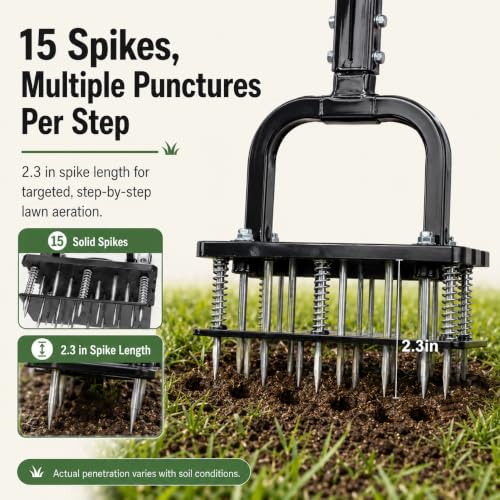
- 15 solid 2.3 inch iron spikes create multiple punctures with each step
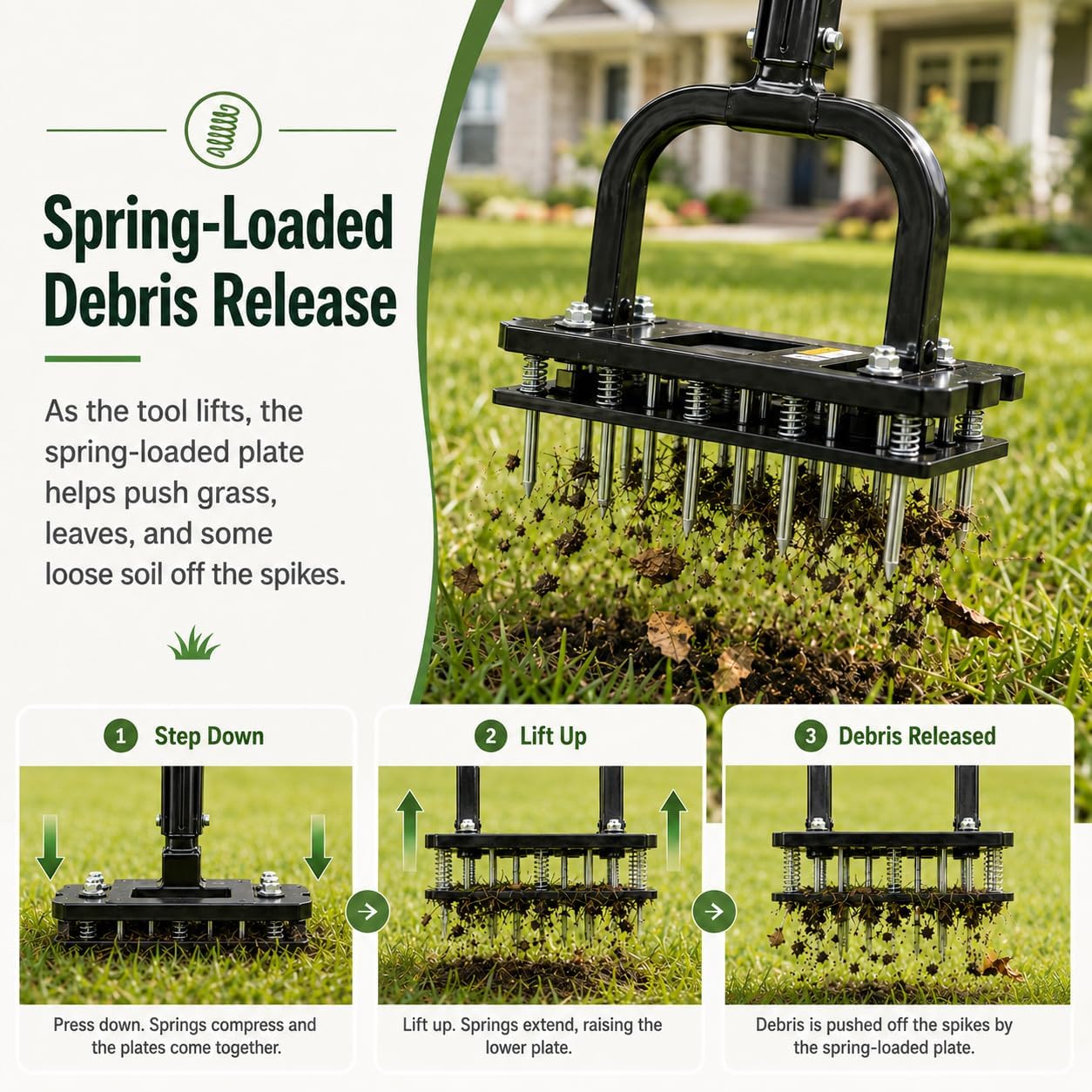
- Spring assisted return plate helps clear grass, leaves, and loose soil from the spikes
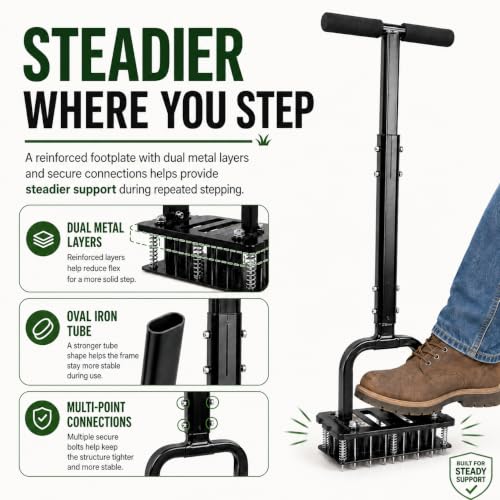
- Reinforced stepping area uses dual 3 mm metal layers, an oval iron tube, and multi point bolt connections for steadier support
- Compact design suits small lawns, edges, and worn spots
Watch out for
- Spike design does not remove soil plugs
- Works best on moist, workable ground and is not suited for dry, frozen, or waterlogged soil
- Intended for small targeted areas rather than broad coverage
For homeowners with compact lawns, the Mylliuim RGL26041302 presents a straightforward manual solution to a common lawn care challenge: soil compaction. This step-on aerator is designed for targeted use on small lawns, edges, and worn spots, providing a physical means to improve air, water, and nutrient flow to grassroots. It is a spike aerator, meaning it punches holes into the ground without removing soil plugs, a key distinction from core aeration methods.

This tool is built for the DIY gardener who prefers a hands-on, equipment-light approach to seasonal lawn maintenance. With its specific design focus, it is best suited for use on moist, workable ground and is not intended for large-scale or commercial applications. The bottom line up front: The Mylliuim RGL26041302 is a capable, manually-operated spike aerator that simplifies aeration for manageable lawn areas, thanks to features like a reinforced footplate and a mechanism to help clear debris from its spikes.
Prime MYLLIUIM RGL26041302 15 Spike Aerator





As an Amazon Associate we earn from qualifying purchases. Product prices and availability are accurate as of the date/time indicated.
Mylliuim RGL26041302 at a Glance
| Specification | Detail |
|---|---|
| Product Type | Manual Step-On Spike Aerator |
| Model Number | RGL26041302 |
| Brand | MYLLIUIM |
| Spike Count & Length | 15 solid iron spikes, 2.3 inches long |
| Key Feature | Spring-assisted debris release plate |
| Build Highlight | Reinforced stepping area with dual 3mm metal layers |
| Recommended Use | Small lawns, edges, and worn spots |
| Soil Condition | Moist, workable ground (avoid dry, frozen, or waterlogged) |
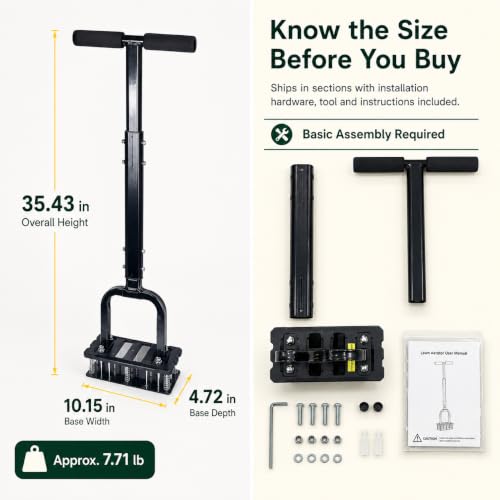
| Dimensions | 35.43 x 10.15 x 4.72 inches |
| Power Source | Manual operation |
Design and Build
The construction of the Mylliuim RGL26041302 centers on durability and user stability during the repetitive stepping motion required for aeration. The manufacturer highlights a reinforced stepping area as a core design element. This reinforcement consists of two 3 mm thick metal layers beneath the footplate, supported by an oval iron tube and secured with multi-point bolt connections. This design aims to provide steadier support and resist flexing or deformation during repeated use, which is a common point of failure in less robust manual tools.
The tool’s functional components are the fifteen 2.3-inch iron spikes. These are fixed in place and designed to penetrate the soil to create aeration channels. A notable design inclusion is the spring-assisted return plate, positioned around the spikes. This feature is engineered to help push grass blades, leaves, and loose soil off the spikes as the tool is lifted from the ground, aiming to reduce the frequency of manual stops for cleaning. The overall design is compact, with the tool shipping in sections that require assembly using the provided hardware and instructions, making it relatively easy to store.
Performance and Features
Spike Aeration Method
It is crucial to understand that the Mylliuim RGL26041302 is a spike aerator. This means it works by driving solid spikes into the soil to create holes, which can help alleviate minor surface compaction. This method differs fundamentally from core or plug aeration, where cylinders of soil are physically removed. Spike aeration is generally considered suitable for light maintenance on established lawns, while core aeration is often recommended for more severe compaction. The manufacturer is clear that this tool “does not remove soil plugs.” For broader aeration needs, readers may explore options in our guide to the best lawn aerator tools.
Operation and Effective Use
Performance is directly tied to proper technique and conditions. The manufacturer explicitly advises preparing the soil first: the ground should be moist and workable for optimal spike penetration. It is also suggested to trim tall grass beforehand. The operation is straightforward: the user steps straight down onto the footplate with their body weight, then lifts the tool and repeats the process in an adjacent area. The tool is not designed for use on dry, frozen, or waterlogged soil, as these conditions can hinder penetration or potentially damage the lawn.
Targeted Coverage and Debris Management
This aerator is made for targeted lawn care. With fifteen spikes creating multiple punctures per step, it is efficient for spot-treating high-traffic areas, lawn edges, and small overall lawns. It is not intended for aerating large, expansive lawns in a single session. The spring-assisted debris release is a practical feature aimed at maintaining workflow. By helping to clear material from the spikes automatically, it seeks to minimize interruptions, allowing the user to move from one spot to the next with less manual intervention to clean the tines.
Maintenance and Running Costs
As a purely manual tool with no engine, battery, or motor, the Mylliuim RGL26041302 has minimal ongoing running costs. There is no fuel, electricity, or replacement battery packs to consider. Maintenance primarily involves care for the metal components to prevent rust. After use, especially on moist soil, it is advisable to clean the spikes and frame of any residual dirt or organic matter. A light coating of oil on the spikes and moving parts of the spring mechanism during off-season storage can help preserve the tool. The durability will depend on the robustness of the welded joints and the reinforced footplate under repeated stress. Since it ships with hardware for assembly, ensuring those connections remain tight over time is also part of routine upkeep. For other manual lawn care tools with different functions, such as soil preparation, you can read about small garden tiller cultivators.
What Owners Say
At the time of this analysis, the Mylliuim RGL26041302 holds a favorable average rating. Detailed written feedback from owners is not yet available to provide specific anecdotes about long-term durability, ease of assembly, or real-world performance on various soil types. The high rating suggests initial user satisfaction, likely pertaining to the tool’s simplicity, the effectiveness of the spike design for its intended purpose, and the utility of features like the debris-clearing plate. Prospective buyers should consider that this indicates positive first impressions but may want to monitor for more detailed, long-term use reviews as they become available.
Pros and Cons
Pros
- Creates multiple aeration holes per step with 15 solid iron spikes.
- Spring-assisted return plate helps clear debris, reducing manual cleanup pauses.
- Reinforced stepping area provides steadier support for repeated use.
- Manual operation means no fuel, cords, or batteries are required.
- Compact design is well-suited for small lawns and targeted areas.
- Ships with necessary hardware and instructions for assembly.
Cons
- Spike design does not remove soil plugs like core aerators.
- Performance is highly dependent on moist, workable soil conditions.
- Not designed for use on dry, frozen, or waterlogged soil.
- Intended for small, targeted areas rather than broad lawn coverage.
- Requires physical effort and repetitive stepping motion to operate.
- Long-term durability of welds and connections under stress is not yet widely documented by users.
Who Should Buy It (and Who Should Skip It)
The Mylliuim RGL26041302 is an ideal fit for homeowners or renters with a small to moderately sized lawn who need a simple, cost-effective tool for seasonal aeration. It’s perfect for those who prefer manual tools and have the physical capacity for the stepping motion. It’s also excellent for spot-treating high-traffic areas, dog runs, or edges that compact faster than the rest of the yard. Gardeners who proactively maintain their soil moisture and can time aeration for optimal conditions will get the best results from this spike aerator.
This tool is not the best choice for everyone. Individuals with very large lawns should skip it, as the manual process would be excessively laborious; they should consider gas-powered lawn aerators for larger areas. Those dealing with severe soil compaction that requires core aeration should look for a plug-removing model. People with hard, clay-heavy soil that is rarely in an ideal “moist and workable” state may struggle to achieve sufficient penetration. Finally, anyone seeking a completely effortless solution or who has physical limitations that prevent repeated stepping should explore other lawn care options.
Final Verdict
The Mylliuim RGL26041302 manual lawn aerator successfully fulfills a specific niche in garden toolkits. Its value lies in its straightforward, purpose-built design for alleviating minor compaction in manageable lawn spaces. The reinforced construction and the thoughtful addition of a spring-assisted debris-clearing plate show an attention to user experience that elevates it above more basic spike aerators. When used as directed—on appropriately prepared soil—it provides a reliable, quiet, and maintenance-light method to promote lawn health without the complexity or expense of powered equipment.
However, its limitations are clearly defined by its design. It is a spike aerator, not a core aerator, and its efficacy is confined to small areas. Your satisfaction will hinge entirely on how well your needs align with these parameters. For the homeowner with a compact lawn who understands the spike aeration process and is willing to put in the physical effort under the right conditions, the Mylliuim RGL26041302 represents a solid and practical investment. For more extensive lawn care tool comparisons, visit our main lawn care tools category.
FAQs
Does the Mylliuim aerator remove plugs of soil?
No, it does not. The Mylliuim RGL26041302 is a spike aerator. It uses fifteen solid iron spikes to punch holes into the ground. This method compacts the soil slightly around the holes rather than extracting cores of soil. Spike aeration is suitable for light maintenance, while core aeration is typically recommended for more severe compaction issues.
What type of lawn or soil is this aerator best for?
This tool is designed for use on small lawns, edges, and worn spots. The manufacturer specifies that it works best on moist, workable ground. It is not suited for dry, hard soil, frozen ground, or waterlogged conditions. For optimal performance, the soil should be damp enough to allow the 2.3-inch spikes to penetrate easily without excessive force.
How does the spring-assisted debris release work?
The tool features a return plate around the base of the spikes that is connected to a spring mechanism. As you step down, the plate compresses. When you lift the tool out of the ground, the spring pushes the plate back down, which helps to scrape off grass, leaves, and loose soil that may be stuck to the spikes. This is intended to reduce the need to stop and clean the spikes manually between steps.
Is assembly required, and is it difficult?
Yes, the Mylliuim RGL26041302 ships in sections and requires assembly. The manufacturer includes the necessary hardware and instructions to put the tool together. The process is generally straightforward, involving bolting the main components together. No specialized tools beyond those typically found in a household toolkit are required.
Featured In
About the author
Editor, Lawn Care Equipment. Based in Columbus, Ohio. Rachel looks after a half-acre suburban lawn and a vegetable plot. She focuses on trimmers, edgers, sweepers, tillers, and the small upgrades that make a yard easier to keep tidy.