
Jardineer 1103 Review: Easy Soil Prep for Beds
The Jardineer 1103 is a manual hand tiller built for compact soil jobs in raised beds, flower boxes, and small garden spaces. Its foot plate and curved handle aim to reduce effort, but it still asks for real muscle in tougher ground.
 By Daniel Whitaker
Updated November 5, 2026
Quick Verdict
8.6/10This manual hand tiller is designed to make soil work easier, especially in confined spaces like raised beds. Its anti-slip foot plate helps drive the sharp tines into the ground with less effort, and the curved handle aims to reduce back strain. Based on user feedback, it's a solid choice for mixing amendments and aerating compacted soil without power tools.
What we like
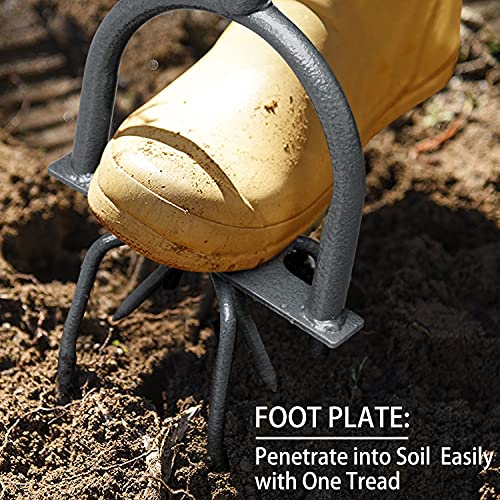
- Anti-slip foot plate helps maximize downward force for easier soil penetration.
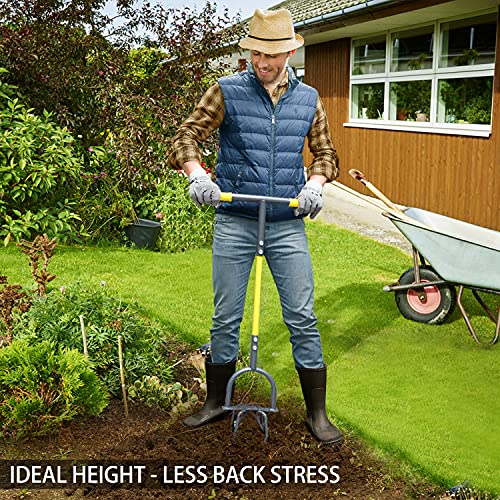
- Ergonomic, curved handle design aims to reduce twisting effort and back strain.
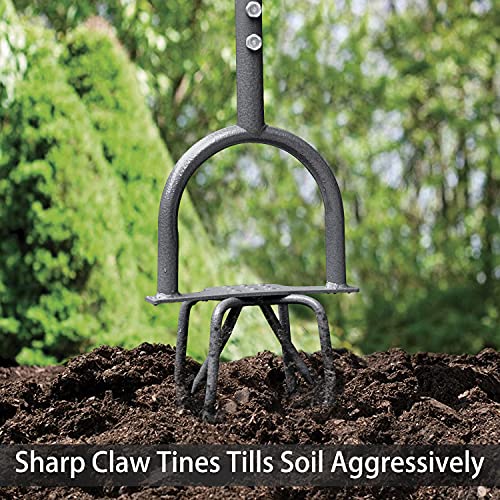
- Razor-sharp, powder-coated steel tines are noted for aggressive soil breaking.
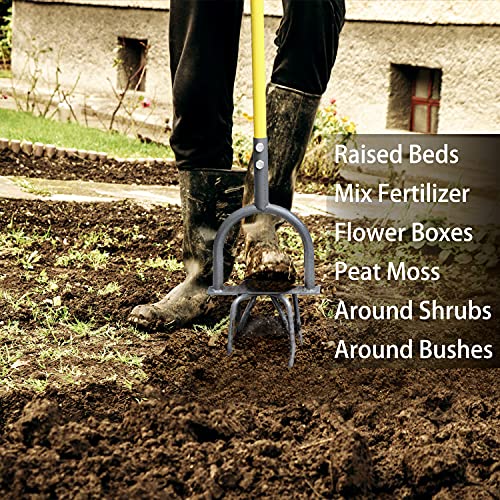
- Well-suited for small areas like flower boxes, raised beds, and vegetable gardens.
- Assembles quickly and is a manual, cordless tool with no power source required.
Watch out for
- Being manual, it requires significant physical effort for hard or clay-heavy soils.
- Its effectiveness can be limited in very large garden areas.
The Jardineer 1103 is a manual hand tiller designed for gardeners who want to loosen, mix, and aerate soil without relying on a powered machine. It is aimed at small-scale jobs such as raised beds, flower boxes, vegetable patches, and other confined growing areas where a full-size tiller would be awkward or unnecessary.

Bottom line: this is a straightforward, cordless soil tool with a practical design that should appeal most to gardeners handling compact spaces and moderate soil work, especially when they want to mix in fertilizer, peat moss, or other amendments.
Prime Jardineer Manual Twist Tiller Cultivator


As an Amazon Associate we earn from qualifying purchases. Product prices and availability are accurate as of the date/time indicated.
Jardineer 1103 at a Glance
| Brand | Jardineer |
|---|---|
| Model | 1103 |
| Product type | Manual hand tiller |
| Operation mode | Manual |
| Power source | Manual |
| Material | Iron, metal |
| Color | Yellow |
| Dimensions | 4.3″D x 16.5″W x 37″H |
| Weight | 2.12 kg |
| Best for | Raised beds, flower boxes, small garden areas |
Design and Build
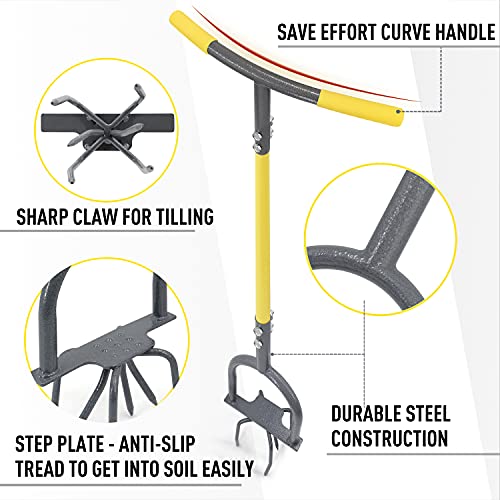
The Jardineer 1103 follows a simple, purpose-built manual tool design. It uses a curved handle and long body intended to reduce twisting effort and back strain, which is especially relevant when you are working soil by hand rather than using a motorized cultivator. The manufacturer also highlights an anti-slip foot plate, which is meant to help drive the tool into the soil with one tread and improve downward force.
Its construction is listed as iron and metal, with powder-coated steel tines described as razor-sharp for aggressive soil penetration. That combination suggests a tool built around strength and direct contact with the ground rather than light, delicate use. The overall size makes it clear that this is a compact garden tool for close quarters, not a large-area machine.
In practical terms, the design is geared toward gardeners who want a manual tool that feels more efficient than a plain hand fork. It does not promise automation or advanced controls, but it does try to make physical soil work less awkward through the foot plate and ergonomic handle shape.
Performance and Features
Soil penetration and aeration
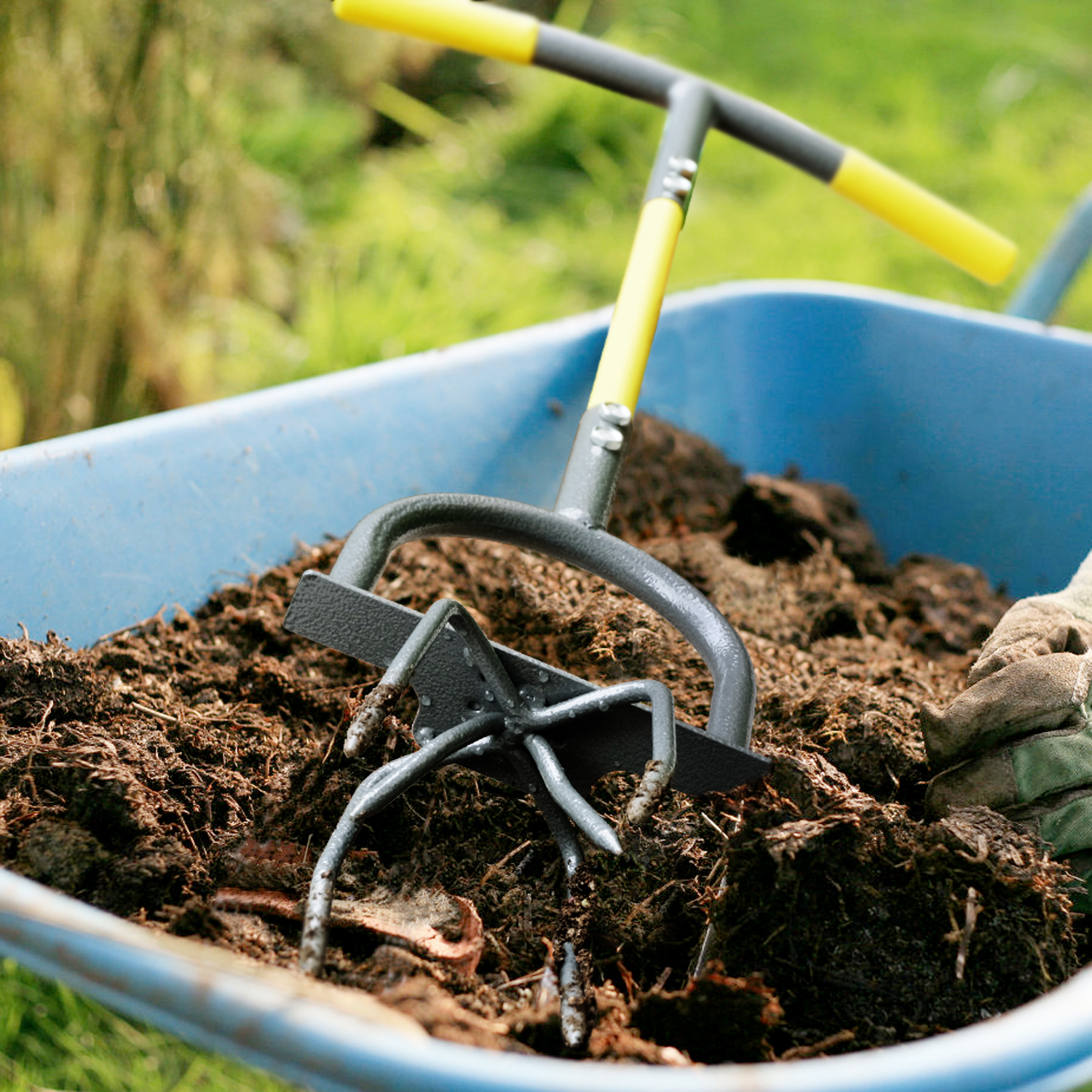
The main selling point here is soil penetration. The anti-slip foot plate is meant to help the user press the tines deeper with less slipping, while the sharp tines are designed for digging into compacted ground. The manufacturer says the tool loosens, turns, tills, and aerates soil, which makes it suitable for improving airflow and helping water and fertilizer move through the root zone.
Because it is manual, results will depend heavily on the soil condition and the effort applied. The product information specifically notes that dry clay or rocky soil should be watered in advance to soften it. That is an important point for expectations: the tool is built to help with difficult soil, but it is not presented as a replacement for mechanical tilling in demanding conditions.
Best use cases
This hand tiller is most clearly positioned for smaller garden zones. It is described as ideal for flower beds, vegetable gardens, lawns, raised beds, and flower boxes, with a special emphasis on compact or confined spaces. That makes it a sensible fit for gardeners who need to work amendments into soil without disturbing a wider area.
It is also useful for mixing fertilizer, peat moss, and other amendments into the soil. For that kind of job, the manual format can actually be an advantage, because it gives you direct control over where the tool goes and how much soil is turned.
Control and effort
There are no powered controls, speed settings, or electronic features to manage. That keeps the tool simple, but it also means the user supplies all of the force. The curved handle and foot plate are there to reduce strain, yet this remains a physical tool that will ask more of you than an electric cultivator.
For gardeners with joint strain or anyone who prefers a more ergonomic manual tool, that balance may still be worthwhile. The design appears intended to make repetitive soil work easier, not effortless. In that sense, the Jardineer 1103 is best understood as an efficiency-focused hand tool rather than a labor-saving machine.
Maintenance and Running Costs
There are no blades, batteries, fuel tanks, or motors to maintain, which keeps ownership simple. Since the Jardineer 1103 is a manual tool, running costs are minimal in the usual sense. You do not need charging cycles, replacement batteries, or engine care.
Upkeep should mainly involve basic cleaning after use and keeping the metal parts in good condition. The product materials are listed as iron and metal, and the tines are powder-coated steel, so it makes sense to treat it like any other metal garden tool and store it properly after use. Beyond that, the manufacturer says it assembles in minutes with included wrenches and spare screws, so occasional hardware checks may be part of normal ownership.
The only other practical cost consideration is the time and effort required to use it in tougher soil. If your ground is very dry, clay-heavy, or rocky, pre-watering is recommended by the manufacturer. That is not a monetary cost, but it is part of the workflow that comes with manual tilling.
What Owners Say
The overall customer rating is strong, and the distribution points to a generally favorable experience. Most feedback appears to land in the five-star range, with additional owners giving it four stars, while smaller shares of reviews are more mixed. That pattern suggests the tool satisfies a large portion of buyers, though not every user will find it equally easy to use in every soil type.
Because no individual buyer excerpts were provided, the most reliable signals come from the rating breakdown and the editor summary. The review picture aligns with the product’s stated strengths: easier soil work in raised beds and small garden areas, good use for mixing amendments, and a manual design that helps without needing power. The mixed ratings likely reflect the reality of manual gardening tools, where soil conditions and user strength matter a lot.
Pros and Cons
Pros
- Anti-slip foot plate improves downward pressure
- Curved handle aims to reduce back strain
- Sharp tines for aggressive soil penetration
- Well suited to raised beds and flower boxes
- No power source required
- Quick assembly with included tools
Cons
- Requires significant physical effort
- Less practical for very large garden areas
- Hard clay or rocky soil may need pre-watering
- No powered assistance or adjustable settings
Who Should Buy It (and Who Should Skip It)
The Jardineer 1103 makes the most sense for gardeners who work in raised beds, flower boxes, small vegetable gardens, or compact lawn sections. It is especially appealing if you want a manual tool for loosening compacted soil, aerating beds, or mixing in fertilizer and peat moss without bringing in a powered tiller.
It is also a reasonable fit for buyers who like simple tools with no cords, batteries, or engine upkeep. The ergonomic handle and foot plate design suggest that Jardineer is trying to make manual tilling less punishing, which may matter to older gardeners or anyone wanting a more comfortable hand tool.
You should probably skip it if your soil is consistently very hard, clay-heavy, rocky, or if you need to cover a large area. Manual tillers can be effective, but they depend on the user for all of the work, and the product itself acknowledges that difficult soil may need extra preparation first. In that situation, a powered alternative may be the better fit.
Final Verdict
The Jardineer 1103 is a well-focused manual hand tiller that delivers exactly what its design suggests: a way to loosen, aerate, and mix small areas of garden soil with less reliance on powered equipment. Its anti-slip foot plate, sharp tines, and curved handle give it a thoughtful layout for raised beds and other tight spaces.
It is not the right choice for every gardener, and it does not pretend to be. If you need to work large plots or break through extremely tough ground regularly, a manual tool will only take you so far. But for smaller beds and targeted soil preparation, the Jardineer 1103 looks like a practical, durable, and easy-to-understand option.
FAQs
What is the Jardineer 1103 best used for?
It is best used for loosening, turning, tilling, and aerating soil in small garden spaces. The product is especially aimed at raised beds, flower boxes, vegetable gardens, and lawns where a compact manual tool is more practical than a larger machine.
Does it need power or batteries?
No, it is a fully manual tool. That means there is no battery to charge and no engine or motor to maintain, which keeps ownership simple and low maintenance.
Can it handle hard soil?
The manufacturer says it is effective on compacted, hard, or clay soils, but also notes that very dry clay or rocky soil should be watered first. That suggests it can work in tougher conditions, although success will depend on how difficult the ground is and how much effort the user applies.
Is it difficult to assemble?
The product information says it assembles in minutes and includes wrenches and spare screws. That makes it sound relatively simple to put together compared with more complex garden equipment.
About the author
Senior Editor, Power Equipment. Based in Boise, Idaho. Daniel has heated his home with firewood for over fifteen years and spends most of his weekends cutting, splitting, and sharpening. He covers chainsaws, saws, and the gear that keeps them running safely.