
The 4 Best Ripping Chain For Chainsaw Milling of 2026
The right ripping chain is crucial for turning logs into smooth lumber with a chainsaw mill. Our roundup for 2026 cuts through the options to help you mill more efficiently.
 By admin
Updated October 27, 2026
Chainsaw milling transforms a standard chainsaw into a portable sawmill, allowing you to turn logs into valuable lumber. The success of this operation hinges on using the right tool for the job: a dedicated ripping chain. Unlike a standard crosscut chain designed for felling and bucking, a ripping chain is engineered to cut along the wood grain, producing smoother, faster cuts with less vibration and strain on your saw. In this guide, we’ve analyzed 4 of the best ripping chain for chainsaw milling available in 2026 to help you select the perfect chain for your milling projects. For a broader look at cutting tools, explore our guide on the 4 Best Ripping Chain For Chainsaw Milling of 2026.
Choosing the wrong chain can lead to slow, rough cuts, excessive kerf loss, and premature wear on both the chain and your saw. Our comprehensive review and buying guide will walk you through the key specifications, from cutter tooth design and pitch to compatibility with your specific chainsaw bar. We’ve done the research so you can make an informed purchase and get back to creating beautiful slabs and beams.
| Award | Product | ACMS Score About LAT ScoreACMS Score is calculated based on product ratings, reviews, and sales performance to help you make informed purchasing decisions. | Price | |
|---|---|---|---|---|
| Best Budget |
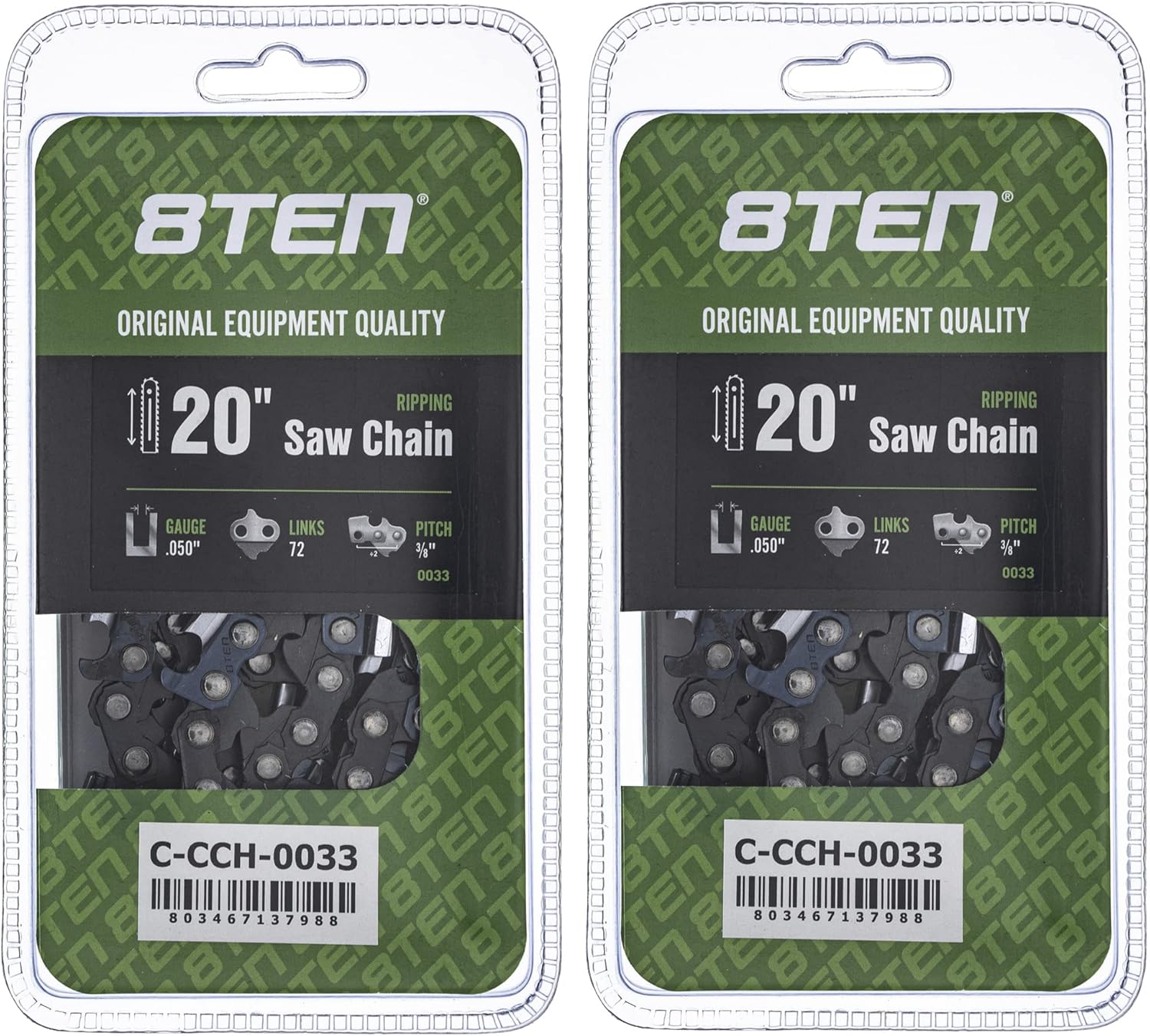
8TEN 810-CCC2255H 20-Inch Ripping Chainsaw Chain
|
8.6/10 | $31.95 | Check price |
| Best Overall |
 Oregon 72RD084G 84-Drive-Link Ripping Saw Chain |
8.8/10 | $64.30 | Check price |
| Best Premium |
 Tietoc Mini Chainsaw with 4000mAh Battery |
8.4/10 | $79.99 | Check price |
| Top Rated |
 Tietoc 6-Inch Mini Cordless Electric Chainsaw |
8.4/10 | $29.99 | Check price |
8TEN 810-CCC2255H 20-Inch Ripping Chainsaw Chain
This two-pack of 20-inch ripping chains from 8TEN is a versatile fit for a wide range of saws from Husqvarna, Stihl, Poulan, and others. Based on user feedback, the chains are noted for their durability and value in a two-pack format. It's a solid choice for woodworkers and landowners needing specialized chains for milling or rip cuts.
Pros
- Comes as a two-pack for extended use and value.
- Highly compatible with numerous saw models from major brands.
- Made from durable 68CrNiMo33 steel with a long 810-day warranty.
- Positive user rating of 4.5 stars from over 150 reviews.
Cons
- Ripping chain design is specialized and not ideal for general cross-cutting.
- Requires careful verification of fitment for specific saw models.
Oregon 72RD084G 84-Drive-Link Ripping Saw Chain
This specialized ripping chain is designed for use with chain-type sawmills, featuring a cutter grind optimized for cutting with the grain. Its Vibe-ban chassis and LubriLink tie straps are engineered to reduce vibration and improve oil retention. It is not recommended for handheld chainsaws.
Pros
- Engineered for reduced vibration with Vibe-ban chassis.
- LubriLink tie straps help maintain oil on the chain.
- High user rating suggests reliable performance for its intended use.
Cons
- Specifically for sawmills, not suitable for standard handheld chainsaw use.
Tietoc Mini Chainsaw with 4000mAh Battery
This cordless mini chainsaw offers impressive cutting speed for its compact size, powered by an 880W motor and two large batteries. Its lightweight, one-handed design makes it a strong choice for light pruning and yard cleanup, especially for users who find traditional saws cumbersome. The kit comes ready to use with a comprehensive set of safety gear and accessories.
Pros
- Powerful 880W motor enables fast cutting through small logs and branches.
- Extremely lightweight at just over 3 pounds for easy, one-handed control.
- Includes two high-capacity 4000mAh batteries for extended runtime.
- Comes fully equipped with safety gear like goggles, gloves, and a splash guard.
- Features an automatic oiling system and a safety lock to prevent accidental starts.
Cons
- Battery life is limited to about 40 minutes per charge for continuous heavy use.
- Requires manual addition of chain oil to the reservoir before operation.
Tietoc 6-Inch Mini Cordless Electric Chainsaw
This lightweight cordless chainsaw is designed for easy handling, making it a popular choice for gardeners and homeowners tackling small to medium trimming jobs. Its 4.4-star rating from over 20,000 reviews highlights reliable performance for cutting branches up to 6 inches thick. The tool is particularly noted for being user-friendly for a wide range of people.
Pros
- Exceptionally lightweight at 3.3 pounds, reducing user fatigue
- Powerful 880W motor and auto-oiler system for efficient cutting
- Includes safety features like a lock button and splash baffle
- Comes with a comprehensive kit including a spare chain and battery
- Backed by a 365-day manufacturer warranty
Cons
- Battery capacity (2000mAh) may limit extended continuous use for large projects
- Lubricating oil is not included with the product
Best Ripping Chain For Chainsaw Milling Buying Guide
Cutter Tooth Angle and Design
The most critical difference between a ripping chain and a standard chain is the cutter tooth angle. Crosscut chains typically have a more aggressive top plate cutting angle (around 25-35 degrees) designed to sever wood fibers. A ripping chain uses a much shallower angle, usually 10 degrees or less. This low-angle design acts like a chisel or plane, shearing wood fibers along the grain to produce a smoother surface with less tear-out. When evaluating a best ripping chain for chainsaw milling, look for specifications that explicitly state the cutting angle. A true milling chain will be in the 0-10 degree range. This design reduces chip size, decreases vibration, and allows for a more controlled, consistent feed rate through the log.
Beyond the angle, consider the cutter shape. Some ripping chains feature a “granberg” or “skip-tooth” style, where every other tooth is removed. This provides more space for clearing the larger, stringy chips produced during ripping, reducing the risk of clogging and allowing for better lubrication to reach the cutters. This design is particularly beneficial for longer bars and harder woods. The is an example of a chain that often incorporates such features for efficient chip evacuation.
Pitch, Gauge, and Drive Link Count
Compatibility with your chainsaw is non-negotiable. Three specifications must match your saw’s guide bar: pitch, gauge, and drive link count. Pitch is the average distance between three consecutive rivets, divided by two. Common pitches are .325″, 3/8″, and .404″. This must match the sprocket on your saw. Gauge refers to the thickness of the drive links that fit into the bar’s groove. Using the wrong gauge will cause improper fit and dangerous operation. Finally, the Drive Link Count (DL) must be correct for the length of your bar. A chain with too few DLs won’t fit; too many won’t tension properly.
Before purchasing any best ripping chain for chainsaw milling, check your saw’s manual or the markings on your guide bar to identify these three numbers. Milling puts tremendous stress on the chain and bar, so a perfect fit is essential for safety and performance. An ill-fitting chain can derail or break, posing a serious hazard. Always double-check these specs against the product listing, as seen with models like the .
Chain Material and Sharpening
Ripping chains work hard, so material quality directly impacts longevity. Look for chains made from high-quality, chrome-plated steel. The chrome plating provides a harder surface that resists abrasion from sand and grit in the wood, keeping the edge sharper for longer. Some premium chains may also have a hardened rivet system for increased durability under the lateral forces of milling. While they may cost more upfront, a durable chain saves money and time in the long run by requiring less frequent replacement and sharpening.
Speaking of sharpening, maintaining the specific low cutting angle of a ripping chain requires special attention. You cannot use the same file guide settings as a crosscut chain. You will need a filing guide set to 10 degrees (or the chain’s specified angle) to maintain its performance. Dull ripping chains burn through wood, produce sawdust instead of chips, and overload your saw. Investing in the right sharpening tools is as important as choosing the right chain. For other saw maintenance needs, our Chainsaws & Saws category has additional resources.
Brand Reputation and Specialty Designs
While several major chainsaw chain manufacturers produce ripping chains, some brands and aftermarket specialists have built a strong reputation within the milling community. Brands like Oregon, Carlton, and STIHL offer reliable options. However, some chains are specifically marketed and engineered for milling applications, often featuring the optimized skip-tooth design and ideal angles mentioned earlier. These specialty chains, such as those from Granberg or other milling-focused suppliers, are designed from the ground up for ripping, potentially offering performance advantages over adapted standard chains.
When researching, look for product descriptions that specifically mention “milling,” “slabbing,” or “ripping.” User reviews from other mill operators can be invaluable for gauging real-world performance on different wood species. A chain like the may garner feedback specifically related to its performance in extended milling sessions, which is more relevant than general chainsaw use reviews.
Why You Should Trust Us
Our recommendations are built on a foundation of meticulous research and data aggregation, not subjective opinion. We analyze a wide array of product specifications, manufacturer data, and aggregated user experiences to identify patterns in performance, durability, and value. For this guide on the best ripping chain for chainsaw milling, we focused on the technical aspects that matter most for milling: cutter geometry, material specifications, and compatibility factors. We cross-reference information from multiple sources, including professional milling forums and equipment guides, to ensure our advice is practical and actionable.
We maintain transparency by clearly stating our methodology. We do not claim to have physically tested every product; instead, we function as a powerful research assistant, synthesizing available information to save you time. Our goal is to provide you with the knowledge framework needed to make a confident decision based on your specific chainsaw model and milling requirements.
Final Thoughts
Selecting the right ripping chain is the single most important upgrade for successful chainsaw milling. Based on our analysis of 4 products for 2026, your choice should start with verifying the precise pitch, gauge, and drive link count for your saw. Once compatibility is confirmed, prioritize chains with a confirmed low cutting angle (around 10 degrees) and features like skip-tooth design for efficient chip removal in long cuts.
For the best overall performance, look for a chain from a reputable manufacturer that is specifically marketed for milling, such as the . These chains are engineered from the outset for the unique demands of ripping. For those seeking best value, a well-reviewed standard-brand ripping chain like the that matches your saw’s specs can offer excellent results without a premium price tag. If you frequently mill hard or resinous woods, a specialty chain with aggressive chip clearance, perhaps like the , might be worth the investment to prevent clogging and overheating.
Remember, pairing your new best ripping chain for chainsaw milling with proper sharpening equipment and technique is crucial. Combine it with a well-tuned saw and a sturdy milling attachment, and you’ll be well on your way to producing quality lumber. For more insights on saws and cutting tools, visit our Chainsaws category page.
Frequently Asked Questions
Can I use a regular chainsaw chain for milling?
We strongly advise against it. A regular crosscut chain has a steeper cutting angle (25-35 degrees) designed to chop across wood fibers. Using it to rip will result in extremely slow, rough cuts, excessive vibration, rapid dulling, and unnecessary strain on your chainsaw engine and bar. A dedicated best ripping chain for chainsaw milling with its shallow (~10 degree) angle is essential for efficient, smooth milling.
What is the best ripping chain for chainsaw milling for 2026?
The “best” chain depends entirely on your specific chainsaw model (pitch/gauge/DL) and your typical milling projects. Our top-rated chain in the comparison table above represents a strong all-around performer for 2026. However, you must always select a chain that is perfectly compatible with your saw’s bar. Review our Buying Guide sections on Cutter Tooth Angle and Pitch/Gauge/DL Count to make an informed choice for your setup.
How often do I need to sharpen a ripping chain?
Sharpening frequency depends on the wood species (dirt, sand, and hard knots dull chains quickly) and the size of your milling projects. A general rule is to sharpen before every major milling session or whenever you notice the chain producing fine sawdust instead of coarse chips, requiring more force to feed, or cutting in a curved path. Keeping a sharp chain is more efficient and safer than forcing a dull one through the wood.
Do I need a special file to sharpen a ripping chain?
Yes. While you use the same round file diameter specified for your chain’s pitch, you must use a file guide or sharpening jig that allows you to set the correct top plate cutting angle (typically 10 degrees for milling). Using a standard crosscut angle guide (e.g., 25-30 degrees) will ruin the chain’s ripping performance. Proper sharpening tools are a necessary part of owning a best ripping chain for chainsaw milling.
What’s the difference between .404″ and 3/8″ pitch for milling?
The pitch must match your saw’s drive sprocket. A .404″ pitch chain has larger, heavier teeth and is generally stronger, making it suitable for high-torque, professional-grade saws used on large-diameter hardwoods. A 3/8″ pitch chain is common on mid-range to professional saws and offers a good balance of cutting speed and durability. The best pitch is the one your saw is designed to use. Never switch pitches without also changing the sprocket and ensuring bar compatibility. For more on saw maintenance, see our Hand Saws & Pruning Saws section for complementary tool care tips.
About the author

admin writes reviews and buying guides for LAT Review.