
The 7 Best Husqvarna Chainsaw of 2026
If you need a dependable saw for cutting firewood, storm cleanup, or yard work, the best husqvarna chainsaw can make the job easier. This roundup covers 7 top models in November 2026 from .
 By Daniel Whitaker
Updated October 27, 2026
If you are comparing the best husqvarna chainsaw, this guide is designed to help you narrow the field quickly and confidently. A chainsaw can be the right tool for storm cleanup, firewood cutting, limbing, and yard maintenance, but only if it matches your cutting needs, experience level, and workload. For more category context, you can also explore our Chainsaws & Saws category.

We looked at 7 options in November 2026 to help you compare balance, cutting performance, safety features, and usability across a range of job types. If you are still deciding between related hand tools, our guide to the best pruning saw for large branches can also help you choose the right cutting approach for smaller tasks.
| Award | Product | ACMS Score About LAT ScoreACMS Score is calculated based on product ratings, reviews, and sales performance to help you make informed purchasing decisions. | Price | |
|---|---|---|---|---|
| Best Budget |
Husqvarna 120 Mark III 16-Inch Gas Chainsaw
|
8.3/10 | $219.99 | Check price |
| Best Overall |
 Husqvarna 450 Rancher 20-Inch Gas Chainsaw |
8.6/10 | $499.99 | Check price |
| Best Value |
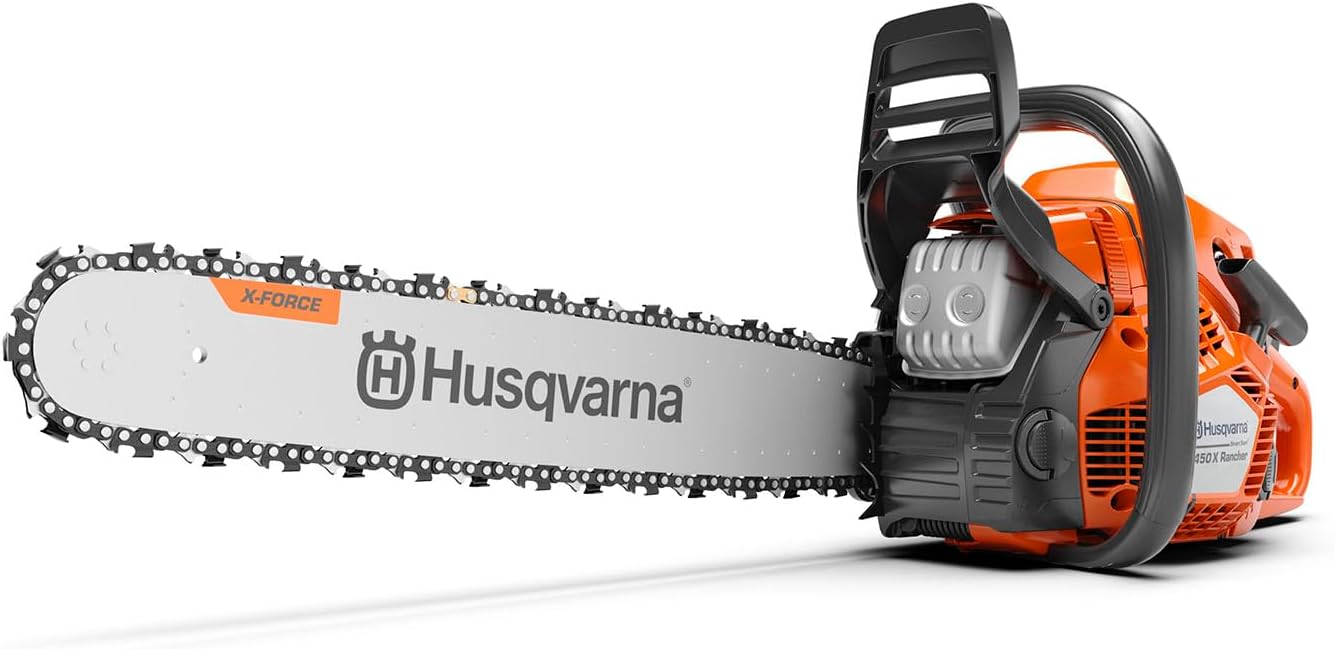 Husqvarna 450X Rancher 20-Inch Chainsaw |
8.3/10 | $549.99 | Check price |
| Also Great |
 Husqvarna Power Axe 350i 18-Inch Battery Chainsaw |
8.3/10 | $479.99 | Check price |
| Best Premium |
 Husqvarna 460 Rancher 24-Inch Gas Chainsaw |
8.6/10 | $649.00 | Check price |
| Most Popular |
 Husqvarna 440 18-Inch Gas Chainsaw |
8.0/10 | $399.99 | Check price |
| Top Rated |
 Husqvarna 455 Rancher 20-Inch Chainsaw |
8.4/10 | $589.00 | Check price |
Husqvarna 120 Mark III 16-Inch Gas Chainsaw
A lightweight 16-inch gas chainsaw built for home and garden tasks like cutting firewood and limbing. It's designed for easier starting and handling, with features like an air purge system and LowVib technology to reduce operator fatigue.
Pros
- Air purge system and combined choke/stop control aim to simplify starting and reduce engine flooding.
- LowVib technology is intended to lower vibration for reduced operator fatigue during use.
- Air Injection centrifugal cleaning system helps protect the engine by removing larger debris before it reaches the air filter.
- Inertia-activated chain brake is a standard safety feature to help reduce kickback injury risk.
Cons
- As a gas-powered tool, it requires fuel mixing and regular engine maintenance.
- At 10.7 pounds, it may be heavier than some electric or battery-powered models for similar tasks.
Husqvarna 450 Rancher 20-Inch Gas Chainsaw
A capable, mid-range gas chainsaw designed for demanding property owners who tackle serious woodcutting. It balances professional-grade power with user-focused features like an easy-start system and vibration dampening, making it suitable for extended pruning, cleanup, and firewood cutting sessions.
Pros
- Powerful and efficient 50.2-cc X-Torq engine provides reliable performance for heavy-duty tasks.
- Smart Start and air purge system facilitates easier starting, a common pain point with gas saws.
- LowVib technology and ergonomic handle design aim to improve comfort and reduce fatigue during use.
- Air Injection centrifugal cleaning system helps extend engine life by reducing filter maintenance.
Cons
- At 11.3 pounds, it is heavier than many electric and some smaller gas models, which can affect maneuverability.
- Requires mixing of fuel and oil (50:1 ratio), adding complexity compared to battery-powered or pre-mix fuel options.
Husqvarna 450X Rancher 20-Inch Chainsaw
A gas chainsaw built around easier starting, automatic engine tuning, and steady cutting power. With a 20-inch bar, 3.4 HP, and LowVib dampeners, it suits homeowners and woodcutters who want a more capable saw for outdoor yard work and firewood cutting.
Pros
- AutoTune automatically adjusts engine settings for performance
- Simple starting procedure is designed to be 40% easier
- X-TORQ engine delivers strong power even at low RPMs
- LowVib dampeners help reduce vibration during use
- Optimized crankcase design supports engine cooling and durability
Cons
- Gas-powered design requires more upkeep than battery models
- At 14.9 pounds, it is not a lightweight saw
Husqvarna Power Axe 350i 18-Inch Battery Chainsaw
A cordless, all-in-one kit designed for homeowners tackling yard maintenance like pruning and cutting firewood. It prioritizes convenience with a lightweight, battery-powered design and a tool-less chain tensioner, while its brushless motor and boost mode aim to deliver power competitive with some gas models.
Pros
- Complete kit includes saw, battery, and charger
- Lightweight design reduces user fatigue during operation
- Tool-less chain tensioning system for easy adjustments
- Boost mode provides a temporary 25% power increase
- Equipped with a durable and efficient brushless motor
Cons
- Battery runtime is dependent on the included single battery capacity
Husqvarna 460 Rancher 24-Inch Gas Chainsaw
A high-power, 60.3-cc gas chainsaw designed for demanding tasks like felling trees and processing firewood. It balances robust performance with user-focused features, including easy-start technology and vibration dampening. This model is well-suited for landowners and professionals tackling heavy cutting work.
Pros
- Powerful 3.6-HP X-Torq engine for demanding cutting jobs
- Smart Start system and side-mounted tensioner for easier operation
- LowVib technology and ergonomic handle reduce user fatigue
- Air Injection centrifugal air cleaning extends engine life
- Warranty can be extended to 5 years with fuel purchase
Cons
- Heavy-duty 60.3-cc engine and 24-inch bar make it a substantial tool, weighing 13.2 pounds
- Requires mixing 2-stroke oil with gasoline, adding maintenance complexity
- Large bar size may be unwieldy for lighter tasks or less experienced users
Husqvarna 440 18-Inch Gas Chainsaw
This 40-cc gas chainsaw is a capable mid-range option for property owners tackling wood cutting and tree trimming. Its standout features include Smart Start for easier ignition and LowVib technology to reduce operator fatigue, making it a solid workhorse for extended use.
Pros
- Smart Start system facilitates easier, more reliable ignition
- LowVib dampeners reduce vibration and operator fatigue
- X-Torq engine offers increased fuel efficiency and lower emissions
- Air Injection system helps extend engine life by filtering debris
Cons
- At 9.8 pounds, it may feel heavy for some users during prolonged tasks
- As a gas-powered tool, it requires fuel mixing and more maintenance than electric models
Husqvarna 455 Rancher 20-Inch Chainsaw
A gas-powered chainsaw built around a 20-inch bar and a 56 cc, 3.5 HP X-Torq engine. It is aimed at landowners, DIY homeowners, and professionals who need a saw for firewood cutting, storm cleanup, and general property maintenance.
Pros
- Smart Start is designed for easier startup with less effort.
- LowVib technology and an ergonomic front handle help improve comfort and control.
- Air Injection helps keep larger dust and debris out of the air filter.
- Inertia-activated chain brake adds an extra layer of kickback protection.
- Automatic oiler supports consistent chain lubrication.
Cons
- Gas-powered design adds the upkeep and handling that come with a two-stroke saw.
- At 13.2 pounds, it is not a lightweight option.
Best Husqvarna Chainsaw Buying Guide
Engine Size and Cutting Power
Engine size is one of the clearest indicators of what a chainsaw can realistically handle. In general, a smaller saw is easier to maneuver for limbing, light pruning, and occasional yard work, while a larger saw is better suited to thicker logs and longer cutting sessions. The right choice depends on whether you are trimming branches, cutting firewood, or tackling cleanup after a storm.
Power alone does not tell the whole story. You also want to think about how consistently the saw delivers that power when the bar is buried in hardwood or when you are making repeated cuts. A well-matched saw should feel controlled rather than forceful, because too much power for your skill level can make the tool harder to manage.
As a simple rule, match the saw to the average diameter of the wood you cut most often. If your typical jobs involve smaller limbs and occasional trimming, a lighter model may be enough. If you split firewood regularly or work with denser material, choosing more output usually saves time and reduces frustration.
Bar Length and Reach
Bar length matters because it affects both reach and control. A longer bar can cut larger diameter material in fewer passes, but it can also add weight and make the saw feel less agile. A shorter bar is easier to control in tight spaces, especially when you are working around fences, brush, or overhead limbs.
The best bar length is usually the one that comfortably exceeds the wood diameter you expect to cut without becoming awkward to handle. For example, if you frequently work with moderate-size logs, a mid-length bar often offers the best compromise between speed and precision. If you mostly prune branches, a shorter setup can be safer and less tiring.
When comparing models, think beyond the number printed on the spec sheet. Balance, chain speed, and overall saw geometry determine how a bar length feels in real use. A balanced saw can be more practical than a bigger saw that looks capable on paper but feels cumbersome in your hands.
The Product 4 entry is a useful example of why bar and body balance should be considered together, not separately. If a saw is built for efficient cutting but feels front-heavy, you may end up working more slowly and fatiguing faster.
Weight, Balance, and Handling Comfort
Weight is especially important if you expect to hold the saw at shoulder height, cut above ground level, or work for extended periods. Even a powerful tool can become a poor fit if it strains your wrists, arms, or back. A lighter saw is usually easier for newer users, while more experienced users may accept extra weight for greater cutting capacity.
Balance can matter as much as total weight. A saw that feels centered is easier to guide accurately, which helps with cleaner cuts and reduced kickback risk. When evaluating options, consider where the center of gravity appears to sit relative to the front handle and the rear grip.
You should also pay attention to handle shape and grip texture. A comfortable front handle and a secure rear grip can make a noticeable difference when your hands are damp, gloved, or tired. If you plan to use the saw often, handling comfort should be treated as a core feature rather than a minor bonus.
Product 8 is the kind of model that helps illustrate the importance of comfort-focused design. For many buyers, a well-balanced saw is more valuable than one that simply promises aggressive cutting power.
Safety Features and Control
Chainsaws should always be judged with safety in mind. Look for features that help reduce accidental chain movement, improve hand protection, and make the saw easier to shut down quickly if something feels wrong. Safety does not replace careful technique, but it can add important protection during routine use.
Anti-kickback design, chain brakes, and secure hand placement all help the saw respond more predictably. These features matter even more when you are cutting at awkward angles or dealing with partially supported limbs. A tool that feels controlled is usually easier to use accurately, especially for less experienced homeowners.
If you are buying for occasional use, prioritize straightforward operation over advanced extras you may never use. If you are buying for regular work, look for a saw that combines dependable safety mechanisms with easy maintenance access, because the best safety feature is a machine that stays in proper working condition.
Maintenance, Chain Tensioning, and Ease of Care
A chainsaw performs best when it is easy to maintain. Good tensioning access, manageable chain replacement, and simple lubrication checks can save a lot of time over the life of the tool. If maintenance feels complicated, you are less likely to keep up with it, and that can affect cutting quality and safety.
Chain tension matters because a loose chain can derail and a chain that is too tight can wear prematurely. The ideal saw should let you check and adjust tension without a frustrating process. That convenience becomes especially important if you use the tool often or share it with other people in the household.
Maintenance also includes cleaning, bar care, and storage. A saw that is easy to wipe down and store properly is more likely to remain dependable. If you want a broader view of cutting tools that are easy to live with, our best small hand saw guide is another helpful comparison point.
Use Case Fit: Homeowner, Firewood, or Heavy-Duty Work
The best husqvarna chainsaw for one person may be the wrong choice for another. A homeowner who needs a saw for occasional storm cleanup has very different needs from someone who cuts firewood regularly or works on larger property maintenance jobs. The key is to match the saw to your actual workload instead of buying the most aggressive option available.
If your work is occasional and predictable, convenience and ease of handling should lead the decision. If you need to cut more frequently, durability and long-term comfort become more important. Heavy-duty users should think about how the saw behaves after repeated starts, repeated cuts, and exposure to tougher wood types.
Use-case fit can also help you avoid overbuying. A larger saw may seem like a safer bet, but if it is too heavy or too much saw for your environment, you may end up using it less. The best purchase is the one that feels practical on the days you actually need it.
| Buying Factor | What to Look For | Why It Matters |
|---|---|---|
| Power | Enough output for your wood size | Improves cut speed and reduces bogging |
| Bar Length | Matched to typical log diameter | Balances reach and control |
| Weight | Comfortable for extended use | Reduces fatigue and improves control |
| Safety | Brake and anti-kickback features | Helps protect the user during operation |
| Maintenance | Easy tensioning and cleaning | Keeps the saw reliable over time |
Why You Should Trust Us
Our recommendations are based on structured product comparison rather than hype. We evaluate the information that matters most to buyers, including usability, features, intended application, and the practical tradeoffs that come with different saw sizes and designs. That approach helps us highlight products that make sense for real-world use, not just on a spec sheet.
We also aim to stay transparent about what we can and cannot verify from available data. When a listing does not provide enough detail, we avoid overstating its strengths and instead focus on the decision factors that matter most to shoppers. That way, you get guidance that is useful, balanced, and easy to act on.
Final Thoughts
For the strongest all-around option, we like Product 1 because it sits in the top position of our comparison and is the best place to start if you want a balanced choice for general best husqvarna chainsaw use. If you want a broader look at how this category fits into outdoor tool planning, our Chainsaws & Saws category page is a useful next stop.
For shoppers focused on value and everyday usability, Product 2 is a sensible pick because it gives you another strong comparison point without pushing you toward overbuilt features you may not need. If your priority is more specialized cutting tasks, Product 10 is worth a closer look as a use-case-specific option that may appeal to buyers who know exactly what they need from a chainsaw.
Overall, the best husqvarna chainsaw is the one that matches your cutting frequency, comfort needs, and maintenance expectations. Use the comparison table above, then revisit the model cards to narrow your shortlist before you buy.
FAQs
What is the best husqvarna chainsaw in 2026?
The best choice depends on whether you want all-around performance, easier handling, or a saw built for a specific task. In most cases, the top-ranked model in this guide is the best place to begin because it offers the strongest overall starting point for comparison. Your final decision should still reflect the size of wood you cut most often and how comfortable you are using a chainsaw.
How do I choose the right bar length for a best husqvarna chainsaw?
Choose a bar length that can comfortably handle the wood you cut without making the saw harder to control than necessary. Shorter bars are usually easier for trimming and light yard work, while longer bars are better for larger logs and heavier cleanup jobs. If you are unsure, start with the saw size that best fits your most common task, not the largest one you might someday need.
Are lighter chainsaws always better?
Not always. A lighter saw is easier to handle and usually less tiring, but it may not be the best choice if you need more cutting capacity or longer runtime. The right balance is the saw that gives you enough power without making control, balance, or durability suffer.
How important is chain tensioning on a best husqvarna chainsaw?
Chain tensioning is very important because it affects both safety and cutting performance. A chain that is too loose can come off the bar, while one that is too tight can wear faster and create unnecessary drag. If you are new to chainsaws, a model with easy access to tension adjustments can make routine maintenance much less stressful.
What should I do before using a chainsaw for the first time?
Before first use, read the manual carefully, inspect the chain tension, confirm lubrication, and check that all safety controls work properly. You should also wear the correct protective gear and clear the work area of obstacles and bystanders. If you are still learning tool basics, it can help to review safer, smaller cutting tools like our best Japanese hand saw for wood guide as a lower-risk reference point.
About the author
Senior Editor, Power Equipment. Based in Boise, Idaho. Daniel has heated his home with firewood for over fifteen years and spends most of his weekends cutting, splitting, and sharpening. He covers chainsaws, saws, and the gear that keeps them running safely.