
The 6 Best Chainsaw Gas Powered of 2026
Gas powered chainsaws can handle tough cutting jobs with steady power and fast performance. We compared 6 top models in November 2026 from to help you choose the right one.
 By Carolyn Brooks
Updated October 27, 2026
If you are shopping for the best chainsaw gas powered, the details matter more than the label on the box. Gas chainsaws are built for tougher cutting jobs, but the right choice depends on how often you cut, what kind of wood you handle, and whether you need more raw power or easier handling. In this guide, we compare 6 options so you can narrow the field quickly and avoid buying a saw that feels either underpowered or unnecessarily heavy.

We also recommend checking out our Chainsaws & Saws category page if you want to compare this guide with other cutting tools. The right gas saw should match your workload, your comfort level, and your maintenance habits, which is why a structured comparison is more useful than choosing by horsepower alone.
| Award | Product | ACMS Score About LAT ScoreACMS Score is calculated based on product ratings, reviews, and sales performance to help you make informed purchasing decisions. | Price | |
|---|---|---|---|---|
| Best Budget |
Husqvarna 120 Mark III 16-Inch Gas Chainsaw
|
8.3/10 | $219.99 | Check price |
| Best Overall |
 Husqvarna 450 Rancher 20-Inch Gas Chainsaw |
8.6/10 | $499.99 | Check price |
| Top Rated |
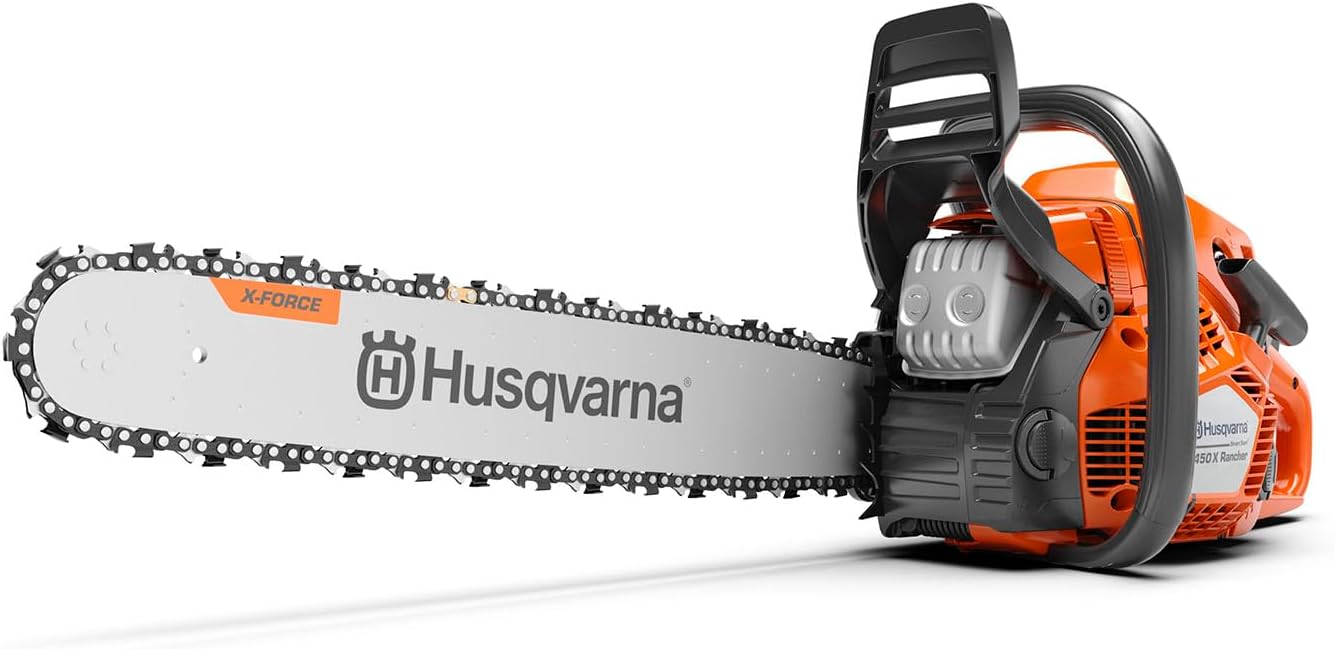 Husqvarna 450X Rancher 20-Inch Chainsaw |
8.3/10 | $549.99 | Check price |
| Best Premium |
 Husqvarna 460 Rancher 24-Inch Gas Chainsaw |
8.6/10 | $649.00 | Check price |
| Best Value |
 Husqvarna 135 Mark II 16-Inch Gas Chainsaw |
8.1/10 | $299.99 | Check price |
| Most Popular |
 SENIX CS4QL-L1 18-Inch Gas Chainsaw |
7.8/10 | $179.99 | Check price |
Husqvarna 120 Mark III 16-Inch Gas Chainsaw
A lightweight 16-inch gas chainsaw built for home and garden tasks like cutting firewood and limbing. It's designed for easier starting and handling, with features like an air purge system and LowVib technology to reduce operator fatigue.
Pros
- Air purge system and combined choke/stop control aim to simplify starting and reduce engine flooding.
- LowVib technology is intended to lower vibration for reduced operator fatigue during use.
- Air Injection centrifugal cleaning system helps protect the engine by removing larger debris before it reaches the air filter.
- Inertia-activated chain brake is a standard safety feature to help reduce kickback injury risk.
Cons
- As a gas-powered tool, it requires fuel mixing and regular engine maintenance.
- At 10.7 pounds, it may be heavier than some electric or battery-powered models for similar tasks.
Husqvarna 450 Rancher 20-Inch Gas Chainsaw
A capable, mid-range gas chainsaw designed for demanding property owners who tackle serious woodcutting. It balances professional-grade power with user-focused features like an easy-start system and vibration dampening, making it suitable for extended pruning, cleanup, and firewood cutting sessions.
Pros
- Powerful and efficient 50.2-cc X-Torq engine provides reliable performance for heavy-duty tasks.
- Smart Start and air purge system facilitates easier starting, a common pain point with gas saws.
- LowVib technology and ergonomic handle design aim to improve comfort and reduce fatigue during use.
- Air Injection centrifugal cleaning system helps extend engine life by reducing filter maintenance.
Cons
- At 11.3 pounds, it is heavier than many electric and some smaller gas models, which can affect maneuverability.
- Requires mixing of fuel and oil (50:1 ratio), adding complexity compared to battery-powered or pre-mix fuel options.
Husqvarna 450X Rancher 20-Inch Chainsaw
A gas chainsaw built around easier starting, automatic engine tuning, and steady cutting power. With a 20-inch bar, 3.4 HP, and LowVib dampeners, it suits homeowners and woodcutters who want a more capable saw for outdoor yard work and firewood cutting.
Pros
- AutoTune automatically adjusts engine settings for performance
- Simple starting procedure is designed to be 40% easier
- X-TORQ engine delivers strong power even at low RPMs
- LowVib dampeners help reduce vibration during use
- Optimized crankcase design supports engine cooling and durability
Cons
- Gas-powered design requires more upkeep than battery models
- At 14.9 pounds, it is not a lightweight saw
Husqvarna 460 Rancher 24-Inch Gas Chainsaw
A high-power, 60.3-cc gas chainsaw designed for demanding tasks like felling trees and processing firewood. It balances robust performance with user-focused features, including easy-start technology and vibration dampening. This model is well-suited for landowners and professionals tackling heavy cutting work.
Pros
- Powerful 3.6-HP X-Torq engine for demanding cutting jobs
- Smart Start system and side-mounted tensioner for easier operation
- LowVib technology and ergonomic handle reduce user fatigue
- Air Injection centrifugal air cleaning extends engine life
- Warranty can be extended to 5 years with fuel purchase
Cons
- Heavy-duty 60.3-cc engine and 24-inch bar make it a substantial tool, weighing 13.2 pounds
- Requires mixing 2-stroke oil with gasoline, adding maintenance complexity
- Large bar size may be unwieldy for lighter tasks or less experienced users
Husqvarna 135 Mark II 16-Inch Gas Chainsaw
A reliable, homeowner-focused gas chainsaw designed for regular yard maintenance. It balances a capable 38-cc engine with user-friendly features like Smart Start and LowVib technology, making it a solid choice for pruning, trimming, and cutting firewood.
Pros
- Smart Start and combined choke/stop control for easier starting.
- LowVib technology reduces vibration and operator fatigue.
- Air Injection system extends engine life by cleaning intake air.
- Side-mounted chain tensioner allows for quick adjustments.
- Inertia-activated chain brake enhances safety during kickback.
Cons
- Requires mixing of 2-stroke fuel and regular engine maintenance.
- Some users may find it underpowered for very large or frequent professional tasks.
SENIX CS4QL-L1 18-Inch Gas Chainsaw
A gas-powered chainsaw built around an 18-inch bar and a 49cc 4-cycle engine, suited for wood cutting, tree trimming, and other heavier yard tasks. It emphasizes no fuel mixing, reduced vibration, and easier handling for users who want a more straightforward gas saw.
Pros
- 18-inch bar handles larger cutting jobs, including tree limbs and firewood
- 49cc 4-cycle engine is designed for strong cutting power with lower emissions
- No fuel mixing required thanks to 4QL technology
- Includes automatic oiler and comes as a complete kit with cover, tools, and engine oil
- 2-year limited warranty
Cons
- At 16 pounds, it may feel heavy for longer sessions
- Gas-powered design is less convenient than battery models for some users
Engine Power and Cutting Demand
Engine power is the first thing many shoppers think about, and for good reason. A gas chainsaw’s performance depends heavily on how well the engine can maintain chain speed when the bar is buried in dense wood. If you mostly cut limbs, light storm debris, or smaller logs, you can prioritize easier handling and smoother startup behavior. If you regularly tackle hardwood, thick trunks, or repeated cutting sessions, you need a saw that can stay composed under load.
It helps to think in terms of workload rather than chasing the biggest engine. More power often means more vibration, more weight, and more fuel use, so the best choice is the model that keeps cutting efficiency high without becoming tiring to control. If you are also comparing other tools for home tree work, our best pruning saw for large branches guide can help you decide when a manual saw is the smarter option and when a gas model is worth the upgrade.
When comparing gas saws side by side, look at the balance between power and usability. A model that feels strong but difficult to guide may slow you down more than a slightly smaller saw that tracks straighter and fatigues your arms less. For most buyers, the best chainsaw gas powered choice is the one that keeps cutting predictable in real conditions, not just on paper.
Bar Length and Cutting Capacity
Bar length determines the maximum diameter you can usually cut in one pass, but longer is not always better. A longer bar gives you reach and versatility, yet it also adds weight and can make the saw feel less nimble. For homeowners and occasional users, a moderate bar length often provides the best mix of control and cutting ability. For property cleanup or heavier felling tasks, a longer setup may be more efficient.
You should also match bar length to the size of the wood you most often handle. A simple rule is to choose a bar that comfortably exceeds your typical log diameter, while leaving enough maneuvering room for safe cutting angles. If your work is mostly around the yard, the sweet spot is usually a saw that can handle standard limb and trunk work without feeling overbuilt.
The comparison table in the product list is useful here because it lets you scan features quickly instead of reading every individual card. If one model clearly stands out for your use case, bookmark it and then compare it against the rest of your shortlist before deciding on the final purchase.
The product photo for the second-ranked saw can help you judge proportions and overall build style. Visual cues such as the body shape, front handle placement, and perceived balance can reveal whether a saw is designed more for steady homeowner use or for more aggressive cutting sessions. That is especially useful if you want a tool that feels manageable during longer jobs.
Weight, Balance, and Handling Comfort
A gas chainsaw may cut well, but if it is awkward in hand, you will notice it quickly. Weight distribution matters as much as total weight because a saw that sits nose-heavy can pull you off line and make precision cuts harder. Good balance helps the bar stay steady, which is especially important when limbing above waist height or making repeated cuts on the ground.
Comfort also affects safety. When a saw feels tiring, your grip gets looser and your control gets worse. Look for signs that the machine is designed with a stable front handle, manageable body length, and a stance that makes it easier to guide through the cut. If you are unsure how a gas model stacks up against lighter alternatives, our Hand Saws & Pruning Saws category page is a useful reference point for lower-fatigue cutting tasks.
For many buyers, balance is the hidden factor that separates a tool you will use often from one that stays in the garage. Even a powerful saw becomes frustrating if it requires constant correction. That is why we place so much weight on ergonomics when evaluating the best chainsaw gas powered options.
Starting System and Maintenance Needs
Gas chainsaws are capable of strong performance, but they also need more care than electric alternatives. Starting behavior is one of the biggest quality-of-life factors, especially if you only use the saw seasonally. A machine that starts reliably after storage saves time and frustration, while one that is finicky may leave you avoiding the tool altogether.
Maintenance should also be part of the purchase decision. You will need to think about fuel handling, chain tension, bar oil, air filter upkeep, and occasional spark plug attention. The best choice is the saw that fits your willingness to perform those tasks. If you prefer minimal upkeep, you may want to compare gas models against simpler hand tools in our best small hand saw guide for lighter-duty jobs.
In practical terms, a dependable starter and straightforward maintenance routine can matter more than a small feature difference. A saw you can service quickly is more likely to stay sharp, safe, and ready when you need it. That is especially important if you only bring it out a few times a year and want it to perform without a long pre-job setup.
Noise, Vibration, and User Fatigue
Gas saws are naturally louder and more forceful than many other cutting tools, so it is smart to think about fatigue before you buy. Excessive vibration can make a saw feel harsher in hand, reduce control, and wear you out faster during longer sessions. A well-designed model will still feel powerful, but the vibration should be manageable enough that your grip remains secure.
Noise is another practical factor. Even if you wear hearing protection, a louder saw can be less pleasant for you and anyone nearby. If your cutting area is close to neighbors, outbuildings, or a house, you may prefer a model that feels efficient without sounding overly aggressive. The right chainsaw should help you finish the job efficiently, not turn every use into a tiring event.
| Buying Factor | What to Look For | Why It Matters |
|---|---|---|
| Power | Consistent cutting under load | Improves performance on dense wood |
| Bar Length | Match to typical log diameter | Balances reach and control |
| Weight | Comfortable carry and cut time | Reduces fatigue |
| Maintenance | Easy starting and simple upkeep | Boosts long-term usability |
| Vibration | Stable handling during repeated cuts | Supports safer control |
Using a simple framework like this keeps the decision clear. Rather than focusing on one feature in isolation, compare how each saw performs across the full job experience. That is the most reliable way to choose the best chainsaw gas powered model for your property and your routine.
Why You Should Trust Us
We build our reviews by comparing structured product data, feature sets, and category-specific use cases rather than relying on marketing language alone. Our goal is to help you identify which saw fits your needs, not to push every reader toward the same option. That means we look at how a chainsaw is likely to perform for different cutting tasks, comfort preferences, and maintenance expectations.
We also aim for transparency. When product data is limited, we do not invent performance claims. Instead, we focus on the information that matters most to shoppers and explain how to weigh it. This approach helps you compare options more confidently and choose the saw that makes sense for your situation.
Final Thoughts
For most shoppers, the best overall choice is the product we would place at the top of the list, because it offers the most balanced starting point across power, handling, and general usefulness. If you want to go straight to the strongest all-around contender, begin with the first-ranked model and compare it against the other top entries in the list. That is usually the safest route when you want one saw that can handle a broad range of yard tasks.
For a best value pick, we suggest looking closely at the lower-cost options near the top half of the ranking, especially if your cutting needs are routine rather than extreme. The best value gas chainsaw is often the one that gives you reliable cutting without extra complexity you will not use. If you want to compare this guide with other cutting tools, the Chainsaws & Saws category page is a good place to continue your research.
For specific use cases, choose the saw that lines up with the kind of work you do most. If you prioritize easier handling and everyday yard cleanup, consider the model that seems most maneuverable in the product cards. If your focus is more demanding cutting, look for the option that appears best suited to heavier use and longer sessions. For more context on lighter-duty alternatives, our best garden hand saws guide is another useful comparison point.
FAQs
What is the best chainsaw gas powered in 2026?
The best chainsaw gas powered in 2026 depends on whether you want maximum cutting strength, better balance, or simpler upkeep. For most buyers, the top-ranked model in the comparison list is the best place to start because it is positioned to offer the strongest overall mix of usability and performance. If you are unsure, compare the top few products side by side rather than choosing on power alone.
How do I choose the right gas chainsaw size for my yard?
Think about the diameter of the wood you cut most often and choose a saw that comfortably handles that range. Smaller jobs benefit from a more manageable saw, while larger logs call for more cutting capacity. If your work is split between light cleanup and occasional heavy cuts, a mid-range option is often the most practical compromise.
Are gas chainsaws harder to maintain than other types?
Yes, gas models usually require more routine care than electric or battery tools because they involve fuel, air filters, spark plugs, and engine upkeep. That does not mean they are difficult to own, but they do reward regular attention. If you want a lower-maintenance alternative for lighter jobs, our Hand Saws & Pruning Saws category page can help you compare options.
What features matter most when buying the best chainsaw gas powered?
Power, bar length, balance, starting reliability, and vibration control are the most important factors for most shoppers. You should also think about how often you will use the saw and how much maintenance you are willing to do. A well-matched saw should feel capable without being more cumbersome than your tasks require.
Can one gas chainsaw handle both home use and heavier cutting?
Yes, but only if you choose a model with enough capacity for the heavier jobs while still remaining manageable for regular yard work. That is why many buyers prefer a balanced all-purpose saw instead of a very large, specialized machine. If you want more context before deciding, revisit the comparison table in the product section and compare the top models with your usual cutting tasks.
About the author
Managing Editor & Buying Guides. Based in Asheville, North Carolina. Carolyn manages the editorial calendar and writes our buying guides. A long-time gardener in the Blue Ridge foothills, she knows how much fall leaf cleanup can wear on a yard, so blowers and vacuums are her specialty.