
The 4 Best Battery Powered Garden Shears of 2026
Need a easier way to trim hedges, shrubs, and light branches? This roundup covers 4 battery powered garden shears from FELCO, MODOFO, FANTTIK® in November 2026.
 By Maria Delgado
Updated October 27, 2026
If you want cleaner edges with less hand strain, the right battery-powered model can make routine trimming feel much faster and more controlled. In this guide to the best battery powered garden shears, we focus on five options that help you shape shrubs, thin light growth, and keep garden borders tidy without relying on a cord or constant manual squeezing.

We also look at how these tools compare against other compact yard-care helpers, including related pruning gear in our best garden loppers guide and broader hand-tool coverage on the Hand Tools category page. The goal is to help you choose a shear that matches your garden size, your grip comfort, and the type of trimming you do most often.
| Award | Product | ACMS Score About LAT ScoreACMS Score is calculated based on product ratings, reviews, and sales performance to help you make informed purchasing decisions. | Price | |
|---|---|---|---|---|
| Best Premium |
Fanttik Y10 Pro Cordless Pruning Shears
|
8.3/10 | $99.99 | Check price |
| Best Budget |
 MODOFO 1.4-Inch Electric Pruning Shears |
8.9/10 | $42.49 | Check price |
| Top Rated |
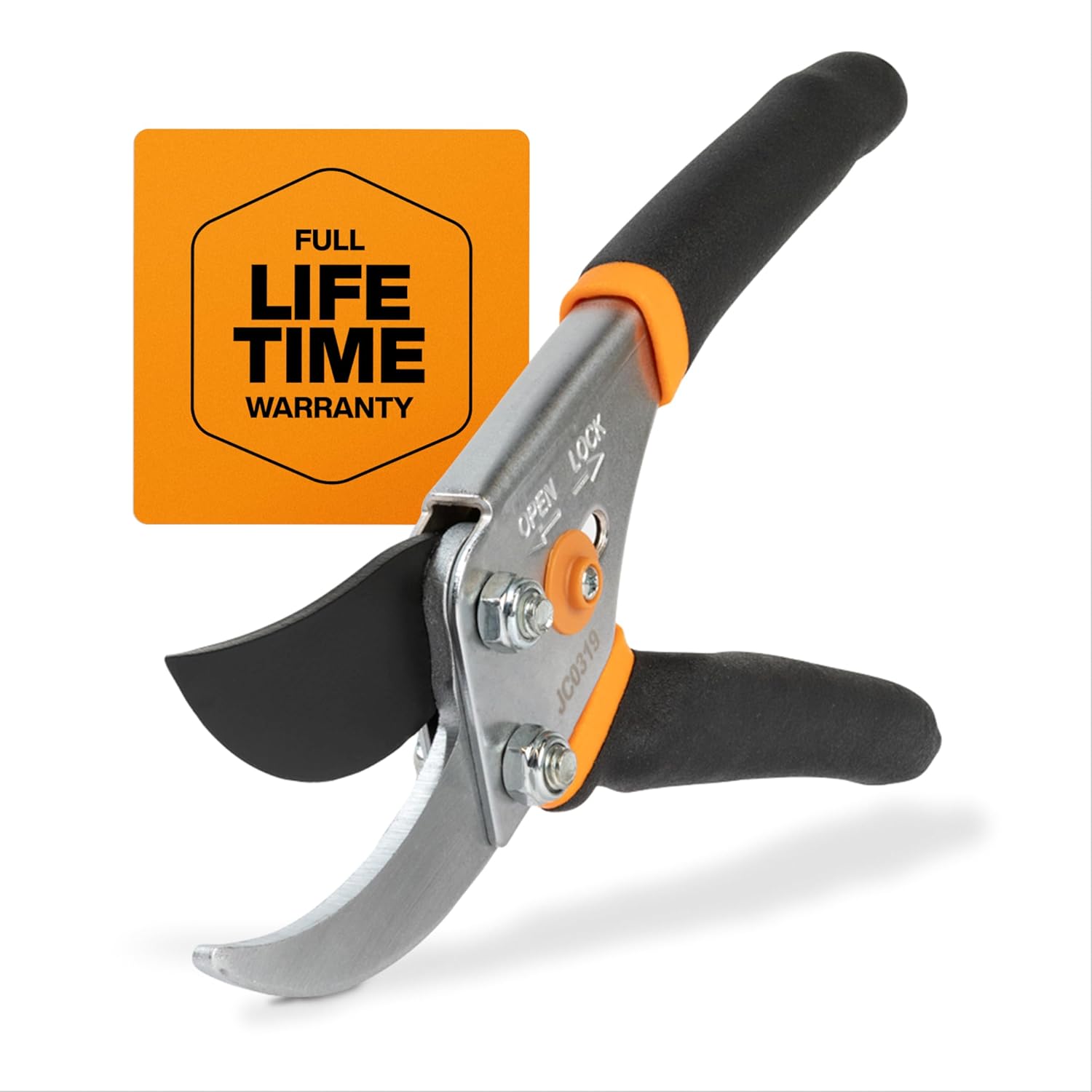 Fiskars Bypass Pruning Shears (Model 91095935J) |
8.8/10 | $12.98 | Check price |
| Best Overall |
 FELCO F2 1-Inch Pruning Shears |
9.1/10 | $67.95 | Check price |
Fanttik Y10 Pro Cordless Pruning Shears
These electric pruning shears are designed for ease and safety, featuring a powerful brushless motor that cuts branches up to 1 inch thick. The smart display, LED light, and ergonomic design make them a solid choice for gardeners seeking to reduce hand strain, particularly seniors or those with arthritis.
Pros
- Powerful 23,000 RPM brushless motor handles branches up to 1 inch thick
- Smart display shows battery and safety alerts, with helpful LED work light
- Ergonomic, lightweight design minimizes hand fatigue for extended use
- Includes a spare blade for quick replacement and long-term sharpness
- Features multiple safety systems including a hand-protection alarm and dual-start trigger
Cons
- The safety alarm can be triggered by high humidity, requiring manual override to continue pruning
MODOFO 1.4-Inch Electric Pruning Shears
A cordless pruning shear with a 1.4-inch cutting capacity, dual adjustable cutting modes, and an LCD that shows battery level and cut count. The brushless motor and two included 2.0Ah batteries make it a practical pick for gardeners who want longer runtime and cleaner branch cutting.
Pros
- LCD display shows battery level and cut count in real time.
- Adjustable cutting modes let you switch between 0.98-inch and 1.4-inch openings.
- Brushless 450W motor is rated for over 1,000 cuts.
- Includes two 2.0Ah batteries, with 1 to 2 hour charging and up to 4 hours of runtime.
- Comes with a storage box, sharpening stone, wrenches, and adapter.
Cons
- Requires a double-press to activate and reactivate after sleep mode.
Fiskars Bypass Pruning Shears (Model 91095935J)
A top-rated bypass pruner designed for clean, precise cuts on live plants. Its low-friction, rust-resistant blades and ergonomic grip make it a durable and comfortable choice for detailed garden trimming. The lifetime warranty underscores its value for home gardeners.
Pros
- Sharp, precision-ground steel blades for clean cuts on stems and branches up to 5/8"
- Low-friction blade coating and self-cleaning sap groove minimize sticking and resist rust
- Ergonomic, non-slip handle provides comfort and control, reducing hand fatigue
- Bypass blade design is ideal for delicate, live growth to minimize plant damage
- Backed by a lifetime warranty, indicating strong manufacturer confidence
Cons
- The all-steel construction, while durable, may feel heavier than pruners with composite handles
- Primarily suited for green growth and small branches; not for heavy-duty, dead wood cutting
FELCO F2 1-Inch Pruning Shears
A classic manual pruner built around Swiss-made precision and a hardened steel blade. The lightweight forged aluminum body, ergonomic grip, and replaceable parts make it a strong fit for gardeners who want a durable tool for regular pruning.
Pros
- Swiss-made construction with a strong reputation for precise cutting.
- Hardened steel blade handles branches up to 1 inch thick.
- Lightweight forged aluminum handles with a lifetime guarantee.
- Ergonomic design with non-slip coating helps reduce hand and wrist strain.
- Fully replaceable parts support long-term use.
Best Battery Powered Garden Shears Buying Guide
Cutting Power and Blade Performance
For battery-powered garden shears, cutting power is the first thing to evaluate because it determines how smoothly the blades move through soft stems, light branches, and repeated snips. A stronger motor and sharper blade design usually mean less resistance, which matters when you are trimming a long hedge line or clearing small overgrowth around flower beds.
Think about the kind of material you trim most often. If your yard has mostly soft growth, you may not need maximum power, but you will still benefit from clean, precise cuts that avoid crushing stems. If you regularly handle thicker shoots, look for a model that keeps its motion consistent under load so you do not have to stop and force the cut.
A practical way to compare options is to focus on blade geometry, stroke smoothness, and how well the tool stays stable during repeated cuts. A shear that feels balanced in the hand often performs better in real use because you can guide the blade tip more accurately along borders and around delicate plants.
Weight, Balance, and One-Hand Control
Because these tools are designed for quick trimming, comfort matters just as much as raw cutting ability. A lightweight shear is easier to use overhead, around raised planters, and along fence lines where you need to keep the tool steady for several minutes at a time.
Balance is important too. If the battery or motor housing makes the front of the tool feel heavy, your wrist has to work harder to keep the blade aligned. That can slow you down and make detailed shaping less precise, especially if you are trimming in short bursts throughout the yard.
For more context on how compact yard tools affect comfort and handling, it can help to compare them with other pruning options in our Shovels, Spades & Hoes category, where ergonomics and control matter for different kinds of digging and edging tasks. The same idea applies here: the right tool should reduce fatigue, not create it.
The B0GD51MWK2 option is the kind of product you want to examine closely if you value easy handling. A design that feels comfortable in one hand can make it simpler to follow straight lines, work around stems, and keep a consistent trim height without over-correcting your wrist.
Battery Runtime and Charging Convenience
Runtime determines whether you can finish a trimming session without waiting for a recharge. If you maintain a small patio garden, a modest battery may be enough. If you trim several beds, edges, and shrubs in one session, you will want a shear that can keep going long enough to avoid interruptions.
Charging convenience matters almost as much as runtime. A tool that charges quickly or uses a familiar charging setup is easier to keep ready between jobs, especially if you do small maintenance trims every week. The best choice is usually the one that fits naturally into your routine rather than the one with the highest headline number.
It also helps to think in task blocks. If you usually spend 15 to 20 minutes tidying borders, another short session after a recharge may be fine. But if you prefer to do all your pruning at once, you should prioritize a battery setup that gives you enough working time to finish before performance drops.
Blade Width, Reach, and Job Type
Blade width and overall reach influence what the tool can handle comfortably. Narrower blades are better for detail work, precise shaping, and trimming near fragile plants, while broader cutting paths can help when you want to cover more area quickly. The right choice depends on whether your yard work is mostly cosmetic shaping or broader cleanup.
If you regularly prune ornamental shrubs, edges, and groundcover, you may prefer a shear that excels at controlled movement. On the other hand, if you are often clearing denser or slightly more stubborn growth, it may be worth choosing a model that feels stable when the blade meets resistance. That stability can make each pass cleaner and safer.
For readers who split their time between trimming and heavier branch work, pairing a compact shear with a stronger pruning tool can be a smart strategy. Our best garden hoes article is a useful reference for gardeners who want a broader toolkit for seasonal maintenance and bed care.
| Trimming Need | Best Blade Focus | What to Look For |
|---|---|---|
| Detail shaping | Narrower, precise blade path | Easy tip control and smooth movement |
| Border cleanup | Balanced width and stability | Consistent cuts with low wrist fatigue |
| Light overgrowth | Stronger cutting action | Less stalling when stems are denser |
Safety Features and Maintenance
Even compact shears should feel safe to start, stop, and store. A good safety setup includes intuitive controls, blade protection when idle, and a design that helps prevent accidental activation while you move around the garden. These details matter most if you store the tool in a shed or carry it between different parts of the yard.
Maintenance is another part of long-term value. You want blades that are easy to clean and a tool body that does not trap debris in awkward places. A simple maintenance routine, such as wiping the blades after use and checking for sap buildup, can help preserve cutting quality and make the tool feel smoother over time.
If you plan to use the shear often, look for a design that minimizes downtime between jobs. The easier it is to keep clean, store, and recharge, the more likely you are to use it regularly instead of reaching for a manual tool.
The B0DBVMHTLK model is a good example of the kind of product that should be evaluated for routine maintenance use. When a shear is easy to handle and keep clean, it becomes much more practical for frequent touch-ups rather than only occasional large jobs.
Why You Should Trust Us
We evaluate products by comparing the available product data, feature sets, category fit, and the kinds of tasks gardeners actually perform with battery-powered shears. Our approach is designed to be objective and transparent, so we focus on what the specifications and product positioning can reliably tell us rather than making exaggerated performance claims.
We also consider how each product fits into a broader gardening workflow, from light trimming to seasonal cleanup. That means we look at ease of use, likely maintenance needs, and whether a tool makes sense for common pruning jobs in the same way we would compare related gear across our Rakes category or other hand-tool sections. Our goal is to help you choose confidently with information that is practical, balanced, and useful.
Final Thoughts
After comparing the five options, our best overall pick is the B0DPDBK17B model because it leads the list and is the most natural fit for readers who want a strong all-around starting point in the best battery powered garden shears category. It is the kind of choice we would expect to appeal to gardeners who want a single tool for regular trimming, light shaping, and general upkeep.
For a best value angle, the B0GD51MWK2 stands out as a practical option for users who care most about comfort and everyday usability. If your main goal is quick routine maintenance rather than heavy-duty pruning, this is the type of shear that can make short jobs feel easy and predictable.
If you want a best-for-specific-use recommendation, the B0DBVMHTLK is the most sensible pick for frequent touch-up work and consistent garden maintenance. For readers who are still comparing tool types, our combined leaf blower and hedge trimmer guide can also help you decide whether a dedicated shear or a multi-purpose tool is the better match for your yard.
FAQs
What is the best battery powered garden shears in 2026?
The best choice depends on whether you value overall balance, comfort, or trimming specialization. In this roundup, the B0DPDBK17B model is our top overall recommendation because it is the strongest all-around fit for most gardeners. If your needs are more specific, a different model may be the better match for your grip style or the kind of plants you trim most often.
Are battery powered garden shears good for small shrubs?
Yes, they are often a very good choice for small shrubs, especially when you want faster and more uniform trimming than manual shears can provide. They are particularly useful for shaping new growth, tidying edges, and reducing hand strain during repeated cuts. If your shrubs are especially dense, you should prioritize a model with stable cutting action and good balance.
How long should best battery powered garden shears battery runtime last?
Runtime should be long enough to cover your usual trimming session without frequent interruptions. For light garden touch-ups, shorter runtime may be acceptable, but if you prune multiple beds in one go, you will want more working time before recharging. The best benchmark is whether the tool can finish your typical garden routine comfortably.
Which features matter most for comfort?
Weight, balance, and one-hand control matter most because they determine how tiring the tool feels after repeated use. A comfortable grip and predictable blade movement can make a much bigger difference than minor cosmetic features. If you want to compare comfort-focused garden tools more broadly, our Hand Tools category page is a useful place to start.
Do battery powered shears need much maintenance?
They usually need only light but regular maintenance, such as cleaning the blades, checking for debris, and storing the tool properly after use. That small routine helps preserve cutting performance and prevents buildup that can slow the blades down. If you use the shear frequently, a quick wipe-down after each session is one of the simplest ways to keep it working well.
About the author
Editor, Garden Hand Tools. Based in Phoenix, Arizona. Maria grows vegetables and native desert plants in a small backyard and cares most about tools that stay sharp and comfortable in the heat. She writes about pruners, loppers, shovels, and everyday hand tools.