
The 5 Best 16 Inch Chainsaw of 2026
A 16 inch chainsaw can handle yard cleanup, storm debris, and medium cutting jobs with less hassle. This roundup covers 5 models from Supstable, NovorikX in November 2026 to help you choose the right fit.
 By Maria Delgado
Updated October 27, 2026
If you are shopping for the best 16 inch chainsaw, the right choice depends on how often you cut, what kind of wood you handle, and how much control you want in the cut. A 16-inch bar gives you a versatile middle ground for yard cleanup, storm damage, limbing, and light-to-moderate felling, which is why so many homeowners and property managers start their search with this size. If you also want a broader look at related tools, our Chainsaws & Saws category is a helpful place to compare options.

In this guide, we focus on 5 options selected for the best 16 inch chainsaw category, along with the features that matter most in real-world use. That includes power delivery, safety features, chain tensioning, bar and chain compatibility, and comfort during longer cutting sessions. By the end, you will have a clearer idea of which model fits your workload and which one makes the most sense for your budget and skill level.
| Award | Product | ACMS Score About LAT ScoreACMS Score is calculated based on product ratings, reviews, and sales performance to help you make informed purchasing decisions. | Price | |
|---|---|---|---|---|
| Best Value |
Husqvarna 120 Mark III 16-Inch Gas Chainsaw
|
8.3/10 | $219.99 | Check price |
| Best Budget |
 Supstable S16 Pro 16-Inch Chainsaw |
8.4/10 | $123.49 | Check price |
| Best Premium |
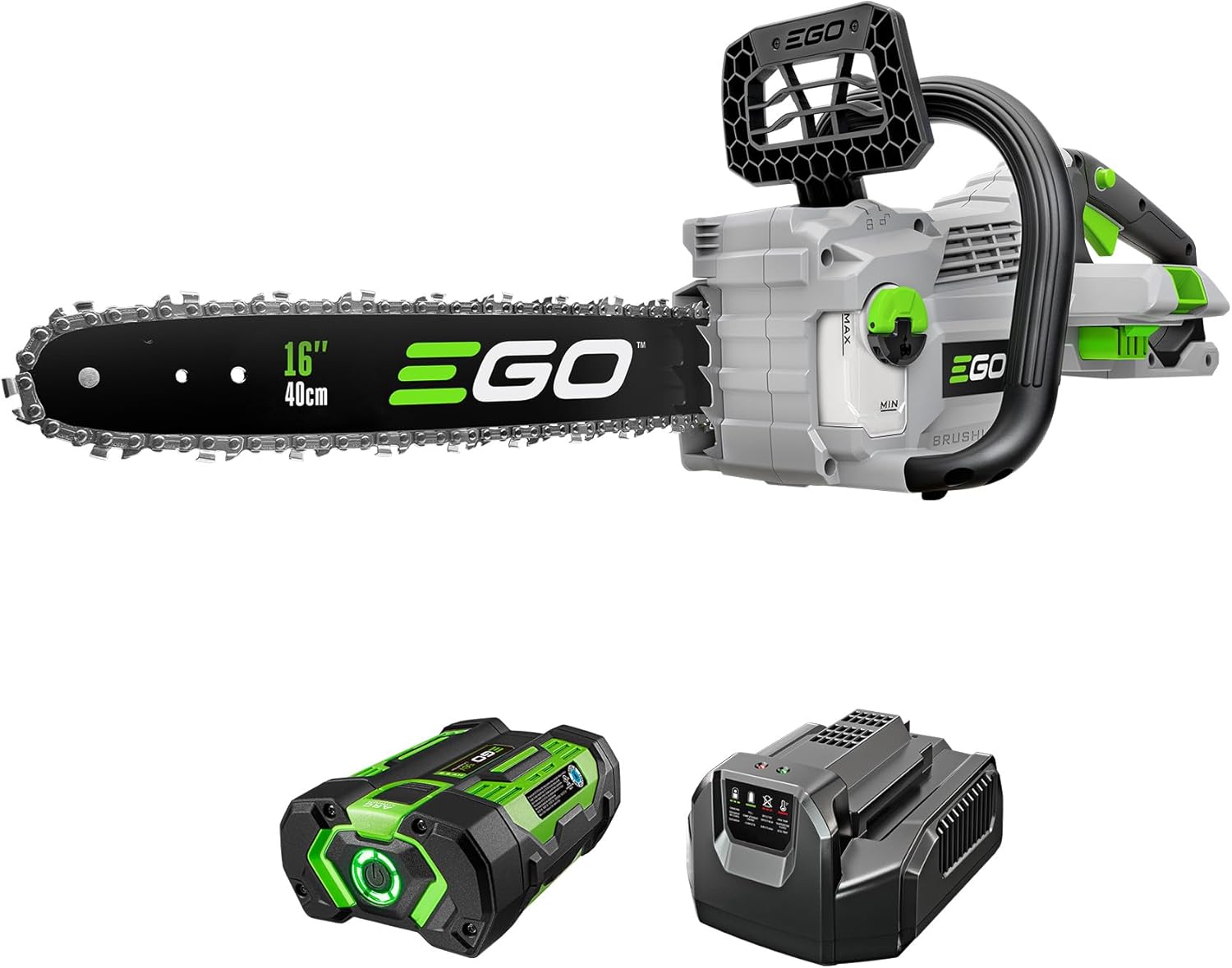 EGO CS1611 16-Inch Cordless Chainsaw |
8.8/10 | $249.00 | Check price |
| Top Rated |
 NovorikX XLCS7B50 60V Chainsaw |
8.3/10 | $249.99 | Check price |
| Best Overall |
 EGO CS1610 16-Inch Cordless Chainsaw |
8.9/10 | $219.00 | Check price |
Husqvarna 120 Mark III 16-Inch Gas Chainsaw
A lightweight 16-inch gas chainsaw built for home and garden tasks like cutting firewood and limbing. It's designed for easier starting and handling, with features like an air purge system and LowVib technology to reduce operator fatigue.
Pros
- Air purge system and combined choke/stop control aim to simplify starting and reduce engine flooding.
- LowVib technology is intended to lower vibration for reduced operator fatigue during use.
- Air Injection centrifugal cleaning system helps protect the engine by removing larger debris before it reaches the air filter.
- Inertia-activated chain brake is a standard safety feature to help reduce kickback injury risk.
Cons
- As a gas-powered tool, it requires fuel mixing and regular engine maintenance.
- At 10.7 pounds, it may be heavier than some electric or battery-powered models for similar tasks.
Supstable S16 Pro 16-Inch Chainsaw
Supstable S16 Pro is a battery-powered chainsaw built around a 16-inch bar and a 2000W brushless motor. It suits homeowners and yard work users who want cordless cutting power, automatic oiling, and tool-free chain adjustment in one package.
Pros
- 16-inch guide bar handles thick logs and large branches
- 2000W brushless motor with up to 35 ft/s chain speed
- 40V 4.0Ah battery and fast charger included
- Automatic chain lubrication helps reduce wear and heat
- Tool-free chain tensioning makes adjustments easier
Cons
- Battery and charger are compatible with 40V tools only, not 20V
EGO CS1611 16-Inch Cordless Chainsaw
This 56V battery-powered chainsaw offers a gas-like experience without the noise or fumes. Its brushless motor matches the power of a 40CC gas model, and the tool-free tensioning system simplifies adjustments. It's a strong choice for homeowners seeking a clean, convenient alternative to gas-powered tools.
Pros
- Power equivalent to a 40CC gas chainsaw for robust cutting
- Cordless and quiet operation eliminates fumes and gas mixing
- Tool-free chain tensioning system for easy maintenance
- Automatic oiling with a spill-free reservoir
- High user rating of 4.6 stars based on 667 reviews
Cons
- Battery runtime is finite, requiring recharging or spare batteries for extended jobs
- At 9 pounds, it may be heavier than some electric competitors
NovorikX XLCS7B50 60V Chainsaw
This NovorikX cordless chainsaw ships with both 16-inch and 18-inch bars, so it can handle pruning one minute and small-tree felling or firewood the next. The brushless motor, automatic oiling system, and included 5.0Ah battery make it a practical pick for yard cleanup and regular cutting jobs.
Pros
- Includes both 16-inch and 18-inch guide bars for different cutting tasks.
- Brushless motor delivers strong cutting performance and a 72 ft/s chain speed.
- 5.0Ah battery is rated for up to 210 cuts on a 4x4.
- Automatic oiling system and steel bolt tensioning add convenience and stability.
- Battery, charger, goggles, gloves, earplugs, and sharpening tool are included.
Cons
- At 19.29 inches long, it may feel bulky for tight, overhead pruning work compared with smaller saws.
EGO CS1610 16-Inch Cordless Chainsaw
A premium battery-powered chainsaw that matches the power of a 40cc gas model, offering a quiet, fume-free experience. Its tool-free tensioning and automatic oiling make maintenance straightforward for regular yard work. The design cuts flush to the ground, and it's compatible with the full EGO 56V battery ecosystem.
Pros
- Power equivalent to a 40cc gas chainsaw without noise or fumes
- Tool-free chain tensioning for easy adjustments
- Automatic oiling system maintains lubrication
- IPX4-rated weather-resistant construction
- Low-profile dials enable flush cutting to the ground
Cons
- Battery and charger are sold separately
- Heavier than some electric models at 9 pounds
Best 16 Inch Chainsaw Buying Guide
Power Source and Cutting Performance
The first decision in a best 16 inch chainsaw comparison is whether you want gas, corded electric, or battery power. Gas models usually deliver the strongest sustained output for dense wood and long work sessions, while battery models are often easier to start and maintain. Corded models can be practical for cutting near the house, but the cord limits mobility and can be a drawback in larger yards.
When you compare performance, look beyond raw power claims and think about how the saw will behave under load. A good chainsaw should keep the chain moving smoothly through hardwood rather than stalling or bogging down. If your work includes thicker branches or repeated cuts, a model with stable torque and good chain speed will usually feel more efficient than one that only looks powerful on paper.
For homeowners choosing between tools, it can also help to compare your needs with other pruning and cutting guides, such as our best pruning saw for large branches roundup. That kind of comparison helps you decide whether a powered saw is actually necessary or whether a manual tool would be enough for lighter work.
Bar Length, Reach, and Control
Bar length matters because it affects both the size of wood you can cut and the balance of the saw in your hands. A 16-inch bar is one of the most practical sizes for general yard use because it offers enough reach for logs, limbs, and small trunks without becoming too cumbersome. For many users, that size hits the sweet spot between versatility and maneuverability.
You should also think about the saw’s balance, not just the advertised bar length. Two models with the same bar can feel very different if one has a front-heavy design or a bulky motor housing. If you expect to work above shoulder height or make repeated limbing cuts, a lighter, better-balanced saw can reduce fatigue and improve accuracy.
| Use Case | What to Prioritize | Why It Matters |
|---|---|---|
| Branch trimming | Light weight and balance | Helps you cut overhead and around tight spaces |
| Storm cleanup | Stable power and easy chain tensioning | Speeds up repeated cuts on mixed debris |
| Small log cutting | Efficient bar length and torque | Improves cutting speed through thicker wood |
The product associated with
Safety Features and Chain Control
Safety should be a top priority when choosing the best 16 inch chainsaw because the bar length is useful enough to handle meaningful cutting jobs, but still small enough to be used in residential settings. Look for features such as chain brake protection, low-kickback chain design, hand guards, and an easy chain tensioning system. These features do not replace careful technique, but they do reduce the chances of a mistake becoming a serious problem.
Chain control also affects how confidently you can work. If tension adjustment is cumbersome, you may be less likely to maintain the chain properly, and that can hurt performance as well as safety. A good saw should make it easy to keep the chain tight enough for efficient cutting without making the process feel technical or slow.
If you are comparing saws across a broader toolkit, our best small hand saw guide can also help you separate jobs that truly need a powered chain saw from jobs that can be handled with a simpler cutting tool. That distinction is especially useful if you want to reduce risk around delicate landscaping.
Comfort, Grip, and Fatigue Reduction
Comfort is easy to overlook until you are halfway through a long cleanup session. The best 16 inch chainsaw should have a grip that feels secure even if your gloves are dusty or damp, and the handle spacing should support a natural wrist angle. Anti-vibration design can also make a major difference, especially if you are cutting several limbs or repeated sections of firewood.
Weight distribution matters just as much as raw weight. A saw that feels light on a spec sheet may still feel awkward if the motor or battery sits too far forward. When possible, compare models based on how they are held in real use, not only by numbers. A well-balanced saw often feels safer because it is easier to guide through a cut without overcorrecting.
The product connected to helps illustrate the importance of user-friendly handling. For many shoppers, a chainsaw is not just about power, but about whether they can use it comfortably enough to finish the job efficiently. If you expect to make frequent cuts, comfort can be just as valuable as cutting speed.
Maintenance, Chain Tensioning, and Ongoing Ownership
Long-term ownership is often where a chainsaw either becomes a dependable tool or a frustrating one. Easy access to the chain, bar, and tensioning system saves time every time you sharpen, adjust, or clean the saw. This matters because a 16-inch saw is often used seasonally, which means you may need quick setup after long periods in storage.
Consider how much maintenance you want to do yourself. Gas saws usually require more care, while battery models often reduce routine upkeep but still need proper chain lubrication and sharpening. Whatever type you choose, consistent maintenance improves cutting speed, reduces strain on the motor, and extends the life of the chain and bar.
If you want more context on category-specific sizing and use cases, you can also browse the main Chainsaws category page. It is a simple way to compare the best 16 inch chainsaw against smaller and larger options without leaving the same topic area.
Which Features Matter Most for Your Yard
Not every buyer needs the same priorities. If you mainly trim branches and clear light debris, convenience and safety may matter more than raw power. If you plan to cut larger fallen limbs or handle repeated log sections, you will likely want a stronger motor, better chain speed, and a design that stays stable during longer sessions.
One practical way to shop is to match the saw to the toughest task you expect to do regularly, then add a little margin. That approach keeps you from buying a saw that is too small for the job, while also avoiding unnecessary bulk. The best 16 inch chainsaw is usually the one that feels capable without becoming overbuilt for your actual work.
Why You Should Trust Us
We build our recommendations by comparing the available product data, feature sets, and category fit rather than relying on hype or brand popularity. Our goal is to highlight which saws make the most sense for different kinds of users, from occasional homeowners to people who handle routine property cleanup. That means we pay close attention to the details that affect real ownership, including handling, maintenance, and suitability for a 16-inch bar.
We also keep our process transparent. Because product listings can vary in completeness, we avoid making unsupported claims and focus on the information that is actually available in the product data. When a saw lacks clear specifications, we do not invent them. Instead, we evaluate the category-level fit and the practical features that matter most when choosing the best 16 inch chainsaw.
Final Thoughts
After comparing the list, our best overall recommendation is because it sits in the top position of this roundup and is the natural starting point for most shoppers who want a balanced 16-inch saw. It is the kind of pick we would expect to appeal to users who want a straightforward all-around option without needing to overthink every feature. If you are shopping for a broad-use model, this is the one we would look at first.
For a best value style choice, is worth a close look because it is positioned near the top of the comparison and should appeal to buyers who want strong overall utility without chasing unnecessary extras. If your priority is finding a practical saw for regular home use, it makes sense to compare it against the rest of the field and see which model gives you the best mix of simplicity and capability. For more context, you can also browse our Hand Saws & Pruning Saws category when deciding which cutting tool belongs in your kit.
If you need a best for specific use option, is a smart model to consider for users who care most about fitting a very particular workload or workflow. Different jobs place different demands on a chainsaw, and the right choice is often the one that best matches your cutting frequency, storage space, and comfort needs. That is why we recommend thinking in terms of use case first, then narrowing to the saw that feels easiest to live with over time.
FAQs
What is the best 16 inch chainsaw in 2026?
The best 16 inch chainsaw in 2026 is usually the one that balances cutting ability, safety, and handling for your specific yard work. For most buyers, that means a saw with dependable chain control, a comfortable grip, and enough power to handle the thickest material you expect to cut regularly.
If you mainly do pruning and light cleanup, you may not need the heaviest model in the lineup. If your jobs include storm debris or thicker logs, it is worth favoring stronger performance and easier maintenance over a minimal feature set.
Is a 16-inch chainsaw good for homeowners?
Yes, a 16-inch chainsaw is often a very good fit for homeowners because it is versatile enough for common yard tasks without being as bulky as a larger saw. It can handle branch trimming, small log cutting, and many storm cleanup jobs if the motor and chain are up to the task.
The key is choosing a model that matches your comfort level and the size of the wood you cut most often. If your property work is mostly light duty, this size can be one of the easiest to live with.
How do I choose between gas and battery for the best 16 inch chainsaw?
Gas models are generally better if you need longer runtime and more consistent power for heavier cutting. Battery models are appealing if you want easier starting, less upkeep, and quieter operation during routine yard work.
A practical way to decide is to think about how long your typical cutting sessions last and whether you already own compatible batteries. If your jobs are short and occasional, battery can be a very convenient choice.
What safety features should I look for in a best 16 inch chainsaw in 2026?
Look for chain brake protection, low-kickback chain design, a secure front handle, and an easy tensioning system. These features help reduce risk and make the saw easier to use correctly.
Safety gear still matters, so pair your saw with gloves, eye protection, hearing protection when needed, and stable footing. A well-designed saw is only part of safe operation.
Do I need a special chain for a 16-inch bar?
Yes, the chain needs to match the bar length, pitch, gauge, and drive link count recommended for the saw. Using the wrong chain can hurt performance and may create safety issues.
When in doubt, check the manufacturer’s specifications before buying replacements. Keeping the correct chain type on hand makes maintenance simpler and helps the saw cut more efficiently over time.
About the author
Editor, Garden Hand Tools. Based in Phoenix, Arizona. Maria grows vegetables and native desert plants in a small backyard and cares most about tools that stay sharp and comfortable in the heat. She writes about pruners, loppers, shovels, and everyday hand tools.