
The 5 Best Rake For Moss Removal of 2026
Moss can quickly take over a lawn and leave it looking patchy and damp. This roundup covers 5 rake options from Walensee, BlumeTrec, BARAYSTUS and more in November 2026 to help you choose the right fit.
 By Carolyn Brooks
Updated October 27, 2026
If you are looking for the best rake for moss removal, the right tool can make a big difference in how quickly you clear compacted growth, dead grass, and stubborn surface buildup. A well-chosen rake helps you open the lawn surface, improve airflow, and prepare your yard for seasonal cleanup without turning routine maintenance into a backbreaking job.

In this guide, we compare 5 options for moss removal and dethatching, including manual rakes, dual-sided tools, and a crack-cleaning option for tight hardscape areas. If you are also comparing other yard tools, our best rakes for gardening gravel guide is a useful companion read for different surface types and cleanup needs.
| Award | Product | ACMS Score About LAT ScoreACMS Score is calculated based on product ratings, reviews, and sales performance to help you make informed purchasing decisions. | Price | |
|---|---|---|---|---|
| Best Overall |
BlumeTrec THR-001 74-inch Dethatching Rake
|
8.4/10 | $32.99 | Check price |
| Best Value |
 Walensee BRM-B566-WA-WAL-DE 15-Inch Dethatcher |
8.1/10 | $29.99 | Check price |
| Top Rated |
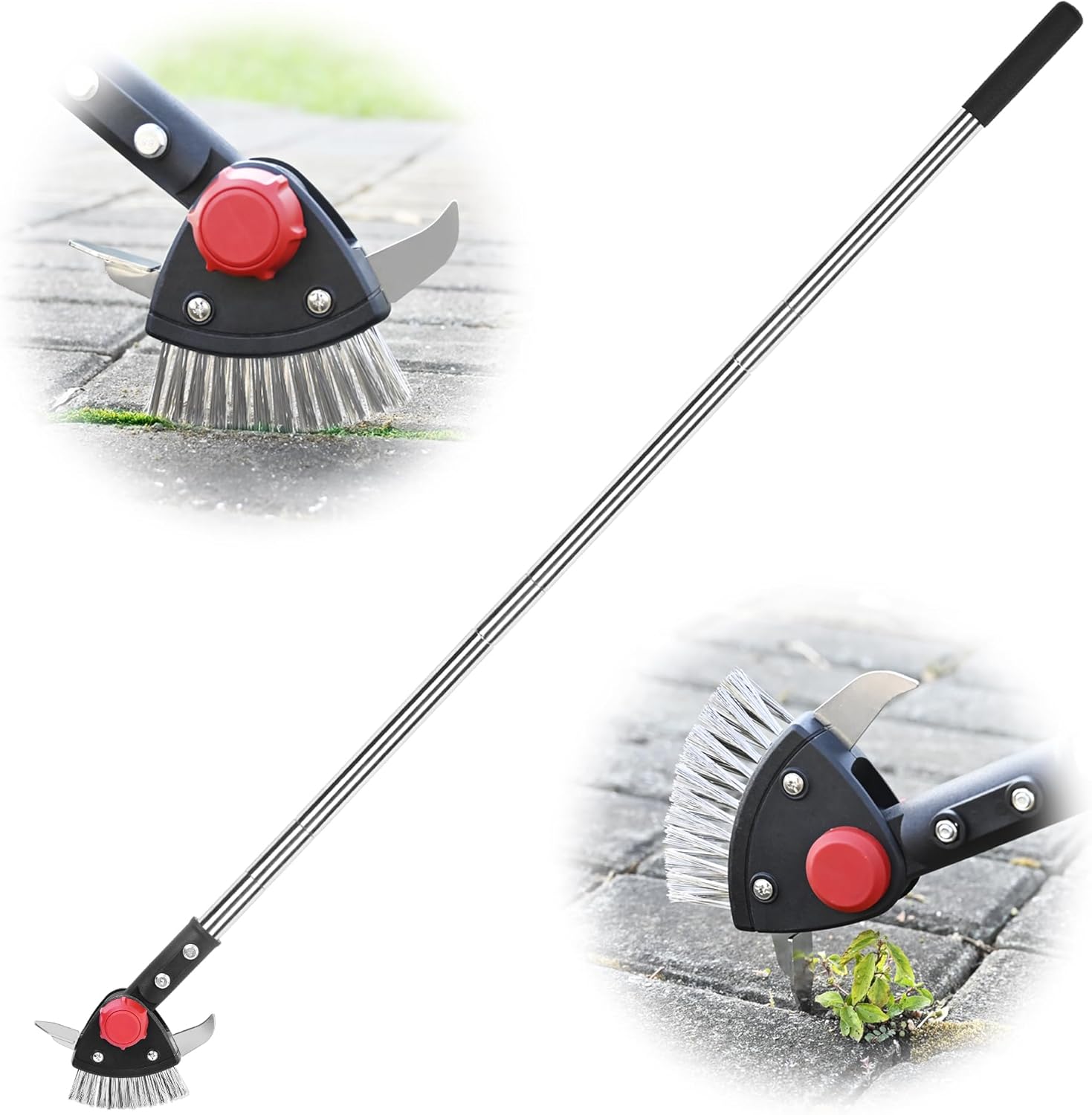 BARAYSTUS JDUS1170 3-in-1 Adjustable Crack Weeder |
7.8/10 | $25.56 | Check price |
| Best Budget |
 Cogardenshower Dual-Sided Thatch Rake with 65-Inch |
8.0/10 | $24.97 | Check price |
| Best Premium |
 BlueFire JC018 Adjustable Dethatcher Rake |
7.3/10 | $35.99 | Check price |
BlumeTrec THR-001 74-inch Dethatching Rake
This long-handled thatch rake is built for deep lawn care, efficiently removing dead grass and debris to improve soil health. Its dual-sided, 15-inch manganese steel head tackles both surface combing and thorough dethatching.
Pros
- Adjustable 74-inch stainless steel handle reduces bending and strain
- Hardened, rust-resistant manganese steel head offers durability
- Dual-sided tines allow for both dethatching and soil cultivation
- Wide 15-inch head covers more area per pass for efficiency
Cons
- At 2.1 kg, it is heavier than many standard lawn rakes
Walensee BRM-B566-WA-WAL-DE 15-Inch Dethatcher
This manual dethatcher rake features a versatile dual-sided head for lifting thatch and cultivating soil. Its adjustable handle offers three lengths for comfortable use, making it a practical tool for regular lawn maintenance and seasonal cleanup.
Pros
- Dual-sided head with 19 curved steel tines for both thatch removal and soil cultivation
- Adjustable stainless steel handle with three length settings (approx. 40, 55, 70 inches) to suit different users and tasks
- Cushioned non-slip grip for improved control and comfort
- Detachable design for easier transport and storage
- Powder-coated manganese steel head resists rust and wear
Cons
- Manual operation requires significant physical effort
- Assembly and periodic re-checking of handle connections are necessary
BARAYSTUS JDUS1170 3-in-1 Adjustable Crack Weeder
This manual weeder consolidates three scraping and brushing heads into one tool, designed for cleaning weeds and moss from gaps in driveways and patios. Its adjustable stainless steel handle offers three lengths for comfortable use, whether standing or kneeling. It's a practical choice for homeowners seeking a dedicated, multi-function crevice cleaner.
Pros
- Versatile 3-in-1 design with curved scraper, triangular scraper, and metal brush
- Sturdy, rust-resistant stainless steel construction
- Adjustable handle with three length settings reduces back strain
- Ergonomic grip design aims to reduce hand fatigue
- Tool-free assembly and disassembly for easy storage
Cons
- Some users might find the 2-pound weight noticeable during prolonged use
- The plastic components may not be as durable as the all-steel parts
Cogardenshower Dual-Sided Thatch Rake with 65-Inch
A dual-sided manual dethatching rake designed for reviving matted lawns and handling everyday cleanup. Its 13-inch head features 21 deep-cleaning tines on one side and 11 lighter tines on the other, offering spring cleanup and regular maintenance in one tool. The reinforced, rust-resistant build with an adjustable handle suits homeowners seeking a durable, non-powered lawn care solution.
Pros
- Effective 2-in-1 design for deep dethatching and surface raking
- Reinforced, rust-resistant construction with a comfortable 65-inch handle
- Adjustable handle length for user comfort during extended use
- Wide 13-inch head efficiently covers more area per pass
Cons
- Manual operation requires significant physical effort for dense thatch
- Heavier build may be tiring during long sessions
BlueFire JC018 Adjustable Dethatcher Rake
This heavy-duty dethatcher uses dual-sided stainless steel tines to remove thatch and improve lawn health. Its adjustable handle and integrated wheels aim to reduce user fatigue, making it suitable for larger lawn maintenance tasks.
Pros
- Heavy-duty stainless steel construction resists rust and corrosion.
- Adjustable handle length up to 66.4 inches accommodates different user heights.
- Wheels reduce dragging resistance and improve maneuverability.
- Dual-sided head with both fine and wide teeth tackles various debris.
Cons
- The 3.7-star average rating from 10 reviews indicates some user dissatisfaction.
- The 15-inch head width may be less efficient for covering very large areas quickly.
Best Rake For Moss Removal Buying Guide
Rake Head Design and Tine Count
The most important thing to evaluate in a moss-removal rake is how the head interacts with the lawn surface. A wider dethatching head can cover more ground quickly, while a narrower head can feel easier to control in tight areas or on uneven ground. Tine count also matters because more tines can increase surface coverage, but tine shape and stiffness determine whether the tool lifts thatch cleanly or simply skims over it.
For lawns with heavy moss or compacted thatch, a dual-sided design can be especially useful because one side can focus on deeper pulling and the other on lighter cleanup. The garden hoes buying guide is also a helpful reference if your cleanup routine includes soil scraping, edging, or tougher surface work around borders.
The Thatch Rake for Lawn with 74inch Handle is a good example of a wider dethatching approach because its 15-inch head and dual-sided tines are built for both lifting debris and loosening the surface. It is the kind of design that makes sense if you want one tool to handle seasonal lawn renovation and routine surface cleanup.
When you compare designs, look at whether the rake is intended for moss removal only or for a broader mix of thatch, dead grass, and light debris. If the lawn is thin and matted, deeper tine engagement is usually more important than pure width. If the lawn is large and only lightly affected, a wider head can save time.
Handle Length, Reach, and Comfort
Handle length affects both comfort and efficiency. A longer handle can reduce bending, which matters if you are working across a large lawn or tackling moss removal for more than a few minutes at a time. Adjustable sectional handles are especially helpful because they let different users set a comfortable working height and adapt the tool to different tasks.
Good grip design matters just as much as raw length. A cushioned or non-slip grip can improve control when the rake is catching on dense material, and a stable connection between handle sections reduces wobble during repeated pulls. This is one reason many buyers prefer adjustable manual dethatchers over fixed-length tools.
The Walensee 15-Inch Thatch Rake for Lawn is a strong example here because its adjustable handle can be set to multiple lengths, giving you more flexibility than a fixed tool. That kind of adjustability can make the difference between a tool that feels awkward and one that feels manageable for longer sessions.
When choosing handle length, think about your height, lawn size, and how much force you want to apply from an upright position. If you are cleaning a small patch, a shorter setting may improve control. If you are dethatching a larger area, a longer setting can reduce strain and help maintain a more consistent angle.
Material Quality and Durability
Moss removal can be hard on a rake because dense buildup places repeated stress on the head, tines, and handle joints. Steel construction is usually preferable, but the type of steel and the finish both matter. Quenched or hardened steel heads are typically better suited for repeated use, while powder-coated or rust-resistant finishes help extend tool life outdoors.
You should also pay attention to how the handle joins together. A reinforced connection can keep the rake stable when you pull through thick material, while thin or loosely fitted sections can flex more than you want. If you plan to use the tool across multiple seasons, durability matters as much as performance on day one.
| Durability Factor | What to Look For | Why It Matters |
|---|---|---|
| Head material | Hardened steel or manganese steel | Improves strength and wear resistance |
| Finish | Powder-coated or rust-resistant coating | Helps protect against moisture and outdoor storage |
| Handle joints | Threaded or reinforced sections | Reduces wobble and improves pulling stability |
The Heavy Duty Thatch Rake for Lawns stands out in this category because it combines a reinforced build with carbon steel tines and a practical sectional handle. If your lawn has dense moss or compacted patches, this is the type of durability profile that can help the tool hold up over repeated use.
Durability is especially important if you store tools in a shed or garage with fluctuating humidity. A rust-resistant finish will not solve every storage issue, but it can slow wear and help the rake stay functional longer between seasonal cleanups.
Versatility for Lawn and Hardscape Cleanup
Some buyers only need a rake for grass and moss removal, but others want a tool that also handles driveways, patios, sidewalks, or paver joints. If your outdoor spaces include both turf and hardscape, versatility becomes a major factor. In that case, a dedicated crack-cleaning tool can be more useful than forcing a lawn rake to do precision work in narrow seams.
The right tool for hardscape cleanup often has a slimmer working edge, a scraper, or a wire brush that can reach into tight spaces. That is why category-specific tools exist: a lawn dethatcher is built to pull through grass and surface buildup, while a crevice tool is built to dig into joints and remove moss or weeds without damaging the surrounding surface as much.
The Crack Weeder Long Handle 3-in-1 Adjustable Crevice is a good example of a multi-surface cleanup tool because it combines scrapers with a wire brush for moss and lichen removal. It is not a lawn dethatcher, but it is highly relevant if your moss problem extends into paving cracks and edges.
If you maintain both a lawn and a hardscape area, it can make sense to buy a dethatching rake for turf and keep a separate crevice tool for joints and seams. That approach usually gives better results than trying to use one tool for everything.
Ease of Use, Maneuverability, and Storage
Moss removal can be physically demanding, so the easier a rake is to maneuver, the more likely you are to use it consistently. Wheels can reduce dragging resistance and help the tool glide more smoothly across larger areas, while lighter, detachable designs are easier to transport and store. If you maintain a wide lawn, maneuverability can matter almost as much as tine design.
Storage is another practical consideration. Detachable handle sections, hanging holes, and compact packaging make seasonal tools easier to keep organized. If your equipment shed is already crowded, a rake that breaks down cleanly can be a better long-term choice than a one-piece design that is difficult to tuck away.
The BlueFire Dethatcher Rake with Wheels is a useful example of a maneuverability-focused design because the wheels help reduce effort during longer passes. If you have a larger area to cover and want to minimize friction, that feature can make the tool feel easier to use even when the lawn is dense.
For most homeowners, ease of use comes down to a balance between resistance and control. A tool that is too light may skip over moss, while a tool that is too heavy may be tiring to push or pull. The best choice is usually the one that matches your lawn density, yard size, and physical comfort level.
Why You Should Trust Us
Our review process focuses on product data, feature comparison, and real-world usefulness for the task at hand. We look at head width, tine layout, handle adjustability, material quality, and versatility so we can judge how well each option fits moss removal and related lawn cleanup jobs.
We do not rely on marketing claims alone. Instead, we compare specifications, build design, and user feedback signals such as rating patterns and review volume to identify the tools that appear most practical for different yard conditions. That helps us offer guidance that is transparent, balanced, and useful for shoppers comparing multiple rakes at once.
Final Thoughts
If you want the best overall option, we recommend the Thatch Rake for Lawn with 74inch Handle. Its wide 15-inch head, dual-sided tines, and long adjustable handle give it the broadest mix of reach, comfort, and dethatching usefulness for general moss removal. It is a strong all-around choice for homeowners who want one manual tool for seasonal lawn care.
For best value, the Heavy Duty Thatch Rake for Lawns stands out because it offers a durable build at a lower entry point than some of the more feature-heavy options. Its deep-clean dethatching design makes it especially appealing if your lawn has thicker buildup and you want a focused tool without paying for extras you may not need.
If your yard includes both turf and hardscape, the Crack Weeder Long Handle 3-in-1 Adjustable Crevice is the best specialized companion tool for moss in seams, joints, and narrow gaps. For those who want to explore more lawn-care tools, you can also browse our Hand Tools category or compare against the best rakes for gardening gravel review to match the tool to your surface type.
FAQs
What is the best rake for moss removal in 2026 for thick moss?
For thick moss, the best option is usually a dethatching rake with a sturdy steel head and enough tine stiffness to pull material out of the surface rather than glide over it. In this group, the Thatch Rake for Lawn with 74inch Handle is a strong all-around pick because it combines a wide head with an adjustable long handle. That balance makes it easier to work through dense lawn buildup without constant bending.
Can a dethatching rake remove moss from a lawn?
Yes, a dethatching rake can remove moss, especially when the moss is mixed with dead grass and shallow thatch. The most effective models have sharp or curved tines that can lift material from the lawn surface without tearing up healthy turf too aggressively. You may need several passes in different directions for heavy buildup.
Should I choose a wide rake head or a narrow one?
Choose a wide head if you want to cover more ground quickly and your lawn is fairly open. Choose a narrower head if you need better control in tight spots or if the lawn has uneven areas that make a broad head harder to manage. The right choice depends on whether speed or precision matters more in your yard.
How important is handle length when choosing Best Rake For Moss Removal?
Handle length is very important because it affects comfort, leverage, and back strain. A longer or adjustable handle helps you work more upright, which is especially useful when you are removing moss from a large area. If you want more guidance on selecting complementary outdoor tools, our Pruning Shears & Loppers category can help you build a more complete yard toolkit.
Do I need a separate tool for patio cracks and paving joints?
Yes, if moss is growing in narrow seams or joints, a separate crevice tool is usually the better choice. A lawn rake is designed for broader surface cleanup, while a tool like the Crack Weeder Long Handle 3-in-1 Adjustable Crevice is built for narrow spaces and detailed scraping. Using the right tool usually saves time and gives a cleaner result.
About the author
Managing Editor & Buying Guides. Based in Asheville, North Carolina. Carolyn manages the editorial calendar and writes our buying guides. A long-time gardener in the Blue Ridge foothills, she knows how much fall leaf cleanup can wear on a yard, so blowers and vacuums are her specialty.