
Amorest AMO-FTQ-HS-1P Review: A Durable Manual Solution for Tough Soil
The Amorest AMO-FTQ-HS-1P Heavy Duty Hand Tiller is a robust, manually-powered cultivator designed to break up compacted soil and clay in garden beds and raised planters with minimal back strain.
 By Maria Delgado
Updated November 5, 2026
Quick Verdict
8.8/10This manual cultivator tackles hard soil and clay with its four sharpened steel tines, allowing for soil aeration and preparation without fuel. Its long handle promotes comfortable, upright gardening, making it suitable for raised beds and gardeners seeking to reduce back strain.
What we like
- Four sharpened tines effectively break up compacted soil
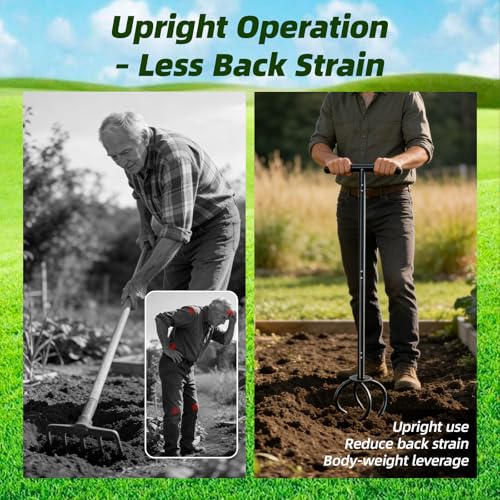
- Long handle design reduces bending and back strain
- Versatile tool for tilling, aerating, and weeding
- Powder-coated steel construction resists rust
- No power source required, operates manually
Watch out for
- Requires significant physical effort for dense clay
- Manual operation may be slow for large areas
For gardeners contending with dense, compacted soil or clay, manual cultivation can be a daunting task. The Amorest AMO-FTQ-HS-1P, a heavy-duty hand tiller, presents itself as a dedicated solution. This long-handled, manually-operated tool is engineered to tackle hard ground in vegetable gardens, flower beds, and raised planters without the need for fuel or electricity, making it a straightforward choice for focused soil preparation.

This product is aimed at homeowners, seniors, and gardeners who prioritize a quiet, maintenance-light tool for specific, manageable areas where larger powered tillers are impractical. Its design focuses on reducing physical strain through an upright working position while promising durability via robust steel construction. In short, the Amorest AMO-FTQ-HS-1P is a purpose-built manual cultivator for breaking up tough soil in confined garden spaces.
Prime Amorest Manual Garden Claw Tiller





As an Amazon Associate we earn from qualifying purchases. Product prices and availability are accurate as of the date/time indicated.
Amorest AMO-FTQ-HS-1P at a Glance
| Specification | Detail |
|---|---|
| Brand & Model | Amorest AMO-FTQ-HS-1P |
| Primary Function | Manual Hand Tiller / Cultivator / Soil Aerator |
| Key Feature | Four Sharpened Curved Steel Tines |
| Handle Design | Long Handle for Upright Use |
| Construction Material | Alloy Steel & Iron with Powder-Coated Finish |
| Power Source | Manual / Hand Powered |
| Operation Mode | Manual |
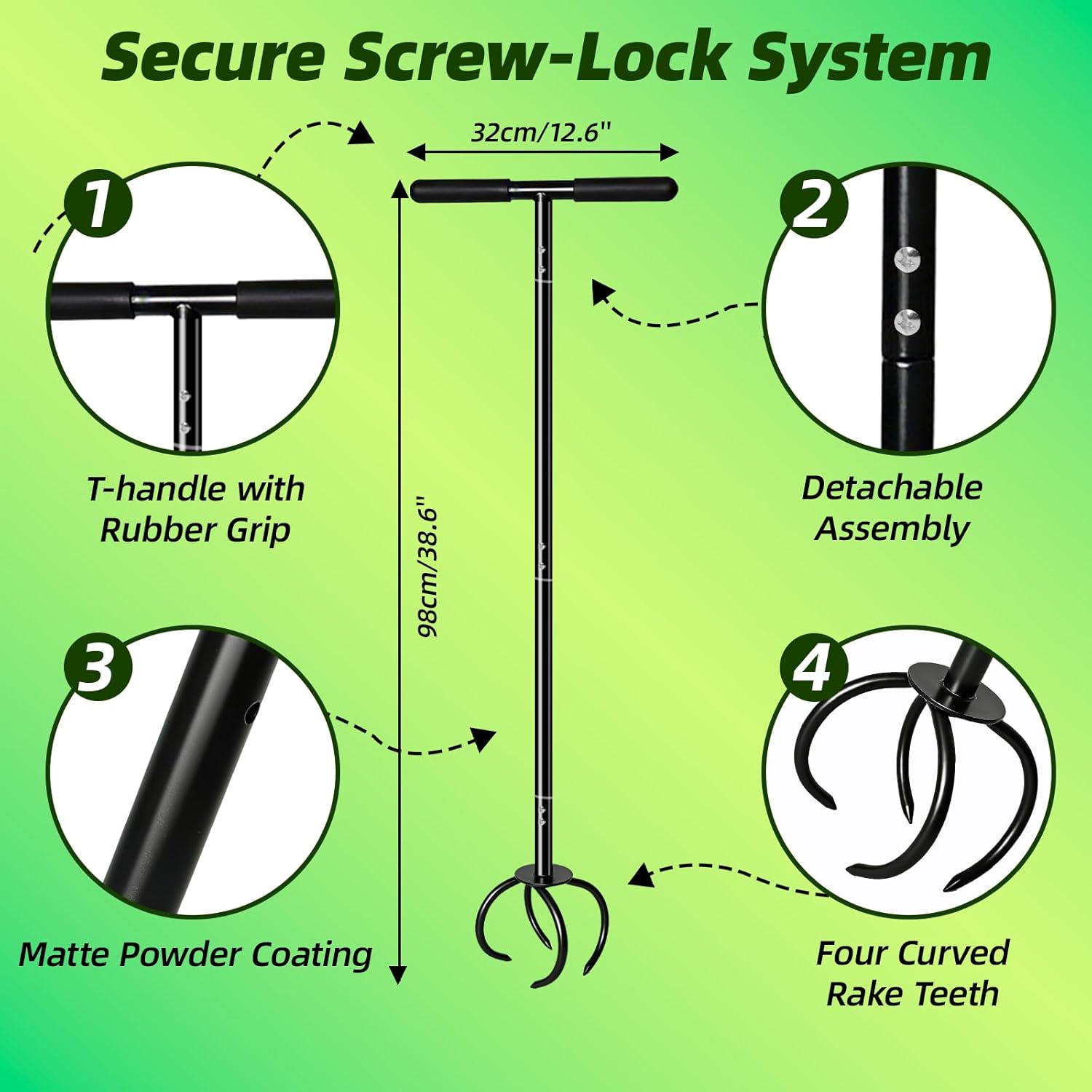
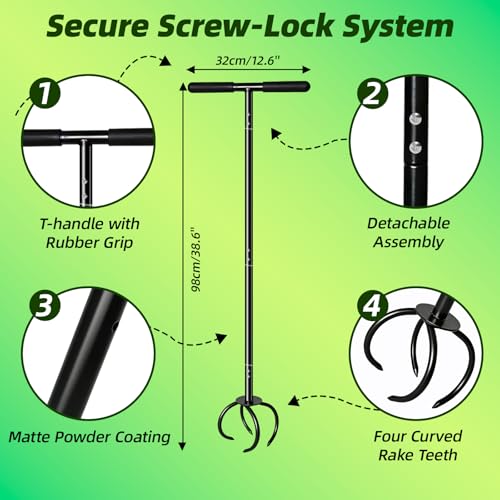
| Item Dimensions (D x W x H) | 5.3″ x 12.6″ x 38.6″ |
| Ideal For | Hard Soil, Clay, Raised Beds, Vegetable & Flower Gardens |
Design and Build
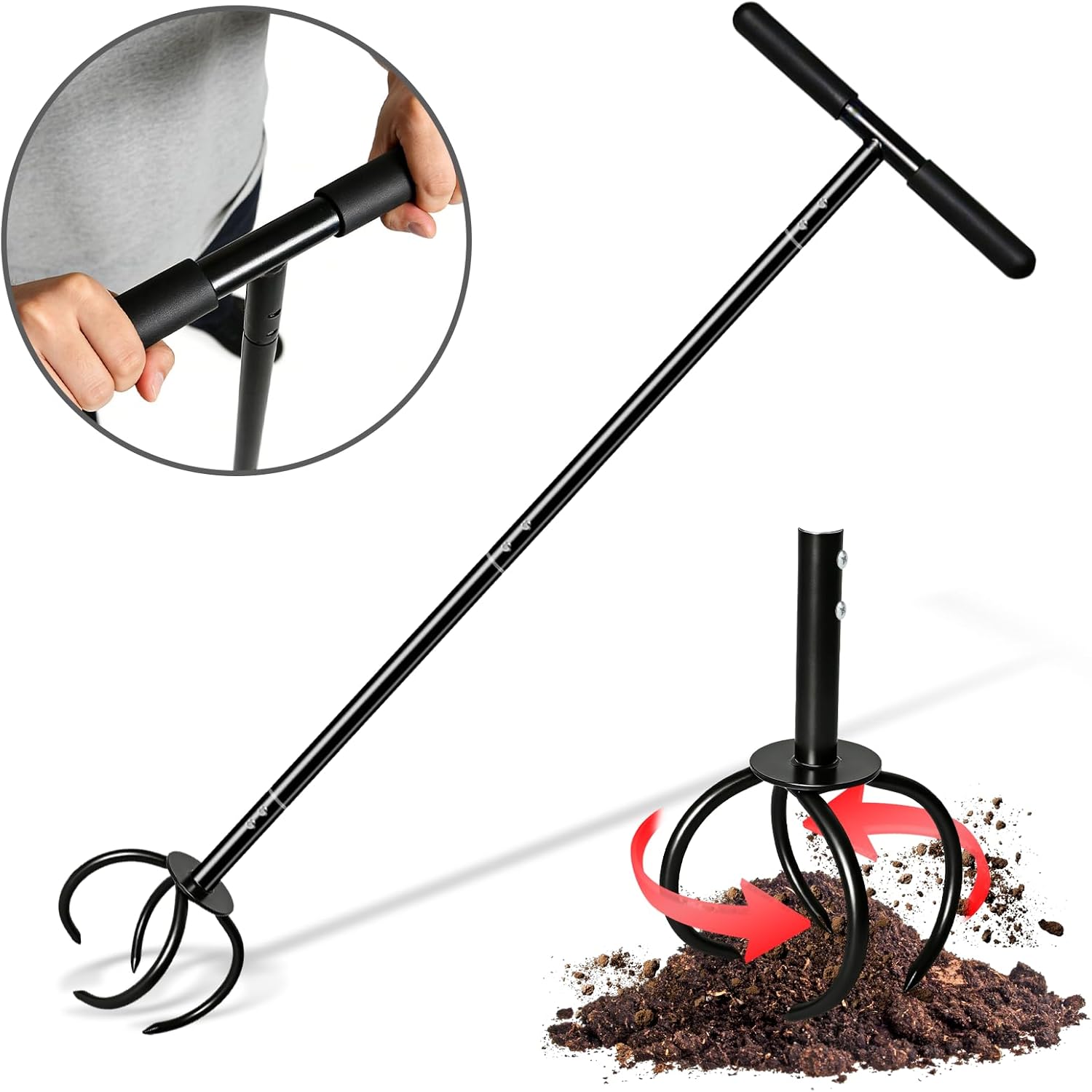
The Amorest AMO-FTQ-HS-1P is defined by a utilitarian design centered on durability and user ergonomics. Its core component is a set of four sharpened, curved steel tines engineered to penetrate compacted earth. These tines are attached to a central shaft that leads to a long, straight handle, creating the classic “twist garden claw” form factor. The overall height when assembled allows an average adult to operate the tool while standing fully upright.
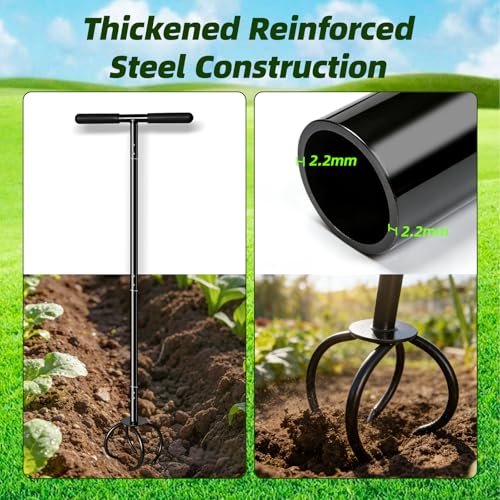
Build quality is highlighted by the use of reinforced thick steel, as stated by the manufacturer. A rust-resistant powder-coated finish is applied to protect the metal components from moisture and soil exposure, aiming to ensure longevity across gardening seasons. The construction is described as heavy-duty, built to withstand repeated twisting force in dense soil without bending. The tool arrives requiring assembly, which is noted to be a simple process.
Performance and Features
Soil Penetration and Loosening
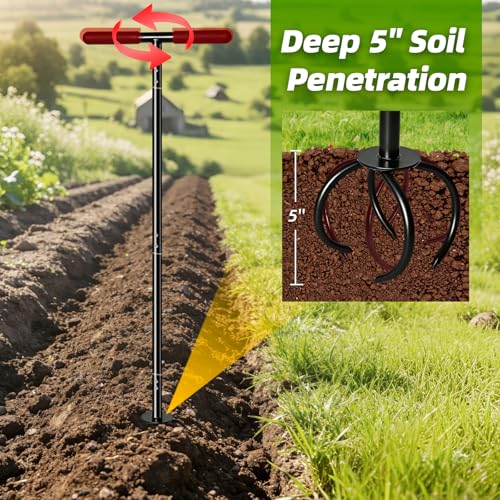
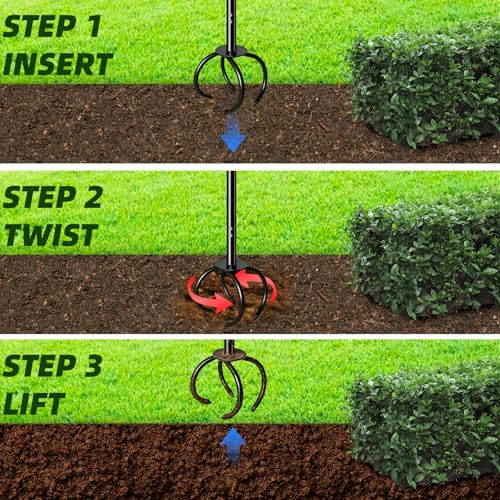
The primary performance claim for this hand tiller is its ability to break hard and compacted soil with less effort. The four sharpened tines are designed to dig deep into challenging substrates like clay and neglected garden beds. By applying downward pressure and a twisting motion, the tines are intended to fracture the soil structure, loosen it for planting, and improve drainage. This manual process is inherently physical but is positioned as an effective alternative to powered tools for targeted areas.
Ergonomic Operation
A key feature is the extended long handle. This design aims to protect the user’s back by minimizing the need to bend over during use. Cultivating from a standing position can significantly reduce back strain, making the tool a consideration for seniors or anyone with mobility concerns. This ergonomic benefit is specifically highlighted for working larger vegetable or flower beds where prolonged kneeling or stooping would be uncomfortable.
Versatility in Garden Tasks
The manufacturer positions the AMO-FTQ-HS-1P as a multi-purpose tool. Beyond basic tilling, it is suggested for use as a soil cultivator to mix in compost, a lawn aerator to puncture soil for air and water, a garden claw for general soil loosening, and a tool for weeding. This versatility is centered on the fundamental action of its tines disturbing and turning the soil in various contexts, from preparing raised beds to improving root growth in established plantings.
Application Scope
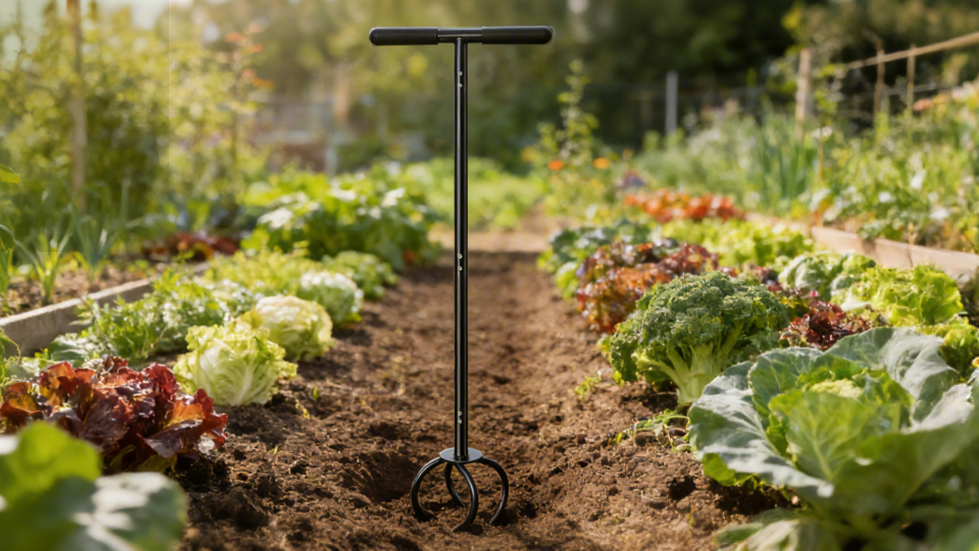
The tool is explicitly designed for use in confined or organized garden spaces. Its form factor makes it suitable for raised beds, vegetable gardens, flower beds, and backyard landscaping areas where bulky, powered rotary tillers would be difficult to maneuver or are simply overkill. It is a tool for precision soil preparation and maintenance rather than for breaking new, large expanses of ground.
Maintenance and Running Costs
As a purely mechanical tool with no engine, battery, or motor, the running costs for the Amorest hand tiller are virtually non-existent. There is no fuel to purchase, no batteries to charge or replace, and no electrical components that could fail. The primary maintenance involves basic care to preserve its physical structure.
After use, cleaning soil off the tines and shaft is recommended to prevent accelerated corrosion, though the powder-coated finish provides a layer of rust resistance. The tool should be stored in a dry place. Since it is constructed from thick steel, the tines are not described as replaceable or sharpenable by the user in the provided data; they are built as a permanent part of the assembly. Long-term durability hinges on the integrity of the steel and the powder coating resisting wear, bending, and rust. The manufacturer describes it as built for repeated use and dependable for every season, suggesting an expectation of longevity with proper care.
What Owners Say
Owner feedback, as reflected in the product’s rating distribution, is overwhelmingly positive. A significant majority of reviews are at the highest rating level, with the remainder being mostly positive. This indicates strong user satisfaction with the product’s performance relative to expectations. While specific review excerpts are not provided in the data, the high aggregate rating suggests that owners find it effective for its intended purposes, such as breaking up tough soil and offering a comfortable, back-saving design. The absence of lower-tier ratings in the distribution implies minimal widespread issues with defects or performance failures among reporting users.
Pros and Cons
Pros
- Four sharpened tines effectively break up compacted soil and clay
- Long handle design reduces bending and back strain
- Versatile for tilling, aerating, cultivating, and weeding
- Powder-coated steel construction resists rust
- No power source required—quiet and always ready
- Easy to assemble and simple to maintain
Cons
- Requires significant physical effort for very dense clay soil
- Manual operation is slower than powered tillers for large areas
- Effectiveness is limited by user strength and soil condition
- Not suitable for breaking new ground over extensive plots
Who Should Buy It (and Who Should Skip It)
The Amorest AMO-FTQ-HS-1P is an excellent fit for gardeners with raised beds, established vegetable plots, or perennial flower beds that need seasonal cultivation. It’s ideal for those who prefer a quiet, low-maintenance tool and want to avoid the hassle of engine maintenance or battery charging. Seniors or individuals with back concerns will appreciate the upright operating position. It’s also a sensible choice for small-scale urban or suburban gardeners where storage space is limited and powered equipment is impractical.
This tool is not the best choice for everyone. Gardeners needing to cultivate very large areas, such as a new full-sized vegetable plot from untilled sod or hardpan, will find the manual process prohibitively slow and laborious. Those with significant physical limitations may still struggle with the twisting force required for hard soil. If you are looking for a tool for primary tilling of large spaces, you should consider a powered garden tiller or a gas-powered model for greater power and coverage.
Final Verdict
The Amorest AMO-FTQ-HS-1P Heavy Duty Hand Tiller fulfills a specific niche in the garden tool arsenal with competence. It is a well-built, manually-powered cultivator that excels at its core task: loosening and aerating soil in confined, prepared garden spaces like raised beds and vegetable gardens. Its ergonomic long handle is a genuine benefit, transforming a typically back-straining chore into a more manageable standing activity. For targeted soil preparation, mixing in amendments, or light weeding, it is a versatile and reliable implement.
Potential buyers must have realistic expectations about its scope. It is not a replacement for a powered tiller for large-scale projects. Its effectiveness is directly tied to user effort and soil conditions. However, for its intended use—managing compacted soil in defined garden areas without noise, fumes, or complex maintenance—it represents a solid value. It stands as a recommended tool for the thoughtful gardener who needs a durable, manual solution for routine soil care, fitting well within the broader category of cultivators and tillers.
FAQs
How does this hand tiller work on hard clay soil?
The tool is specifically designed for hard and compacted soils like clay. The four sharpened, curved steel tines concentrate force to penetrate the dense material. Using a stepping and twisting motion, you drive the tines into the ground and then twist the handle to fracture and loosen the soil structure. While effective, it does require considerable physical effort in very dense clay compared to softer soils.
Is the Amorest hand tiller good for seniors or people with back problems?
Yes, the long handle design is a key feature for this demographic. It allows the user to operate the tool while standing fully upright, significantly reducing the need to bend over. This minimizes back strain and makes gardening more accessible for seniors or those with mobility issues, provided they have the upper body strength to perform the twisting action.
Can I use this tool to aerate my lawn?
The manufacturer lists lawn aeration as one of its functions. The sharp tines can be pushed into lawn soil to create holes that allow air, water, and nutrients to reach grass roots. For small lawns or spot aeration, it can be suitable. For larger lawns, a dedicated lawn aerator, either manual or powered, would be more efficient for covering substantial area.
What is the main advantage of a manual tiller over a powered one?
The primary advantages are simplicity, quiet operation, and low maintenance. There is no engine to start, no fuel to mix or buy, no batteries to charge, and no cords to manage. It is always ready to use, produces no emissions, and is typically lighter and easier to store than powered tillers. It is a cost-effective and environmentally friendly option for small-scale, precise gardening tasks.
About the author
Editor, Garden Hand Tools. Based in Phoenix, Arizona. Maria grows vegetables and native desert plants in a small backyard and cares most about tools that stay sharp and comfortable in the heat. She writes about pruners, loppers, shovels, and everyday hand tools.