
Nohovu NH_03 Review: Heavy-Duty Digging with Less Back Strain
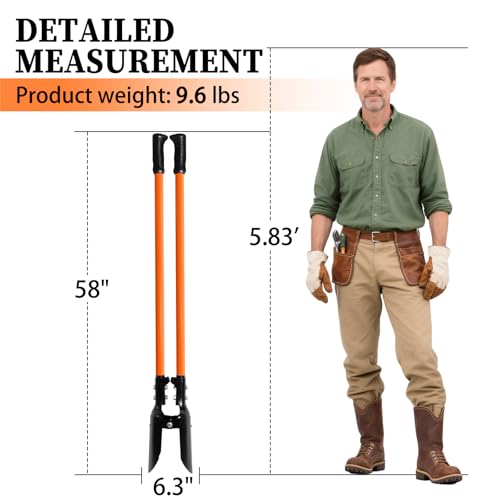
The Nohovu NH_03 is a manual post hole digger built for tough soil, featuring sharp carbon steel blades and durable fiberglass handles. Its 58-inch design aims to reduce bending and back strain during use.
 By Jake Lindgren
Updated November 1, 2026
Quick Verdict
8.9/10This manual post hole digger uses carbon steel blades and thick fiberglass handles to handle tough soil more efficiently. Its 58-inch length also helps reduce bending, which makes it a practical pick for fence posts, planting, and mailbox installation.
What we like
- Sharp carbon steel blades are designed to dig through hard and clay soil.
- Thickened fiberglass handles add durability and a non-slip grip.
- 4-screw construction is built for a solid, reliable connection.
- 58-inch length helps reduce back strain from bending.
Watch out for
- At 9.6 pounds, it may feel heavy for some users.
For homeowners tackling fencing projects, planting trees, or installing mailboxes, digging clean, deep holes can be a laborious chore. A manual post hole digger is a classic tool for these tasks, but not all are built to handle the rigors of dense or clay-heavy soil. The Nohovu NH_03 enters this space with a focus on heavy-duty construction and user comfort. This review analyzes its specifications, design, and intended use to determine if it’s a practical addition to your garden tool shed.

The Nohovu Post Hole Digger, Heavy Duty, is a manually operated tool designed for efficient digging in challenging ground conditions. It is positioned as a solution for adults needing to dig holes for building fences, planting, and other landscaping projects. Based on its listed specifications, this tool combines sharp blades with a long handle to potentially make strenuous digging tasks more manageable. In short, it’s a tool built for those who need to dig through hard soil without excessive bending.
Prime Nohovu NH_03 Post Hole Digger


As an Amazon Associate we earn from qualifying purchases. Product prices and availability are accurate as of the date/time indicated.
Nohovu NH_03 at a Glance
| Specification | Detail |
|---|---|
| Model Name | Nohovu NH_03 |
| Total Length | 58 inches |
| Item Weight | 9.6 pounds |
| Blade Material | High Carbon Steel |
| Handle Material | Thickened Fiberglass |
| Grip Type | Non-Slip, Ergonomic |
| Construction | 4-Screw Connection |
| Primary Use Cases | Building fences, digging holes, planting, installing mailboxes |
| Style | Classic (Orange & Black) |
| Best For | Hard and clay soil |
Design and Build
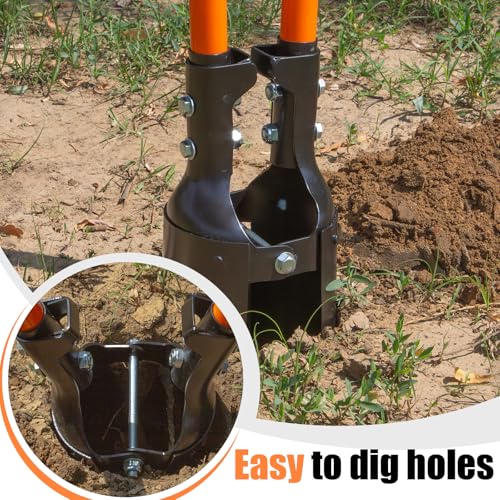
The Nohovu NH_03 is built around a philosophy of sturdy, reliable construction. The core components are the blades and the handles, which are designed to withstand demanding use. According to the manufacturer, the connection between these two critical parts is a focal point of the design, aiming to prevent failure during operation.
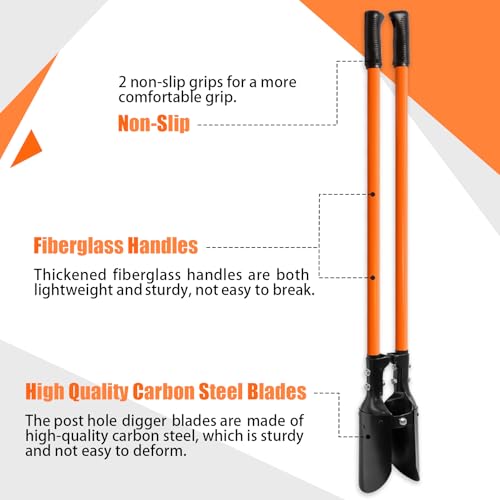
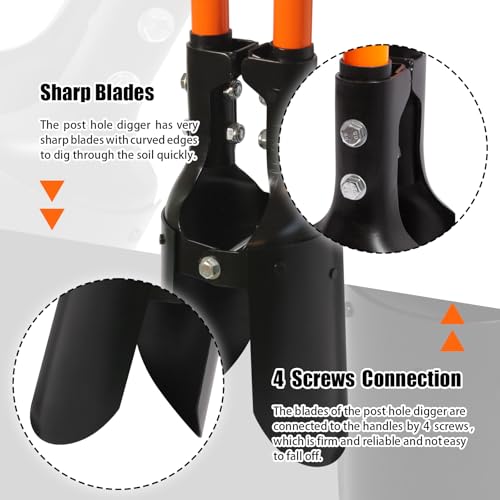
The blades are crafted from high-quality carbon steel, a material chosen for its strength and resistance to deformation. The manufacturer states the blades are very sharp and feature curved edges, a design intended to aid in cutting through compacted earth more efficiently than a straight edge might. The handles are made from thickened fiberglass, which is promoted as being sturdy, durable, and resistant to breaking. They are fitted with non-slip grips, which are crucial for maintaining control, especially when the tool becomes muddy. The handles and blades are joined directly by four high-quality screws, a method the manufacturer describes as solid and reliable, even in harsh environments. The overall length of 58 inches is a key ergonomic feature, designed to reduce the user’s bending angle and, consequently, the pressure on the lower back during the digging motion.
Performance and Features
Blade Performance in Tough Soil
The primary performance claim for the Nohovu NH_03 centers on its ability to handle difficult soil types. The sharp, carbon steel blades with curved edges are specifically noted for digging quickly in hard and clay soil. This suggests the tool is engineered not just for loose topsoil but for the more challenging layers beneath, which can stall lesser tools. The design aims to improve gardening efficiency by reducing the effort and time required to create each hole.
Ergonomic Handle and Grip
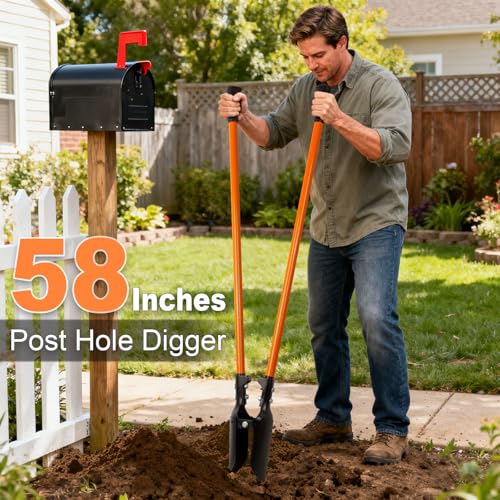
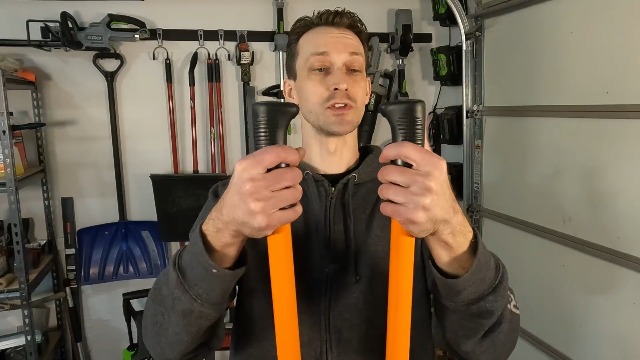
Performance is not solely about cutting power; user comfort and control are equally important for a manual tool. The 58-inch fiberglass handles provide greater leverage and allow the user to stand more upright. This can significantly reduce fatigue and back strain over a long digging session. The non-slip grips enhance safety and control, ensuring the user’s hands are less likely to slip, even when applying substantial force or when the grips are wet. This combination of length and secure grip is a key feature for adult users.
Solid Construction for Reliability
A post hole digger undergoes significant stress as it is forced into the ground and its handles are pulled apart to lift soil. The Nohovu’s 4-screw construction connecting the blades to the handles is highlighted as a feature that ensures reliability. This direct, bolted connection is intended to prevent the wobbling or loosening that can occur with riveted or weaker joints, contributing to the tool’s overall heavy-duty designation.
Maintenance and Running Costs
As a purely manual tool with no motor, batteries, or filters, the Nohovu NH_03 has minimal ongoing running costs. Maintenance primarily involves caring for the blades and ensuring the mechanical connection remains tight. The carbon steel blades should be cleaned of mud and debris after use to prevent rust and maintain their sharpness. Periodically checking the four connecting screws for tightness is advisable, as vibration from use could potentially loosen them over time. The fiberglass handles and non-slip grips likely require only basic cleaning. The manufacturer does not list specific lubrication requirements or blade replacement procedures, so general tool care principles apply. For more insights on maintaining similar manual digging tools, our guide on the best hand post hole digger offers useful tips.
What Owners Say
At the time of this analysis, there are no detailed buyer review excerpts available for the Nohovu NH_03. The product holds a high average rating, but this score is not yet based on a substantial volume of user feedback. Therefore, long-term durability reports, hands-on experiences with specific soil conditions, and nuanced feedback on comfort during extended use are not available for summary. Prospective buyers may want to monitor for emerging user reviews that discuss real-world performance over multiple projects.
Pros and Cons
Pros
- Sharp carbon steel blades designed for hard and clay soil
- Thickened fiberglass handles for added durability
- Non-slip, ergonomic grips for better control
- 58-inch length helps reduce back strain from bending
- Solid 4-screw construction for reliable connection
- Suitable for a variety of digging tasks (fences, planting, mailboxes)
Cons
- At 9.6 pounds, it may feel heavy for some users
- Lack of extensive user reviews for real-world verification
- Manual operation requires significant physical effort for many holes
- No specific maintenance instructions listed by the manufacturer
Who Should Buy It (and Who Should Skip It)
The Nohovu NH_03 is ideally suited for an adult homeowner or landscaper who has periodic projects involving digging in tough soil. If you’re installing a fence line, planting several trees or shrubs, or setting sturdy posts for a mailbox or gate, this tool’s heavy-duty construction and long handles are significant benefits. It’s a good fit for those who prefer a reliable manual tool and want to minimize back strain during use. For broader comparisons, you can explore our curated list of the best post hole digger options across different types.
This tool may not be the best choice for everyone. Individuals with strength or mobility limitations might find the 9.6-pound weight cumbersome over time. For those who need to dig a very large number of holes, a powered auger might be a more efficient, albeit more expensive, investment. Furthermore, if your soil is exceptionally rocky or filled with large roots, any manual digger, including this one, will face significant challenges. For smaller, occasional tasks in soft soil, a lighter, less expensive model could suffice.
Final Verdict
The Nohovu NH_03 Post Hole Digger presents a specification-driven case for being a capable manual tool. Its design choices—sharp carbon steel blades, thickened fiberglass handles, a long shaft, and a bolted connection—are all aligned with tackling demanding digging work while prioritizing user ergonomics. On paper, it addresses common pain points like blade dulling, handle breakage, and back fatigue effectively.
While the high rating is promising, the current lack of detailed owner feedback means its long-term durability and performance in varied real-world conditions are not yet fully documented. However, based on its construction and features, the Nohovu NH_03 appears to be a well-considered option for the serious DIYer or gardener facing tough soil. It stands as a potentially reliable and back-friendly choice within the category of post hole diggers. As with any tool, matching its capabilities and weight to your specific needs and physical capacity is key to a satisfactory purchase.
FAQs
What is the blade material on the Nohovu NH_03?
The blades are made from high-quality carbon steel. The manufacturer states this material is sturdy, durable, and not easy to deform. The blades are also described as being very sharp with curved edges to aid in digging through hard soil.
How long are the handles and what are they made of?
The handles are made of thickened fiberglass and contribute to a total tool length of 58 inches. The fiberglass is promoted for its strength and resistance to breaking. The handles feature non-slip grips for better control during use.
Is this digger suitable for clay soil?
Yes, one of the key performance claims for the Nohovu NH_03 is its ability to dig through hard and clay soil quickly. The sharp, curved carbon steel blades are specifically designed for this purpose to improve gardening efficiency in challenging conditions.
What kind of maintenance does this tool require?
The manufacturer does not provide specific maintenance instructions. General care for a tool of this type would include cleaning the blades after use to prevent rust, periodically checking the four connecting screws for tightness, and wiping down the handles and grips. It has no motor or battery, so there are no associated costs for those components.
Featured In
About the author
Contributor, Seasonal & Snow Tools. Based in Duluth, Minnesota. Jake has cleared long Minnesota driveways every winter for most of his adult life and has strong opinions about shovels and pushers. He writes about snow removal and cold-weather yard work.