
Hasanen 850CFM Leaf Blower Review: Power for Big Jobs
The Hasanen 850CFM Leaf Blower is a commercial-style backpack gas blower aimed at demanding yard cleanup and snow clearing. It stands out for sustained power, a large fuel tank, and comfort-focused controls, but its noise, weight, and 2-stroke upkeep will not suit everyone.
 By Daniel Whitaker
Updated October 27, 2026
Quick Verdict
8.3/10This commercial-grade backpack blower from HASANEN is built for extended, demanding yard work. Its potent 63cc engine and large fuel tank provide sustained power for tasks like leaf removal and even snow clearing. The design prioritizes operator comfort with an adjustable harness and a constant speed switch for easier handling.
What we like
- Powerful 63cc 2-stroke engine suitable for heavy-duty commercial use
- Large 1.8L fuel tank reduces refueling interruptions
- Backpack design with adjustable harness for improved user comfort during long sessions
- Constant speed switch allows for hands-free operation at a set throttle
- Flame-retardant air outlet offers wide 120° vertical and 135° horizontal adjustment for versatility
Watch out for
- Noise level is rated at 101 dB, which is quite loud
- Uses a 2-stroke engine requiring fuel-oil mix, which can be less convenient and more polluting than 4-stroke
- Weighs 19.7 lbs (10 kg), which is on the heavier side for backpack blowers
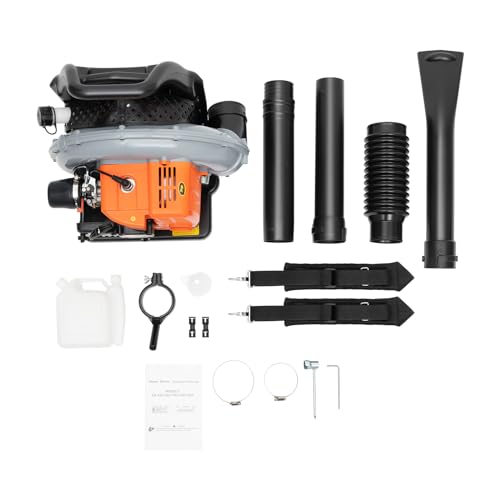
The Hasanen 850CFM Leaf Blower is a backpack gas blower designed for heavy yard cleanup, commercial use, and other demanding outdoor tasks. With a 63cc 2-stroke engine, a backpack form factor, and a large fuel tank, it is built for users who want strong airflow and longer run time without constant refueling.

It is a good fit for property owners and crews who need a blower that can handle leaves, sand, hard gravel, and even snow, while offering a harness-style carry setup for longer sessions. Bottom line: this is a power-first blower with useful comfort features, but it asks you to accept gas-engine noise, 2-stroke maintenance, and a heavier build.
HASANEN 850CFM 63CC Backpack Gas Leaf Blower


As an Amazon Associate we earn from qualifying purchases. Product prices and availability are accurate as of the date/time indicated.
Hasanen 850CFM Leaf Blower at a Glance
| Brand | HASANEN |
|---|---|
| Model | 850CFM Leaf Blower |
| Power source | Gas powered |
| Engine | 63CC 2-stroke |
| Power output | 2.7kW |
| Maximum speed | 6800 rpm |
| Air speed | 210 miles_per_hour |
| Fuel tank | 1.8L |
| Weight | 19.7 lbs |
| Noise level | 101 dB |
Design and Build
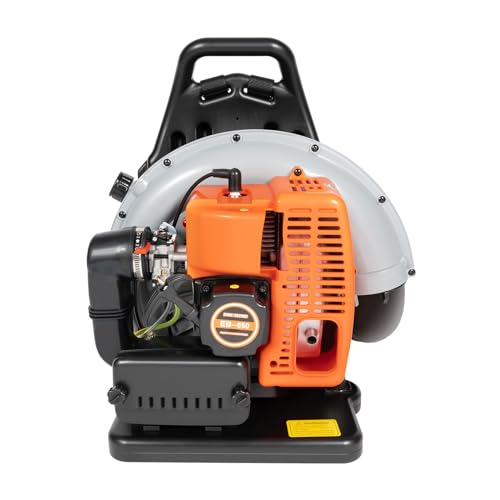
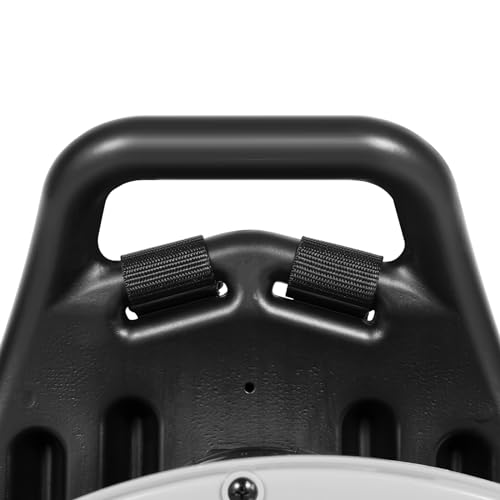
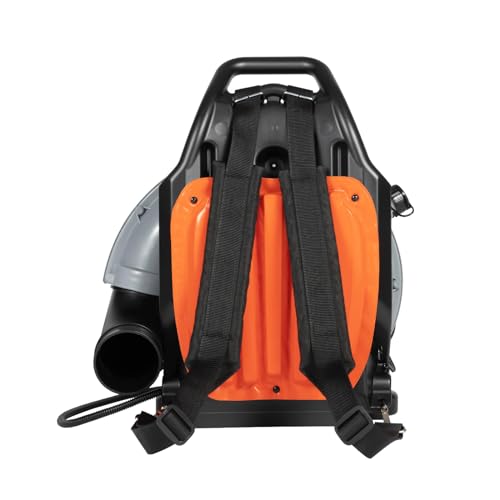
The Hasanen 850CFM Leaf Blower follows a backpack design, which is the right format for a machine meant to deliver sustained output over larger areas. Its adjustable and breathable straps are meant to improve comfort during longer sessions, and the thickened backrest is designed to help isolate machine heat from your body. For a blower intended for commercial use, those are practical choices that matter more than decorative styling.
The manufacturer says the housing uses polypropylene, which it describes as heat resistant, corrosion resistant, and impact resistant. The blower also includes a flame-retardant air outlet, and the design emphasizes a top-handle style for easier carrying when you are moving the unit around. At 19.7 lbs, it is not especially light for a backpack blower, so the harness and backrest are important parts of the design rather than optional extras.
Dimensions are listed, but the more useful takeaway is that this is a substantial tool built for outdoor work rather than quick, occasional tidy-ups. If you want a compact cordless machine, this is not that kind of product. If you want a gas backpack blower with a serious airflow focus, the layout and materials are aimed in that direction.
Performance and Features
Engine output and airflow
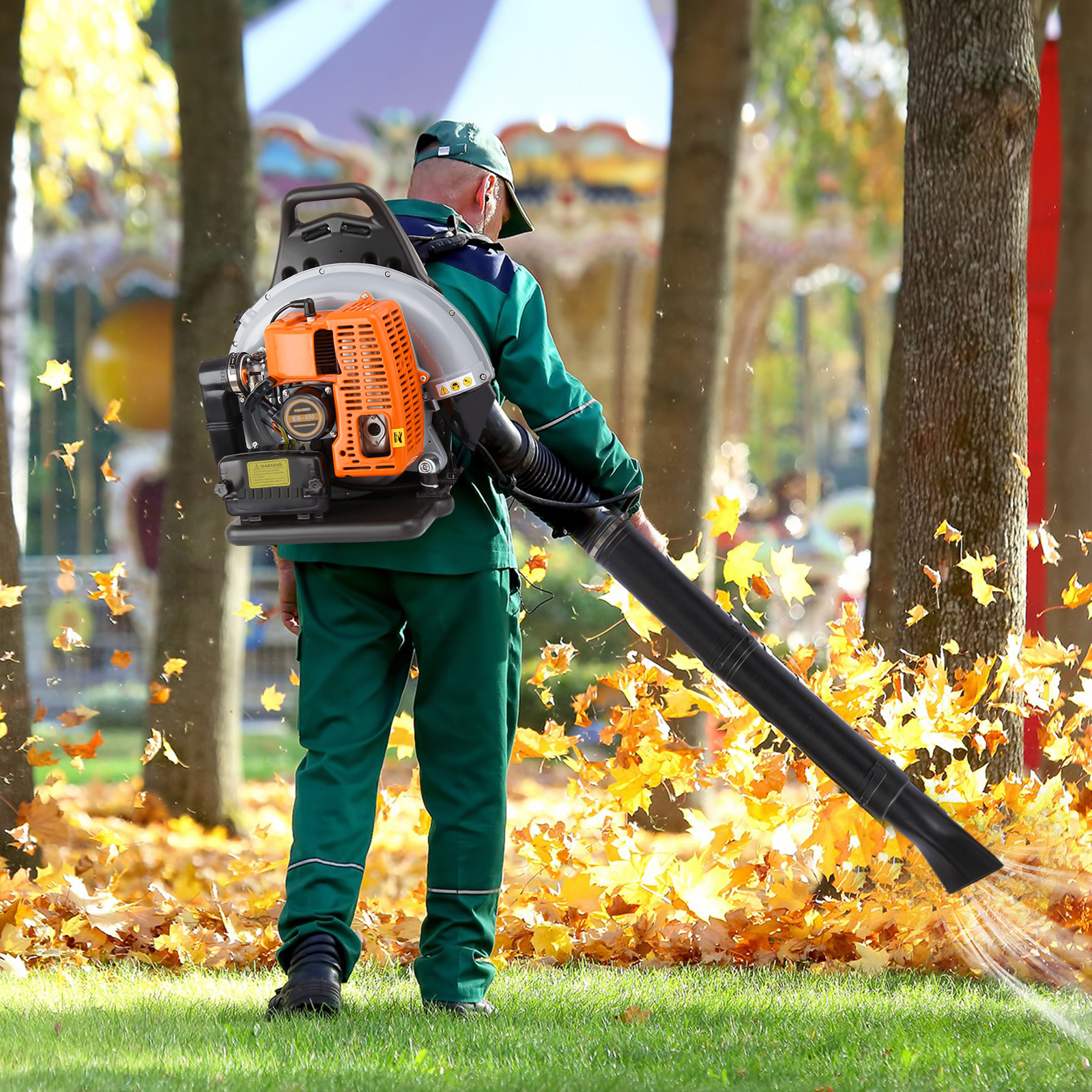
The core of the machine is its 63cc two-stroke engine, rated at 2.7kW, with a maximum speed listed at 6800 rpm and air speed listed at 210 miles per hour. The manufacturer says it is capable of moving leaves, sand, hard gravel, and snow, which tells you the blower is positioned as more than a basic leaf cleanup tool. For large driveways, yards, and job sites, that kind of power can be more useful than a lighter, lower-output design.
One thing to keep in mind is that the brand presents the product as commercial-grade, and the specifications support that positioning. The combination of high engine displacement and backpack carry style points toward long sessions and larger cleanup areas, not just a quick pass across a patio. The unit is also marketed as an 850CFM model, which reinforces the emphasis on strong clearing capability.
Coverage and directional control
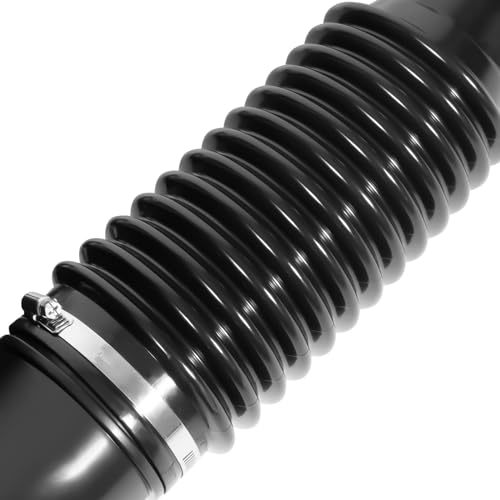
Coverage is one of the more interesting parts of this blower. The long flame-retardant outlet supports up and down 120 degree adjustment and left to right 135 degree adjustment, and the hose at the interface also helps direct airflow where you need it. In practice, that kind of articulation should make it easier to sweep debris along edges, around obstacles, and across wider spaces without constantly repositioning your body.
That flexibility matters because blower performance is not only about raw power. A strong stream that is difficult to aim can become tiring, especially on larger properties. Here, the adjustable outlet is one of the product’s more useful design touches, since it adds control to the otherwise aggressive output.
Controls and convenience
The switch and accelerator sit on the same control handle, which allows one-handed control. The blower also includes a constant speed switch, so you do not have to keep pressing the valve to maintain output. That is a helpful feature for longer cleaning sessions because it reduces hand fatigue and makes the tool easier to manage.
The machine also uses an oil bubble and a visible fuel delivery pipe to make refueling easier. Those are not flashy features, but they are practical ones. On a gas blower, anything that reduces setup confusion or makes routine operation smoother is worth noting.
Safety and operating approach
Safety features include air-cooled operation, multiple heat dissipation holes, and one-click shutdown. The manufacturer also notes that the product does not contain batteries, which removes battery storage concerns and battery-related spontaneous combustion risk from the equation. For users who prefer gas equipment and want simple storage after use, that may be appealing.
That said, the blower’s safety and comfort story is tied closely to its gas-powered nature. It is not a low-noise or low-maintenance machine, and the 101 dB noise level is a reminder that hearing protection is a sensible consideration during use. The feature set helps, but it does not change the basic profile of a high-output gas blower.
Maintenance and Running Costs
Because this is a 2-stroke gas blower, upkeep is different from a battery model or a plug-in electric blower. The manufacturer notes that the machine does not contain batteries, but it does require fuel and oil mixing, which adds a step to refueling and makes operation less convenient than a single-fuel system. If you are used to 2-stroke tools, that will feel normal. If you are not, it is something to factor into the ownership experience.
The product description does not list blade details, and this is a blower rather than a cutting tool, so there are no blades to maintain in the usual sense. The main running considerations are fuel mix, fuel storage, and routine care typical of a gas engine. Beyond that, the available information does not provide a detailed maintenance schedule, so it is best to assume standard gas-tool upkeep rather than anything unusually demanding or unusually simple.
Running costs will also be influenced by how often you use it and for how long. The 1.8L fuel tank is a practical advantage because it reduces interruptions, but it also means the unit is built around combustion fuel rather than rechargeable power. For shoppers comparing operating expense, the important point is that this is a higher-output gas machine with the usual tradeoffs that come with that category.
What Owners Say
The overall rating is positive, and the rating distribution suggests that most buyers are satisfied, with the majority of ratings in the top tier. At the same time, the presence of a meaningful share of lower ratings shows that the experience is not uniformly perfect. That pattern often appears with powerful gas tools, where strong performance can be offset by noise, weight, or setup expectations.
No buyer review excerpts were provided, so the clearest signals come from the aggregate rating pattern and the product’s feature set. The strongest appeal appears to be power and endurance, while the likely sticking points are the loud operation, 2-stroke fuel requirements, and heavier carry weight. In short, owner sentiment looks favorable overall, but this is still a blower with clear tradeoffs.
Pros and Cons
Pros
- Strong 63cc 2-stroke engine
- Large 1.8L fuel tank
- Backpack harness for longer sessions
- Constant speed switch
- Wide-angle adjustable outlet
- Suitable for heavy-duty cleanup
Cons
- Very loud at 101 dB
- Requires fuel-oil mix
- Heavier than some alternatives
- Not battery powered
- Gas upkeep is less convenient
Who Should Buy It (and Who Should Skip It)
Buy this blower if you need a commercial-style backpack model with strong airflow, a long-running fuel tank, and a design that is meant to reduce fatigue during extended cleanup. It makes sense for larger yards, tougher debris, and users who value gas-powered output over quiet operation or low-maintenance convenience. It is especially relevant for people who want one tool that can handle more than simple leaf pickup.
Skip it if you want a quieter machine, a lighter blower, or the simplicity of battery power. The 101 dB noise level, 2-stroke fuel requirements, and 19.7 lb weight will be dealbreakers for some users. If your needs are modest or your cleanup areas are small, a less powerful blower may be a better fit.
Final Verdict
The Hasanen 850CFM Leaf Blower is a straightforward power tool with a clear identity: it is built for strong, extended blowing performance rather than light-duty convenience. Its 63cc engine, large fuel tank, adjustable outlet, and backpack harness make it a practical choice for bigger cleanup jobs and users who want to work for longer stretches with fewer interruptions.
It is not the best choice for everyone, but that is not really its goal. This is a loud, gas-powered, 2-stroke backpack blower with the kind of feature set that suits demanding outdoor work. If you can live with the tradeoffs, it offers a compelling mix of power, coverage, and comfort-oriented handling.
FAQs
Is the Hasanen 850CFM Leaf Blower good for large yards?
Yes, it is well suited to larger areas because it combines a 63cc engine with a backpack format and a large fuel tank. Those features point toward longer sessions and more sustained cleanup. The adjustable outlet can also help direct airflow across wider spaces.
Does this blower work for snow removal?
The manufacturer says it can quickly remove snow as well as leaves, sand, and hard gravel. That makes it more versatile than a basic yard blower. As always, actual results will depend on the conditions and the type of debris you are moving.
Is it easy to carry?
It is designed as a backpack blower with adjustable and breathable straps, plus a thickened backrest for added comfort. However, the unit weighs 19.7 lbs, so it is not especially light. The carry setup helps, but it is still a substantial tool.
What kind of upkeep does it require?
Because it is a 2-stroke gas blower, it requires fuel-oil mix rather than battery charging. The available information does not provide a detailed maintenance schedule, but standard gas-tool upkeep applies. If you prefer minimal maintenance, this type of machine may feel more involved than an electric alternative.
Featured In
- The 5 Best Lightweight Backpack Gas Leaf Blower of 2026
- The 4 Best Gasoline Powered Leaf Blower of 2026
- The 5 Best Leaf Blower Backpack of 2026
About the author
Senior Editor, Power Equipment. Based in Boise, Idaho. Daniel has heated his home with firewood for over fifteen years and spends most of his weekends cutting, splitting, and sharpening. He covers chainsaws, saws, and the gear that keeps them running safely.