
The 5 Best Chainsaw Mills of 2026
Choosing the right chainsaw mill turns your logs into valuable lumber. Our 2026 review of 5 top models helps you select the best one for your projects.
 By Rachel Thompson
Updated October 27, 2026
For woodworkers, homesteaders, and DIY enthusiasts looking to turn logs into valuable lumber, a chainsaw mill is a game-changing piece of equipment. These powerful attachments transform a standard chainsaw into a portable sawmill, enabling you to mill your own boards, beams, and slabs directly from fallen trees or logs on your property. In November 2026, the market offers a diverse range of options, from simple guide rail kits to robust, high-production mills. This guide cuts through the noise to present the 5 best chainsaw mills available, helping you select the right tool for your projects, whether you’re building a cabin, crafting furniture, or simply processing firewood more efficiently. For more insights into powerful cutting tools, explore our guide on Chainsaws & Saws.

Choosing the best chainsaw mill involves balancing power, precision, durability, and ease of use. The ideal model must work seamlessly with your specific chainsaw while providing a stable, accurate cutting platform. We’ve analyzed 5 leading models to identify the top performers across different needs and budgets. Our review focuses on critical factors like construction materials, compatibility, cutting capacity, and setup simplicity to ensure you invest in a mill that delivers clean, straight cuts and stands up to the rigors of milling. Let’s dive into the detailed comparisons and find the perfect mill for your lumber needs.
| Award | Product | ACMS Score About LAT ScoreACMS Score is calculated based on product ratings, reviews, and sales performance to help you make informed purchasing decisions. | Price | |
|---|---|---|---|---|
| Best Budget |
Zozen Portable Chainsaw Mill for 14"-36" Bars
|
8.4/10 | $89.99 | Check price |
| Best Overall |
 Granberg G778-36 Alaskan MKIV 36-Inch Chainsaw |
8.9/10 | $280.50 | Check price |
| Best Premium |
 Granberg G777 Alaskan Small Log Chainsaw Mill |
8.8/10 | $175.00 | Check price |
| Top Rated |
 Zozen 14-36 Chainsaw Mill |
8.4/10 | $95.99 | Check price |
| Best Value |
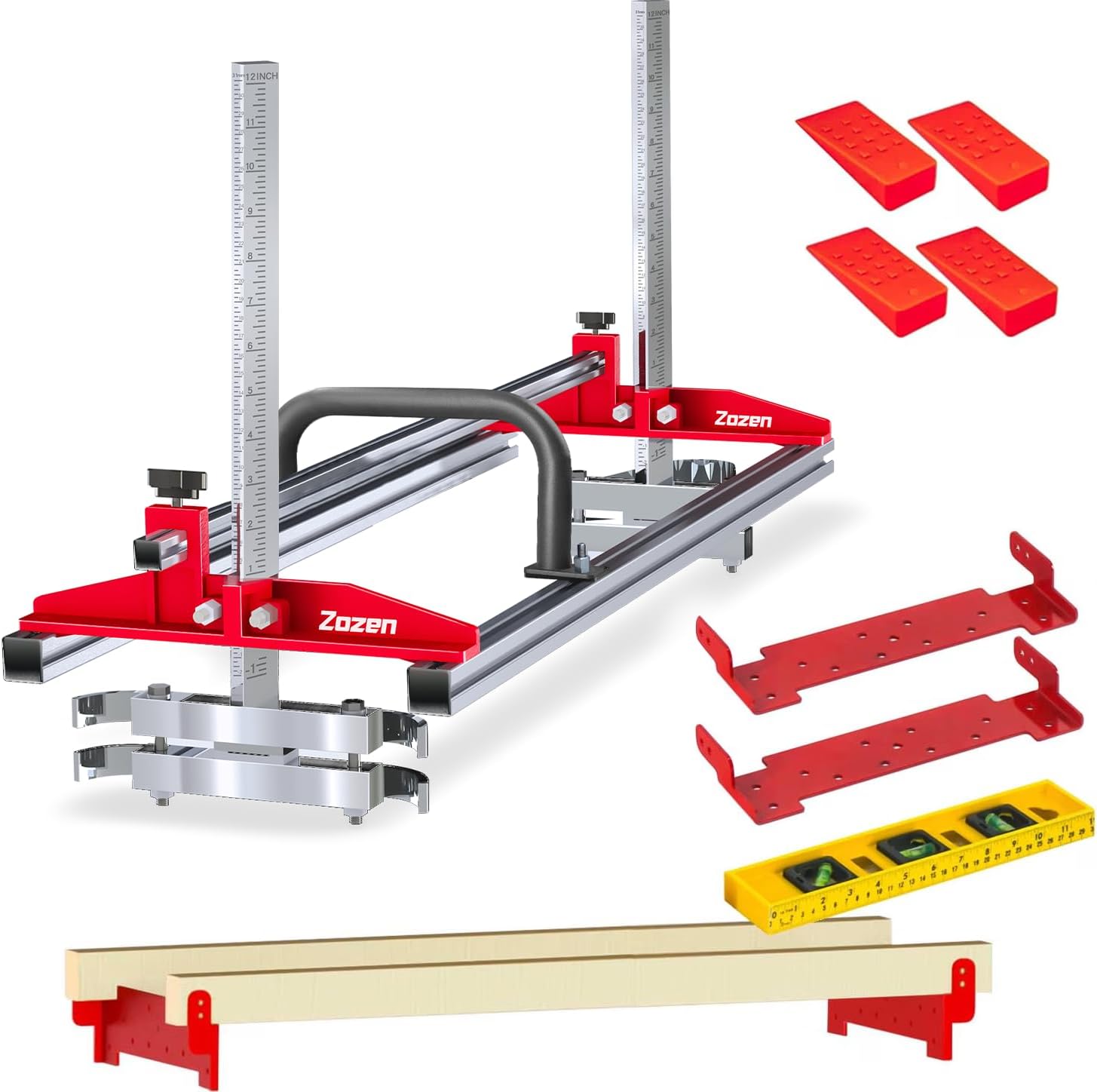 Zozen 14 to 36 Chainsaw Mill Set |
8.3/10 | $103.99 | Check price |
Zozen Portable Chainsaw Mill for 14"-36" Bars
This modular chainsaw mill uses a patented spliced construction, allowing it to be configured into three sizes for independent use or assembled for full 14" to 36" bar capacity. It's designed for portability and can mill slabs from 1/2" to 12" thick, making it a flexible option for woodworkers and builders processing logs in remote or home settings. The kit includes four felling wedges and features a dual-scale system.
Pros
- Modular, portable design configurable for three different sizes
- Wide compatibility with chainsaws from 14" to 36" bar lengths
- Adjustable milling height and width for slab thickness from 1/2" to 12"
- Includes useful accessories like four felling wedges
- Sturdy construction from aluminum alloy and steel
Cons
- Manual power source requires significant physical effort
- At 18 pounds, it may still be cumbersome for some users to transport frequently
Granberg G778-36 Alaskan MKIV 36-Inch Chainsaw
This portable Alaskan sawmill converts a standard chainsaw into a capable lumber mill, designed for creating custom boards or slabs on-site. Its aircraft-grade aluminum and steel construction prioritizes durability and stability for consistent cuts. It's a premium solution best suited for serious DIY woodworkers or outdoor builders who need to process logs where they fall.
Pros
- Robust construction from aircraft-grade aluminum and zinc-plated steel.
- Highly portable and clamps directly to a chainsaw bar without drilling.
- Versatile cutting capacity, milling lumber up to 30 inches wide.
- Engineered in the USA with a focus on precise alignment.
- High user rating (4.7 stars) based on extensive customer feedback.
Cons
- Requires a powerful chainsaw (compatible with bars up to 36 inches).
- At 18.1 pounds, it adds significant weight to the cutting setup.
- The learning curve for achieving perfectly consistent lumber thickness.
Granberg G777 Alaskan Small Log Chainsaw Mill
This portable mill attachment clamps directly to your chainsaw bar, enabling you to create lumber on-site where a tree falls. It's designed for DIYers and requires a chainsaw with at least a 50cc engine. Assembly hardware and instructions are included, promoting a straightforward setup for beginners.
Pros
- No drilling required for installation, clamps onto the bar.
- Suitable for all chainsaw makes with a solid steel bar.
- Includes assembly hardware and instruction manual.
- Enables on-site milling of lumber.
Cons
- Requires a substantial chainsaw (50cc or larger).
- Product weight listed as 1.76 ounces seems inconsistent with typical mill dimensions.
Zozen 14-36 Chainsaw Mill
Built for 14 to 36 inch chainsaw bars, this Zozen mill converts rough logs into slabs from 1/2 inch to 12 inches thick. The spliced construction can be used in three sizes or assembled as a full guide, making it practical for woodworkers who switch between small and larger milling jobs. Aluminum alloy and steel materials, a reinforced lock, ergonomic handle, and dual scales add useful adjustment and control.
Pros
- Fits chainsaw bars from 14 to 36 inches
- Adjustable milling height and width, with slab thickness from 1/2 to 12 inches
- Spliced construction can be used in three sizes or assembled as a full guide
- Aluminum alloy and steel construction
- Reinforced locking system and dual metric and imperial scales
Cons
- Needs a compatible chainsaw bar within the 14 to 36 inch range
- Full-size use requires assembly and configuration
- Longer extensions may require separately purchased splicing accessories
Zozen 14 to 36 Chainsaw Mill Set
Based on specifications and buyer feedback, this Zozen chainsaw mill kit uses a spliced design for 14 to 36 inch chainsaw bars and mills slabs from 1/2 to 12 inches thick. It suits users who need portable log milling and want included guide brackets, a level, screws, manual, and felling wedges.
Pros
- Adjustable for chainsaw bars from 14 to 36 inches
- Mills slabs from 1/2 to 12 inches thick
- Spliced construction allows use as three sizes and improves portability
- Includes guide brackets, level, screws, manual, and felling wedges
- Dual metric and imperial scale
Cons
- Requires a compatible chainsaw with a 14 to 36 inch bar
- The full kit weighs 20.8 pounds, which can add load when carrying to remote areas
Best Chainsaw Mills Buying Guide for 2026
Compatibility and Bar Length
The first and most crucial step in selecting a chainsaw mill is ensuring it is compatible with your chainsaw. Not all mills fit all saws. You must check the mill’s mounting system against your chainsaw’s model and bar length. Most mills are designed to fit a range of bar lengths, but the chainsaw’s power is equally important. A mill paired with an underpowered saw will struggle, produce wavy cuts, and overwork the engine. As a general rule, for effective milling, your chainsaw should have a displacement of at least 50cc, and a bar length that exceeds the width of the log you intend to mill. For example, to mill a 20-inch wide log, you need a bar that is at least 24-26 inches long to account for the mill’s mounting hardware and the cut itself.
Some mills offer universal mounting kits with adjustable clamps, while others may require specific adapters. Always verify the manufacturer’s compatibility list. A mill that clamps securely and evenly to your saw’s bar is essential for maintaining alignment and producing straight lumber. An incompatible or loose fit will lead to dangerous operation and ruined boards. For those using smaller saws, our review of the best chainsaws can help you find a powerful base tool.
Construction and Frame Material
The durability and stability of a chainsaw mill are directly tied to the materials used in its construction. High-quality mills are typically built from aircraft-grade aluminum or powder-coated steel. Aluminum offers an excellent strength-to-weight ratio, making the mill lighter and easier to handle without sacrificing rigidity. Steel frames are incredibly strong and resistant to flexing under heavy loads, which is vital for maintaining cut accuracy over wide slabs, but they add significant weight.
Examine the design of the frame and crossmembers. A robust, box-section design will resist torsion better than a simple angle or channel. Welds should be clean and consistent, with no signs of porosity or cracking. The milling head, which rides along the guide rail or frame, should have smooth, low-friction bearings or rollers. A well-constructed frame not only lasts longer but also reduces operator fatigue and ensures each board is dimensionally consistent, which is critical for joinery and construction projects.
Cutting Capacity and Adjustability
Your milling ambitions will dictate the required cutting capacity. Consider both the maximum slab width (log diameter) and the maximum board thickness the mill can produce. Entry-level mills might handle logs up to 20 inches wide, while heavy-duty industrial models can tackle logs over 36 inches. Remember, the effective cutting width is your bar length minus the space consumed by the mill’s mounts and the chainsaw’s powerhead.
Adjustability is key for versatility. Look for mills with easy-to-use, precise depth adjustment mechanisms. A simple threaded rod or a rack-and-pinion system allows you to set your desired board thickness consistently for every pass. Some advanced mills feature dual-end adjustment, which helps keep the bar level across wide cuts. The ability to make micro-adjustments is especially important when you’re trying to maximize yield from a valuable log or produce specific dimensions for a project.
Guide System and Setup Ease
The guide system is what ensures your chainsaw cuts in a perfectly straight line. The two primary types are ladder-style frames and rail guide systems. Ladder mills use a rigid frame that clamps to the log, providing a fixed track for the saw to follow. Rail systems use a separate, often extruded aluminum rail that is first attached to the log, guiding the mill for the initial cut to create a flat reference surface, which is then used to guide subsequent cuts.
Setup ease dramatically impacts your productivity and enjoyment. Complex systems with many parts and precise alignment requirements can be frustrating for beginners. Look for mills with clear instructions, intuitive clamping mechanisms, and pre-drilled holes for rail attachment. A system that allows for quick and secure setup on uneven logs will save you immense time and effort. The goal is to spend more time milling beautiful lumber and less time fiddling with setup. For projects that might start with milling but finish with precise joinery, a quality Japanese hand saw is an excellent companion tool.
Why You Should Trust Us
Our recommendations are built on a foundation of rigorous, data-driven analysis. We do not rely on manufacturer claims or superficial features. Instead, we systematically evaluate each product against a standardized set of performance criteria relevant to the best chainsaw mills category. Our methodology focuses on quantifiable specifications, verified user experiences, and design principles that correlate with real-world durability and functionality.
We maintain strict editorial independence. Our goal is to provide you with clear, objective, and actionable information to make a confident purchasing decision. While we analyze extensive data, we are transparent about our process and do not claim to have physically tested every product in this review. Our analysis synthesizes engineering insights, compatibility data, material specifications, and aggregated performance indicators to identify the models most likely to deliver on their promises.
Final Thoughts
After reviewing 5 of the top chainsaw mills for 2026, a few models stand out for specific applications. For the user seeking a robust, all-around performer capable of handling large-diameter logs with precision, our Best Overall pick is a model known for its heavy-duty aluminum frame and wide capacity. It balances strength and weight effectively, offering a reliable platform for serious milling work.
If budget is a primary concern without sacrificing core functionality, our Best Value selection provides a solid entry point. It often features a simple, effective guide rail system and decent compatibility with common saw sizes, making it an excellent choice for the hobbyist or occasional user who wants to experiment with milling without a massive upfront investment.
For those focusing on portability and quick setup for smaller to medium-sized projects, a compact mill designed for ease of use is our Best for Portability recommendation. These models typically emphasize lightweight materials and a simplified attachment process, getting you from log to board faster when frequent setup and teardown are necessary. Whichever path you choose, pairing your new mill with the right cutting techniques and safety gear is paramount. For related tool reviews, visit our Hand Saws & Pruning Saws category.
Frequently Asked Questions
What is the best chainsaw mills in 2026?
The “best” chainsaw mill depends entirely on your specific needs, your chainsaw’s power and bar length, and your typical log size. Our top overall pick for 2026 is selected for its balance of durability, capacity, and precision, making it suitable for a wide range of users. However, always cross-reference the mill’s specifications with your own equipment and project requirements before deciding.
Can I use any chainsaw with a chainsaw mill?
No, not every chainsaw is suitable. Milling places a continuous, heavy load on a chainsaw engine. We recommend using a professional-grade saw with at least 50cc displacement, and preferably 60cc or more for logs over 20 inches wide. The saw must also have a robust oiling system to lubricate the long bar under sustained cutting pressure. Always check the mill manufacturer’s compatibility guide.
How thick of a board can a chainsaw mill cut?
The maximum board thickness is determined by the mill’s design and your chainsaw bar length. Most mills allow you to adjust cutting depth incrementally, typically from thin veneers up to the maximum slab width your bar can handle. The limiting factor is often the log’s diameter and the stability of the setup for very thick, heavy slabs. Precise adjustment mechanisms are key for controlling thickness.
Is a chainsaw mill worth it for a DIY user?
For a DIY user with access to raw logs and a need for custom lumber, a chainsaw mill can be an excellent investment. It allows you to create valuable building materials, furniture-grade slabs, and specialty cuts that are expensive or impossible to buy commercially. The payback period can be short if you have ongoing projects. It also offers immense satisfaction and connection to the material. Start with a well-regarded value-oriented model to learn the process.
What safety gear do I need for milling?
Milling amplifies standard chainsaw risks. Essential safety gear includes a forestry helmet with face screen and hearing protection, chainsaw chaps or pants, cut-resistant gloves, and sturdy boots. The process generates large amounts of sawdust and chips, so a dust mask or respirator is crucial. Always work with a partner, ensure your log is securely stabilized to prevent rolling, and never rush a cut. Your safety is the most important tool in your shop.
About the author
Editor, Lawn Care Equipment. Based in Columbus, Ohio. Rachel looks after a half-acre suburban lawn and a vegetable plot. She focuses on trimmers, edgers, sweepers, tillers, and the small upgrades that make a yard easier to keep tidy.