
The 4 Best Quality Chainsaw Chains of 2026
If your chainsaw is cutting slowly or leaving rough edges, the right chain can make a big difference. We compared 4 options from KAKEI in November 2026 to help you choose the best quality chainsaw chains.
 By Rachel Thompson
Updated October 27, 2026
If you want reliable cutting performance from your saw, choosing the right chain matters just as much as choosing the bar and powerhead. The best quality chainsaw chains can improve cut speed, reduce vibration, and help your saw work more efficiently across everyday tasks like trimming limbs, bucking firewood, and clearing storm debris.

In this guide, we break down 4 options that stand out for different use cases, so you can compare durability, tooth design, and compatibility without guessing. If you are also comparing other cutting tools, our Chainsaws & Saws category is a useful place to start.
| Award | Product | ACMS Score About LAT ScoreACMS Score is calculated based on product ratings, reviews, and sales performance to help you make informed purchasing decisions. | Price | |
|---|---|---|---|---|
| Best Value |
Husqvarna X-Cut SP33G 18-Inch Chain
|
8.9/10 | $24.99 | Check price |
| Best Premium |
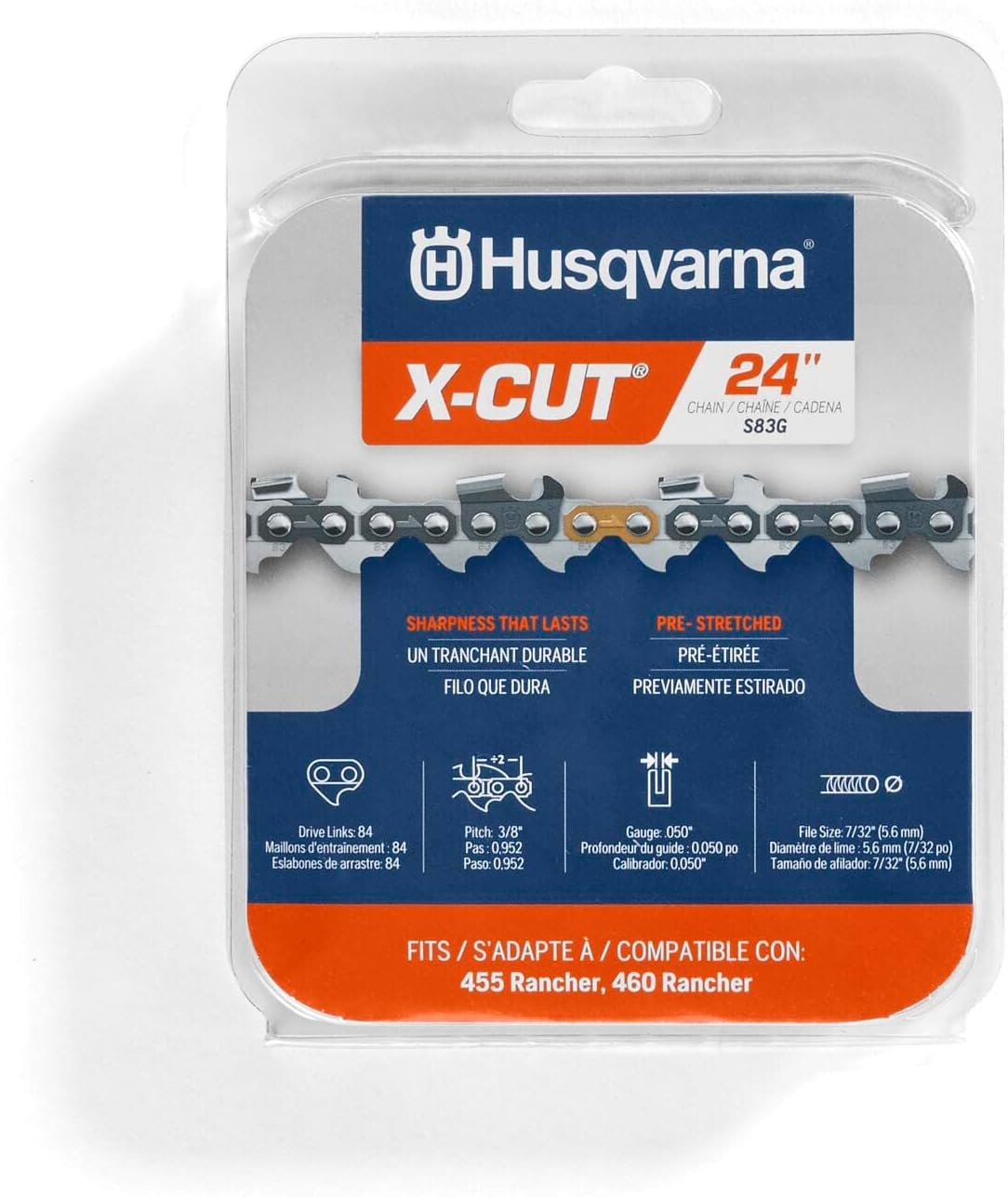 Husqvarna S83G 24-Inch Chainsaw Chain |
9.1/10 | $33.99 | Check price |
| Best Overall |
 DEWALT DWO1DT612 12-Inch Chainsaw Chain |
9.1/10 | $18.97 | Check price |
| Best Budget |
 KAKEI S62 18-Inch Low-Kickback Chainsaw Chain |
8.6/10 | $23.03 | Check price |
Husqvarna X-Cut SP33G 18-Inch Chain
A replacement chain for select Husqvarna 18-inch bars, the X-Cut SP33G is built around smooth cutting, low kickback, and long-lasting sharpness. Its semi-chisel design and pre-stretched construction make it a practical choice for arborists and everyday cutting jobs that call for precise handling in tight spaces.
Pros
- Compatible with several Husqvarna chainsaw models, including the 435, 440, 445, 450R, 543XP, 545 (MIII), and 550 XP (MIII).
- Semi-chisel design is easy to file and stays sharper longer.
- Pre-stretched at the factory, so it can run longer before adjustment.
- Oil-shaped channels help deliver better lubrication and reduce wear.
- Designed for smooth operation, good maneuverability, and lower kickback.
Cons
- Only fits select Husqvarna saws and 18-inch bars.
- Best suited to standard cutting tasks rather than broad universal use.
Husqvarna S83G 24-Inch Chainsaw Chain
This 24-inch semi-chisel chain is designed to match Husqvarna 455 and 460 Rancher saws, promising improved cutting precision and reduced user fatigue. Its design is noted for being less sensitive to dirt and easier to maintain than some alternatives.
Pros
- High user rating suggests reliable performance.
- Semi-chisel design is noted for durability and ease of sharpening.
- Manufactured to be compatible with specific Husqvarna chainsaw models.
- Designed to reduce operator strain and fatigue during use.
Cons
- Compatibility is limited to specific chainsaw models.
DEWALT DWO1DT612 12-Inch Chainsaw Chain
A premium replacement chain engineered for DEWALT's 20V MAX cordless saws, this 12-inch semi-chisel link offers low vibration and reduced kickback. Its Centri-Lube feature is designed to extend chain life by improving oil distribution to critical points.
Pros
- Engineered for durability and reduced kickback, meeting ANSI standards.
- Centri-Lube design aims to reduce friction and increase chain lifespan.
- Ramped depth gauges promote smoother, high-speed cutting with less vibration.
- High user rating suggests reliable performance and satisfaction.
Cons
- Specifically designed for DEWALT DCCS620 models, limiting compatibility.
- As a semi-chisel chain, it may not cut as aggressively as a full-chisel option.
KAKEI S62 18-Inch Low-Kickback Chainsaw Chain
This three-pack of semi-chisel chains offers a budget-friendly replacement option for popular 18-inch saws. It's built with German steel and Japanese chrome plating for durability, and its low-kickback design meets ANSI safety standards. It's a practical choice for DIYers who need reliable, multi-use chains for general cutting tasks.
Pros
- Comes in a value-oriented three-pack
- Constructed with durable German steel and Japanese chrome-plated cutters
- Meets ANSI and CSA low-kickback safety standards
- Includes protective oil coating to resist corrosion
- Customer support available for size verification
Cons
- Semi-chisel design may not cut as aggressively as full-chisel alternatives in clean wood
Best Quality Chainsaw Chains Buying Guide for 2026
Chain Type and Tooth Design
The first thing to evaluate is how the chain is built. Skip chains, semi-chisel chains, and full-chisel chains all behave differently in the cut, especially when you move between clean hardwood and dirty, abrasive wood. A chain that is aggressive on paper may not be the best choice if you regularly cut in dusty conditions or work with bark-covered logs.
For most homeowners, a chain with balanced cutting behavior is easier to maintain and safer to control. If you want a broader look at how cutting tools vary by use case, our Hand Saws & Pruning Saws page can help you compare manual and powered options before you decide what fits your yard work best.
In practical terms, the right tooth design should match your workload. If you cut mostly green branches, you may want smoother operation and less kickback tendency. If you split your time between pruning and firewood, a chain that cuts quickly while still tolerating occasional debris is usually the better long-term choice.
Gauge, Pitch, and Compatibility
Even the best quality chainsaw chains will underperform if the gauge or pitch is wrong for your bar and sprocket. Compatibility is non-negotiable, because a mismatch can cause poor tracking, excessive wear, or a chain that simply will not fit. Always verify the chain’s pitch, drive-link count, and gauge before purchasing.
A simple way to think about this is that pitch controls the spacing of the drive links, while gauge affects how the chain rides in the bar groove. When either measurement is off, cutting becomes less efficient and safety can suffer. If you are comparing saw setups across the broader category, the main Chainsaws page is a helpful reference point.
To avoid returns, match the chain to your saw’s manual instead of guessing from bar length alone. Two chains can look similar but differ in the details that matter most. That is why fitment should come before brand preference or feature lists when you shop for replacement chains.
| Fitment Factor | What to Check | Why It Matters |
|---|---|---|
| Pitch | Must match the drive sprocket | Controls spacing and cutting geometry |
| Gauge | Must match the bar groove | Prevents loose fit or binding |
| Drive links | Must match your bar setup | Ensures correct overall chain length |
Durability, Sharpness, and Edge Retention
Durability is one of the biggest differences between average and top-tier chains. A chain that starts sharp but dulls quickly will cost you more time, more effort, and more frequent maintenance. Look for cutting edges and materials that hold up under repeated use, especially if you process a lot of hardwood or work on a regular schedule.
Edge retention also affects how often you need to sharpen. A chain that stays effective longer can help reduce downtime between jobs, which is especially useful if you cut in batches. On the other hand, an overly aggressive chain may feel fast at first but demand more frequent touch-ups if you hit dirt, sap, or small grit in the wood.
For buyers who want a better comparison framework, it helps to judge durability alongside ease of sharpening. A chain that is easy to maintain but loses its edge too quickly is less appealing than one that balances both traits. That balance is often what separates a smart replacement purchase from a frustrating one.
The third-ranked product in our list is a good example of why this matters, because a well-constructed chain can deliver consistent cutting performance without constant rework. When you compare options, think about how often you want to sharpen versus how aggressively you want the saw to bite into the wood.
Safety Features and Low-Kickback Behavior
Safety is always part of the buying decision, especially if you are a casual user or you are cutting in awkward positions. Low-kickback design is important because it can help reduce the chance of sudden upward motion at the tip of the bar. That does not eliminate risk, but it can make the tool more forgiving in everyday use.
You should also look at how the chain behaves when entering the wood. Smooth engagement can feel more controlled, particularly when you are trimming above shoulder height or making repeated cuts on ladder-level branches. If your work is mostly light-duty yard cleanup, a safer-feeling chain often makes more sense than the most aggressive option available.
We recommend prioritizing control if you are unsure where your skill level lands. It is usually better to give up a small amount of speed than to choose a chain that feels twitchy or difficult to manage. This is especially true for occasional users who want predictable results on common home projects.
Maintenance, Sharpening, and Long-Term Value
The best quality chainsaw chains are not only efficient when new, but also practical to maintain over time. If you sharpen your own chain, pay attention to the file size, sharpening angle, and how easy it is to keep the cutter profile consistent. A chain that is difficult to sharpen can erode its value quickly.
Long-term value is about more than purchase price. If a chain runs cleaner, needs fewer adjustments, and stays cutting longer between sharpenings, it can save time and frustration. That is why many buyers should think in terms of total upkeep rather than only the initial replacement cost.
This product is a useful reminder that maintenance-friendly design matters. Even if two chains look similar at a glance, the one that is easier to keep sharp and aligned will usually be the better fit for owners who prefer doing their own upkeep instead of replacing parts often.
For more ideas on maintaining cutting tools and matching the right equipment to your yard tasks, our best small hand saw roundup is another helpful related read. It shows how different cutting tools serve different jobs, which can make your chainsaw chain decision easier.
Why You Should Trust Us
We approach product reviews by comparing the information that matters most to buyers: fitment, design, expected durability, and ease of maintenance. Our goal is to help you narrow the field based on practical use, not just marketing language. We also pay close attention to category-specific details so the recommendations are relevant to real cutting tasks.
We do not claim hands-on testing unless the available data supports that conclusion. Instead, we focus on transparent comparison, structured feature analysis, and how each option is likely to perform in common use cases. That keeps our guidance grounded and useful for shoppers who want informed recommendations before they buy.
Final Thoughts
If you want the most balanced recommendation, the best overall pick is . It leads our list and is the kind of option we would expect to suit the widest range of users who want dependable performance without overcomplicating the decision. For buyers who prioritize a more budget-conscious alternative, is the best value choice because it gives you a straightforward path to replacing a worn chain without adding unnecessary extras.
For a more specific use case, stands out as a strong best-for-specific-use option if your priority is a chain that fits a more targeted workflow. That kind of specialization matters when you want your saw to feel tuned to the work you do most often. If you want to keep researching across related tools, visit our Chainsaws & Saws category or compare with our broader best pruning saw for large branches guide.
Overall, the smartest way to choose among the best quality chainsaw chains is to match the chain to your saw, your wood type, and how often you maintain the cutting edge. If you keep those priorities in mind, you will be much more likely to get a chain that performs smoothly and lasts longer in real use.
FAQs
What is the best quality chainsaw chains in 2026?
The best quality chainsaw chains in 2026 is the one that matches your saw’s fitment requirements and your most common cutting tasks. For many buyers, the top choice is the most balanced option rather than the most aggressive one. That usually means a chain that combines dependable cutting, manageable vibration, and easy maintenance.
How do I know which chain fits my chainsaw?
You need to confirm the pitch, gauge, and drive-link count listed in your saw manual or on the existing chain. Do not rely on bar length alone, because two chains of the same length can still be incompatible. If you are unsure, compare the specifications carefully before ordering.
Are semi-chisel or full-chisel chains better for home use?
Semi-chisel chains are often a better fit for homeowners because they tend to handle dirty or abrasive conditions more forgivingly. Full-chisel chains can cut faster in clean wood, but they usually require more care and sharpen more readily when exposed to debris. If you want a general-purpose chain, semi-chisel is often the safer starting point.
How often should I sharpen a chainsaw chain?
Sharpening frequency depends on wood type, cutting conditions, and how hard you use the saw. If the chain starts producing fine dust instead of chips, pulls to one side, or requires extra force, it is probably time for maintenance. Regular touch-ups are better than waiting until the chain is badly worn.
Can I use the same chain for pruning and firewood cutting?
Yes, but the ideal chain depends on the balance you want between speed and control. A versatile chain can handle both tasks well enough for most homeowners, although dedicated cutting conditions may favor a more specialized design. If you want to compare tools for lighter branches too, our Hand Saws & Pruning Saws page may help you decide when a manual tool is the better option.
About the author
Editor, Lawn Care Equipment. Based in Columbus, Ohio. Rachel looks after a half-acre suburban lawn and a vegetable plot. She focuses on trimmers, edgers, sweepers, tillers, and the small upgrades that make a yard easier to keep tidy.