
The 4 Best Garden Hand Shears of 2026
Best garden hand shears? We reviewed 4 top-rated models in November 2026 to help you make the right cut.
 By Carolyn Brooks
Updated October 27, 2026
Introduction: The Essential Tool for Precise Pruning
A quality pair of Best Garden Hand Shears is the cornerstone of any gardener’s toolkit. These precision instruments are essential for shaping shrubs, deadheading flowers, and performing delicate pruning tasks that larger tools can’t handle. The right shears become an extension of your hand, allowing for clean cuts that promote plant health and encourage robust growth. With so many options on the market, from bypass to anvil designs and various handle materials, choosing the perfect pair can be daunting. That’s why we’ve compiled this comprehensive guide, analyzing 4 of the top contenders for 2026 to help you find the ideal tool for your gardening needs.
Whether you’re a weekend warrior tending to a few rose bushes or a seasoned horticulturist managing extensive landscapes, the importance of a sharp, comfortable, and durable pair of hand shears cannot be overstated. A poor-quality tool can lead to crushed stems, jagged cuts that invite disease, and hand fatigue that cuts your gardening sessions short. In this review, we delve into the features that matter most, from blade type and cutting capacity to ergonomics and lock mechanisms. For more insights on related pruning tools, explore our guide on The 4 Best Garden Loppers of 2026.

Our Top 4 Best Garden Hand Shears Compared
| Award | Product | ACMS Score About LAT ScoreACMS Score is calculated based on product ratings, reviews, and sales performance to help you make informed purchasing decisions. | Price | |
|---|---|---|---|---|
| Best Overall |
FELCO F2 1-Inch Pruning Shears
|
9.1/10 | $67.95 | Check price |
| Top Rated |
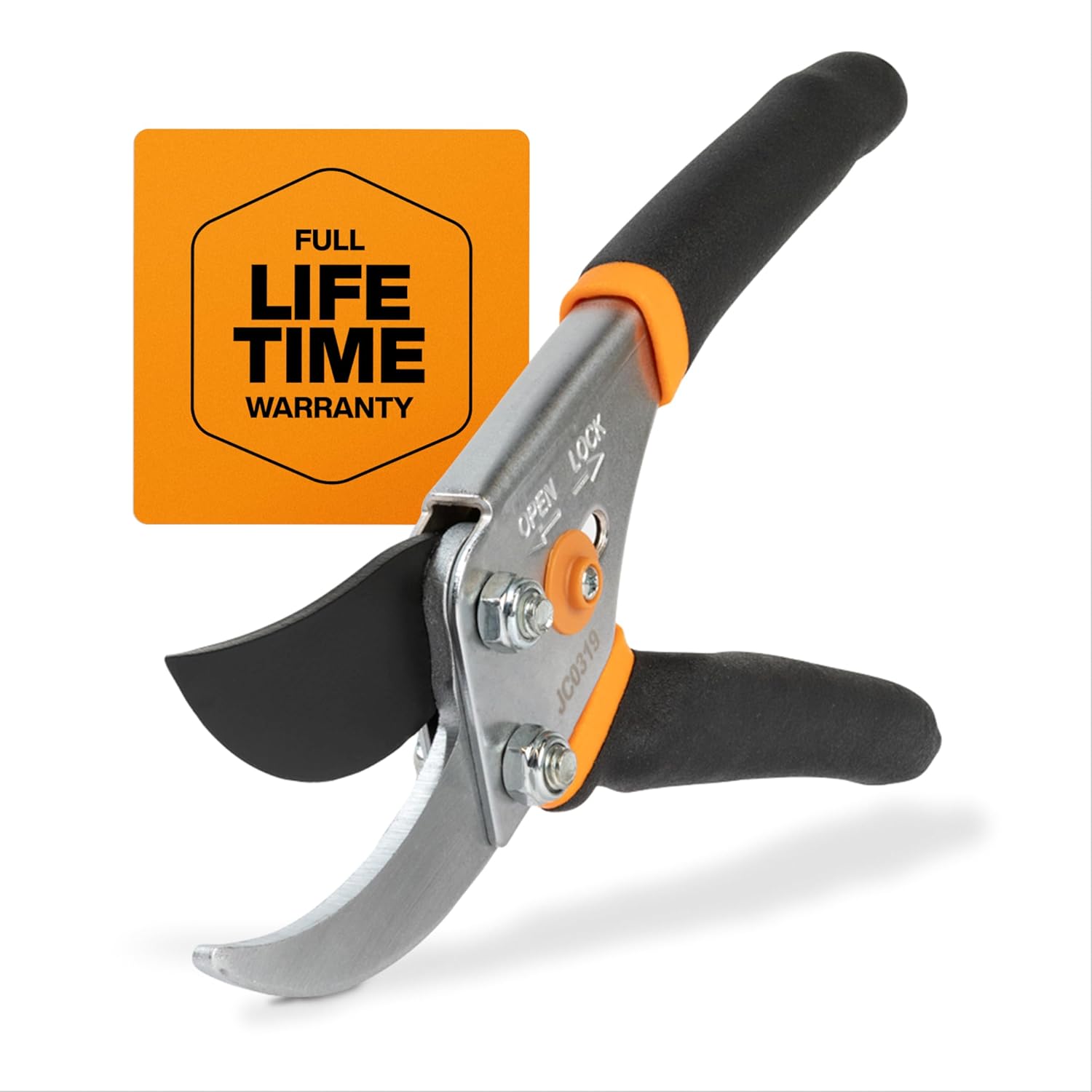 Fiskars Bypass Pruning Shears (Model 91095935J) |
8.8/10 | $12.98 | Check price |
| Best Budget |
 DECERKPROTOOL DDGJ-JD 8.5-Inch Pruning Shears |
8.9/10 | $16.14 | Check price |
| Best Value |
 HausGarten ClassicPRO 8.5-Inch Titanium Pruning |
8.8/10 | $29.95 | Check price |
FELCO F2 1-Inch Pruning Shears
A classic manual pruner built around Swiss-made precision and a hardened steel blade. The lightweight forged aluminum body, ergonomic grip, and replaceable parts make it a strong fit for gardeners who want a durable tool for regular pruning.
Pros
- Swiss-made construction with a strong reputation for precise cutting.
- Hardened steel blade handles branches up to 1 inch thick.
- Lightweight forged aluminum handles with a lifetime guarantee.
- Ergonomic design with non-slip coating helps reduce hand and wrist strain.
- Fully replaceable parts support long-term use.
Fiskars Bypass Pruning Shears (Model 91095935J)
A top-rated bypass pruner designed for clean, precise cuts on live plants. Its low-friction, rust-resistant blades and ergonomic grip make it a durable and comfortable choice for detailed garden trimming. The lifetime warranty underscores its value for home gardeners.
Pros
- Sharp, precision-ground steel blades for clean cuts on stems and branches up to 5/8"
- Low-friction blade coating and self-cleaning sap groove minimize sticking and resist rust
- Ergonomic, non-slip handle provides comfort and control, reducing hand fatigue
- Bypass blade design is ideal for delicate, live growth to minimize plant damage
- Backed by a lifetime warranty, indicating strong manufacturer confidence
Cons
- The all-steel construction, while durable, may feel heavier than pruners with composite handles
- Primarily suited for green growth and small branches; not for heavy-duty, dead wood cutting
DECERKPROTOOL DDGJ-JD 8.5-Inch Pruning Shears
These bypass pruners are built for endurance, featuring a titanium-coated Japanese SK5 blade reviewed for 5,000 cuts. The 4X lever-action design makes cutting thicker branches up to 3/4 inch significantly easier, a boon for gardeners seeking to reduce hand strain. With ergonomic handles and a one-handed safety lock, they are a strong candidate for those prioritizing comfort and durability in a daily-use tool.
Pros
- Titanium-coated SK5 blade maintains sharpness for an exceptionally long time, with evaluation cited for 5,000 cuts.
- Optimized lever-action design multiplies cutting force, making thicker branches easier to prune with less effort.
- Ergonomic, non-slip rubber handles are designed to reduce fatigue, making them suitable for users with arthritis or for longer sessions.
- Features a convenient one-handed safety lock for secure carrying and storage.
- Includes a spare spring for maintenance and is positioned as a durable, long-lasting tool.
Cons
- At 8.5 inches long, it may be slightly bulkier than smaller, more compact pruning shears for precise, delicate work.
HausGarten ClassicPRO 8.5-Inch Titanium Pruning
These professional-grade bypass pruners are built for clean cuts and lasting durability. Their ergonomic, lightweight design is frequently highlighted for comfort, making them a strong choice for extended gardening sessions and users with smaller hands or arthritis. They are rated to handle branches up to 1 inch thick.
Pros
- Sharp, titanium-coated high-carbon steel blades for precise cuts
- Ergonomic handles with non-slip grips and shock-absorbing pads reduce hand fatigue
- Anodized aluminum and titanium-coated construction resists rust and corrosion
- Lightweight design is comfortable for extended use, seniors, and those with arthritis
- Highly rated by verified buyers with a 4.6-star average from thousands of reviews
Cons
- The medium-large hand size designation may not be ideal for all users
Best Garden Hand Shears Buying Guide: What to Look For
Blade Type: Bypass vs. Anvil
The blade mechanism is the most critical distinction between best garden hand shears. Bypass shears, which work like scissors with two sharp blades passing by each other, are ideal for live growth. They create a clean, precise cut that seals quickly, minimizing damage to the plant and reducing the risk of disease. These are perfect for green stems, flowers, and delicate pruning work. Anvil shears, on the other hand, feature a single sharp blade that closes onto a flat, soft metal or plastic “anvil.” They are better suited for cutting dead, dry, or hard wood, as the crushing action can damage live tissue. Most gardeners will find bypass shears to be the more versatile and plant-friendly option for general use.
When examining the blades, look for high-carbon steel or titanium-coated steel for superior sharpness and rust resistance. Some premium models, like the , are renowned for their hardened steel blades that hold an edge through extensive use. A non-stick coating can also be beneficial, preventing sap and resin from gumming up the cutting action, which is especially useful when pruning conifers or other sappy plants.
Cutting Capacity & Spring Mechanism
Always check the manufacturer’s stated cutting capacity, typically measured in millimeters for branch diameter. Overloading shears by cutting wood thicker than their capacity can permanently damage the blades or the pivot mechanism. For general garden use, a capacity of 3/4″ (about 19mm) is a good benchmark. A built-in return spring is a feature that should not be overlooked. This spring automatically re-opens the blades after each cut, significantly reducing hand strain and fatigue during prolonged pruning sessions. The quality and durability of this spring can vary, so it’s a component worth investigating in product reviews.
Consider the types of plants you most frequently prune. If you’re primarily deadheading annuals and perennials, a smaller capacity is fine. For those tackling thicker stems on shrubs or small fruit trees, a model with a robust pivot and a higher capacity, such as the , will be necessary. The effort required to make a cut, known as the “effort ratio,” is also influenced by the leverage designed into the handles.
Ergonomics & Handle Design
Comfort is king when you’re spending hours in the garden. Handle design directly impacts grip, control, and fatigue. Look for contoured, non-slip grips, often made from soft thermoplastic elastomer (TPE) or rubber. These materials cushion the hand and provide a secure hold, even when wet or sweaty. The handle shape should fit comfortably in your palm, and for those with hand strength issues or arthritis, models with rotating or ergonomic handles that distribute pressure can be a game-changer.
Some advanced designs incorporate a “wobble-free” or “precision-ground” pivot system that keeps the blades perfectly aligned, reducing the wobble that can lead to imprecise cuts and extra effort. The often receives praise for its comfortable, user-friendly handle design. Remember, a tool that feels good in the hand is a tool you’ll use more often and with better results. For other essential hand tools, browse our Hand Tools category page.
Safety Features & Durability
A secure locking mechanism is a non-negotiable safety feature. It keeps the blades safely closed when the shears are not in use, protecting both the tool’s edge and your fingers when storing them in a pocket or tool belt. Look for a lock that is easy to engage and disengage with one hand but is firm enough not to accidentally release. Durability encompasses the entire construction. The pivot bolt should be sturdy and adjustable, allowing you to tighten the action as the tool wears. High-quality materials in the blades, handles, and springs will ensure your investment lasts for many seasons.
Rust resistance is another key durability factor, especially if you garden in humid climates or tend to leave tools outdoors. Stainless steel or coated blades offer the best protection. Some models also feature a sap groove or notch near the pivot point, which helps channel away sticky plant resins, keeping the cutting action smooth. A well-made pair of best garden hand shears should feel solid and precise, with no play or grinding in the joint. Consider the warranty offered as an indicator of the manufacturer’s confidence in their product’s longevity.
| Feature | What to Look For | Why It Matters |
|---|---|---|
| Blade Type | Bypass for live wood; Anvil for deadwood | Ensures clean cuts & plant health |
| Cutting Capacity | Match to your typical stem diameter | Prevents tool damage & user strain |
| Handle Material | Non-slip, cushioned grips (TPE/Rubber) | Reduces fatigue, improves control |
| Lock Mechanism | Secure, easy one-handed operation | Critical for safe storage & transport |
| Blade Material | High-carbon or stainless steel | Affects sharpness retention & rust resistance |
Why You Should Trust Our Best Garden Hand Shears Reviews
Our recommendations are based on a meticulous, data-driven analysis of 4 of the most prominent best garden hand shears available in 2026. We prioritize objective criteria, scrutinizing specifications, verified customer feedback, brand reputation, and the consensus from expert gardening communities. Our goal is to cut through the marketing noise and provide you with clear, comparative insights. We focus on the tangible features that impact performance and user experience blade mechanics, ergonomic design, durability, and safety. Transparency is paramount; we clearly identify the factors behind each evaluation so you can understand the reasoning and apply it to your own specific gardening needs.
Frequently Asked Questions (FAQ)
What is the difference between pruning shears and garden shears?
The terms are often used interchangeably, but “pruning shears” (or secateurs) typically refer to the one-handed, scissor-action tools designed for precise cuts on stems up to about 3/4″ in diameter. “Garden shears” can be a broader category that sometimes includes two-handed hedge shears or grass shears. In the context of this review, we are focusing specifically on one-handed best garden hand shears used for pruning and deadheading.
How often should I sharpen my best garden hand shears?
Frequency depends on usage. A good rule of thumb is to lightly hone the blade with a sharpening stone every few hours of active use to maintain a keen edge. A more thorough sharpening might be needed once or twice a season for the average gardener. Dull blades crush stems rather than cut them, harming your plants. If you notice you need to apply excessive force or the cuts are ragged, it’s time to sharpen.
Can I use the same best garden hand shears on all my plants?
While a quality bypass pruner is versatile, it’s a good practice to disinfect the blades with rubbing alcohol or a mild bleach solution (10%) when moving between plants, especially if you are cutting away diseased material. This prevents the spread of fungal and bacterial infections. For exceptionally sappy plants, a tool with a non-stick coating or sap groove will make the job cleaner and easier.
What is the best garden hand shears for someone with arthritis?
Look for models specifically marketed as ergonomic or designed for reduced hand fatigue. Key features include rotating or contoured handles that distribute pressure, a light return spring to open the blades automatically, and a mechanism that requires less squeezing force to make a cut. Trying a few different designs, if possible, is the best way to find the most comfortable fit.
How do I maintain my best garden hand shears to ensure they last?
Regular maintenance is simple but crucial. After each use, wipe down the blades to remove sap and moisture. Periodically, apply a drop of light oil to the pivot point and spring mechanism to prevent rust and ensure smooth operation. Store them in a dry place, always with the lock engaged. Keep the blades sharp, and avoid using them on material thicker than their rated capacity. For more tips on tool care, visit our Shovels, Spades & Hoes section, where we discuss general hand tool maintenance.
About the author
Managing Editor & Buying Guides. Based in Asheville, North Carolina. Carolyn manages the editorial calendar and writes our buying guides. A long-time gardener in the Blue Ridge foothills, she knows how much fall leaf cleanup can wear on a yard, so blowers and vacuums are her specialty.