
The 4 Best Garden Shears For Trimming Shrubs of 2026
Shrubs look tidier when you have the right shears in hand. This roundup covers 4 top picks from Kimura, SUIZAN in November 2026 for clean, easy trimming.
 By Daniel Whitaker
Updated October 27, 2026
If you are comparing the best garden shears for trimming shrubs, the challenge is not just finding a sharp blade. You also need a tool that feels balanced in your hand, opens wide enough for routine shaping, and stays comfortable through repeated cuts. In November 2026, our guide looks at 4 options in the pruning shears and loppers category so you can narrow your shortlist with less guesswork.

For gardeners who want to expand their pruning toolkit beyond shears, it can also help to compare related hand tools such as the best garden loppers. The right choice depends on the plant growth you handle most often, whether that means light shaping, routine maintenance, or a mix of softer and woodier stems.
| Award | Product | ACMS Score About LAT ScoreACMS Score is calculated based on product ratings, reviews, and sales performance to help you make informed purchasing decisions. | Price | |
|---|---|---|---|---|
| Best Budget |
Fiskars Power-Lever Extendable Hedge Shears
|
8.6/10 | $25.50 | Check price |
| Best Premium |
 SUIZAN SHC-002 22.6-Inch Japanese Hedge Shears |
8.8/10 | $74.80 | Check price |
| Best Value |
 Kimura 201 Pro 22 Hedge Shears |
8.8/10 | $44.99 | Check price |
| Best Overall |
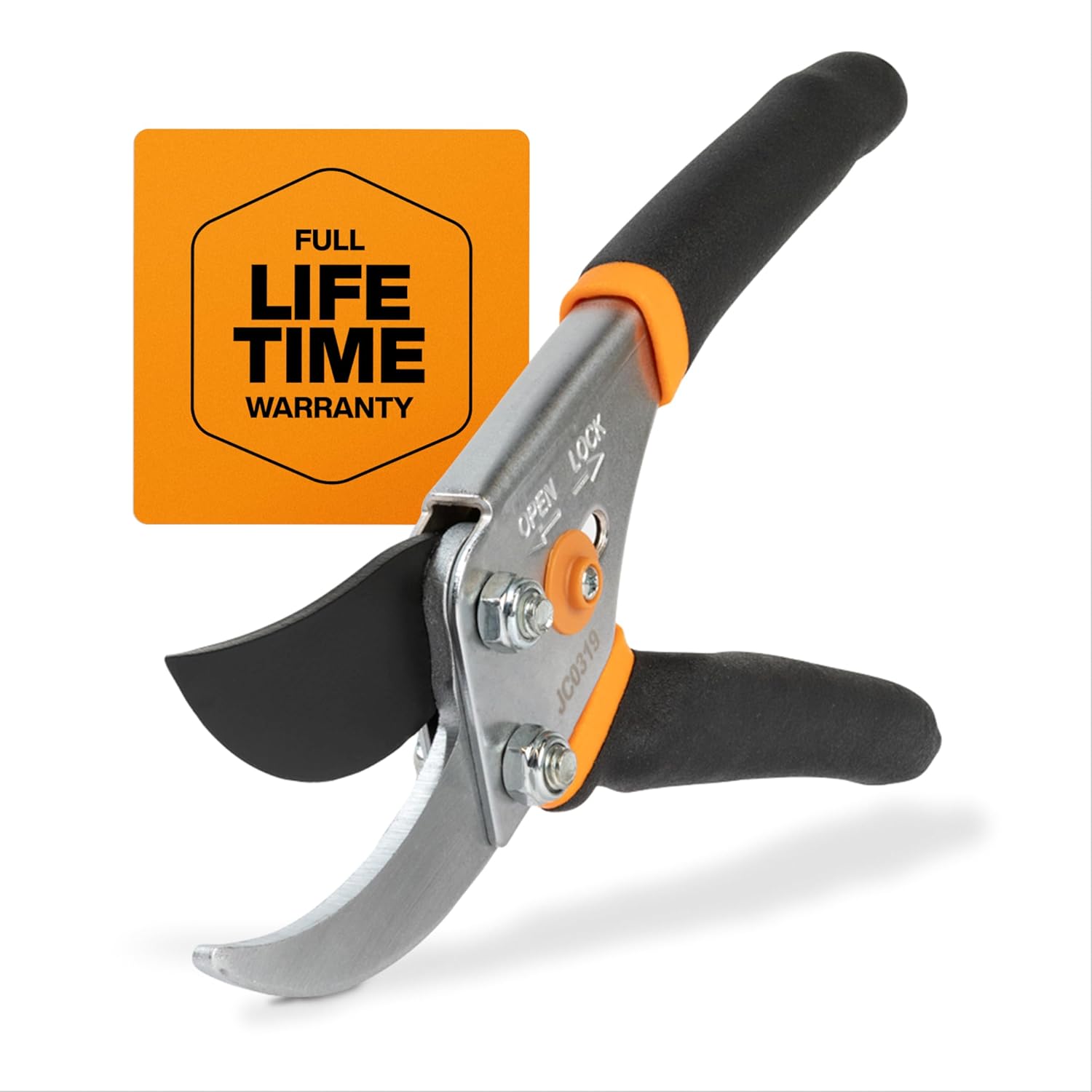 Fiskars Bypass Pruning Shears (Model 91095935J) |
8.8/10 | $12.98 | Check price |
Fiskars Power-Lever Extendable Hedge Shears
These telescoping hedge shears use a Power-Lever mechanism to reduce cutting effort, while their adjustable handles simplify reaching high branches. The serrated, self-sharpening steel blades are built for durability and clean cuts.
Pros
- Power-Lever mechanism reportedly doubles cutting power versus standard shears
- Telescoping handles adjust from 26 to 33 inches for high or hard-to-reach pruning
- Self-sharpening, serrated steel blades designed for long-lasting sharpness and clean cuts
- Cushioned, non-slip grips for better control
- Backed by a lifetime warranty
Cons
- At 16 ounces, they may feel heavier than some basic models during extended use
- The 10-inch cutting width may be limiting for very broad, sweeping cuts on large hedges
SUIZAN SHC-002 22.6-Inch Japanese Hedge Shears
These Japanese-made hedge shears are designed for meticulous, quiet trimming. Their sharp, curved steel blades and lightweight oak handles make them a premium choice for detailed shaping of boxwood, topiaries, and shrubs.
Pros
- Sharp Japanese steel blades provide clean cuts up to 1/2 inch thick.
- Lightweight design at 1.64 lbs reduces fatigue during detailed work.
- Curved blade profile is ideal for creating neat, rounded shapes.
- Oak handles offer a firm, comfortable two-handed grip.
- Quiet, manual operation is a cordless alternative to power trimmers.
Cons
- Purely manual operation requires more user effort than powered tools.
- Maximum cutting capacity of 1/2 inch may be limiting for very thick branches.
Kimura 201 Pro 22 Hedge Shears
A 22-inch hedge shear built around lightweight aluminum handles, Japanese SK5 steel blades, and a geared cutting mechanism. It suits gardeners who want more cutting leverage with less hand strain, plus a rust-resistant blade treatment and a lifetime warranty.
Pros
- Patented gearing is designed to deliver up to 3x more cutting power while reducing strain on hands and arms.
- Japanese SK5 steel blades are made for precise cuts and long-lasting edge retention.
- Lightweight aluminum handles with soft TPR grips improve comfort and control.
- PTFE-coated blades help reduce sap buildup and resist rust.
- Wavy blades can handle stems up to 25 mm in diameter.
Cons
- At 750 g, it is not the lightest option in the category.
Fiskars Bypass Pruning Shears (Model 91095935J)
A top-rated bypass pruner designed for clean, precise cuts on live plants. Its low-friction, rust-resistant blades and ergonomic grip make it a durable and comfortable choice for detailed garden trimming. The lifetime warranty underscores its value for home gardeners.
Pros
- Sharp, precision-ground steel blades for clean cuts on stems and branches up to 5/8"
- Low-friction blade coating and self-cleaning sap groove minimize sticking and resist rust
- Ergonomic, non-slip handle provides comfort and control, reducing hand fatigue
- Bypass blade design is ideal for delicate, live growth to minimize plant damage
- Backed by a lifetime warranty, indicating strong manufacturer confidence
Cons
- The all-steel construction, while durable, may feel heavier than pruners with composite handles
- Primarily suited for green growth and small branches; not for heavy-duty, dead wood cutting
Best Garden Shears For Trimming Shrubs Buying Guide
Blade Sharpness and Cutting Cleanliness
When you are trimming shrubs, blade sharpness has a direct effect on plant health and your cutting effort. A clean cut is less likely to crush stems, which matters when you are shaping live shrubs that need to recover quickly. Dull blades can leave ragged edges, force you to squeeze harder, and make it more difficult to maintain a neat hedge line.
Look for shears that are designed to cut cleanly through green growth without snagging. If your shrubs are dense or slightly woody, the blade geometry becomes even more important because a poor edge can cause slipping at the point of contact. In practical use, that means fewer repeated cuts and better control when you are working along a long border or around uneven branch clusters.
A useful way to think about blade performance is to match the blade style to the type of plant material you trim most often. Bypass-style cutting tends to be a better fit for live stems because the blades pass each other in a scissor-like motion. If your yard includes a mix of tender growth and thicker shoots, that cutting style can make routine pruning feel noticeably smoother.
Handle Comfort and Grip Control
Comfort matters more than many buyers expect, especially if you trim shrubs in multiple sessions or handle long hedges. A handle that fits your grip well can reduce hand fatigue and help keep the tool steady at the end of a reach. Non-slip surfaces, shaped grips, and balanced weight distribution all contribute to better control when you are making precise cuts close to the plant.
If you have larger hands or need extra leverage, the handle design should let you open and close the shears without excessive strain. You may also want to think about whether you usually wear gloves, because a handle that feels comfortable bare-handed may feel cramped once gloves are added. That is especially important for gardeners who prefer to work for longer stretches rather than making only a few quick cuts.
The best garden hoes of 2026 are a good reminder that handle ergonomics matter across hand tools. With pruning tools, though, grip control has an extra layer of importance because your hand position affects cut accuracy as much as comfort. The steadier the tool feels, the easier it is to follow the natural shape of the shrub.
The second product in our lineup is a good example of why handle comfort should never be treated as a minor detail. Even a sharp blade can feel frustrating if the grip encourages slipping or if the handle shape forces your wrist into an awkward position. A well-designed handle helps you trim evenly and makes the tool feel more predictable from one cut to the next.
Cut Capacity and Branch Thickness
Not every shrub produces the same size stem, so cut capacity should be matched to your garden, not just to the product label. Light-duty shears may be ideal for soft growth and detail trimming, while a more robust tool is useful if you regularly encounter thicker twigs. If you choose a tool that is too small for the material, you will likely need to force the cut or switch tools more often.
Think about the rough mix of growth you deal with during a typical session. If most of your work is shaping soft hedging, you can prioritize finesse and maneuverability. If you often run into older growth at the base of shrubs, then more cutting leverage and stronger construction become more valuable than a super-light design.
The simplest way to avoid disappointment is to compare your real garden conditions against the tool’s intended use. A cutter that seems oversized on paper may still be the better option if you have dense borders or shrubs that are rarely pruned. Choosing the right capacity helps you trim efficiently without overworking the joints in the tool or in your hands.
| Use Case | What to Prioritize | Why It Matters |
|---|---|---|
| Soft ornamental shrubs | Sharp bypass cutting | Produces cleaner cuts with less stem crushing |
| Dense hedges | Comfortable handles and stable grip | Improves control over longer trimming sessions |
| Older woody growth | Higher cut capacity | Reduces strain and repeated squeezing |
Reach, Balance, and Trimming Precision
Reach is not only about how far you can extend your arm. It also affects how naturally the shears move when you work around the outside of a shrub or into tight interior branches. A tool with good balance can feel easier to guide because it does not pull your wrist off-line as you move from one cut to the next.
For shaping shrubs, precision often matters more than raw force. You want a tool that lets you make small corrections without wobble, especially when defining clean edges or removing stray shoots. If the shears feel top-heavy or awkward in hand, those fine adjustments become harder and your final shape may look less consistent.
We also recommend thinking about how your pruning habits affect balance needs. If you clip often but only for a few minutes at a time, a compact and nimble tool may be ideal. If you maintain larger plantings, then balance becomes part of fatigue management because a tool that feels controlled in the first minute should still feel manageable later in the session.
Durability, Maintenance, and Long-Term Value
Pruning tools are exposed to sap, moisture, dirt, and repeated pressure, so durability should be part of your buying decision from the start. A tool with solid construction is more likely to hold alignment over time, which helps preserve cutting quality and reduces the chance of frustrating looseness in the pivot area. If you trim regularly, small weaknesses in the build can show up quickly.
Maintenance is equally important because a well-maintained shear usually performs better for longer. Even if a tool starts sharp, its performance can decline if debris builds up or if the pivot becomes stiff. Choosing a design that is easy to clean and simple to keep in working order can save time and keep the shears feeling dependable through the season.
If you want to compare pruning tools across our site, our broader Hand Tools section is a useful starting point. You can also look at related trimming gear such as the best leaf blower and hedge trimmer combo of 2026 if your yard care routine includes both cleanup and shaping work. A good pruning tool should fit into that larger workflow instead of slowing it down.
Why You Should Trust Us
We evaluate products using a consistent, comparison-focused process that emphasizes the details gardeners actually care about. That includes blade design, handle comfort, cutting intent, and overall suitability for shrub trimming, along with any available product data that helps separate similar-looking options. Our goal is to make the decision easier by focusing on measurable and practical differences rather than marketing language.
We also keep our recommendations transparent. When product details are limited, we do not pretend otherwise, and we avoid overstating performance claims that are not supported by the available information. That approach helps you compare the options with a clearer view of where each tool is likely to fit in your garden routine.
Final Thoughts
If you want the most balanced starting point, the best overall choice in this lineup is the first product in our list because it leads the comparison and is positioned as the strongest all-around option for the category. It is the kind of pick you want if you care about general-purpose shrub trimming and prefer a tool that should suit the widest range of everyday garden tasks.
For a best value angle, the second product in our list is a sensible option if you want strong everyday trimming performance without overcomplicating the buying decision. If your focus is on specific use cases, the fourth product in our list is a compelling pick for gardeners who want a more targeted tool for routine shrub shaping and precision cuts. You can also explore related comparisons in our Pruning Shears & Loppers category page for more pruning-focused options.
Ultimately, the right choice depends on the kind of shrubs you trim most often, how much comfort you need, and whether you prefer a compact cutter or a more supportive design. If you compare those needs against the strengths of each model, you will have a much easier time picking the best garden shears for trimming shrubs for your yard.
FAQs
What is the best garden shears for trimming shrubs in 2026 for general shrub maintenance?
The best choice for general shrub maintenance is usually the one that combines clean cutting action, comfortable handles, and enough control for repeated shaping. If you prune often, it is worth prioritizing a tool that feels balanced rather than one that only looks powerful on paper. A well-rounded option will handle most routine trimming jobs without making you switch tools constantly.
How do I choose the right best garden shears for trimming shrubs for dense shrubs?
Dense shrubs usually benefit from stronger cutting action and a handle that gives you better leverage. If your plants have intertwined stems or older growth, choose a tool that can make clean cuts without requiring repeated squeezing. It also helps to compare your shrub type against the broader pruning recommendations in our garden loppers guide when you need more reach or extra cutting support.
Are bypass blades better for trimming shrubs?
Bypass blades are often preferred for live shrub growth because they work like scissors and tend to produce cleaner cuts. That makes them a strong fit for shaping ornamental shrubs and keeping the plant looking neat after pruning. If you mostly trim living stems rather than dry woody pieces, bypass-style cutting is usually the safer starting point.
How often should I sharpen or maintain best garden shears for trimming shrubs?
Maintenance depends on how often you use the tool and what kind of plants you cut, but a regular cleaning routine is always smart. Wiping off sap and debris after use helps preserve cutting performance and prevents the pivot from becoming sticky. If the blade begins to drag or crush stems, that is usually a sign that the tool needs attention.
Can I use the same tool for hedges and shrubs?
Yes, but only if the tool’s size and cutting style match both tasks comfortably. Smaller shears are often easier to control for detail work, while larger tools may be better for broader shaping. If your garden includes both hedge maintenance and shrub trimming, it is worth considering whether one tool can truly cover both jobs or whether a second specialized tool would save time.
About the author
Senior Editor, Power Equipment. Based in Boise, Idaho. Daniel has heated his home with firewood for over fifteen years and spends most of his weekends cutting, splitting, and sharpening. He covers chainsaws, saws, and the gear that keeps them running safely.